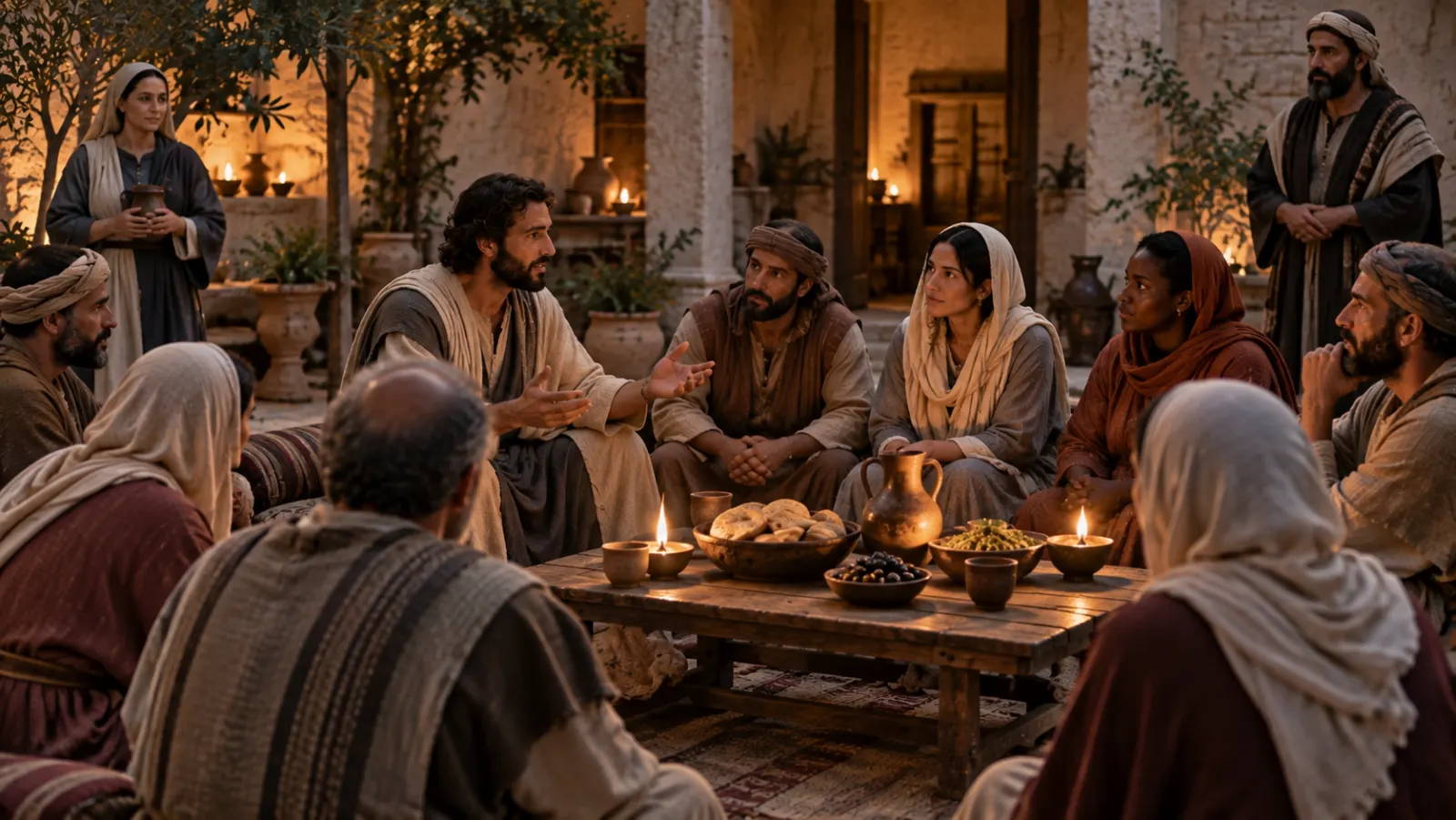
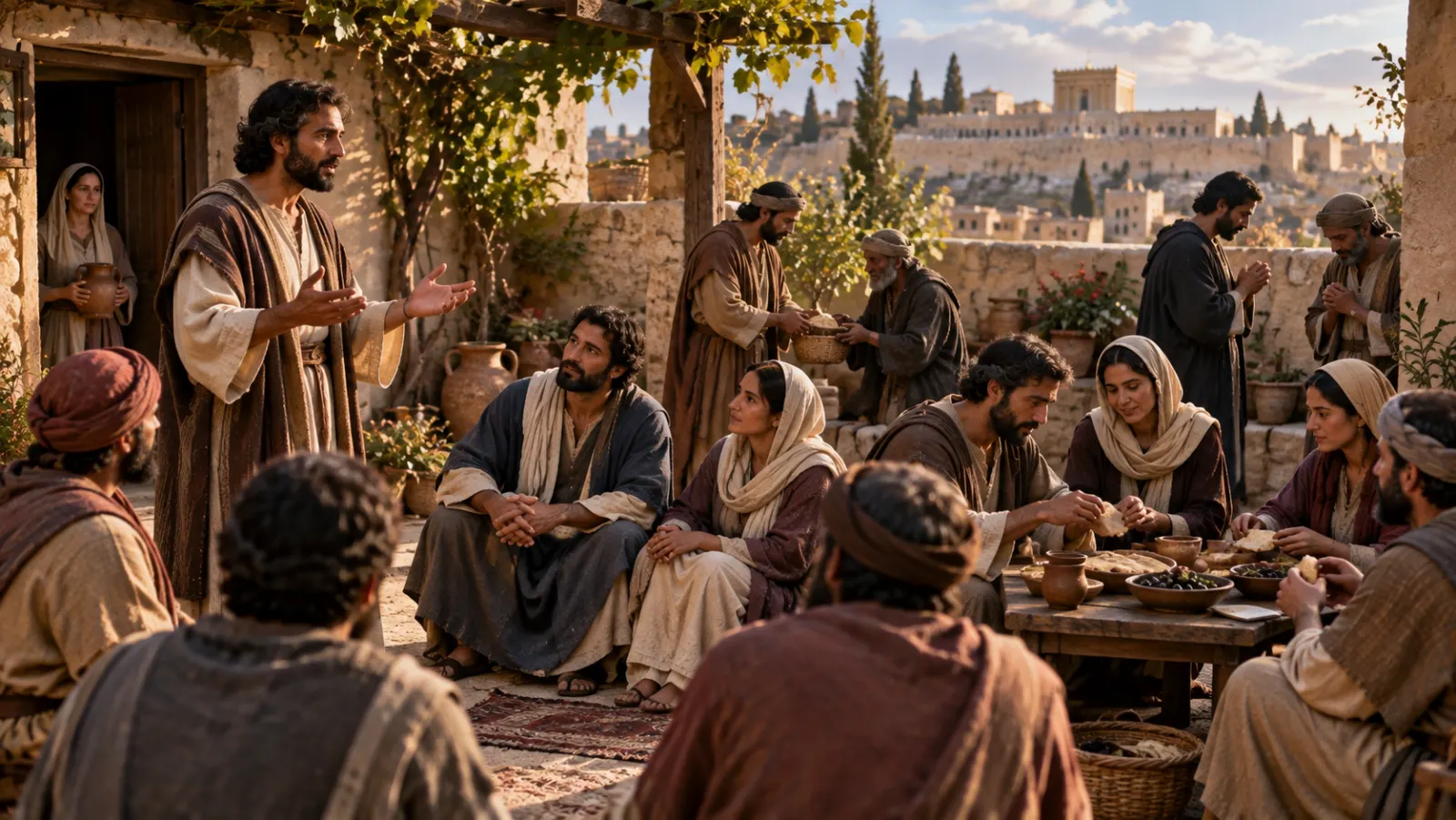
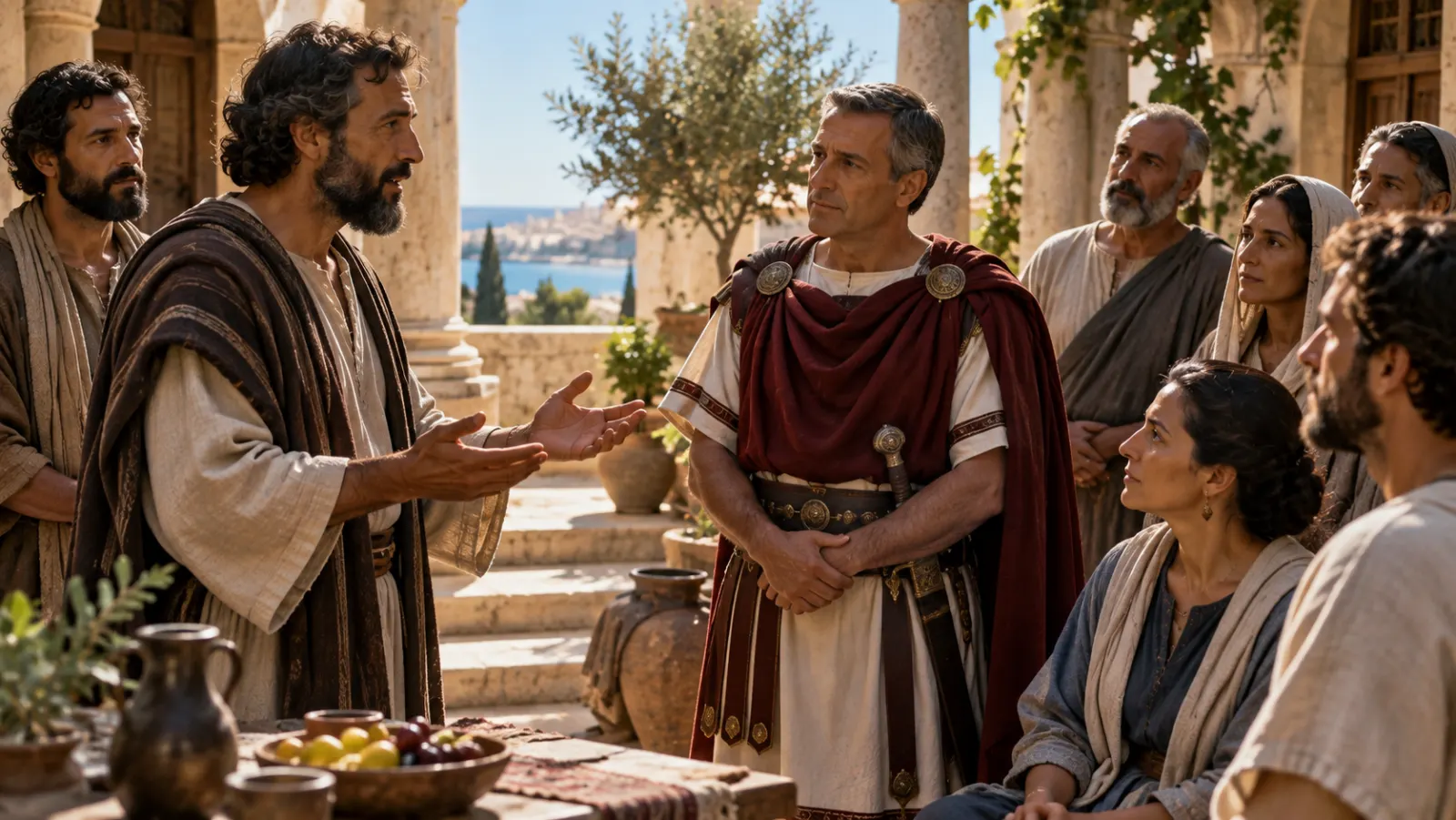
Acts and the New Testament letters name women such as Mary, Lydia, Prisca, and others whose households became places of prayer, teaching, hospitality, and mission. Their stories complicate any picture of the early church built only around public male speakers.
Before churches had property committees, someone had to open a door. Before there were fellowship halls, someone had to provide a table. Before traveling teachers could reserve a hotel room, someone had to decide whether a stranger could sleep under the same roof. Hospitality sounds gentle, but in the first-century church it was logistical power. Homes made gatherings possible, and the people who controlled those homes shaped the movement’s capacity to survive and spread.
Several women appear precisely at those pressure points. Mary, the mother of John Mark, has a house in Jerusalem where many believers gather in prayer. Lydia opens her household in Philippi after her baptism and later receives Paul and Silas again. Prisca, also called Priscilla, appears with Aquila as a teacher, coworker, traveler, and host of a church in their house. These women are not decorative figures in someone else’s ministry story. Their resources, judgment, and initiative become part of the church’s infrastructure.
Mary’s house in Jerusalem was already a known gathering place
Acts 12 tells the story of Peter’s release from prison. When he is free, he goes to the house of Mary, mother of John Mark, where many people are gathered and praying. The narrative assumes that this address is an obvious place for Peter to seek the community. Mary’s home is not presented as a random private residence. It functions as a recognized meeting point.
The passage tells us little about Mary herself, which is frustrating to modern curiosity. We should not invent a biography. Yet the house is hers by name, and the gathering is substantial enough to include a servant named Rhoda and many praying believers. Whatever Mary’s precise economic position, her household resources support communal life at a moment of political danger.
Lydia turns conversion into open-door hospitality
In Acts 16, Lydia is introduced near Philippi as a seller of purple goods and a worshiper of God. After she and her household are baptized, she urges Paul and his companions to stay in her home. At the end of the chapter, after prison and public conflict, Paul and Silas return to Lydia’s house, see the brothers and sisters, encourage them, and depart. Her home frames the story of the emerging Philippian community.
Working Preacher highlights how Lydia’s open heart becomes an open door. Her hospitality is not passive. She presses the missionaries to accept it. The narrative gives her enough agency that readers should resist reducing her to “the woman who provided a guest room.” She becomes a local anchor for a fragile new community.
Prisca and Aquila show a household team in motion
Prisca and Aquila appear in Acts and Paul’s letters across several cities. They work, travel, teach Apollos more accurately, risk themselves, and host a church in their house. Paul often names Prisca before Aquila, which has led many readers to wonder whether she had particular prominence, though name order alone cannot prove an office or rank.
What can be said without speculation is already significant. Prisca participates in theological instruction and missionary partnership. Her household is mobile and useful to the gospel across different cities. The pair illustrates how work, marriage, hospitality, travel, and teaching could intersect in early Christian mission without fitting modern categories of “clergy” and “laity” very neatly.
Household authority made hospitality consequential
Ancient households were economic and social units, not simply private emotional spaces. Hosting a group could require food, servants or labor, physical room, social reputation, and the willingness to accept risk. A host might connect a congregation with neighborhood networks, business contacts, travelers, and dependents. Hospitality therefore carried influence even when the New Testament did not attach a formal title to it.
This helps explain why the study of early churches cannot focus only on whoever delivers the sermon. Communities also depended on organizers, patrons, hosts, messengers, caregivers, and teachers whose labor was sometimes less visible. Women appear repeatedly in those roles.
Do not flatten the evidence into a modern slogan
Readers on different sides of contemporary debates about women in church leadership sometimes rush to make every named woman prove a complete modern church polity. The texts deserve better. Lydia’s story does not tell us the title printed on her business card. Mary’s house does not reveal a congregational constitution. Prisca’s instruction of Apollos is explicit, but the exact setting and later office structures should not be invented.
Historical restraint is not the same as minimizing women. In fact, the undisputed evidence is substantial precisely when allowed to speak in its own categories. Women pray, prophesy, host, teach, travel, fund, serve, and help sustain local communities. Those realities belong inside any honest reconstruction of early church life.
The church grew through ordinary forms of courage
Opening a home sounds less dramatic than preaching before a crowd, but it could be costly. A host attached her household reputation to a new movement. She brought unfamiliar people into domestic space. She accepted disruption. In periods of local hostility, the address itself could become known. Hospitality therefore required discernment as well as generosity.
Modern churches often celebrate visible leadership while overlooking the people who create the conditions in which ministry can happen. The early church stories correct that instinct. A meal prepared, a room opened, a traveler sheltered, a difficult conversation hosted, or a meeting protected can become historically consequential acts of faithfulness.
Invisible labor is still a theological issue
The stories of women hosts expose a recurring problem in church memory: public speech is easier to remember than the labor that sustains it. A missionary journey can be mapped on a page. The meals, beds, introductions, household negotiations, correspondence, and local credibility that made the journey possible are harder to see. Yet without them, itinerant ministry would have been far more fragile.
This is not only a question about recovering women’s contributions in the past. It is also a question about what churches honor in the present. Communities still depend on forms of labor that are relational, domestic, administrative, and often unpaid. When those tasks are treated as spiritually secondary, the church can reproduce the same status assumptions the gospel is meant to transform.
The New Testament does not solve every modern debate about office, but it does make one conclusion unavoidable: women were active participants in the formation, hosting, teaching, support, and expansion of early Christian communities. Any historical portrait that leaves them at the edge has cropped the picture too tightly.
Household hosts also sat at the intersection of church and neighborhood. A home had social visibility. Guests came and went. Business relationships overlapped with domestic life. Neighbors noticed patterns. A host could therefore make Christian gatherings possible while also exposing her reputation and household to scrutiny. That social cost helps explain why hospitality is repeatedly praised as a Christian virtue rather than treated as ordinary etiquette.
Remembering these hosts also changes how we narrate expansion. Christianity did not move only along the routes of preachers; it moved through households capable of receiving, feeding, teaching, and reconnecting people. Hospitality was one of the movement’s networks.
The earliest churches existed because people made space for one another, and several of the New Testament’s clearest hosts are women.
Their significance should neither be exaggerated beyond the sources nor reduced to background service. Mary, Lydia, Prisca, and others show that household leadership and hospitality could carry the gospel across cities and crises.
Church history is easier to tell through famous preachers. The New Testament keeps reminding us that movements also depend on the people who open the door, set the table, teach quietly, and make community physically possible.