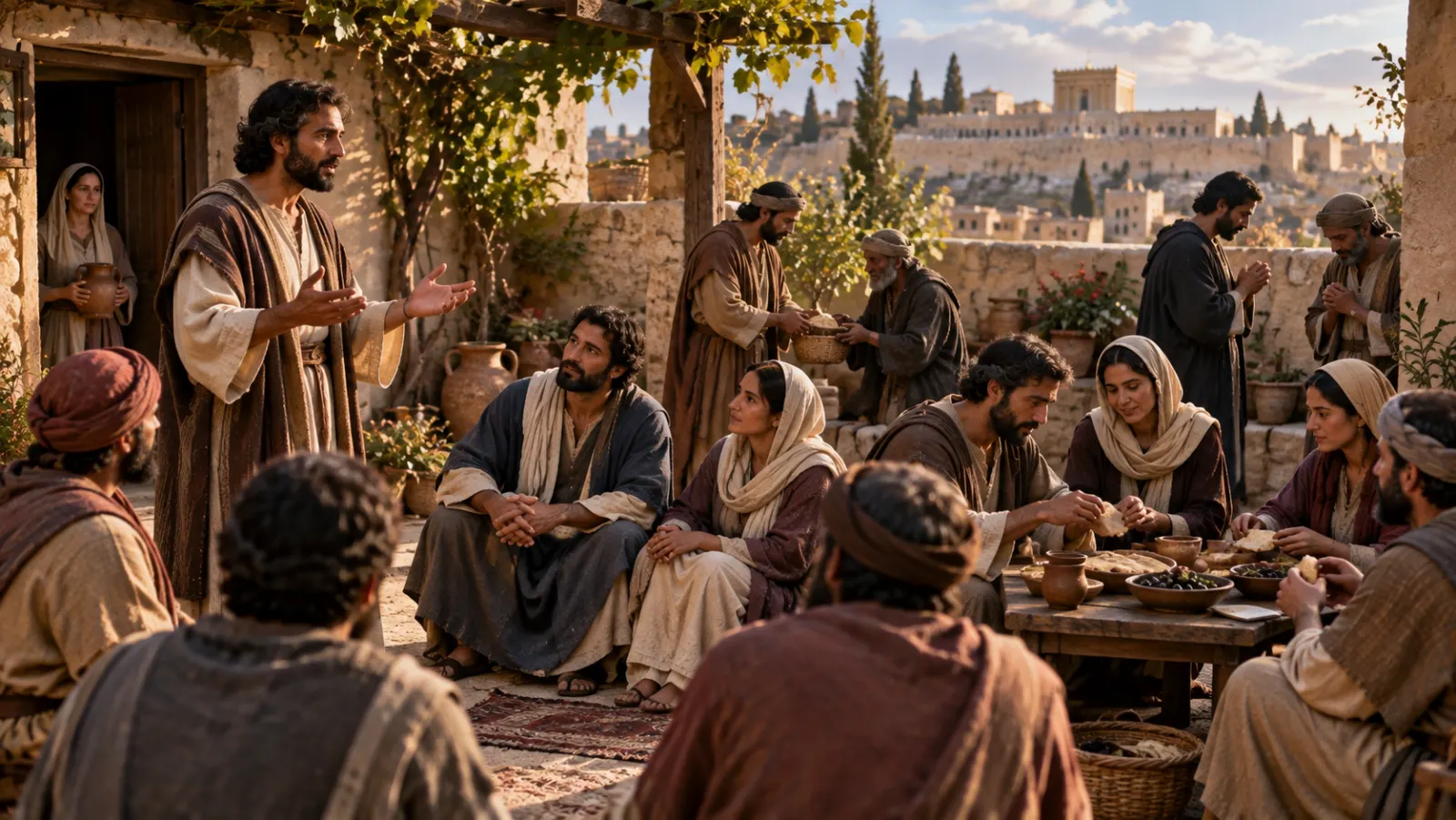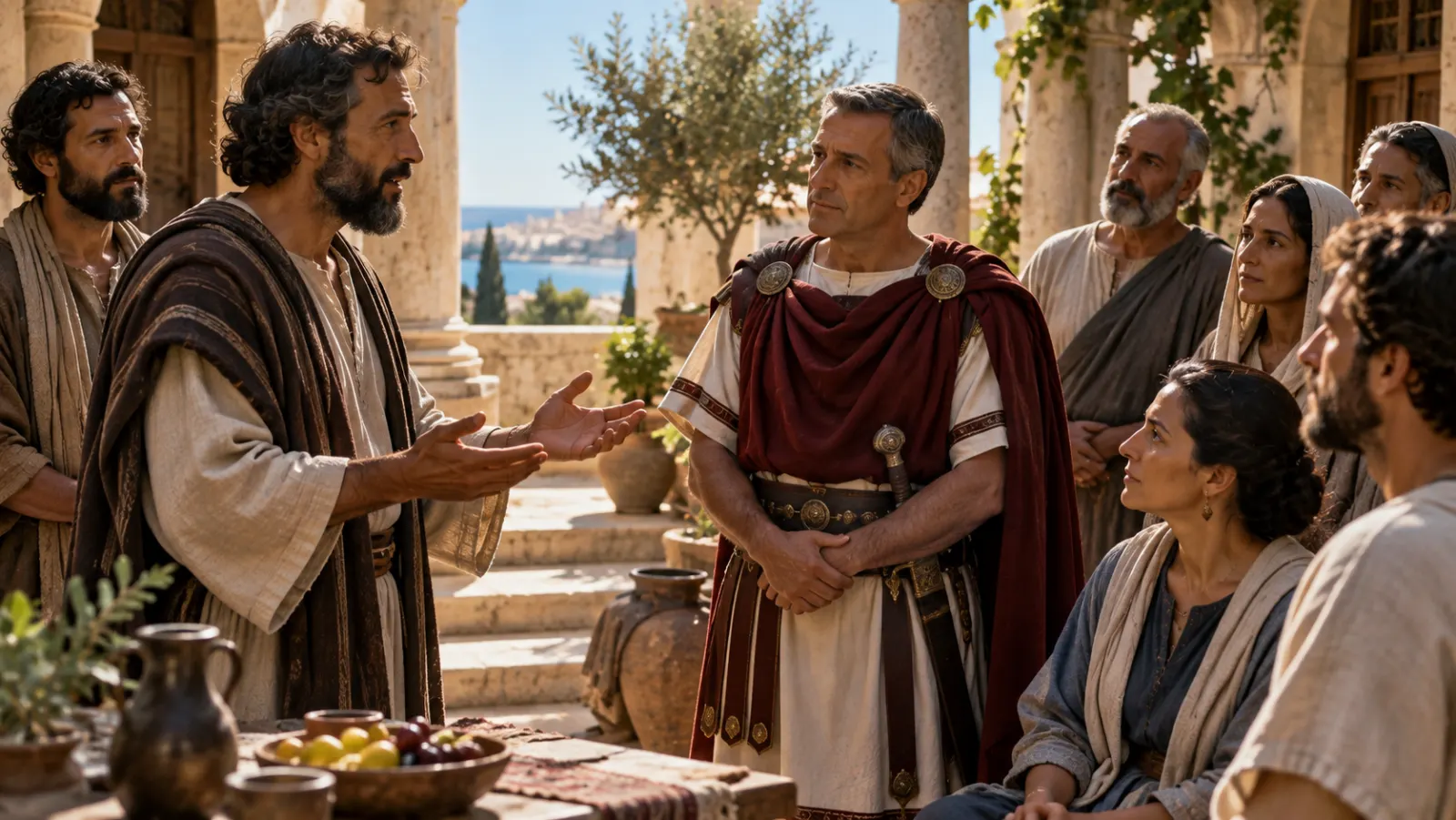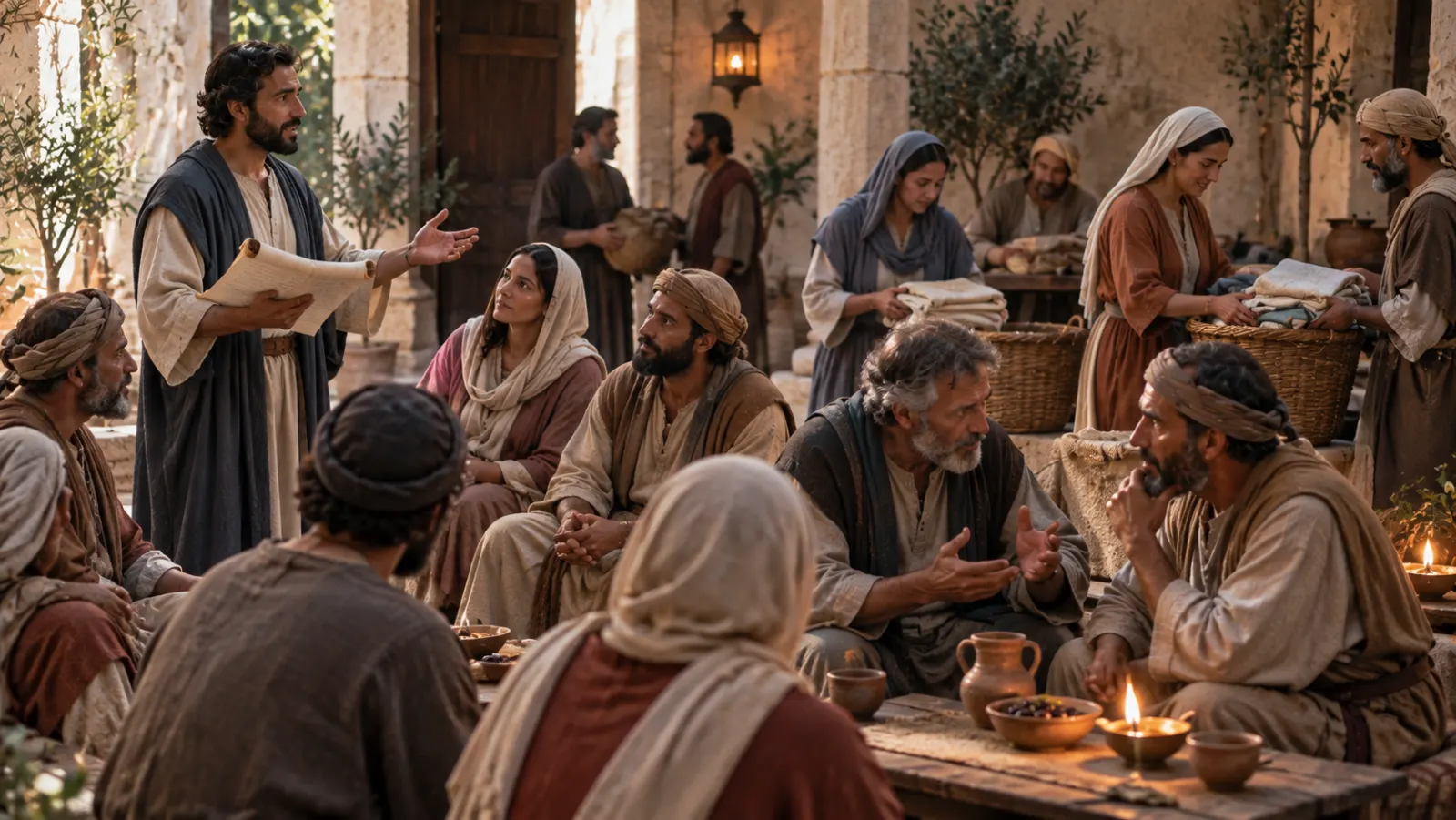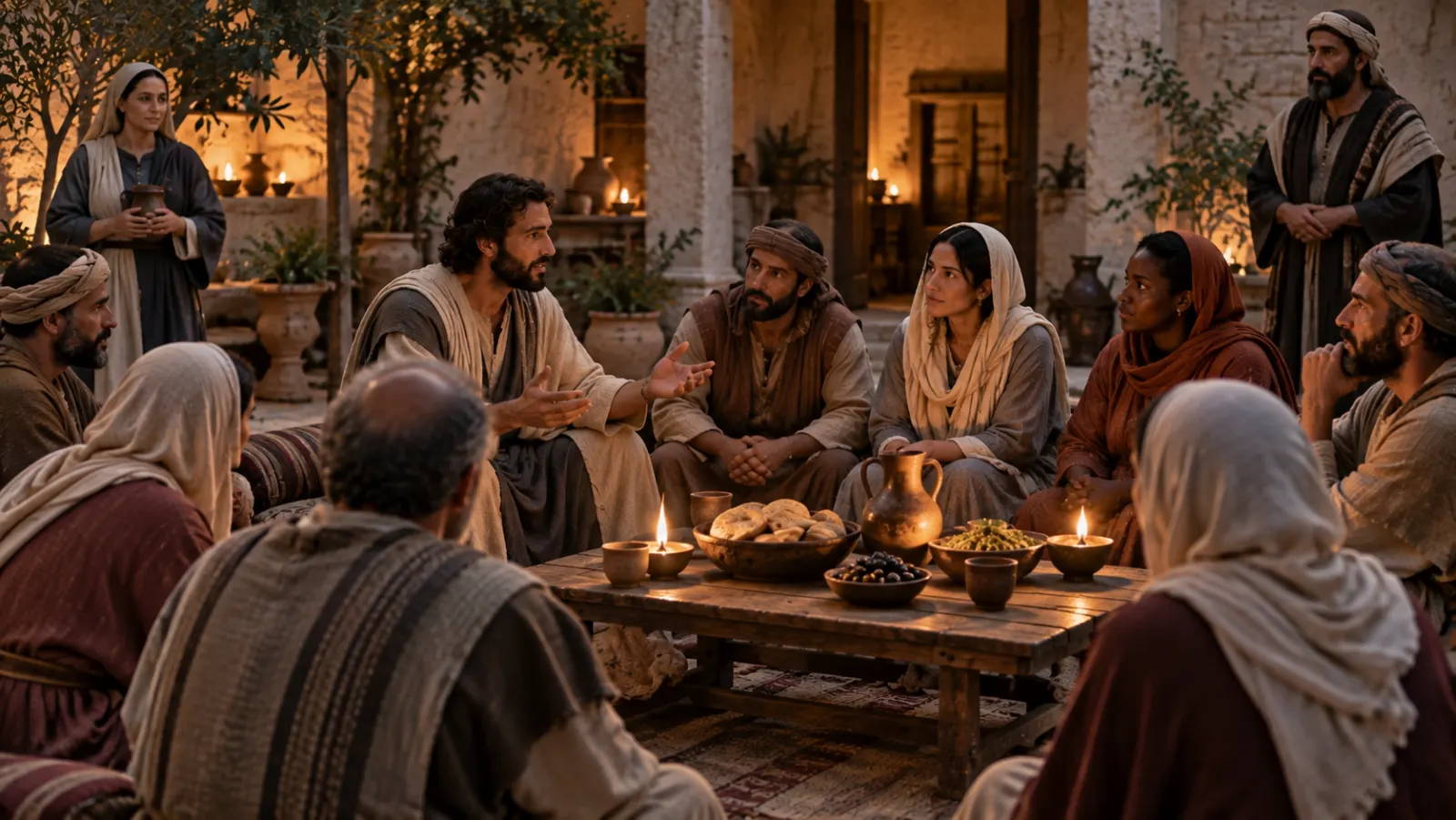
Acts says Jesus-followers were first called “Christians” in Antioch. The label emerged in a cosmopolitan city where Jewish and Gentile believers were learning to share a community, and where the church would soon become a major sending center for mission.
The word “Christian” feels so ordinary now that it is hard to imagine a time when no one used it. Acts locates that moment in Antioch: “the disciples were first called Christians” there. The sentence is brief, almost casual, but it marks an important social development. A movement that began as a Jewish messianic community in Jerusalem had become visible enough in a major Roman city to acquire a public name connected to Christ.
Antioch was an appropriate place for that to happen. The city was large, diverse, strategically connected, and culturally mixed. Jews had long lived there alongside Greeks, Syrians, Romans, and others. Acts portrays the local church as a place where the gospel was being spoken to a wider audience and where Jewish and Gentile followers of Jesus were becoming part of the same movement. The name arrives in a city already forcing the church to think beyond a single ethnic or geographic setting.
The church in Antioch began through displaced believers
Acts traces Antioch’s story back to the scattering that followed Stephen’s death. Some believers traveled north and initially spoke the message primarily among Jews. Others began speaking to Greek-speaking Gentiles as well. Luke emphasizes that the “hand of the Lord” was with them and that many turned to the Lord. The church at Antioch therefore grows from both persecution and improvisation rather than from a carefully announced headquarters expansion.
This matters because the missionaries are not all famous apostles. Acts speaks generally of scattered believers from places such as Cyprus and Cyrene. The mission advances through people whose names are mostly lost to us. Antioch reminds readers that major historical shifts are often carried by ordinary people who cross a social boundary before later institutions know what to call the result.
Barnabas arrives as a trusted bridge figure
When news reaches Jerusalem, the church sends Barnabas. Acts describes him as encouraged by what he sees rather than threatened by it. He exhorts the believers to remain faithful and then goes to Tarsus to find Saul. Barnabas functions as a bridge between Jerusalem and the new mixed community, and his willingness to recognize grace outside familiar patterns becomes part of Antioch’s stability.
The episode offers an early example of oversight that does not simply centralize control. Jerusalem takes the development seriously, but the emissary does not shut down local initiative. He validates what appears to be God’s work and strengthens it. The relationship between older centers and emerging communities will remain complicated throughout Acts.
What did “Christian” mean at first?
The Greek term Christianoi likely sounded like a social label identifying people associated with “Christos,” the Christ or Messiah. It may have been coined by outsiders rather than adopted immediately as the movement’s preferred self-description. Acts itself more often uses terms such as disciples, believers, brothers and sisters, or followers of “the Way.” The name “Christian” appears only a few times in the New Testament.
That scarcity is useful. It warns us not to imagine that first-century believers possessed the same mature religious-category vocabulary later Christians inherited. Scholars of Christian origins increasingly caution against projecting a fully separated “Christianity” and “Judaism” back into the earliest decades. Antioch’s label reflects growing social visibility, but it does not prove that every boundary between synagogue and church had suddenly become clear.
Antioch became a mission base
By Acts 13, Antioch has a group of prophets and teachers and becomes the setting from which Barnabas and Saul are sent on mission. That makes the city more than a successful local congregation. It becomes a sending community. The movement’s geographic center of gravity is beginning to diversify. Jerusalem remains vital, but Antioch now generates initiative of its own.
This development also reflects the city’s character. A cosmopolitan environment placed believers in contact with languages, ethnicities, trade routes, and travelers. The church did not invent Antioch’s diversity; it had to learn to live faithfully inside it. Mission often grows where communities cannot avoid meeting people unlike themselves.
Antioch was not a conflict-free multicultural success story
Later texts prevent us from romanticizing the city. Galatians 2 remembers a painful dispute in Antioch over table fellowship between Jewish and Gentile believers. Acts 15 is also tied to controversy coming from Antioch over circumcision and the requirements for Gentile converts. A mixed church did not solve identity questions merely by existing.
That is precisely why Antioch is historically significant. The city is a workshop where theological convictions become social practices. Who eats with whom? Which customs are required? How can Jews and Gentiles belong to the same Messiah without erasing Jewish identity or forcing Gentiles to become Jews? The questions become unavoidable because the people are already sharing a church.
The name outlived the complexity that produced it
Within a few centuries, “Christian” would designate an increasingly recognizable religious identity across the Roman world. But Acts allows us to watch the label at an earlier, messier stage. It emerges before councils, creeds, cathedrals, and legal recognition. It names a network of people centered on Christ while many of their social boundaries are still being negotiated.
That should make modern Christians cautious about treating the word as self-explanatory. The earliest people called Christians were not defined by architecture, political privilege, or a settled denominational system. They were known by association with Christ inside a diverse urban community that was still learning what that association demanded.
Antioch also teaches us to distinguish a name from a settled identity
Labels can move faster than self-understanding. Outsiders may have found “Christian” a convenient way to identify people associated with Christ, while the believers themselves were still negotiating how their Jewish roots, Gentile membership, Scripture, meals, and mission fit together. The name could be socially useful before every theological implication of the identity had been worked out.
That is common in history. Movements receive names, institutions, and public reputations while their internal boundaries remain fluid. Antioch is important because it lets us see that process early. A label that would later sound universal first appears in one particular city with very particular tensions.
It also gives modern Christians a useful question: what does the public hear when it hears the word “Christian”? In Antioch the name pointed to people visibly associated with Christ. That basic association remains the standard against which every later cultural meaning of the word should be tested.
Antioch also shows why urban Christianity could expand quickly without owning monumental property. A city connected by roads and trade brought travelers through the same neighborhoods again and again. Households, workshops, synagogues, markets, and social networks created repeated contact. The church could spread through relationships already embedded in city life. The gospel moved not only because someone preached to a crowd but because believers lived in a place where people from many regions routinely met.
The city therefore becomes a reminder that Christian identity was forged in contact, not in isolation. Believers learned who they were while explaining Jesus to neighbors, receiving newcomers, handling disputes, and sending people elsewhere. The public name “Christian” emerged from a community already being stretched by mission.
Antioch matters because it shows Christianity becoming publicly visible without yet becoming culturally settled.
The city gave the movement a name, but it also gave it hard questions. Jews and Gentiles, local leaders and Jerusalem emissaries, missionaries and household hosts all had to work out how allegiance to Jesus changed belonging.
The title “Christian” would eventually travel far beyond Antioch. Acts preserves the setting where it first surfaced so that the name remains connected to mission, diversity, conflict, and the costly work of becoming one people in Christ.