The New Testament repeatedly mentions believers gathering in homes, but historians caution against imagining one universal “house-church model.” The earliest Christ-followers met wherever community, hospitality, safety, and space allowed.
Picture a church with no sign out front, no reserved parking, no children’s wing, no stage lights, and no building that anyone in the neighborhood would identify as a church. That is a much better starting point for imagining the first generations of Jesus-followers than a miniature version of a modern congregation. Acts and the New Testament letters point repeatedly to homes, courtyards, rented rooms, workshops, and other ordinary spaces where believers gathered. The movement spread before it possessed a recognizable architectural footprint.
That fact matters because buildings silently teach us what we think a church is. Modern Christians often use the word “church” for a structure. The earliest believers used language for an assembly or community. Their physical setting could be important, but the gathering itself mattered more than the address. To understand those early churches, we need to separate what the New Testament actually tells us from the tidy reconstruction that every congregation met in the same sort of private living room.
The New Testament really does mention churches in homes
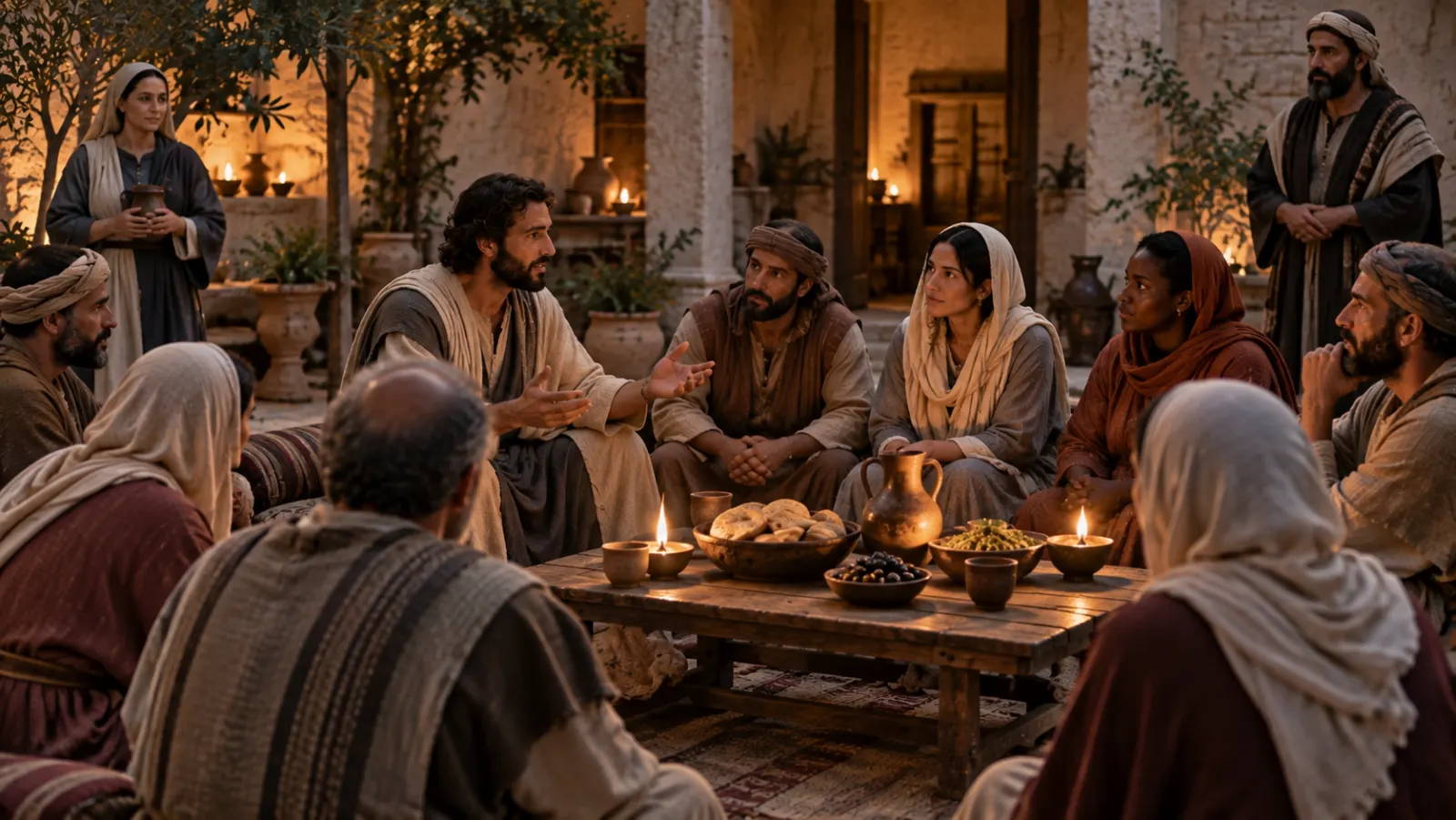
Several passages are explicit. Paul greets a church meeting in the house of Prisca and Aquila, and similar language appears around other households. Acts describes believers gathered in the house of Mary, the mother of John Mark, and later points to Lydia’s home as a place where believers regroup. These references make domestic hospitality one of the clearest features of early Christian life. A house could provide shelter, food, a courtyard, a room large enough for discussion, and a host with enough resources to receive others.
Yet “house church” can mislead if it makes us imagine a suburban single-family home with a dozen people sitting in a circle. Ancient households varied dramatically. A wealthy urban house could include work areas, servants, dependents, clients, tenants, and open courtyards. Poorer believers might have lived in cramped apartments with little room for gatherings at all. The phrase tells us that a household mattered; it does not give us a universal floor plan.
Historians are more cautious than popular reconstructions
John Kloppenborg has warned that scholars possess far less direct information about the size, finances, and meeting places of first-century Christ groups than people often assume. Comparisons with voluntary associations in Greek and Roman cities suggest that small groups could meet in homes, workshops, dining facilities, outdoor settings, or other available spaces. Those comparisons do not prove where every Christian group met, but they discipline the imagination. The evidence supports flexibility more than architectural uniformity.
This is one reason archaeology must be handled carefully. The famous Christian building at Dura-Europos in Syria is extremely important, but it dates to the first half of the third century, roughly two centuries after Pentecost. It was a house adapted for Christian use, including a meeting hall and baptistery. It shows that domestic buildings could be reshaped for congregational life. It cannot simply be projected backward as a photograph of a congregation in Jerusalem, Antioch, or Corinth in the year 50.
Hospitality was infrastructure
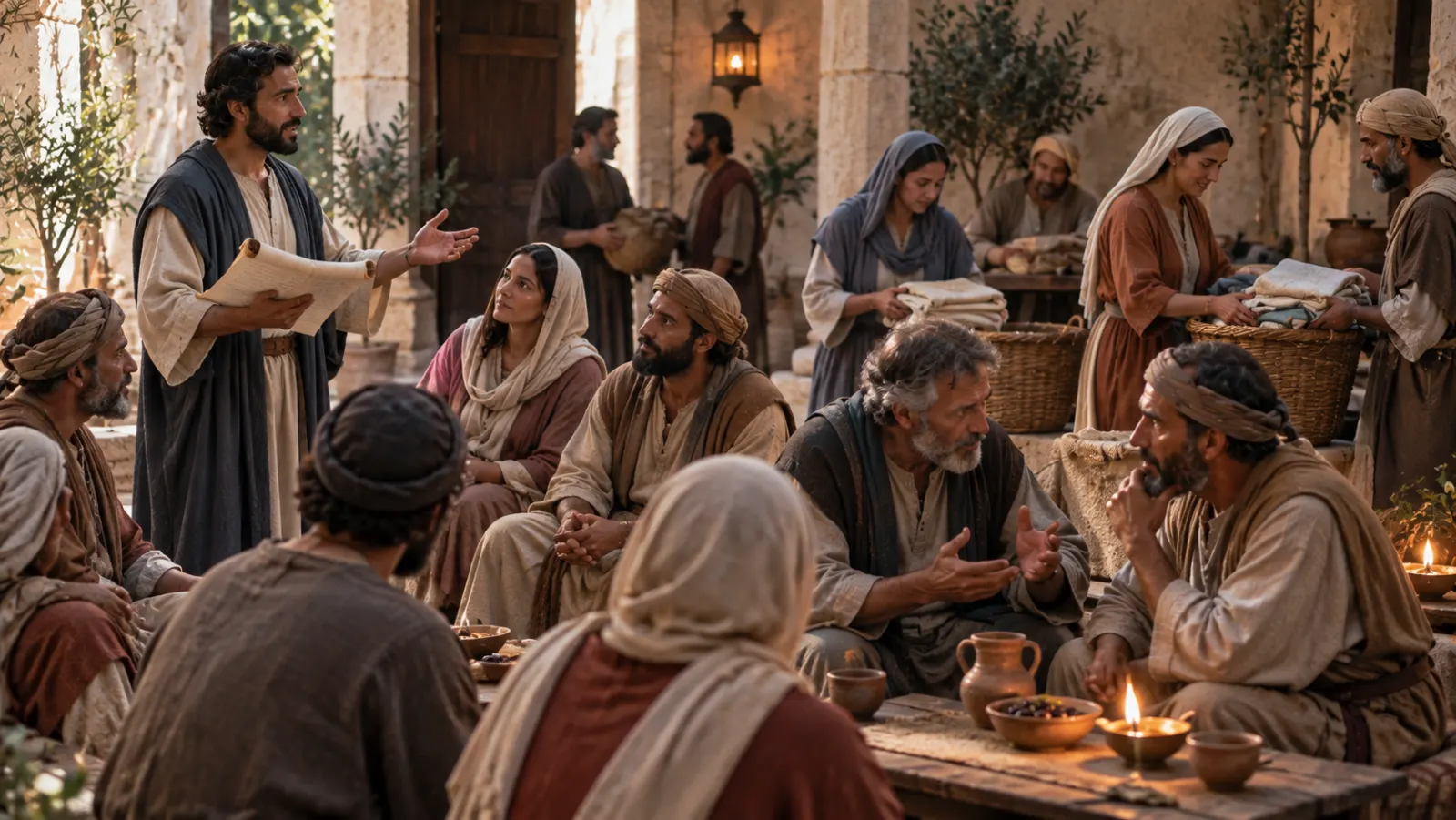
In a movement without dedicated property, hospitality was not a decorative virtue. It was infrastructure. Someone had to open a door, provide space, arrange food, handle the social risk of hosting strangers, and absorb the inconvenience that comes with repeated gatherings. That helps explain why the New Testament notices household hosts. A person with a usable home could become strategically important to the life of a local church even without holding a title that sounds impressive to modern ears.
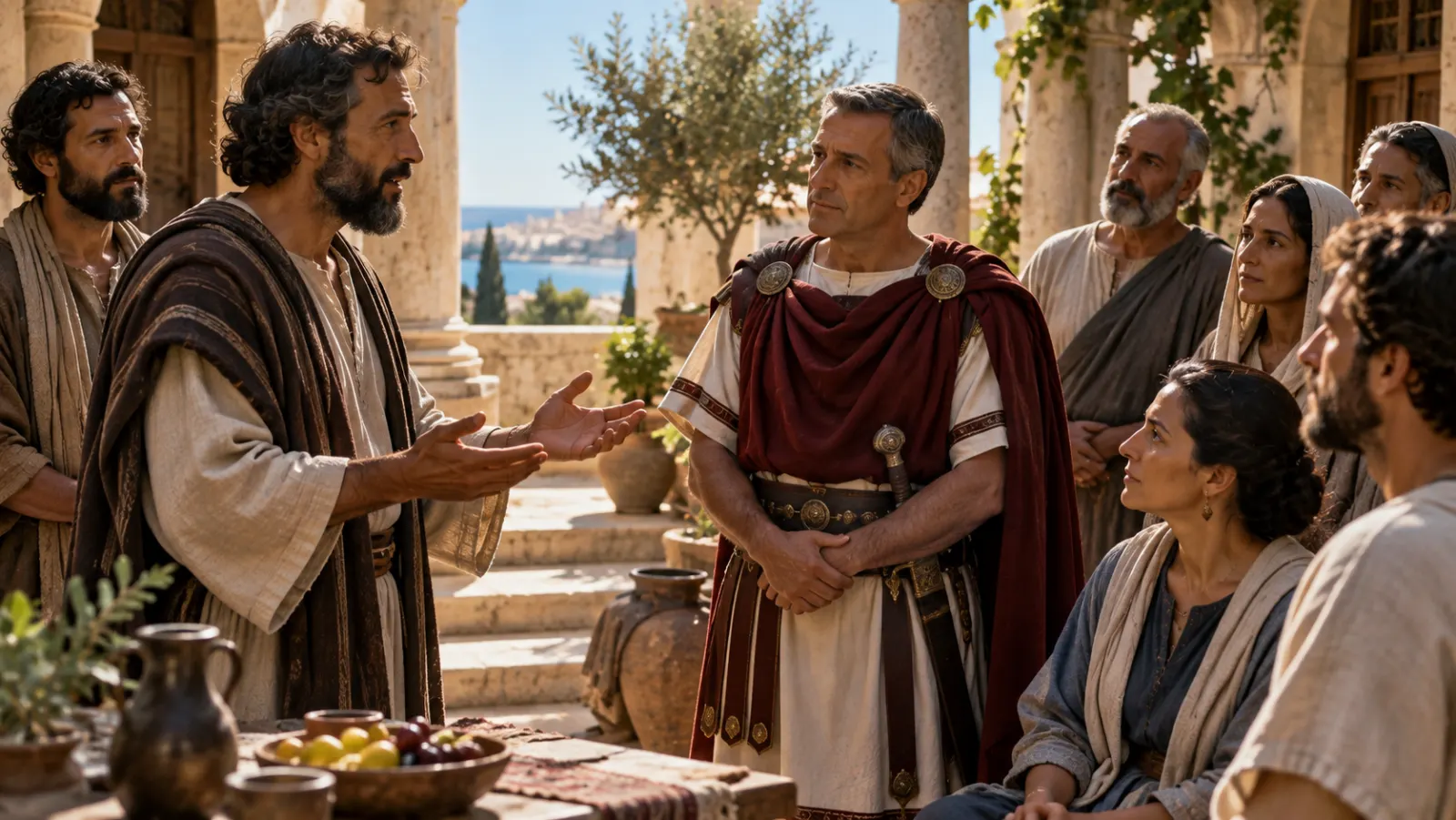
Hosting also shaped the social dynamics of the group. The person who controlled a household normally possessed status and authority in the ancient world. Christian teaching about mutual service therefore operated inside real social hierarchies rather than outside them. A gathering might include household members, laborers, freed people, enslaved people, artisans, merchants, travelers, and guests who did not enter the room with equal social power. The gospel’s language of siblinghood had to be practiced amid those inequalities.
Jerusalem was different from a later Gentile city
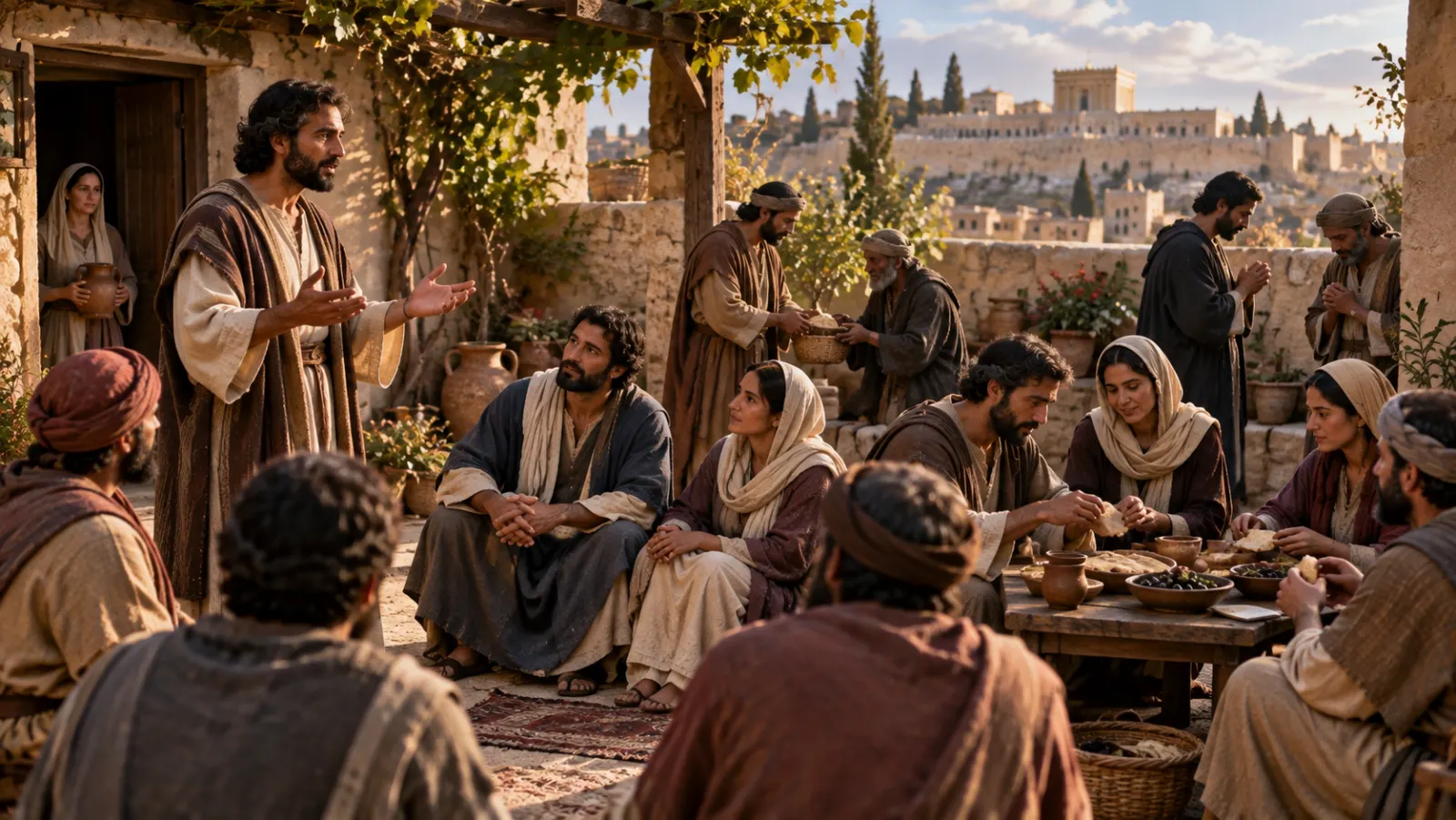
The earliest Jerusalem community should not be detached from Jewish public religious life. Acts portrays Jesus-followers praying and teaching in relation to the temple as well as meeting in homes. Paula Fredriksen’s work on the first generation emphasizes how thoroughly Jewish that Jerusalem movement remained. These believers did not wake up after Easter thinking they had founded a separate religion with its own real-estate program. They understood themselves within Israel’s story while confessing Jesus as Messiah and expecting God to fulfill his promises.
That means “home versus temple” is the wrong contrast. The first believers could participate in public Jewish worship and also gather in smaller domestic settings. As the movement spread into cities with mixed Jewish and Gentile populations, the balance changed. The pattern was adaptive because the mission moved through different neighborhoods, legal environments, household networks, and economic conditions.
A building is not the same thing as a congregation
The absence of church buildings did not mean the absence of structure. The believers learned, prayed, ate, baptized, collected money, cared for vulnerable members, settled disputes, sent messengers, and recognized leaders. Those activities required organization. What they did not require was a purpose-built sanctuary. The social body existed before Christian architecture became visible on the archaeological landscape.
That distinction matters for modern readers because buildings can become so normal that they seem essential to Christian identity. Historically, they are not. Christians eventually built magnificent churches, and architecture became a major expression of theology and community. But the earliest churches demonstrate that Christian life can take recognizable form in borrowed, domestic, improvised, and modest spaces.
What archaeology can and cannot show
Archaeology becomes more useful when it is asked modest questions. Dura-Europos shows that by the third century a Christian community could deliberately modify a house for worship and baptism. Archaeology of Roman cities also helps us understand the physical constraints of streets, apartments, courtyards, workshops, and dining rooms. It can make New Testament references more concrete without pretending to identify the exact room where a first-century congregation met.
What archaeology cannot currently provide is a catalog of first-century church buildings, because such a catalog does not exist. The silence is itself instructive. The movement’s earliest material footprint was light. Texts, networks, meals, households, travel, oral teaching, and shared practices carried the faith before architecture advertised it.
What changed when Christians finally had dedicated buildings?
Purpose-built Christian architecture became increasingly visible only later. When communities acquired or adapted dedicated spaces, they gained new possibilities: larger assemblies, permanent baptisteries, storage for charitable distribution, more visible ritual settings, and a public presence that could not be packed away after a meal. Those developments were important, but they also changed the social feel of Christian gathering. A faith practiced around a household table does not organize space in exactly the same way as a basilica filled with hundreds of worshipers.
The contrast helps us read the first century without contempt for either period. House-based and improvised gatherings were not automatically purer, and later church buildings were not automatically signs of compromise. Each setting created opportunities and temptations. The earliest evidence simply reminds us that the church’s essential practices were portable long before they became architecturally monumental.
The first churches were not impressive because of real estate. They were impressive because ordinary spaces became places of prayer, teaching, reconciliation, generosity, and witness.
That history should not be turned into a slogan that buildings are bad. Dedicated spaces can serve a community well. The historical point is simpler: Christian identity came first. Architecture followed.
When the New Testament speaks of a church in someone’s house, it invites us to see hospitality as mission, space as stewardship, and the gathered people—not the structure around them—as the primary meaning of church.