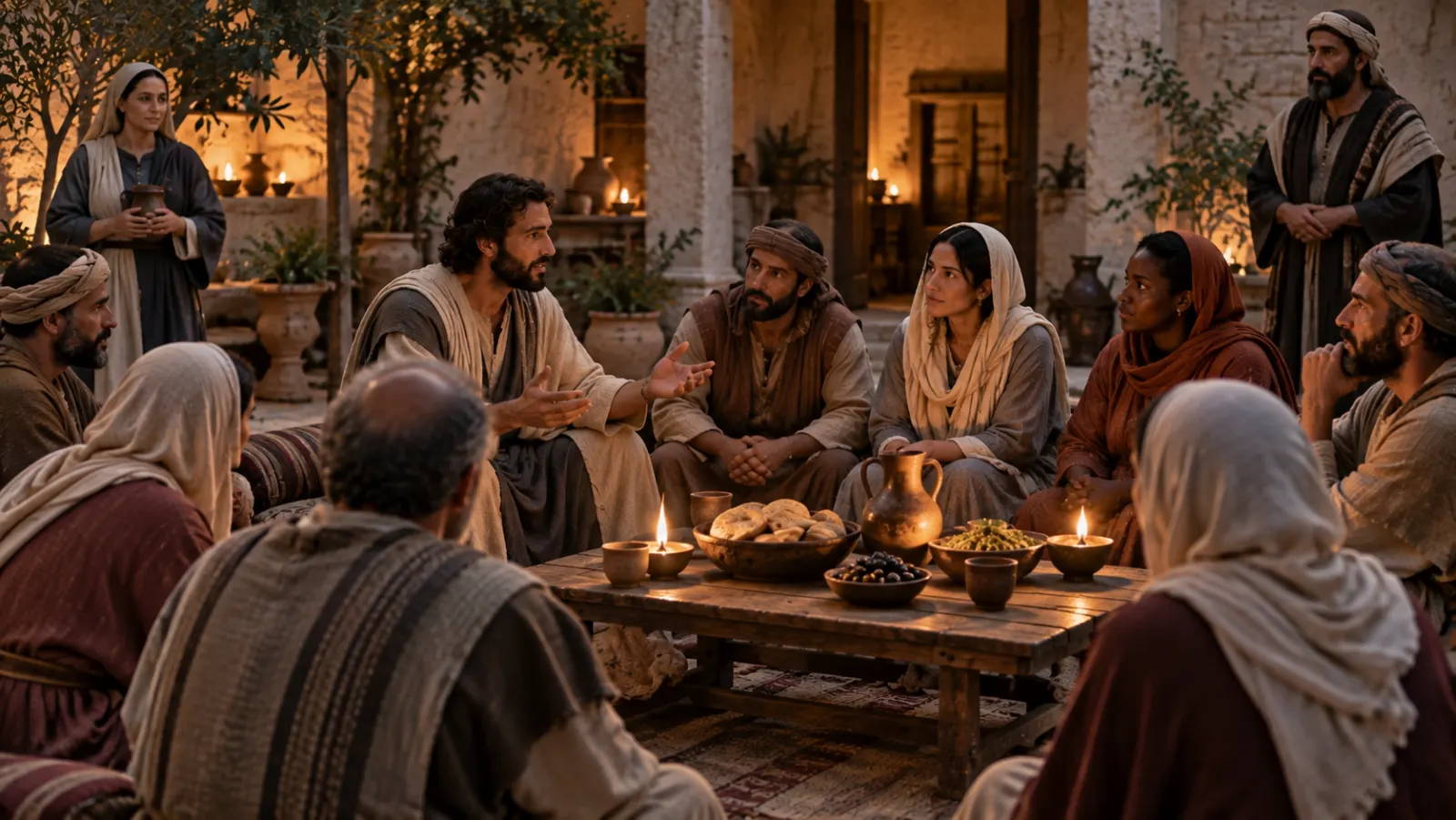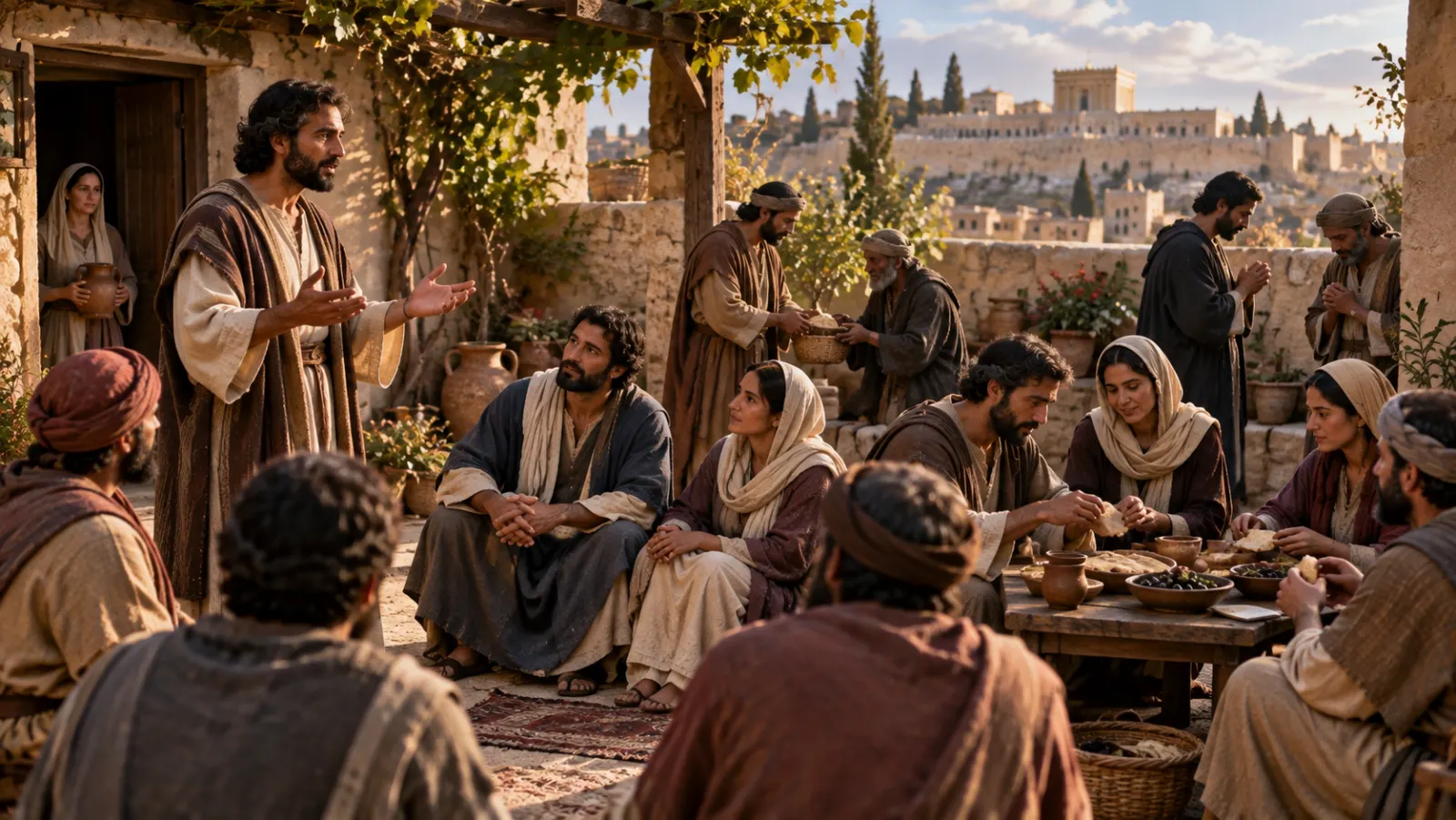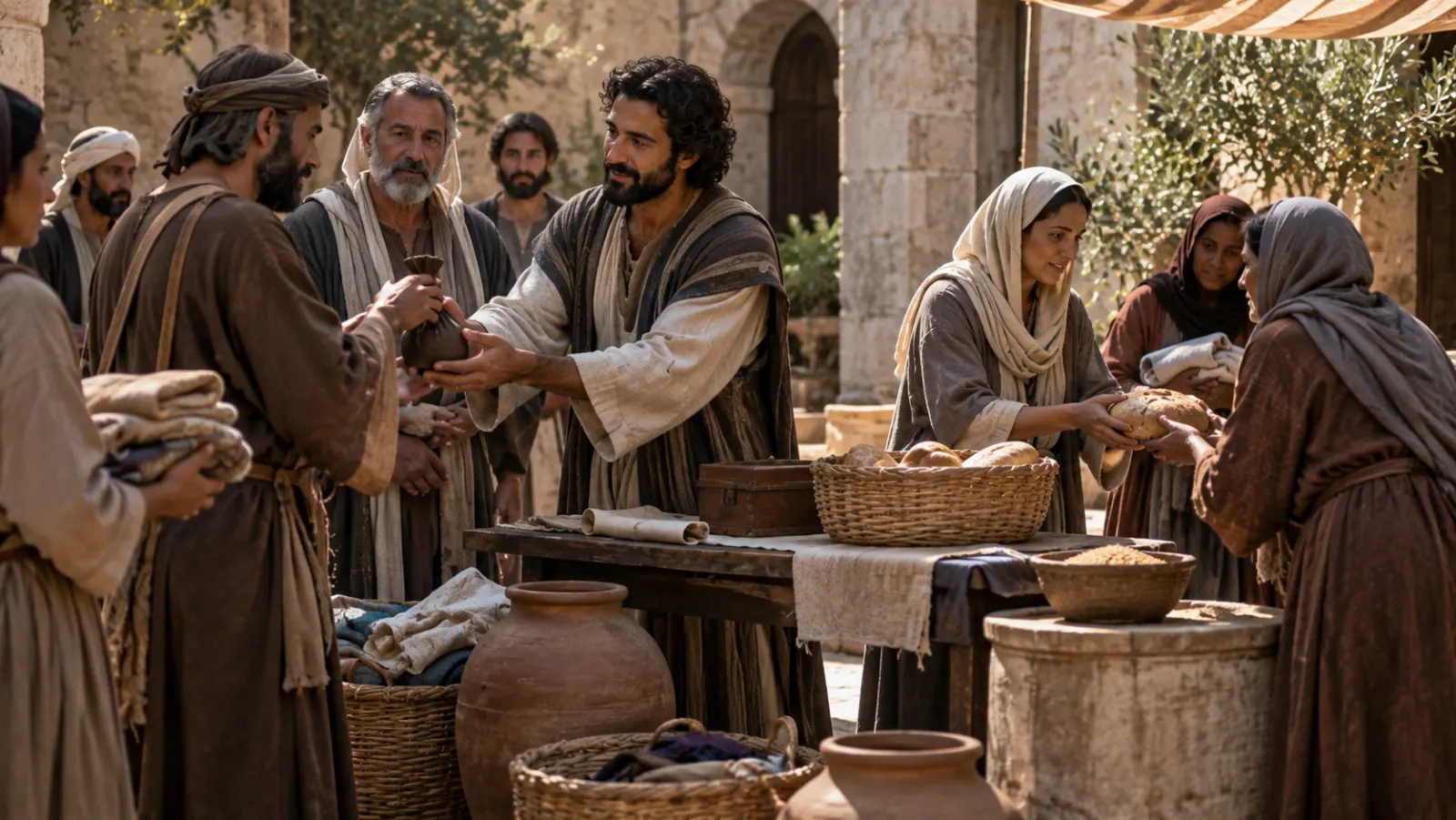
Acts 6 describes a complaint by Greek-speaking Jewish believers whose widows were neglected in daily distribution. The episode shows that diversity created real administrative strain and that the church responded by changing leadership rather than dismissing the complaint.
The first church problem in Acts is not a dispute over music style, building color, or preaching length. It is a complaint that vulnerable people are not receiving food fairly. That detail should unsettle romantic readings of the early church. Only a few chapters after Pentecost, a community praised for sharing possessions discovers that its distribution system is overlooking widows from one linguistic and cultural group.
Acts calls the complaining group “Hellenists” and contrasts them with “Hebrews.” This is not a conflict between Jews and Gentiles. Working Preacher rightly stresses that both groups are Jewish. The difference is connected to language, culture, and diaspora background. Greek-speaking Jewish believers, likely shaped by life outside Judea, find that their widows are being neglected in a daily ministry of support. Diversity is already testing the community from within.
Widows were not a side issue
In the biblical world, widows regularly appear among people at heightened economic risk. Without a husband, property access, income, and social protection could become precarious, especially where extended family support was weak or absent. Israel’s Scriptures repeatedly command care for widows, orphans, immigrants, and the poor. A messianic Jewish community claiming to embody God’s renewed people could not treat neglected widows as a minor administrative inconvenience.
That is why the complaint has theological weight. The problem concerns food, but it also concerns whether the community’s structures match its message. Acts has already said that resources were distributed according to need. Now a subgroup says the distribution is failing them. The contrast is intentional: ideals are meaningful only when institutions can hear where reality falls short.
“Hellenists” and “Hebrews” were both part of Jewish life
English readers can easily mishear the categories. “Hellenists” does not mean pagan Greeks who recently converted to Christianity. The term points to Greek-speaking Jews, many connected to diaspora communities. The “Hebrews” were likely Aramaic-speaking or more locally rooted Jewish believers. Both belonged to the Jewish world of the earliest Jesus movement, but they carried different linguistic and cultural habits into the same church.
That matters because conflict did not wait until Gentiles arrived in large numbers. The church experienced internal diversity from the beginning. People can share Scripture, Messiah, baptism, prayer, and economic commitment while still noticing unequal treatment along language or cultural lines. Spiritual unity does not erase the social patterns people bring with them.
The apostles do not tell the widows to stop complaining
Luke does not portray the complaint itself as sinful. The community responds by changing the way the work is organized. The Twelve gather the disciples, name the competing demands of prayer, proclamation, and table service, and ask the community to select trusted people for the practical ministry. The response may not answer every modern question about leadership, but it clearly treats the breakdown as serious enough to require structural adaptation.
This is a useful contrast to communities that spiritualize administrative problems. If meals are not reaching people, more inspirational language is not enough. Someone must inspect the system. Acts presents prayer and practical organization as partners rather than rivals. The Spirit-filled church needs both proclamation and competent distribution.
The Seven reflect the people whose complaint was heard
The seven men chosen in Acts 6 all have Greek names. A Greek name by itself does not prove ethnic or linguistic identity, and we should avoid pretending the list gives biographies Luke does not supply. Still, many interpreters reasonably see the names as consistent with the community entrusting significant responsibility to people close to the Hellenist concern. Nicholas is even identified as a proselyte from Antioch.
If that reading is right, the solution is not merely to preserve the old structure while promising greater sensitivity. Representation changes. Those affected by the problem gain recognized servants whose credibility can cross the cultural divide. Churches today should be careful about forcing an exact organizational model onto Acts 6, but the narrative’s instinct is clear: people who experience neglect should not remain invisible when solutions are designed.
Were these the first deacons?
Christian tradition often identifies the Seven as the first deacons. There are reasons for the connection: the passage uses language from the same word family as “service” or “ministry,” and later church offices called deacons carried forms of practical responsibility. Yet Acts never formally gives the Seven the title “deacon” here. Stephen and Philip soon appear preaching and evangelizing, which is broader than a narrow food-service job description.
The safest conclusion is that Acts 6 contributes to the church’s developing understanding of ordered service without functioning as a complete ordination manual. Later Christian structures should not be read backward into every detail. Luke’s immediate concern is that growth created needs, needs required trusted leaders, and leadership could be distributed rather than hoarded.
Growth creates new failure points
Acts begins the episode by noting that the number of disciples was increasing. Growth sounds like success, but it also increases complexity. More people means more languages, more households, more vulnerable members, more information to track, and more opportunities for some needs to be missed. A ministry practice that worked for dozens may fail for hundreds or thousands.
That is one of the most realistic features of the story. Churches sometimes interpret administrative strain as evidence that someone lacks faith. Acts treats strain as something healthy communities must address. The answer is neither panic nor denial. The community listens, delegates, and creates capacity for the next stage of mission.
The episode also changes how we define “spiritual” leadership
Acts 6 refuses to divide the church into spiritually important work and merely practical work. The Seven are chosen because the distribution problem requires people with good reputations, wisdom, and the Spirit. Food administration is treated as work that needs theological character. At the same time, the apostles insist that prayer and the ministry of the word cannot simply be abandoned. Different responsibilities are honored without being collapsed into one role.
That balance can be difficult for modern congregations. Churches may promote gifted speakers while assuming anyone can manage money, food, safeguarding, benevolence, or volunteer systems. Acts points in the opposite direction. Practical ministries can affect the dignity of vulnerable people and the credibility of the gospel, so competence and character matter profoundly.
The result of the reorganization is not bureaucratic stagnation. Luke immediately says the word of God continued to spread. The story therefore presents good administration as mission-enabling. A fairer system does not distract from proclamation; it removes a contradiction that would otherwise undermine it.
The narrative also suggests that complaints can be a gift to a growing church. Without the Hellenists’ protest, the inequity might have remained hidden from leaders who assumed the system was working. Healthy leadership does not require the absence of criticism; it requires the ability to distinguish destructive accusation from truthful information about people being harmed. In Acts 6, the complaint becomes data that helps the church become more faithful.
The episode therefore joins justice and mission in a way modern churches often separate. Fair distribution is not a distraction from evangelism, and proclamation is not an excuse to ignore material inequity. Luke presents both as part of one Spirit-shaped witness.
Acts 6 refuses to give us a flawless first church. It gives us something more useful: a church willing to discover that its generosity is not reaching everyone equally.
The complaint of the Hellenist widows is not an embarrassment to be hidden. It becomes the occasion for better leadership, wider participation, and continued growth.
That makes this small food-distribution dispute one of Acts’ most enduring lessons. Spirit-filled communities still need feedback, fair systems, cultural awareness, and leaders humble enough to change how the work is done.