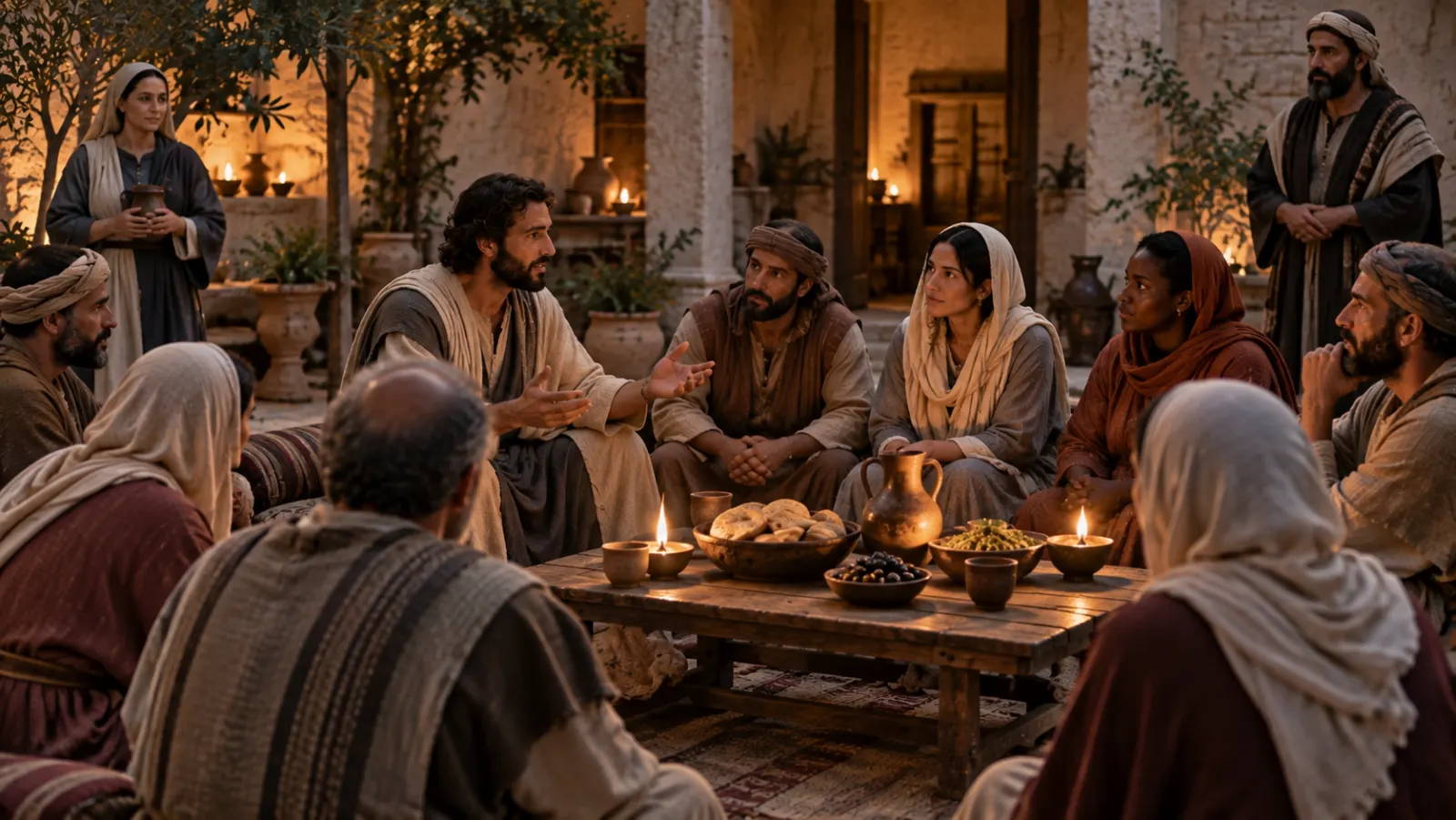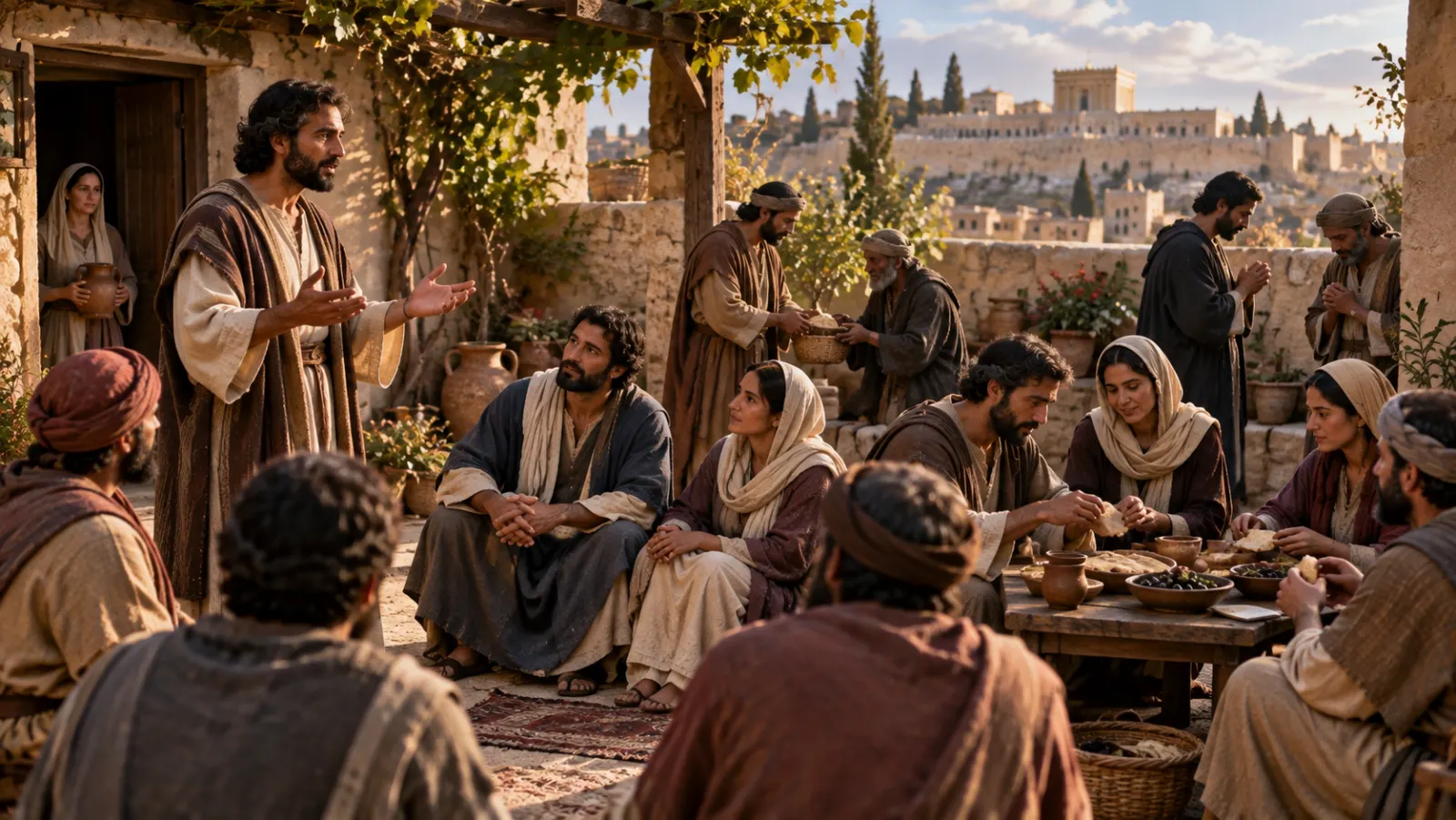
Teaching, fellowship, breaking bread, prayers, generosity, temple participation, and meals in homes form Luke’s first sustained portrait of the post-Pentecost church. The picture is inspiring, but it is not a plug-and-play blueprint for a modern Sunday service.
Acts 2:42–47 is one of those Bible passages that can look like a church mission statement before we have really read it. Teaching. Fellowship. Breaking bread. Prayers. Generosity. Worship. Growth. It sounds complete enough to print on a wall. But Luke is not giving a constitution, a weekly order of service, or a nostalgic photograph of a flawless community. He is showing what happened when people who confessed Jesus as Lord began constructing a shared life around that confession.
The most striking feature is not a single activity but the density of the relationships. Faith is not described as a private decision followed by occasional attendance. The believers devote themselves to practices that bind time, money, meals, worship, and learning together. To read the passage well, however, we also need to remember that Luke is a narrator with theological aims. His summary presents a meaningful portrait, not a minute-by-minute census of every Christian in Jerusalem.
They devoted themselves to teaching
The first item is the apostles’ teaching. That makes sense in a movement built around claims about Jesus that required explanation. The apostles were witnesses to his ministry, death, and resurrection, and the community needed to learn how those events fit Israel’s Scriptures and Jesus’ own instruction. Teaching was therefore not an academic accessory added once the spiritual excitement cooled. It was one of the community’s founding practices.
This also helps correct a false contrast between Spirit and study. Pentecost does not produce a church that abandons instruction for spontaneity. The same chapter that describes wind, fire-like signs, and inspired speech ends with sustained learning. Spiritual vitality and disciplined teaching belong in the same story.
“Fellowship” meant more than friendliness
The Greek word often translated “fellowship,” koinonia, can sound soft in modern Christian speech. We may hear coffee, conversation, and a sense of welcome. Acts gives the word material weight. The believers share life deeply enough that economic need becomes a community concern. Working Preacher’s commentary on the passage emphasizes mutual aid as a foundational feature of Luke’s portrait. Fellowship reaches into possessions, hunger, and vulnerability.
That does not mean every relationship was equally intimate or that thousands of people all knew one another personally. Large numbers would have required smaller social networks. But Luke wants the reader to see a community in which belonging changes obligations. The person who has resources cannot treat the person who lacks them as someone else’s problem.
Breaking bread joined table and memory
“Breaking bread” may include ordinary shared meals, remembrance of Jesus’ final meal, or both. The phrase should not be forced into a later liturgical category more precise than Luke provides here. What is clear is that eating together mattered. Meals turn theology into social proximity. People must decide who sits near whom, who is served, who contributes, who is welcomed, and whether class distinctions are reinforced or challenged.
That makes the table one of the most practical settings in early Christian formation. A sermon can proclaim unity; a meal tests it. Later New Testament texts show that Christian meals could also expose inequality and conflict. Acts 2 presents the positive ideal: food received with gladness, homes opened, and shared life made visible.
The prayers were rooted in Jewish worship
Luke also says the believers devoted themselves to “the prayers,” wording that may point to recognizable patterns of Jewish prayer rather than only spontaneous private devotion. Acts continues to portray the Jerusalem believers in relation to the temple. The earliest church did not begin by discarding Israel’s worship life and inventing a wholly separate religious system.
Paula Fredriksen’s historical reconstruction of the first Jerusalem believers presses this point strongly: they remained a Jewish messianic community centered in Jerusalem and connected to the temple world. For Christian readers, that setting should produce humility. The church’s earliest prayer vocabulary, Scriptures, calendar, hopes, and categories were deeply Jewish.
Their economics were visible
Acts says believers sold possessions and distributed resources according to need. The next chapters return to the same theme, which means Luke does not treat generosity as a sentimental footnote. Economic sharing is one of the signs that the resurrection message has produced a new kind of community. At the same time, other New Testament evidence indicates that Christians continued to own homes and property. The Jerusalem pattern should not be reduced either to compulsory abolition of ownership or to harmless generosity that leaves material relationships untouched.
The practical principle is harder than either simplification: possessions are subordinated to love of neighbor. The community does not claim that poverty is spiritually beautiful. It moves resources so that need is addressed. That is why the summaries of Acts continue to challenge churches in wealthy settings even when the exact Jerusalem arrangement is not copied.
Luke’s portrait is ideal—and still demanding
Scholars debate how closely these summary scenes correspond to everyday practice across the entire Jerusalem movement. Luke is clearly capable of presenting an idealized picture, and the story itself soon records hypocrisy, complaint, persecution, and conflict. The presence of those later problems is important. Acts does not describe a golden age in which Christians had no disagreements. It describes a community whose stated practices gave it resources for facing those disagreements.
The passage therefore works better as a theological portrait than as a checklist for recreating the year 30. A modern church may meet weekly rather than daily, use a dedicated building rather than a courtyard, and organize care through formal ministries. The deeper question is whether teaching, prayer, table fellowship, generosity, and shared belonging actually shape its life.
The rhythm was public and private at the same time
Acts describes believers in connection with the temple and with meals “from house to house.” That combination matters. The Jerusalem church was not a private club hidden from the city, but neither was all of its life conducted in a public religious space. Large-scale witness and smaller household fellowship reinforced one another. Public worship kept the community embedded in Israel’s story; domestic meals turned that story into relationships close enough for needs to become visible.
Modern churches often separate worship, discipleship, charity, and social life into different departments. Luke’s portrait feels more integrated. The same people who hear teaching also pray, eat, give, and welcome others. We should not imitate every schedule literally, but the integration itself remains challenging: a church can offer excellent programs and still fail to become a people whose practices belong together.
There is also a missionary dimension to this ordinary rhythm. Luke says the community enjoyed favor with the people and that new people were being added. The attraction is not presented as the result of one technique. Public witness and visible shared life belong together. Teaching explains the gospel; generosity and table fellowship display what that gospel does to a community. The credibility of the message is therefore social as well as verbal.
Acts 2 does not give us the first church bulletin. It gives us something more searching: a picture of what a community looks like when the gospel reaches schedules, tables, wallets, habits, and relationships.
The passage is inspiring because it is concrete. It is also uncomfortable for the same reason. Luke does not let “spiritual” life float above food, money, time, or responsibility for neighbors.
The earliest Jerusalem church was not yet a polished institution. It was a people learning to live as if Jesus really were risen and the Spirit really had been given. That experiment in shared life is still the challenge inside the description.