The earliest churches clearly had recognized leadership, yet the New Testament shows titles and functions developing across different communities. Reading later denominational structures back into Acts can create more certainty than the evidence allows.
Ask ten modern Christians what a properly organized church must have and you may receive ten confident answers. Senior pastor. Plurality of elders. Bishop. Congregational vote. Deacons. Denominational oversight. Independent local leadership. Some of those structures appeal directly to the New Testament, but the earliest Christian communities do not present us with one clean organizational chart dropped from heaven at Pentecost.
That does not mean the first churches were leaderless. Acts is full of recognized authority and delegated responsibility. Apostles testify and teach. The Seven are appointed for a crisis of distribution. Prophets and teachers serve in Antioch. Elders appear in local churches and in Jerusalem. James exercises notable influence. Missionaries are sent. Money is entrusted. Disputes are adjudicated. The question is not whether there was structure. The question is how fixed, uniform, and transferable that structure was across the first decades.
The apostles occupy a unique founding role
In Acts, the Twelve are closely connected to Jesus’ ministry and resurrection witness. Their authority is not simply the earliest form of a modern pastoral job. They teach, testify, oversee decisions, and represent continuity with Jesus’ chosen witnesses. Matthias is selected to restore the symbolic number twelve after Judas’s death, a process Acts never repeats as a routine succession mechanism.
That uniqueness matters. Churches that claim every later office is simply identical to apostolic authority risk flattening the narrative. The apostles help establish and authenticate the movement in a way tied to the founding events of the gospel.
The Seven show leadership created for a concrete need
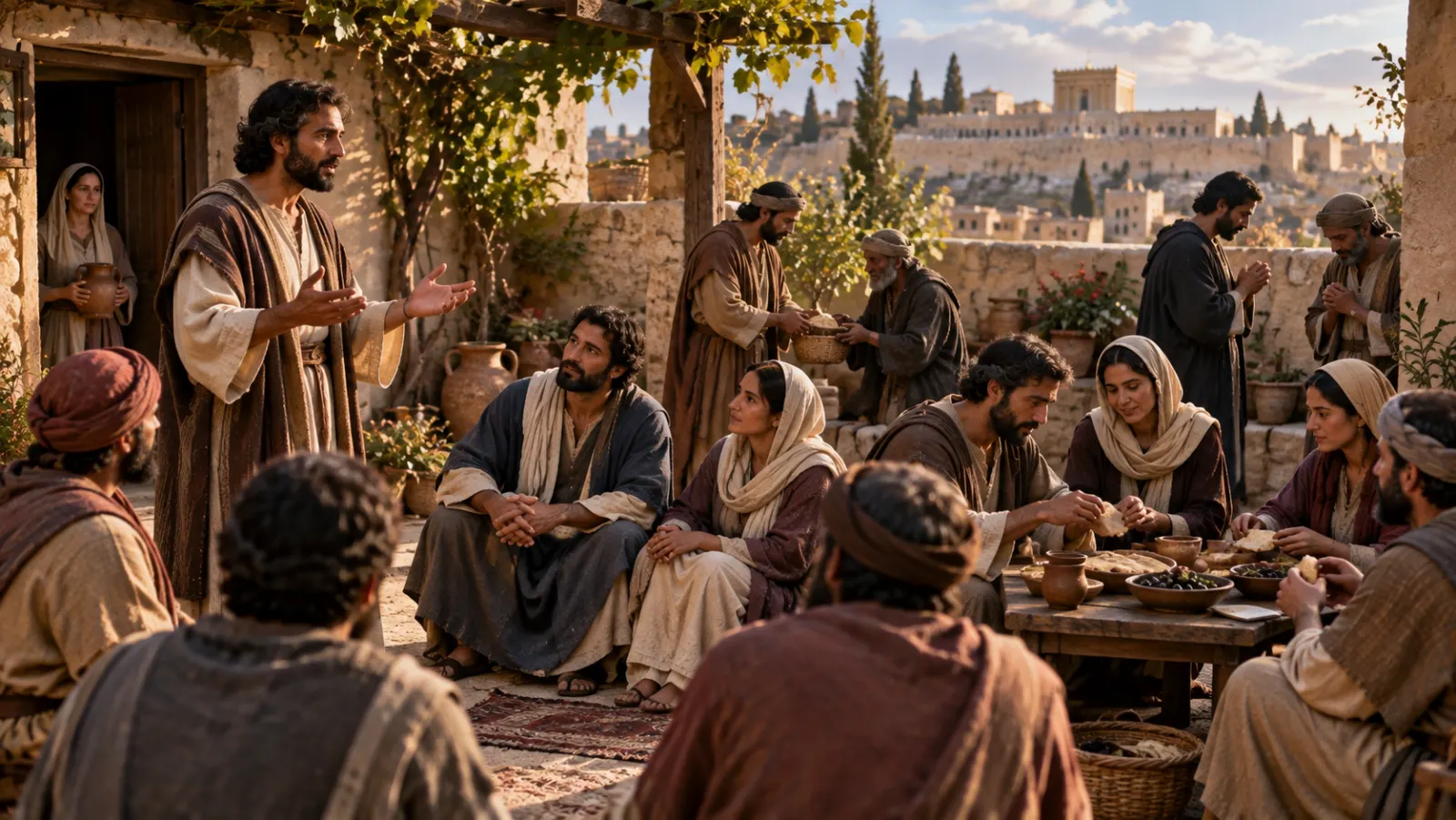
Acts 6 introduces seven trusted men after the complaint about neglected widows. The community selects them, the apostles pray, and hands are laid on them. Later tradition often calls them deacons, but Acts does not formally use that title for the group. Stephen and Philip also move quickly into preaching and evangelistic activity.
The episode suggests that early church roles could emerge in response to practical pressure. Leadership is not only inherited from a fixed template; it is also organized around mission and care. The community recognizes character and wisdom, then entrusts responsibility where the existing arrangement has become inadequate.
Elders appear, but Acts does not narrate their origin in Jerusalem
By Acts 11, relief from Antioch is sent to “the elders” in Judea. In Acts 15, apostles and elders deliberate together. On missionary journeys, elders are appointed in local churches. Yet Acts never pauses to explain when the Jerusalem elders first appeared, how many there were, or exactly how their authority related to every other leader.
That silence should produce modesty. The office is real and significant, but Luke is more interested in what leaders do within the mission than in giving readers a constitutional handbook. Later church traditions developed different systems partly because the New Testament evidence contains both clear principles and unresolved structural questions.
Antioch has prophets and teachers
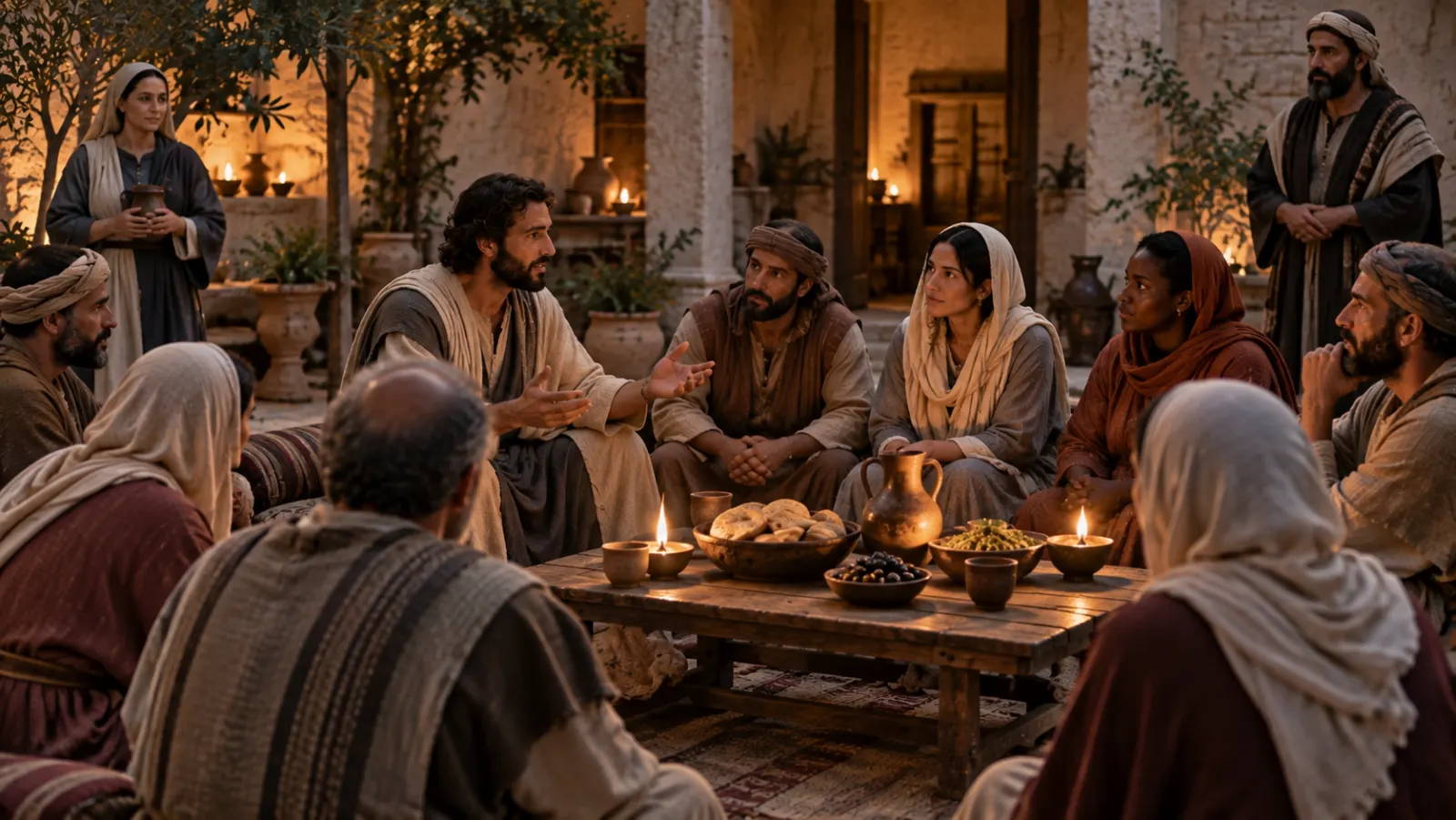
Acts 13 opens with a list of prophets and teachers in Antioch. The Spirit’s call of Barnabas and Saul occurs within worship, fasting, and a plural leadership setting. Again the scene resists a modern single-pastor template. Different gifts and voices operate together, and mission emerges from the community’s discernment.
The titles also remind us that early Christian leadership was charismatic as well as administrative. Teaching, prophecy, mission, pastoral care, and practical service overlap in ways that later church systems would classify more sharply.
Ancient associations offer useful comparisons—but not identities
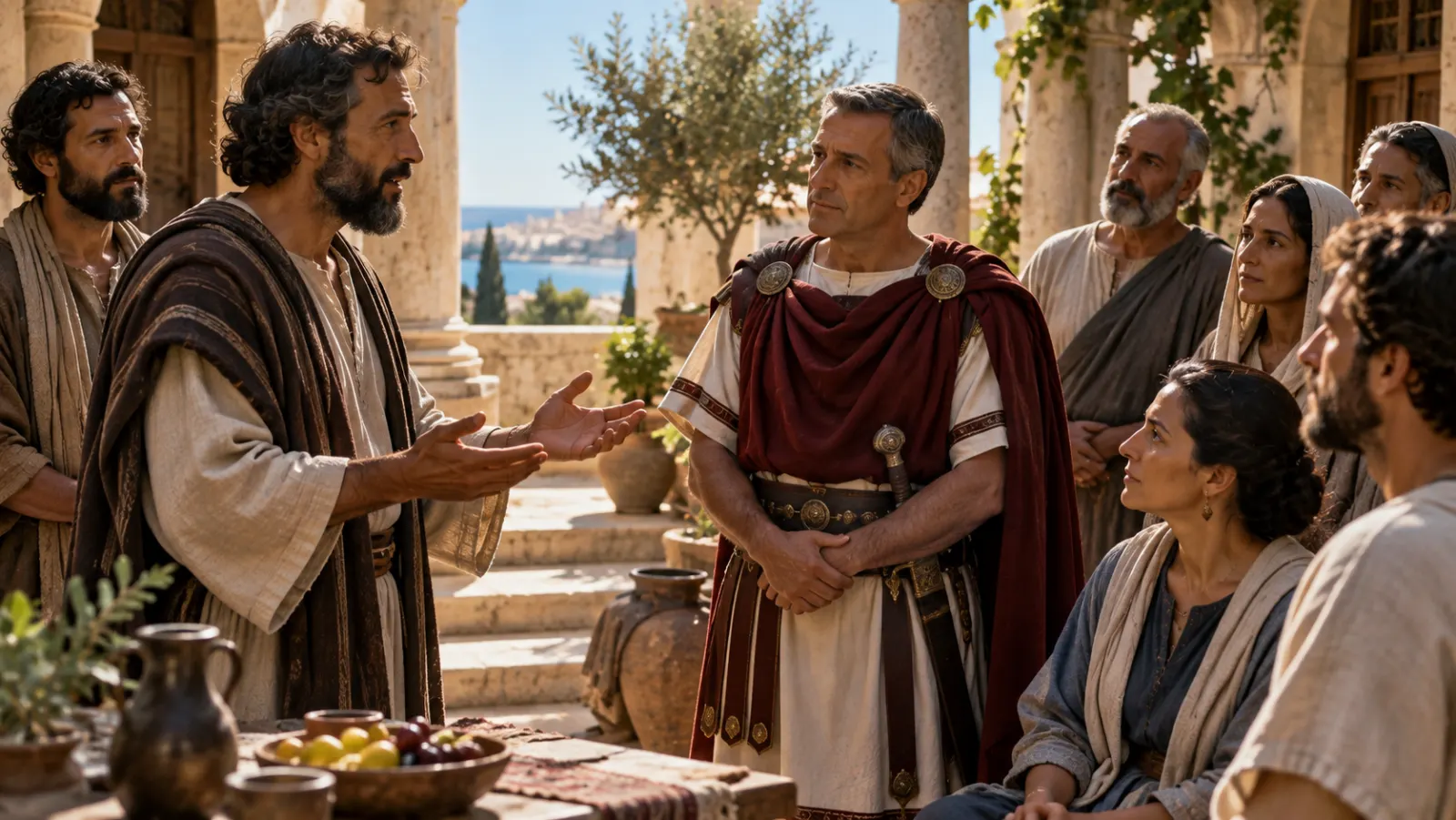
John Kloppenborg’s study of early Christ groups alongside ancient associations is helpful because it places Christian communities inside a world already familiar with small voluntary groups, shared meals, officers, funds, patrons, membership practices, and meeting spaces. Such comparisons can show what kinds of organization were socially possible in Greek and Roman cities.
But comparison is not equivalence. Early churches were shaped by Israel’s Scriptures, claims about Jesus, baptism, the Lord’s Supper, prayer, mission, and expectations about God’s kingdom. They could resemble other associations in some social mechanics while differing significantly in purpose and identity.
Why the New Testament leaves room for more than one polity
Christian traditions often build church government from a constellation of passages rather than from one exhaustive chapter. That is understandable. The New Testament gives real data: qualifications for overseers and deacons, elders in churches, apostolic authority, congregational participation, gifted teachers, and accountable stewardship. What it does not give is a universally detailed flowchart showing exactly how every title relates in every city across every decade.
That explains why faithful Christians have reached different conclusions about polity while appealing sincerely to Scripture. The differences should not be waved away, but neither should one tradition pretend that its later structure appears in Acts with modern terminology already attached. Historical honesty can coexist with strong ecclesiological conviction.
Structure became more explicit as churches multiplied
Growth creates the need for repeatable forms. A single community may rely on personal knowledge and informal authority; networks of churches need recognized messengers, trustworthy handling of funds, processes for appointing leaders, ways to address false teaching, and patterns that survive the departure of founding missionaries. The New Testament itself reflects that movement toward greater explicitness.
At the same time, development should not be confused with instant uniformity. Different documents emphasize different roles, and terminology can overlap. The later second-century pattern of one bishop presiding over a city’s churches is clearer in writers such as Ignatius than in the earliest chapters of Acts. Historical sequence matters if we want to avoid importing a later structure into an earlier text.
This development can be understood positively. Organization is not the enemy of spiritual life; it is one way communities protect teaching, people, money, and mission over time. The challenge is to ensure that offices remain forms of service rather than becoming substitutes for the character, accountability, and shared discernment that gave them purpose.
Leadership vocabulary also changes as the New Testament unfolds. “Elder” comes from Jewish communal language, while “overseer” and “deacon” appear in Greco-Roman civic and service contexts as well as Christian usage. The same community could draw on several cultural vocabularies at once. That flexibility cautions us against assuming each English title carried the same institutional meaning everywhere from Jerusalem to Philippi.
What remains stable across the texts is more important than a perfectly reconstructed hierarchy: leaders are expected to serve, teach faithfully, handle resources responsibly, protect vulnerable people, and remain accountable to the community and to God. Organization exists for the health of the body and the integrity of the mission. When an office becomes mainly a platform for status, it has drifted from the logic that gives early Christian leadership its legitimacy.
This should make contemporary debates both more serious and more charitable. Structure matters because it shapes accountability, teaching, and care. Yet Christians can acknowledge genuine biblical patterns while admitting that the first-century evidence does not answer every later constitutional question with equal precision. Conviction does not require pretending the sources are less complex than they are.
The earliest churches remind us that faithful order serves people, truth, mission, and mutual responsibility.
The earliest churches were organized, but they were not organizationally identical to twenty-first-century congregations.
Their structures developed around witness, teaching, prayer, care, discipline, money, mission, and the need to preserve faithful communities across distance. Leadership was plural in many settings and closely tied to character and service.
The New Testament therefore gives churches more than a blank page and less than a modern policy manual. It offers patterns, offices, qualifications, and theological priorities that every later structure must take seriously—and enough diversity to keep Christians humble about claiming that one contemporary chart is simply the first-century church reproduced.