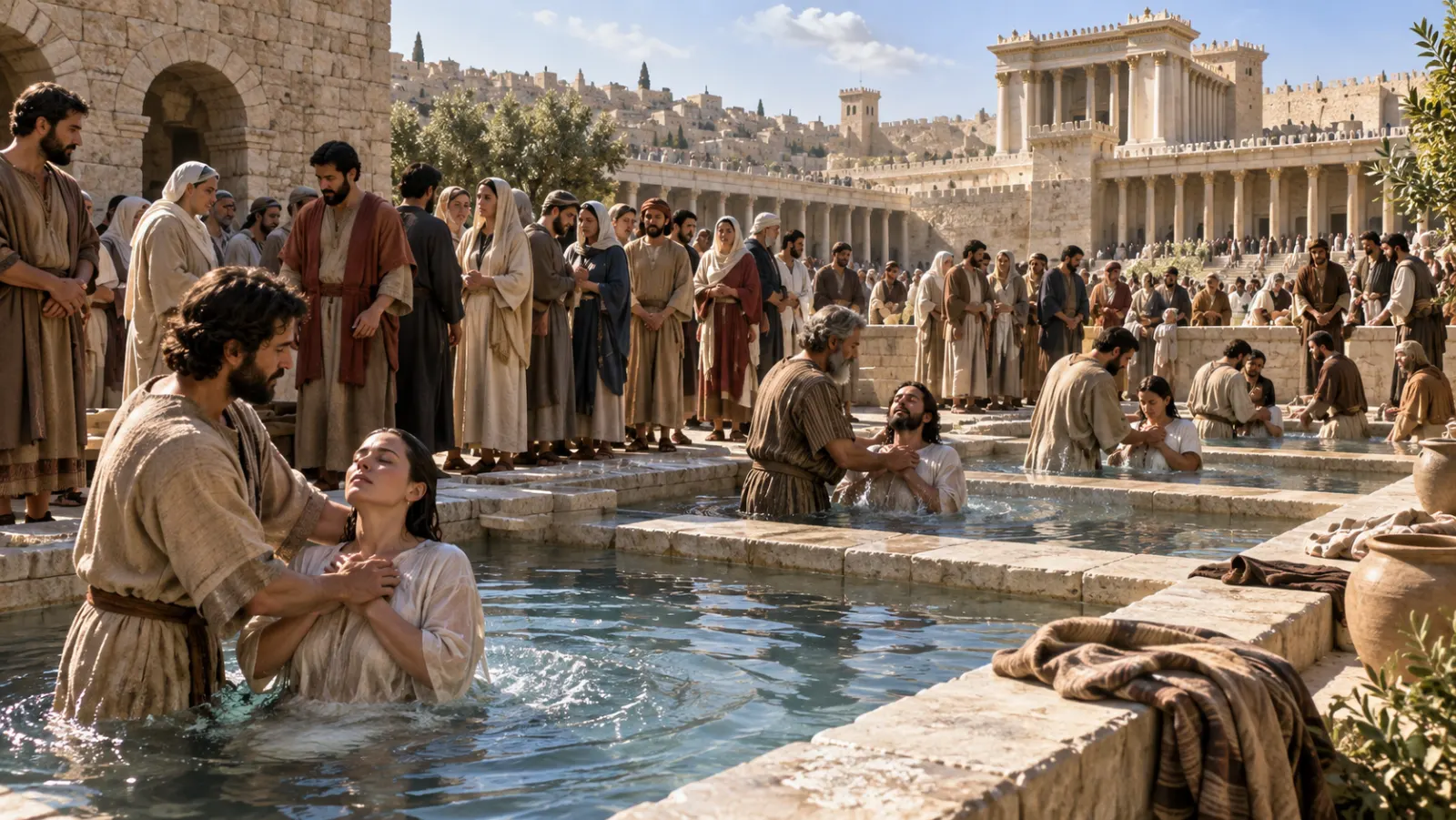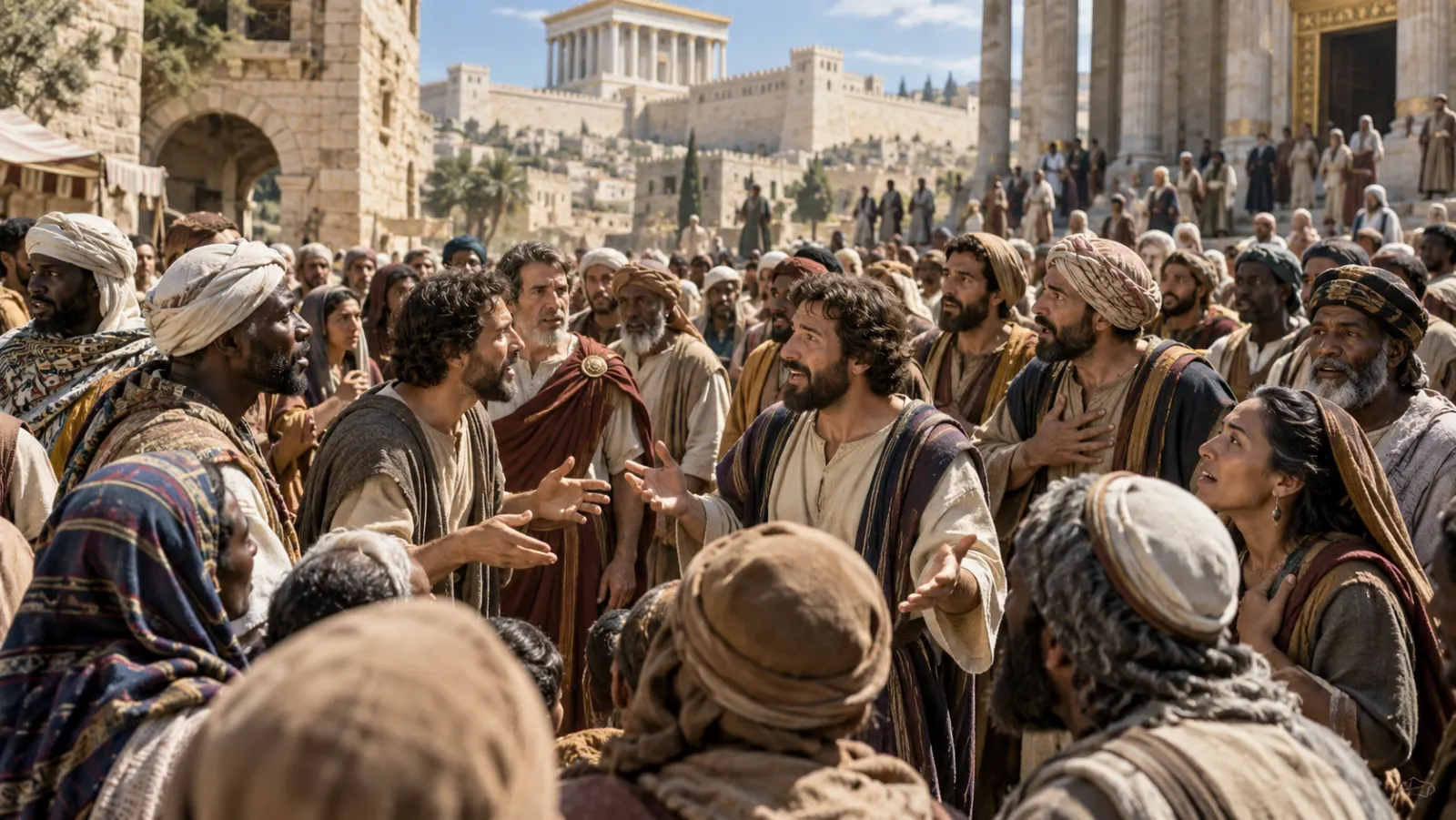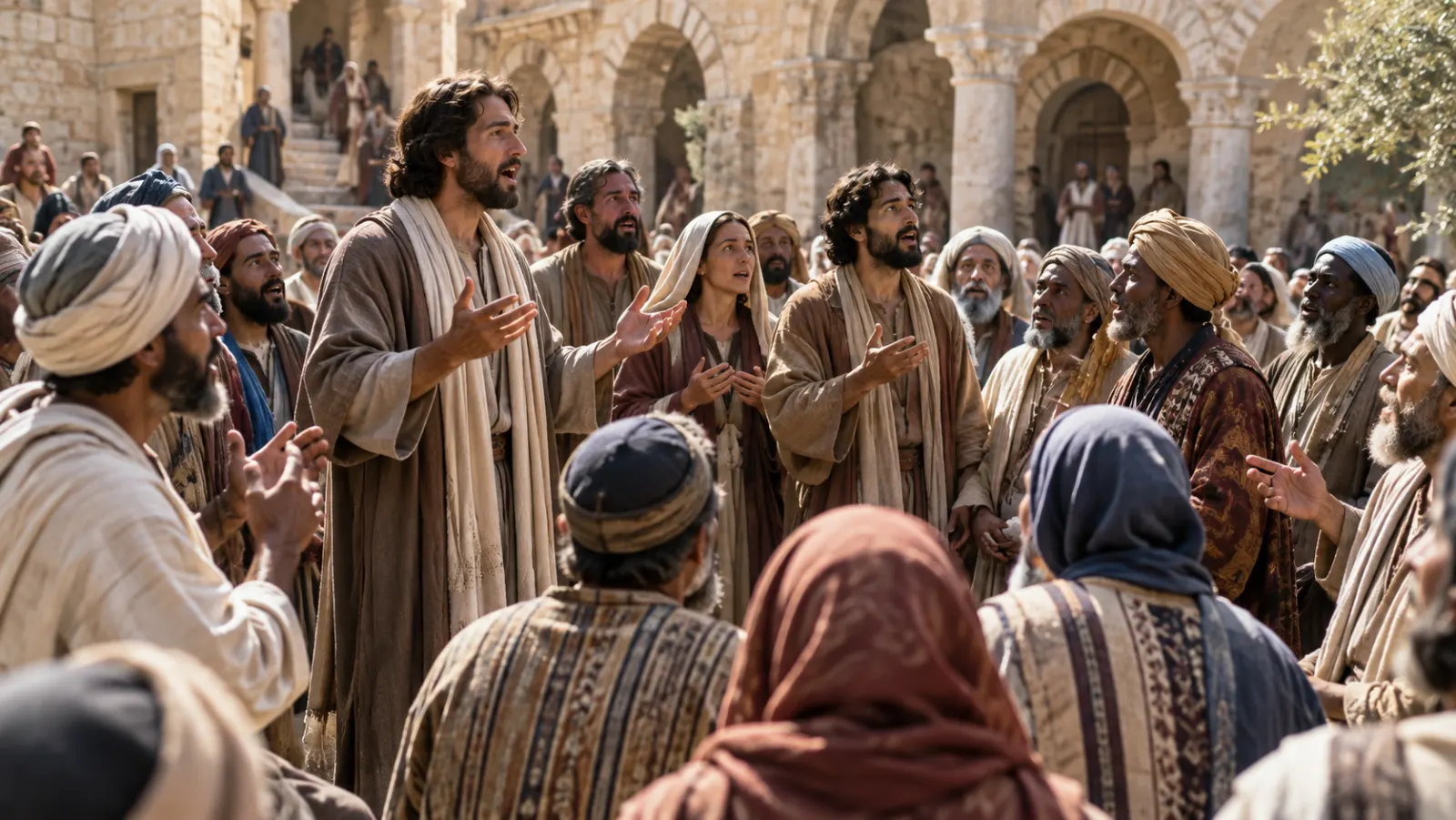
Acts 2 pauses the action to name regions from across the ancient world. The list can feel like a speed bump, but it tells readers what kind of crowd heard Pentecost and previews the outward movement of Acts.
Bible readers are often tempted to skim lists of unfamiliar place names. Acts 2 punishes that habit. Luke interrupts the Pentecost story with a dense geographic catalog: Parthians, Medes, Elamites, residents of Mesopotamia, Judea and Cappadocia, Pontus and Asia, Phrygia and Pamphylia, Egypt and parts of Libya near Cyrene, visitors from Rome, Cretans, and Arabs. The list is not filler.
It answers a basic question created by the miracle: who is hearing? The audience is not a generic “crowd.” It is a festival gathering shaped by Jewish diaspora history. These are Jews and proselytes connected to regions stretching east of the Roman Empire, across Asia Minor, into North Africa, westward to Rome, and south toward Arabia. Jerusalem becomes, for a moment, a crossroads of the wider world.
These are regions, peoples, and diaspora networks—not modern nation-states
Modern readers naturally imagine a list of countries. Luke’s world did not map itself with our borders. “Asia” is a Roman province, not the continent. “Libya near Cyrene” identifies a North African region. “Parthians” and “Medes” point eastward into territories shaped by empires outside direct Roman control. The list mixes geographic and ethnic designations in an ancient way.
That historical difference matters because it keeps us from turning Acts 2 into a modern flags-of-the-world poster. Luke is depicting the spread of Jewish life across the ancient Mediterranean and Near Eastern worlds, not assembling representatives of every twenty-first-century nationality.
The crowd is international and still deeply Jewish
Acts explicitly identifies the hearers as Jews and proselytes. The international diversity does not mean Pentecost has already become a mass Gentile conversion event. The first great audience is diaspora Judaism gathered in Jerusalem for a Jewish feast.
That point is crucial for the narrative arc of Acts. The gospel will move beyond Jewish communities and eventually include Gentiles without conversion to Judaism. But Luke does not skip the Jerusalem beginning. The worldwide horizon opens from within Israel’s scattered family.
The order of places creates a widening map
Scholars debate the exact logic of the list, because it is not a perfectly neat clockwise itinerary. Even so, it clearly ranges across a broad world. It begins far to the east, moves through Judea and Asia Minor, reaches Egypt and North Africa, includes Rome, and adds islands and Arabia. The effect is panoramic.
Luke’s readers do not need a map to feel the scale. Language after language, region after region, the story keeps saying: the people hearing this are not all local. Pentecost turns Jerusalem into a staging ground for transregional witness.
The list previews Acts 1:8
Just one chapter earlier, Jesus tells the apostles they will be witnesses in Jerusalem, Judea, Samaria, and to the ends of the earth. At Pentecost, the apostles have not yet traveled to those ends. Instead, people connected to far-flung regions have come to Jerusalem. Mission begins with the world arriving at the city before the witnesses themselves begin moving outward.
That narrative strategy is elegant. Acts 2 is both fulfillment and preview. The Spirit enables a sign of global reach on day one; the rest of Acts will show how difficult, contested, and surprising the actual geographic and ethnic expansion becomes.
Language makes geography personal
The list would be mere cartography if it were not joined to the repeated phrase “our own language.” These visitors are not abstract dots on a map. They have mother tongues, regional identities, memories, and communities back home. Pentecost meets them at that human level.
This is one reason translation belongs near the center of Christian mission. The gospel is not only true in the abstract; it must become hearable. Luke’s miracle dramatizes what later missionaries, translators, parents, teachers, and immigrant congregations will spend centuries doing through ordinary labor: carrying the message across linguistic worlds.
The list confronts cultural centralism
Every Christian culture is tempted to imagine itself as the normal center and everyone else as the mission field. Acts 2 destabilizes that instinct. Jerusalem is the theological center of the opening scene, but the crowd already embodies a dispersed world. Very soon the narrative itself will leave Jerusalem and challenge the apostles to recognize God’s work in places and people they did not control.
For American Christians, that is worth hearing. Christianity does not become more authentic when it sounds American, English-speaking, middle-class, or culturally familiar. Pentecost presents a gospel at home in translation from the beginning.
The geography is theological without being a modern atlas
The list also reminds readers that diaspora Jewish identity could be layered. A person might be culturally shaped by Rome, Alexandria, Cappadocia, or Mesopotamia while remaining deeply connected to Jewish worship and Jerusalem. Ancient identity was not limited to one simple national label. Pentecost gathers people whose homes, languages, and imperial settings differ but whose pilgrimage creates a common religious space.
That complexity explains why the miracle of hearing matters so much. Shared faith does not automatically produce shared language. Luke refuses to let religious unity erase the real work of communication. The Spirit meets that difference rather than pretending it does not exist.
The inclusion of “Jews and proselytes” is another important detail. Proselytes were Gentile converts to Judaism, so even the first audience already contains a small sign of porous boundaries. Acts will later face the much larger question of Gentiles entering the Jesus movement without becoming Jews. Pentecost does not resolve that debate, but it introduces a community already familiar with people crossing religious and cultural lines.
The geography also has a narrative afterlife. As Acts continues, the gospel reaches regions connected to the opening list and beyond. Readers who remember Pentecost can recognize that the initial multilingual sign was not wasted spectacle. It anticipated a book structured by movement—Jerusalem to wider Judea, Samaria, Asia Minor, Greece, and eventually Rome.
For modern readers, the list should therefore be read slowly enough to recover faces behind the names. Each region represents communities to which travelers could return, carrying memories of Jerusalem and perhaps news about Jesus. Luke does not tell us which Pentecost pilgrims became later missionaries, so that should not be asserted. But the networked possibilities of pilgrimage are historically real and missionally suggestive.
The list also resists a narrow story of Christianity
Christian history would eventually become centered for long periods in regions Luke does not name here at all. That later history can make Western readers unconsciously imagine Europe and North America as Christianity’s natural home. Acts 2 starts differently: the movement’s first public audience stretches east, south, and west from Jerusalem, including regions that modern Western memory often treats as peripheral.
That is a useful correction. The gospel’s geographic identity is expansive from the beginning, and no later Christian civilization can claim to be its default cultural owner. Pentecost belongs to a story that was transregional before it was ever Western.
The nations list matters because it turns Pentecost from a private miracle into a geographic manifesto. Luke wants readers to feel the range of the audience before Peter even begins his sermon.
The list is historically rooted in Jewish pilgrimage and diaspora life, not in a modern concept of nation-states. Yet its theological force is unmistakably expansive: the message about Jesus is already pressing against linguistic and geographic boundaries.
When Christians slow down enough to read the place names, Pentecost becomes larger. The Spirit does not create a provincial movement with global ambitions added later. From the first public day, the horizon is already wider than Jerusalem.
Luke’s geography therefore acts like a theological horizon line: the church may begin in Jerusalem, but it is never permitted to imagine that Jerusalem—or any later cultural center—exhausts the reach of the gospel.