Before Christians associated Pentecost with the coming of the Holy Spirit, Jews knew the day as the Feast of Weeks, a pilgrimage festival tied to harvest, firstfruits, and Jerusalem. That background changes how Acts 2 reads.
If an American church announces a Pentecost service, the word usually sounds thoroughly Christian: red banners, prayers for the Holy Spirit, perhaps a sermon about mission or spiritual gifts. Acts 2 starts somewhere earlier. When Luke says the day of Pentecost had arrived, he is naming a Jewish festival already embedded in Israel’s Scriptures and pilgrimage calendar. The first hearers of the story did not need the word explained as a Christian invention.
The Greek name Pentecost means “fiftieth.” It became a way of referring to the biblical Feast of Weeks, counted from the Passover season. The Hebrew name Shavuot means “weeks.” That counting matters because Acts 2 is not detached from Passover and the death and resurrection of Jesus. Luke places the outpouring of the Spirit inside a calendar that already linked liberation, harvest, worship, and pilgrimage.
The feast begins with harvest and firstfruits
In the Torah, the festival is described with several overlapping names. Exodus calls it the Feast of Harvest. Deuteronomy calls it the Feast of Weeks. Numbers speaks of the day of firstfruits. Leviticus connects the celebration to the completion of a seven-week count and to offerings from the new grain harvest. The biblical emphasis is agricultural and covenantal: Israel rejoices before God because the land has produced and because its abundance is received as gift rather than private achievement.
That agricultural setting is easy to miss when Pentecost is remembered only through church calendars. In ancient Israel, grain, harvest, bread, generosity, and worship belonged together. Deuteronomy even frames the festival as a communal rejoicing that includes household members, Levites, immigrants, orphans, and widows. The feast trained Israel to remember both dependence on God and responsibility toward neighbors.
It was also a pilgrimage festival
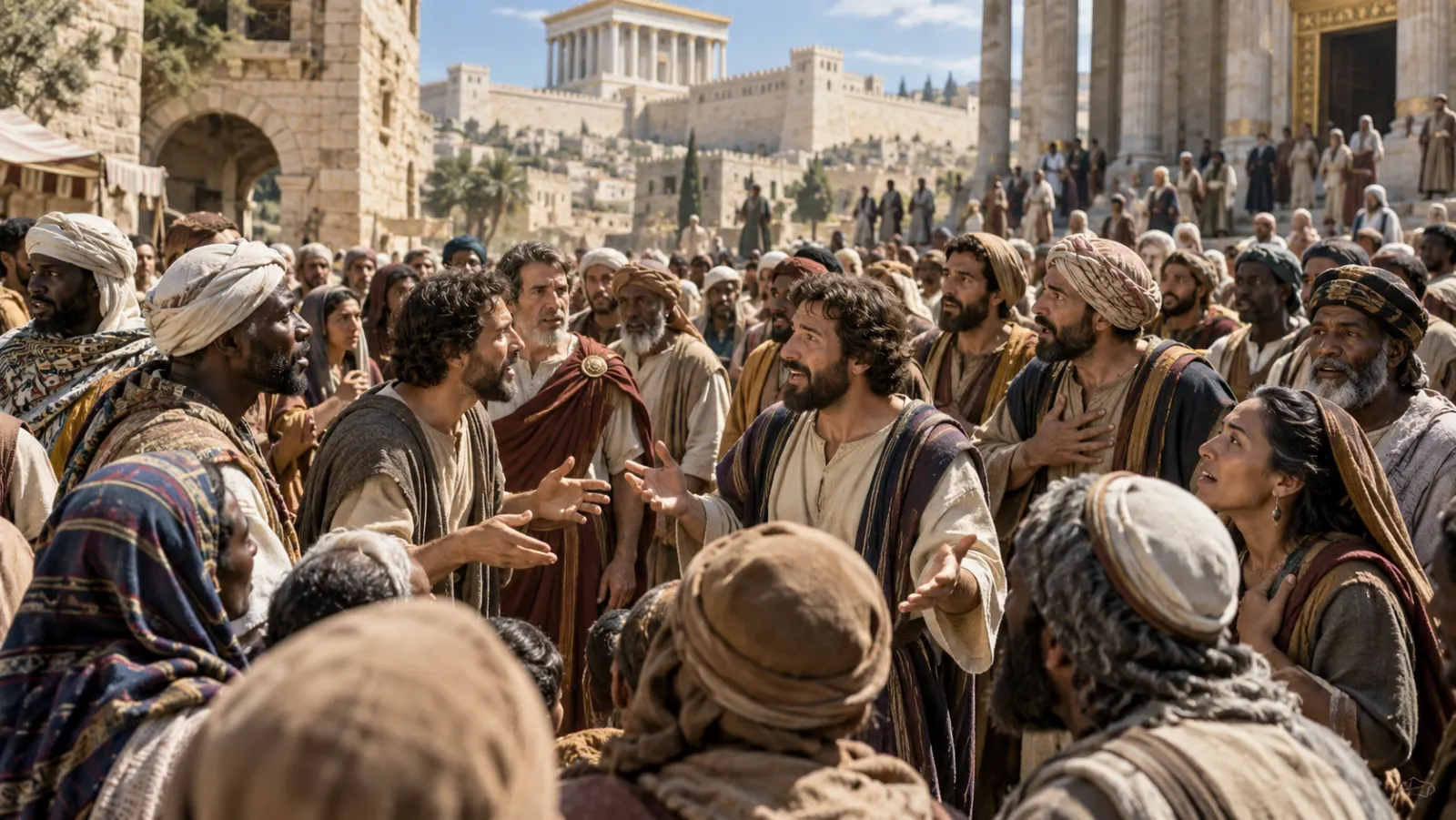
Passover, Weeks, and Booths were the three great pilgrimage festivals in the Torah. For Jews who could make the journey, Jerusalem was the destination. That helps explain why Acts 2 can plausibly describe a remarkably international Jewish crowd in the city. Luke’s list of Parthians, Medes, Elamites, residents of Mesopotamia, visitors from Rome, Cretans, Arabs, and others fits a festival world in which diaspora Jews gathered around the Temple city.
My Jewish Learning notes that Shavuot was one of the three pilgrimage festivals and that ancient observance was connected with bringing firstfruits to the Temple. Josephus also knew the feast as an occasion that drew people to Jerusalem. Acts therefore does not need to invent a cosmopolitan audience for the sake of the miracle. The festival itself helps account for why so many languages and regions could be represented at once.
The Sinai connection requires historical care
Modern Jewish observance strongly associates Shavuot with the giving of the Torah at Sinai. Christians often notice the suggestive parallels: fire, divine presence, covenant, and a people formed by God’s word. Those connections can be theologically fruitful, but the historical timeline needs care. The Torah itself presents Shavuot primarily as a harvest and firstfruits festival; explicit rabbinic identification of the day with Sinai becomes especially clear in later Jewish sources.
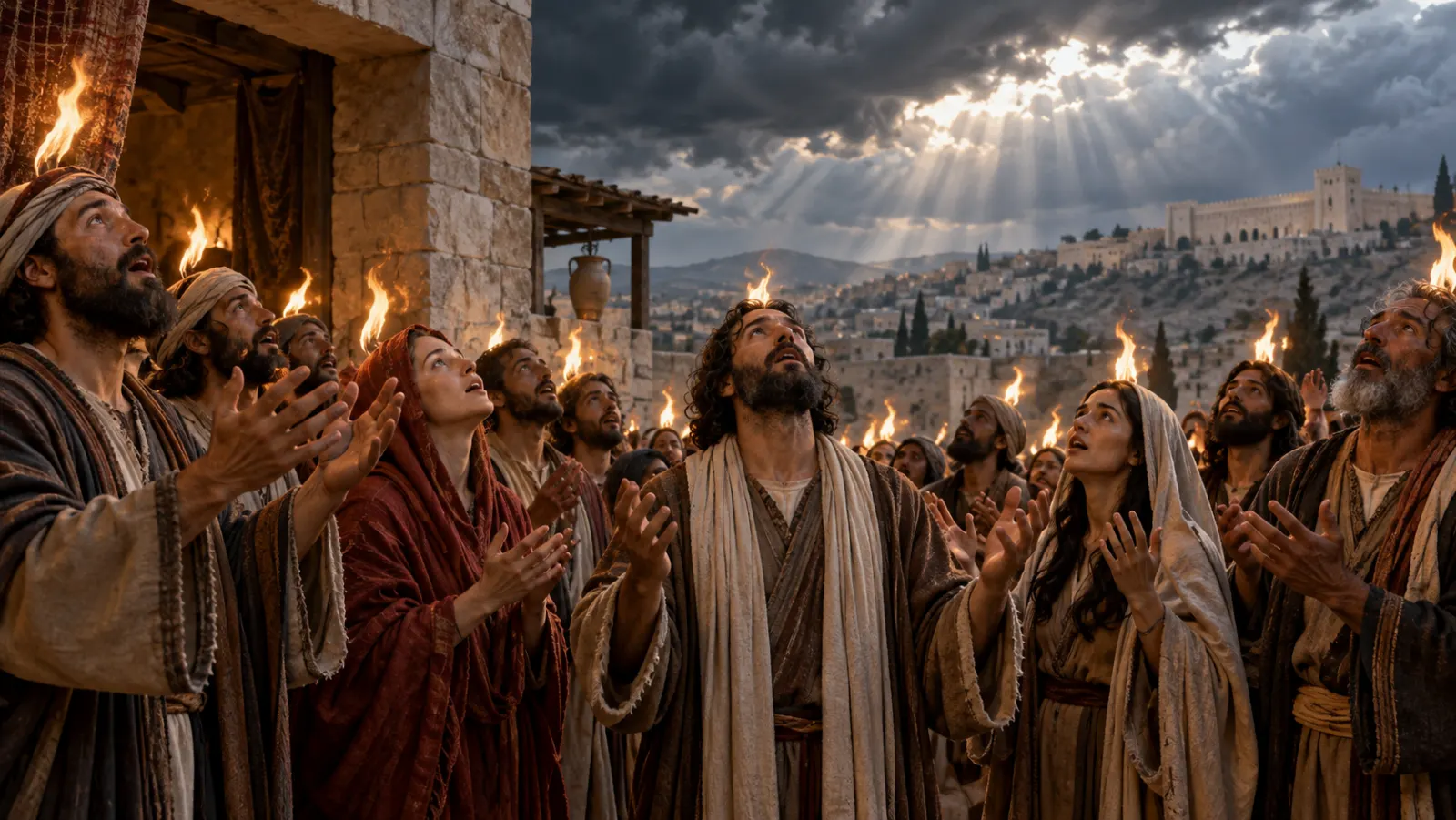
That does not mean Sinai imagery is irrelevant to Acts 2. Scholars have argued that Luke’s wind, fire, divine speech, and gathered people may intentionally evoke theophany traditions associated with Sinai. It does mean Christians should avoid saying that every Jew in Jerusalem in Acts 2 necessarily understood Shavuot exactly as later rabbinic Judaism would. Respectful interpretation distinguishes biblical festival data, later Jewish development, and possible Lukan echoes.
Firstfruits make an intriguing Christian connection
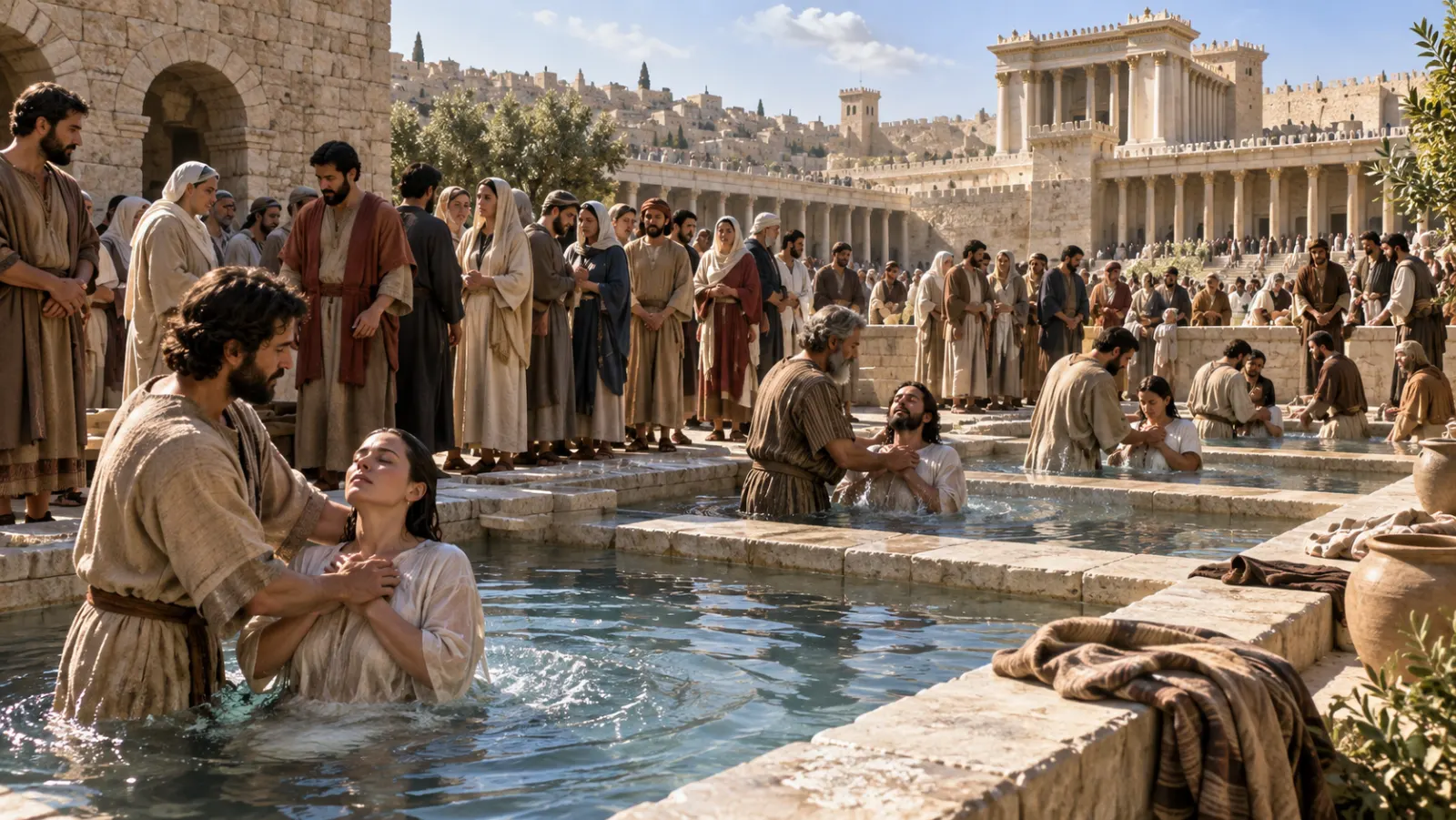
Acts 2 reports that about three thousand people responded to Peter’s preaching and were baptized. Christian readers have long noticed how fitting that is on a feast of firstfruits. Luke never pauses to say, “These converts are the firstfruits of the worldwide church,” so the connection should not be presented as an explicit quotation from the narrative. Still, the harvest setting provides a natural theological backdrop for a day when a small group of Jesus’ followers suddenly becomes a public, multiplying community.
This theme appears elsewhere in the New Testament, where harvest and firstfruits language can describe God’s people and God’s saving work. Pentecost therefore brings together an actual agricultural feast and a dramatic spiritual harvest without requiring us to erase the Jewish meaning of the day. The Christian claim depends on Israel’s story rather than replacing it.
Why the Jewish setting changes Christian reading
When Pentecost is detached from Shavuot, Acts 2 can sound like Christianity suddenly appearing from nowhere. Luke tells a different story. The disciples are Jews in Jerusalem, waiting in obedience to Israel’s Messiah, on one of Israel’s appointed feast days, speaking to Jews and proselytes gathered from across the Mediterranean and Near East. Peter interprets the event through the prophet Joel and then through Israel’s Scriptures about David.
That setting matters ethically as well as historically. It keeps Christians from treating Judaism as merely a failed background that disappears once the church arrives. Pentecost is intelligible because Jewish Scripture, Jewish worship, Jewish pilgrimage, and Jewish expectation are already there. The story’s expanding mission grows from those roots.
A feast of gratitude becomes a moment of mission
The traditional agricultural themes of Shavuot also prevent Pentecost from being reduced to spectacle. Wind, fire, and languages are memorable, but the biblical feast underneath them is about receiving God’s gifts and returning thanks. Acts adds another gift: the promised Spirit, given not as private spiritual entertainment but as power for witness. The disciples speak “the mighty works of God” in languages the crowd can understand.
That movement—from gift to witness—fits the feast remarkably well. Israel brings firstfruits because God has given harvest; the disciples proclaim because God has given the Spirit. In both cases, grace creates public gratitude. Pentecost becomes a Christian feast not by forgetting Shavuot but by claiming that the God of Israel has acted again in continuity with his promises.
What first-century pilgrims may have brought into the scene
Pilgrims arriving for Weeks did not come to a neutral convention center. They entered a city dominated by the Temple and by memories of covenant, sacrifice, prayer, and Israel’s story. Some would have traveled long distances through expensive and difficult conditions. Others lived closer to Judea. Luke does not tell us what each person expected that morning, but the festival context means the crowd already possessed a religious vocabulary through which claims about fulfillment, Messiah, prophecy, and Spirit could be heard and debated.
That helps explain why Peter’s sermon can move quickly through Joel, David, resurrection, and lordship without pausing to introduce Israel’s Scriptures from scratch. He is not addressing a random pagan audience. He is reasoning within a shared scriptural world, even though his conclusion about Jesus is deeply contested. Pentecost’s missionary breadth therefore begins with continuity: the gospel first crosses regional and linguistic boundaries inside the scattered Jewish people gathered in Jerusalem.
Pentecost makes better sense when Christians remember that the day already belonged to Israel’s calendar. The setting is not decorative. It explains the crowd, the timing, and much of the theological texture of Acts 2.
The careful reader should hold several layers together: the Torah’s Feast of Weeks, the Temple-era pilgrimage world, later Jewish association with Sinai, and Luke’s Christian claim that the promised Spirit was poured out on that day.
That approach produces a richer Pentecost and a more respectful one. The church does not need to flatten Jewish history in order to confess the work of the Spirit. It can instead see Acts 2 as a moment in which Israel’s God acts within Israel’s story and sends the good news outward from Jerusalem.