Christians often say Pentecost “reverses Babel.” The idea has real literary and theological appeal: scattered languages become a setting for understanding. But the relationship is more interesting than a simple undo button.
“Pentecost reverses Babel” is one of those Christian phrases that sounds so natural it can feel like a verse. It is not. Acts 2 never mentions Babel, Nimrod, or the tower of Genesis 11. Peter does not quote the story. Luke does not pause to say that God is undoing a curse of languages. The connection is an interpretation built from patterns readers notice across Scripture.
That does not make the interpretation wrong. It makes it something to examine rather than repeat automatically. The strongest version of the Babel-Pentecost connection asks what the two stories actually share, where they differ, and what theological claim emerges when they are read together.
Why the comparison is attractive
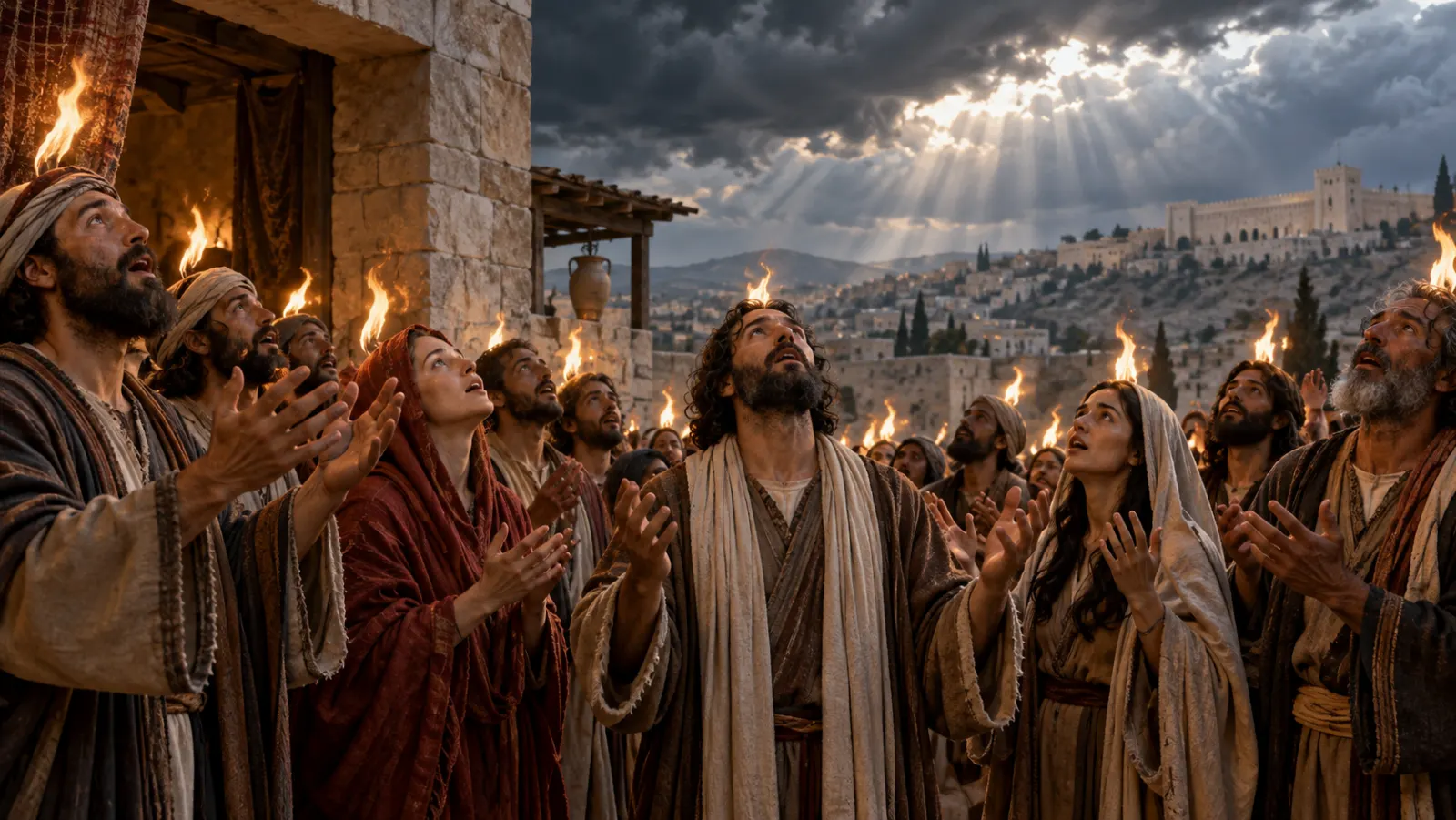
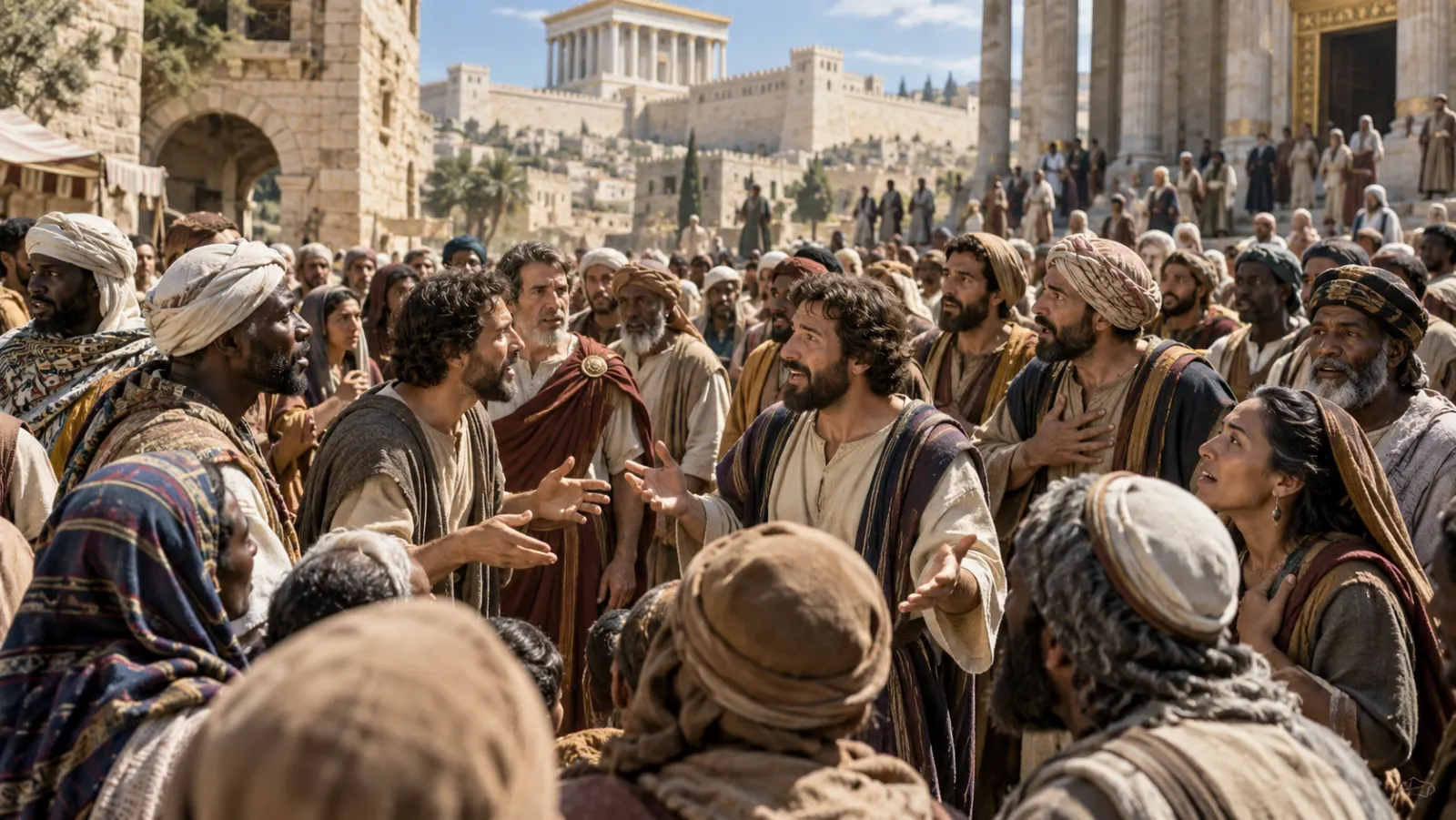
Genesis 11 tells of a human project built around one language and a desire to secure a name and resist dispersal. God confuses the speech and scatters the people. Acts 2 places a multilingual crowd in Jerusalem and narrates Spirit-enabled speech that is understood across those linguistic differences. The verbal and thematic contrast is obvious enough that Christian interpreters have long connected the scenes.
The nations list in Acts 2 can deepen the connection because Genesis 10, immediately before Babel, contains a table of nations. Some scholars see Luke’s geographic catalog as participating in a “nations” tradition that reaches back into Genesis. Others think the case for a deliberate literary echo is suggestive rather than demonstrable.
Pentecost does not restore one language
The biggest problem with calling Pentecost a simple “reversal” is that the languages do not disappear. God does not make everyone speak Hebrew, Aramaic, or Greek. The miracle works through plurality. Parthians remain Parthians; Romans remain visitors from Rome; Arabs hear in their own tongue. Diversity is not erased in order to create unity.
That may be more theologically significant than a return to pre-Babel sameness. Pentecost demonstrates communion across difference. The Spirit creates intelligibility without demanding cultural flattening. In a world where unity is often confused with uniformity, Acts offers another model.
Babel’s problem is larger than multilingualism
Genesis 11 is not merely an origin story explaining why translation is inconvenient. The builders seek a name, a monumental city, and protection from scattering. The narrative is about concentrated human ambition as well as language. If Pentecost answers Babel, it does so not only by addressing communication but by creating a people whose speech magnifies God rather than their own collective greatness.
That contrast is easy to miss. Babel says, in effect, “let us make a name for ourselves.” Pentecost begins with people declaring “the mighty works of God.” One project bends communication toward self-exaltation; the other receives speech as gift for witness.
The link is ancient, but not uncontested
Christian interpreters have connected Babel and Pentecost for centuries. Modern scholarship continues to explore the relationship, but not all scholars agree on how directly Luke intended Genesis 11 as a source. The article “The reversal of Babel” in Verbum et Ecclesia surveys arguments for the connection while also acknowledging scholars who question the strength of the literary link.
This is exactly the kind of case where responsible Bible reading benefits from graded confidence. We can say the canonical comparison is illuminating. We can say Luke’s nations and languages make the echo plausible. We should be more cautious about claiming Luke explicitly tells us Pentecost is the formal reversal of Genesis 11.
A better phrase may be “Babel answered, not erased”
If Babel dramatizes fractured human communication and self-protective ambition, Pentecost answers those wounds by making God’s works hearable across linguistic boundaries. Yet the many languages remain. The Spirit does not drag history backward to a single tongue; he pushes mission forward into every tongue.
That distinction matters for Christianity’s global history. The church has sometimes acted as if one imperial language, one cultural style, or one national tradition were the natural home of the gospel. Pentecost resists that instinct. Translation is not a concession to human weakness. It is close to the heartbeat of the church’s first public mission.
What this means for American churches
American congregations live amid hundreds of languages, migration stories, and cultural communities. A shallow Babel theology might treat difference mainly as a problem to solve. Pentecost invites a different posture: difference can become the arena in which the Spirit demonstrates the reach of the gospel.
That does not make cross-cultural ministry easy. Translation can fail; power imbalances distort communication; churches can demand assimilation while calling it unity. The Pentecost vision challenges communities to ask whether people are actually hearing the mighty works of God in forms they understand or merely being invited into someone else’s religious culture.
The canonical comparison works best when difference is preserved
Genesis 10 and 11 also complicate the story because the “table of nations” comes before the tower narrative. Humanity is already described in families, lands, and languages in Genesis 10. Genesis 11 then offers a theological story about human concentration, pride, and scattering. That literary relationship is one reason simplistic claims that Babel is merely “the moment languages were invented” do not capture the full canonical picture.
Acts 2 similarly refuses to make language itself the enemy. The crowd’s many languages are not portrayed as sinful. The problem is lack of understanding; the gift is Spirit-enabled communication. The nations do not need to become culturally identical before they can hear. That is why “Babel answered” may be more precise than “Babel erased.”
Reading the stories together also shifts the emphasis from technology to worship. Babel uses coordinated human capacity to build upward and secure a name. Pentecost uses divine gift to send speech outward and magnify God. The contrast is not anti-city, anti-language, or anti-human cooperation. It is about the direction of glory and the source of security.
This reading gives Christian mission an important ethical test. If the church crosses languages only to make other people culturally resemble the missionary culture, it may reproduce Babel-like centralization under religious language. Pentecost-shaped mission translates, listens, and witnesses without demanding that the world’s peoples first surrender every non-sinful difference.
Why the comparison remains worth keeping
None of these cautions means churches should abandon the Babel connection. Canonical interpretation often notices patterns that individual biblical authors do not formally footnote. Reading Scripture as a whole can generate legitimate theological insight when the reader is honest about the level of certainty involved.
The Babel-Pentecost pairing is strongest when it sends Christians back to both texts rather than replacing them with a slogan. Genesis warns about collective self-exaltation; Acts celebrates Spirit-given witness across languages. Together they form a richer theology of human speech, cultural difference, and the glory of God.
Pentecost may rightly be read alongside Babel, but the relationship is richer than “many languages bad, one language good.” Acts celebrates multilingual understanding, not the abolition of linguistic difference.
The connection is best presented as a strong theological and canonical echo rather than an explicit equation Luke states for us. That honesty does not weaken the insight; it protects it from becoming a cliché.
Babel is answered when human speech stops serving self-made glory and becomes a vehicle for God’s mighty works. At Pentecost, unity arrives not by silencing difference but by making the gospel hearable within it.
There is also a pastoral advantage in keeping the distinction. If Pentecost is described only as the cancellation of Babel, multilingual life can sound like a defect awaiting removal. If it is described as Spirit-given understanding across real languages, linguistic diversity can be received as part of the human world into which the gospel is sent. The miracle is communion without cultural erasure.