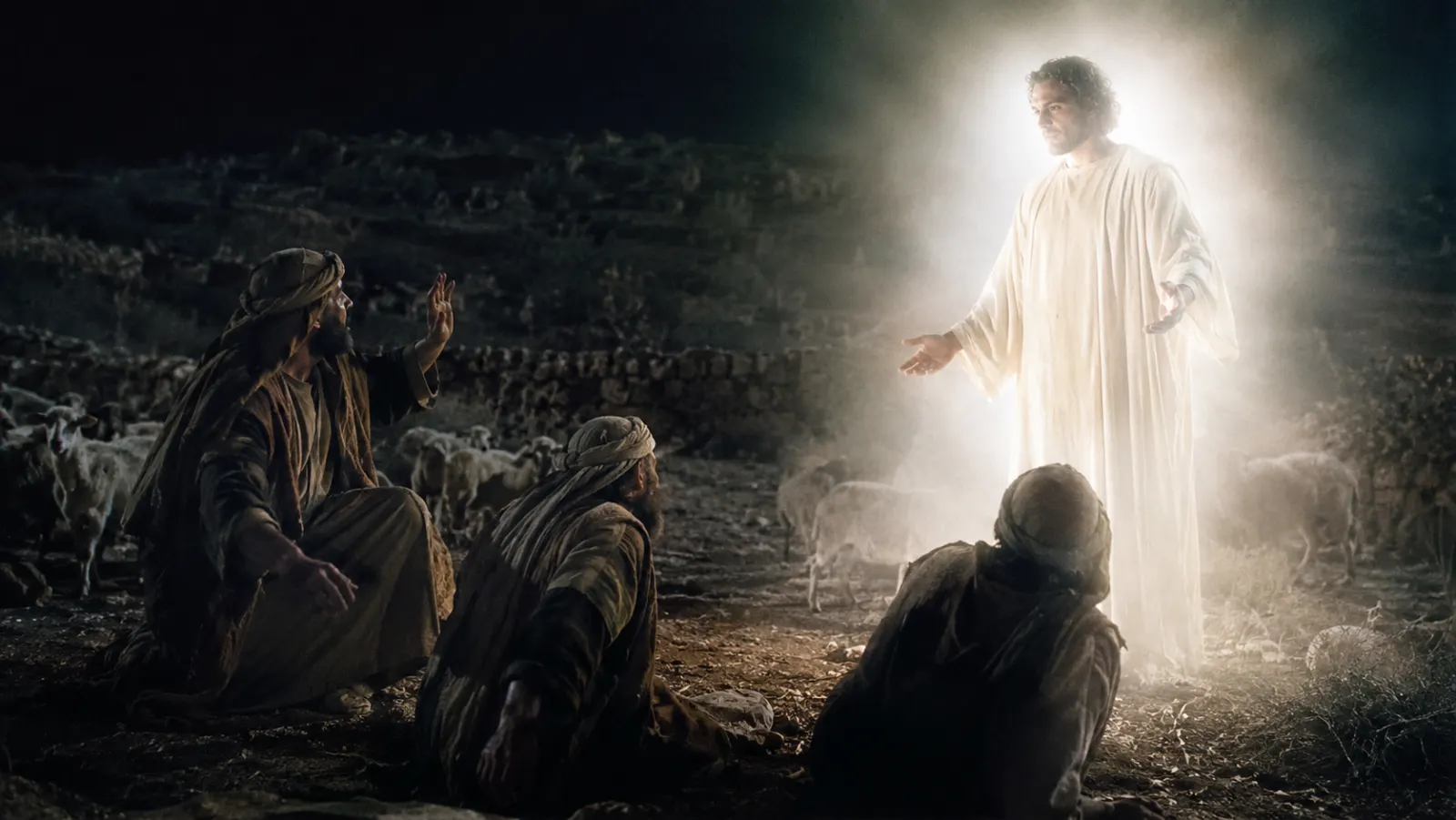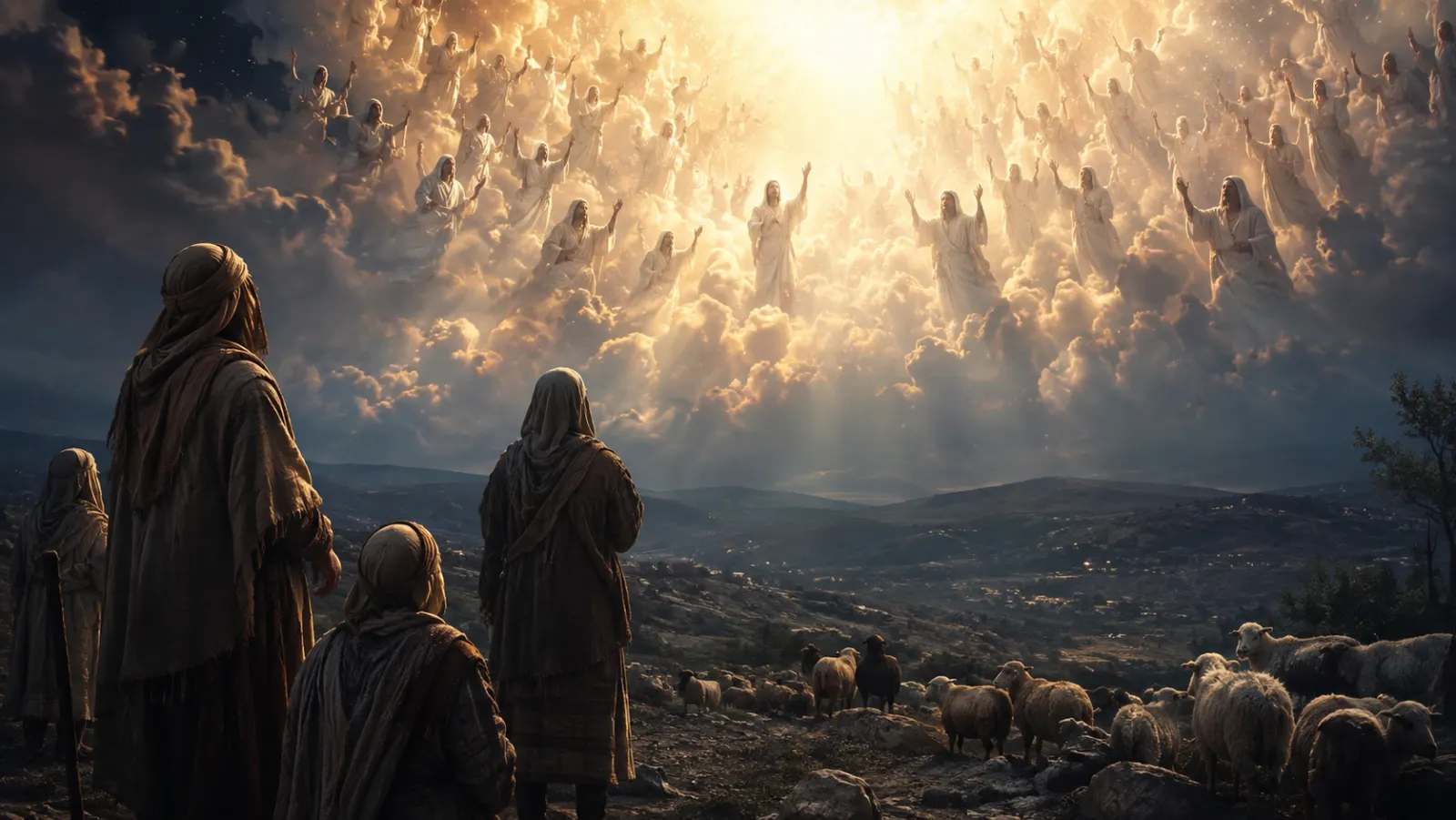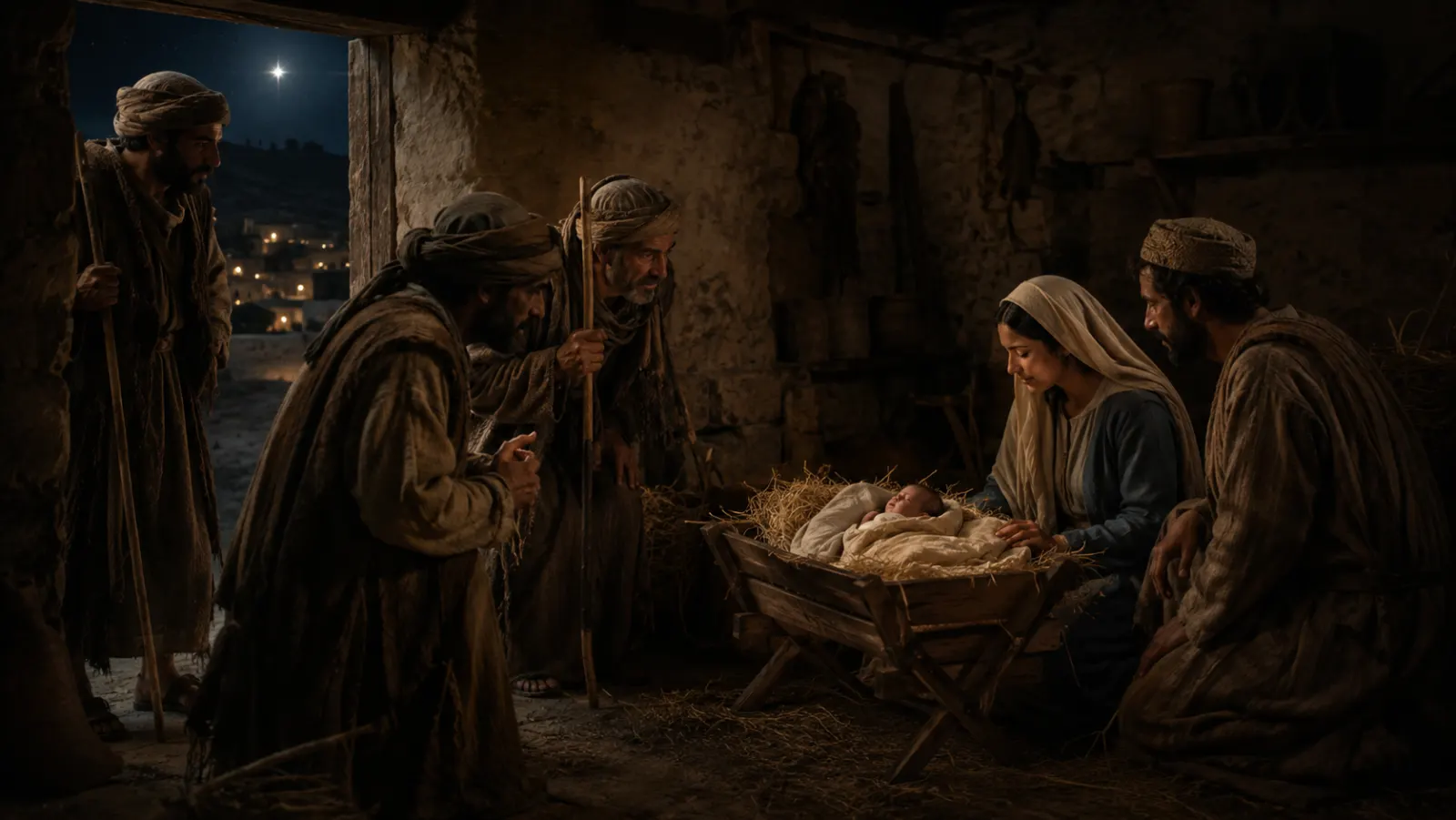
The most visually overwhelming part of Luke 2 is the heavenly host. Yet the angel’s identifying sign is not light, music, or a miracle in the heavens. It is a newborn wrapped in cloths and lying in a feeding place.
If a modern filmmaker staged Luke 2, the temptation would be obvious: make the angels the visual climax. Fill the sky. Shake the ground. Let the music peak. Then cut to credits. Luke refuses that structure. The angels are spectacular, but they are not the destination.
The angel gives the shepherds a sign: a baby wrapped in cloths and lying in a manger. That is almost aggressively ordinary. Swaddling cloths identify a newborn. A feeding place belongs to the world of animals and household necessity. The sign does not ask the shepherds to interpret another heavenly wonder. It asks them to go find a particular child.
A biblical sign does not have to be flashy
Modern Americans hear “sign” and often think supernatural display: something statistically impossible, visually undeniable, or spectacular enough to silence doubt. The Bible sometimes gives signs like that. But signs can also be identifying markers that connect God’s word to a concrete event.
In Luke 2, the unusual combination is the point. Babies are wrapped. Babies are not ordinarily laid in feeding places. The shepherds are given something specific enough to recognize when they arrive. The sign ties revelation to reality.
The angels make the manger harder, not easier, to ignore
There is a deliberate scale mismatch. The glory of the Lord fills the field. A heavenly army appears. Then the shepherds are told to look for a baby in lowly circumstances. Luke places cosmic majesty and human vulnerability side by side so neither can cancel the other.
Without the angels, readers might interpret the manger as evidence that the child is unimportant. Without the manger, readers might imagine divine glory only as overwhelming spectacle. Together they announce incarnation: the One whose birth heaven celebrates has entered the conditions of ordinary human life.
The sign is accessible to the shepherds
The shepherds do not need priestly training, political connections, astronomical expertise, or wealth to verify what they have heard. They need to go to Bethlehem and look. The sign is public enough to be found and humble enough to be approached.
That accessibility fits Luke’s larger Gospel. Jesus will be encountered by crowds, sick people, women, children, religious leaders, tax collectors, soldiers, and outsiders. The incarnation is not hidden behind an elite code. God acts mysteriously, but the child is not inaccessible.
The feeding place is not automatically a sacrificial-lamb prophecy
A popular sermon line says the shepherds were raising Temple lambs, that special lambs were wrapped in cloths, and that the manger instantly signaled Jesus as the final sacrifice. The New Testament certainly later identifies Jesus with sacrificial themes, and John calls him the Lamb of God. But Luke 2 does not make that historical chain explicit.
We do not need to force an elaborate lamb code into the scene. The manger already communicates enough: the Messiah is found in conditions of startling humility. Later biblical theology can connect Jesus’ birth, death, and sacrificial identity without inventing livestock customs we cannot securely establish.
Incarnation means God does not remain at a safe spiritual distance
The sign presses readers toward a central Christian claim. God’s salvation does not arrive merely as a message from heaven. The Word becomes flesh. The Son is born. He can be held, wrapped, fed, moved, and eventually wounded.
That physicality matters in an American religious climate where “spiritual” can mean vague, inward, or detached from bodies. Luke’s sign is bodily and located. The shepherds are sent to a child who occupies space. Christianity begins not with an escape from material life but with God entering it.
The manger critiques our instinct to identify importance by packaging
Americans are trained to read status through presentation: the right building, brand, stage, credentials, lighting, security detail, or media launch. If something is important, we expect it to look important. Luke undermines that reflex.
The angelic announcement guarantees that the child matters before any earthly packaging confirms it. The shepherds have to trust the word enough to recognize glory in a form that does not advertise itself. That is a pattern the Gospel will repeat all the way to the cross.
The sign asks for recognition, not admiration of the messengers
Once the shepherds receive the sign, the angels leave. The scene’s spiritual maturity is visible in what happens next: the shepherds do not search the sky hoping for another experience. They go to the child.
That is a useful test for Christian fascination with the supernatural. Genuine revelation moves people toward the God who reveals himself, not toward endless pursuit of experiences. The field matters because it directs Bethlehemward. The messenger succeeds when the message becomes central.
Swaddling cloths are ordinary enough to keep the focus on the manger
Ancient infants were commonly wrapped for warmth, support, and care. Luke’s reference to cloths therefore does not require a hidden ritual meaning. The striking part of the sign is the combination: a newborn properly wrapped yet placed in a feeding location. Familiar care and unusual circumstance stand together.
That combination prevents two opposite readings. Jesus is not presented as neglected in the sense that nobody cares for him; Mary wraps him. Yet his circumstances are undeniably humble. The sign is not filth for shock value. It is ordinary maternal care inside an unexpectedly low setting.
The shepherds are asked to trust a message that leads to something small
Religious experience can create a craving for escalation. After one extraordinary moment, we want another, then another. Luke sends the shepherds in the opposite direction. The next confirmation of the angelic message is quieter than the experience that delivered it.
That pattern has pastoral wisdom. Christian faith is not sustained by chasing bigger sensations. The shepherds obey the word and find Christ in an ordinary-looking scene. For believers who have known intense spiritual moments and then returned to ordinary life, the manger offers a mature theology of where God may be found.
The sign also protects the identity of Jesus from fantasy kingship
A child announced as Messiah and Lord could invite immediate political imagination: palace, army, throne, public acclaim. The manger forces the reader to revise those expectations at the beginning. Jesus’ kingship will be real, but it will not be established through the normal choreography of elite birth and public power.
Luke does not reject kingship. He redefines what divine kingship looks like in history. The child will grow, teach, confront, suffer, rise, and reign according to God’s purpose. The manger is the first visual lesson that his path will not imitate the world’s standard scripts for greatness.
The sign is theological because it is historical
Christian theology sometimes sounds abstract: incarnation, humility, lordship, salvation. Luke grounds those claims in physical details. A baby can be found. Cloth can be seen. A feeding place has a location. The shepherds are not invited to contemplate an idea but to encounter a person.
That is one reason the manger has remained such a powerful Christian symbol. Its force is not sentimentality. It says God’s saving action entered ordinary matter and ordinary space. The sign is humble because the incarnation is concrete.
The shepherds are given a sign they can recognize without elite mediation
No official has to authenticate the sign for them. No priestly gatekeeper certifies the baby before they may approach. The combination the angel gives is concrete enough that ordinary people can verify it with their own eyes.
That accessibility does not make the event anti-institutional. It simply shows that God’s revelation is not trapped behind social privilege. The shepherds can obey directly, and Luke lets their recognition matter.
The sign is simple enough to remember
The angel gives the shepherds a compact identifying description, not a complicated riddle. Wrapped baby. Manger. The memory can travel from the field into the town without needing written instructions or specialist interpretation.
Luke’s economy of detail is part of the scene’s power. The sign is humble, concrete, and memorable—the exact opposite of the way modern institutions often signal importance through layers of complexity.
Luke’s most spectacular scene contains a deliberately unspectacular sign. A baby, cloths, a manger. The contrast is the point.
Heaven tells the shepherds how to recognize what earth has not yet learned to value. The glory is real. The humility is real. And Christian faith begins by refusing to choose between them: the Lord announced by the heavenly host is the child they can actually find.