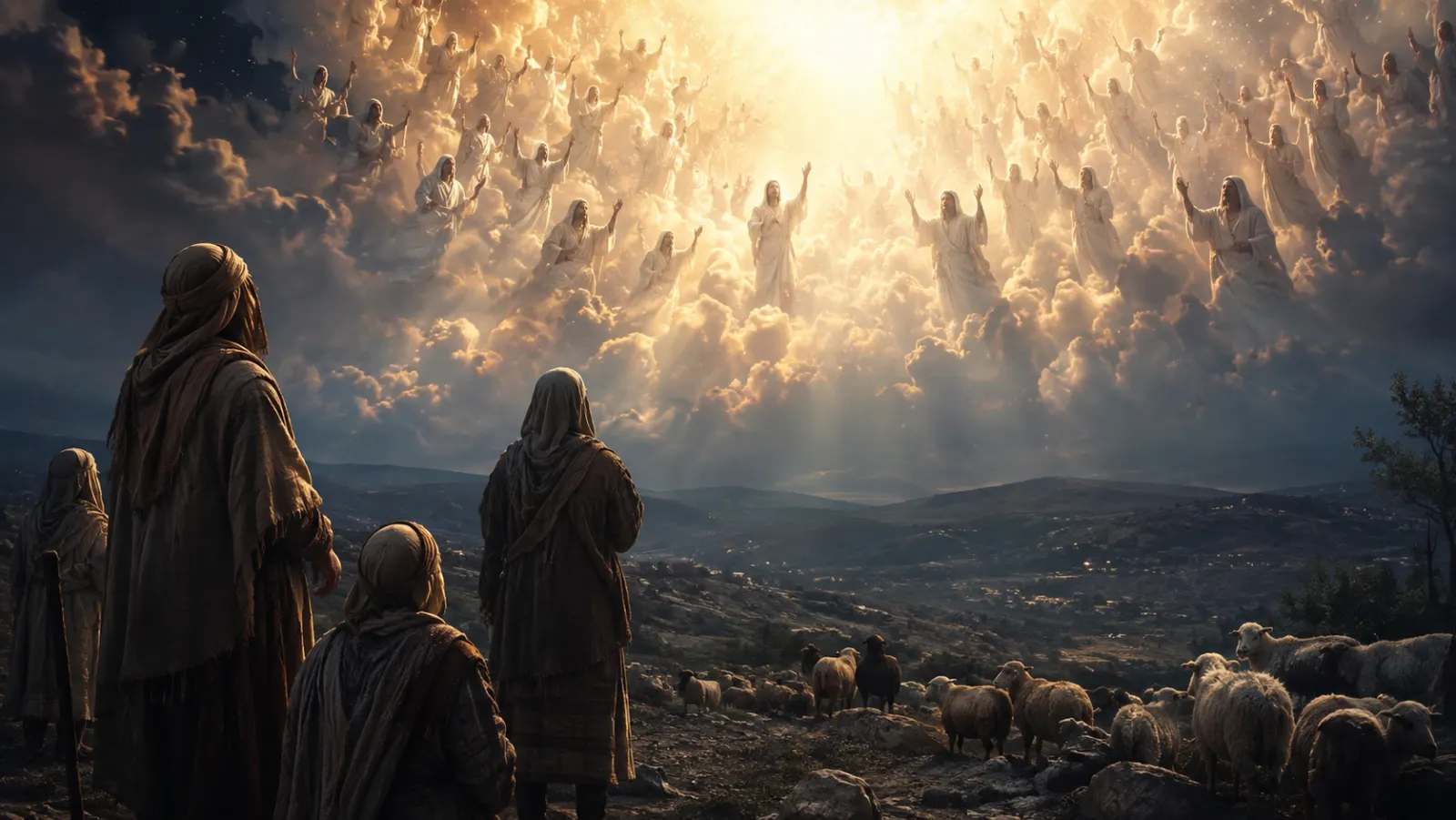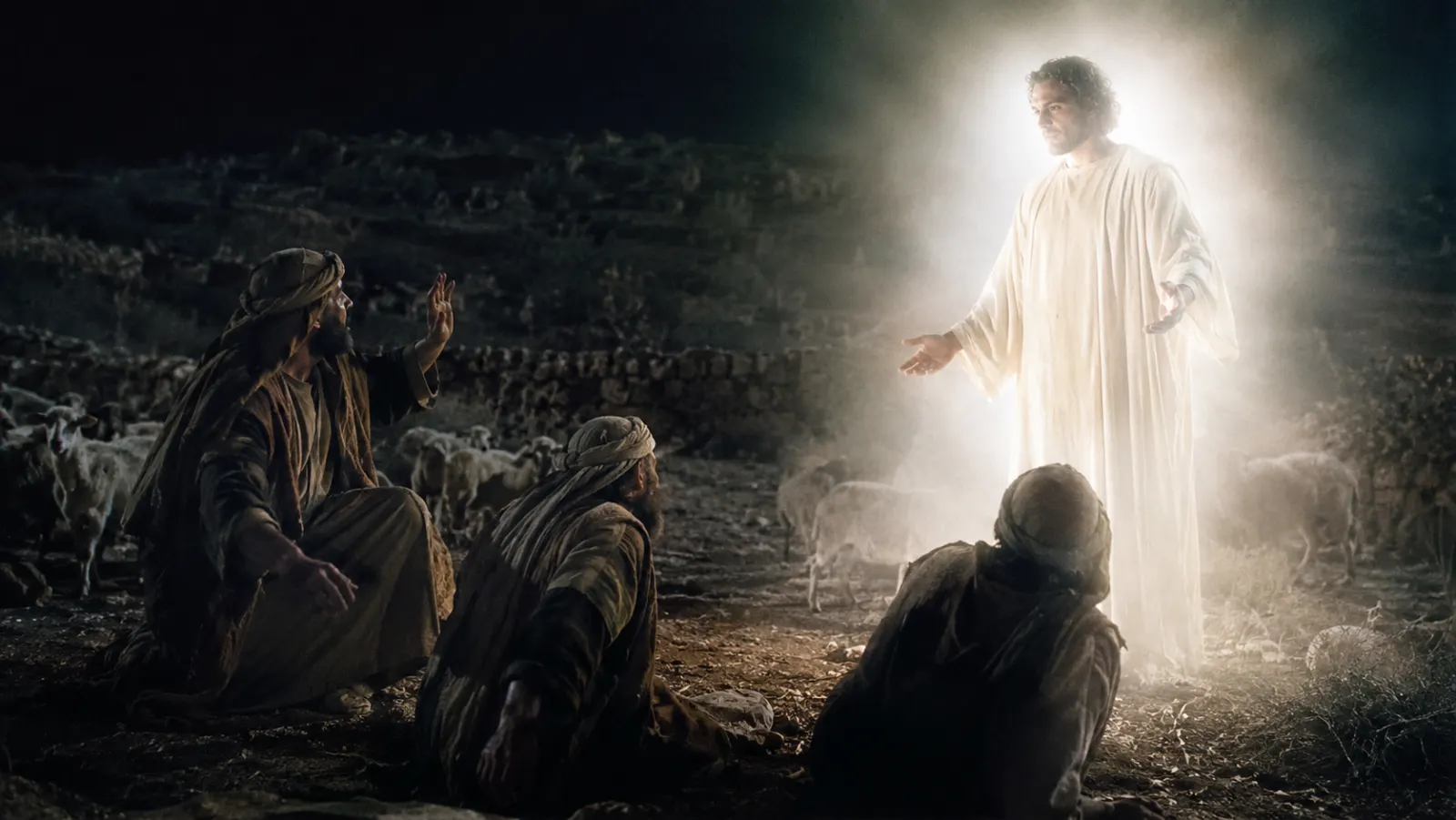
American Christmas culture has trained us to picture angels as soft, winged, glowing ornaments. Luke presents something more unsettling: a messenger from God whose arrival overwhelms ordinary people with fear.
Walk through an American store in December and angels are everywhere: gold wire wings, porcelain faces, soft white robes, sparkling halos, smiling children with feathers. None of that is automatically wrong as art. The problem begins when seasonal art quietly replaces the Bible in our imagination.
Luke 2 gives us no wings, no halo, no harp, and no description of a sweet expression. It gives us an angel of the Lord, the glory of the Lord, and shepherds who are overwhelmed with fear. The scene is not cozy until the messenger speaks. To understand why, we have to recover what “angel” means in Scripture.
“Angel” is first a job description: messenger
The Greek word angelos means messenger. In the Bible it can refer in some contexts to human messengers, but often it names heavenly beings sent by God. Their identity is defined less by a standardized appearance than by their relation to God and their assignment. They deliver messages, carry out divine purposes, worship, protect, announce, and sometimes execute judgment.
That already corrects a common American picture. Angels are not independent spiritual celebrities with their own inspirational brand. The biblical angel’s authority is derivative. The messenger matters because of the Sender. In Luke 2, the angel does not invite fascination with himself; he announces what God has done in the birth of Jesus.
The Bible does not give every angel wings
Some heavenly beings in Scripture are described with wings—cherubim and seraphim are obvious examples. But that does not mean every being called an angel is presented that way. In several biblical narratives, angelic visitors appear sufficiently human that people interact with them before fully understanding who they are. Hebrews even imagines people entertaining angels without realizing it.
So the familiar winged figure is an artistic synthesis, not a universal biblical anatomy chart. Christian art has every right to symbolize the heavenly, but readers should know the difference between symbol and text. Luke never asks us to picture feathers in the field.
The shepherds’ fear is not stage fright
Luke says the glory of the Lord shines around the shepherds and they are filled with great fear. This response matches a broad biblical pattern. Encounters with the holy or with powerful heavenly messengers destabilize ordinary human experience. Zechariah is afraid when Gabriel appears. Mary is troubled. Other biblical figures fall down, tremble, or need reassurance.
That is why “Do not be afraid” is not a cute slogan. It is mercy. The messenger has to interpret the event for terrified people. The fear comes before the content is understood. Only when the angel says he brings good news can the shepherds begin to reframe what is happening.
Biblical angels are powerful without becoming rivals to God
Modern spiritual culture sometimes treats angels as semi-independent guides: personal protectors to consult, energies to invoke, or comforting beings who exist mainly to make us feel watched over. Scripture can speak of angelic protection and service, but it consistently keeps worship directed toward God. In Revelation, angels refuse worship that belongs to the Lord.
Luke 2 makes the same hierarchy clear. The angel announces the Savior. The heavenly host praises God. The shepherds go to see Jesus. Every line moves away from angel-centered spirituality toward God’s action in Christ. The angels are magnificent precisely because they are servants of a greater glory.
The Christmas scene is more “otherworldly” than pop culture allows
American Christmas often domesticates the supernatural. A nativity can become so familiar that nothing in it feels dangerous, strange, or holy. Luke does the opposite. Night suddenly opens to divine glory. A heavenly multitude appears. Working people experience a rupture in ordinary perception.
That does not mean readers should chase extraordinary experiences or become obsessed with angel sightings. Luke’s narrative is not a manual for reproducing the event. It is a testimony that God’s world is larger than the visible horizon and that the birth of Jesus carries cosmic significance. The field becomes, briefly, a place where heaven and earth overlap.
Why the Bible leaves appearance details surprisingly open
Readers often want physical descriptions: How tall was the angel? Did he float? Did he have wings? What color was the light? Luke supplies almost none of that. His restraint is instructive. The message matters more than the visual specifications.
That can frustrate a culture trained by film and illustration, where every scene must be rendered. But the lack of detail protects us from confusing imagination with revelation. We are free to create art, pageants, and movies, but we should label those choices as interpretation. The text itself gives us enough: a heavenly messenger, divine glory, fear, reassurance, announcement, and praise.
The best angelology keeps Jesus at the center
If a Christmas teaching about angels ends with people more interested in angels than in Jesus, it has missed Luke’s architecture. The angel’s message contains titles that matter enormously: Savior, Messiah, Lord. Then the sign is not another heavenly display. It is a baby wrapped in cloths and lying in a manger.
That downward movement is the theological surprise. The spectacle of heaven points to the humility of incarnation. The angels do not compete with the child; they identify him. Their greatness is seen in how completely they direct attention to God’s greater act.
Cherubim, seraphim, and angels should not be collapsed into one creature
Popular art often mixes every heavenly being into a single visual species: human body, white robe, two wings, halo. Scripture is more varied. Cherubim guard holy space and appear in throne imagery. Seraphim in Isaiah have six wings. Other heavenly messengers may look human enough to be mistaken for ordinary men. “Angel” names a messenger role more than one standardized body type.
Keeping those categories distinct prevents two errors at once. We do not have to deny the Bible’s strange winged beings, and we do not have to give wings to every angelic messenger. Luke 2 simply does not tell us what the messenger’s body looked like. The glory surrounding the event is clear; the anatomy is not.
The command “Do not fear” preserves both holiness and grace
Modern spirituality sometimes tries to make the divine completely safe, therapeutic, and instantly comfortable. Other religious imaginations make God only terrifying. Luke holds something more biblical together. The shepherds are genuinely afraid because God’s glory has invaded their ordinary night. The angel does not tell them their fear is silly. He answers it with good news.
That sequence matters. Grace is not the denial of holiness; it is God’s merciful word spoken into the presence of holiness. The same scene that overwhelms the shepherds also reassures them. Christmas wonder is therefore neither sentimental softness nor spiritual horror. It is awe redirected by a message of salvation.
Christmas art can be faithful without pretending to be documentary
Christians have painted angels with wings, light, color, musical instruments, and visual symbols for centuries. Those choices can teach theology, create beauty, and communicate transcendence. Problems arise only when viewers forget that art is interpretation. A wing may symbolize heavenly movement; a halo may symbolize holiness; neither is supplied by Luke 2.
The healthiest posture is neither iconoclasm nor credulity. We can appreciate art while returning to the text for claims about what happened. That habit allows the Bible to correct our imagination without requiring us to strip Christmas of every creative image.
Why this matters for children as well as adults
Children absorb theology through pictures long before they can explain doctrine. A pageant angel with cardboard wings is harmless as play, but good teaching can still explain that the Bible does not say every angel has wings. That small distinction trains young readers to love both imagination and textual honesty.
Adults need the same discipline. Familiar images are powerful precisely because they are familiar. Returning to Luke with fresh attention helps us notice what is actually there: fear, glory, message, praise, and a Savior. Those elements are more compelling than the ornaments we sometimes add.
The angels of Christmas are more compelling when we stop forcing them into sentimental shapes. Luke’s messenger is not a decoration but a servant of the living God. The shepherds’ fear is reasonable; the reassurance is gracious; the announcement is the point.
Art can keep its wings and carols can keep their poetry. But Scripture should keep the final word. In Luke 2, angels exist to tell us who Jesus is, praise the God who sent him, and then disappear from the scene.