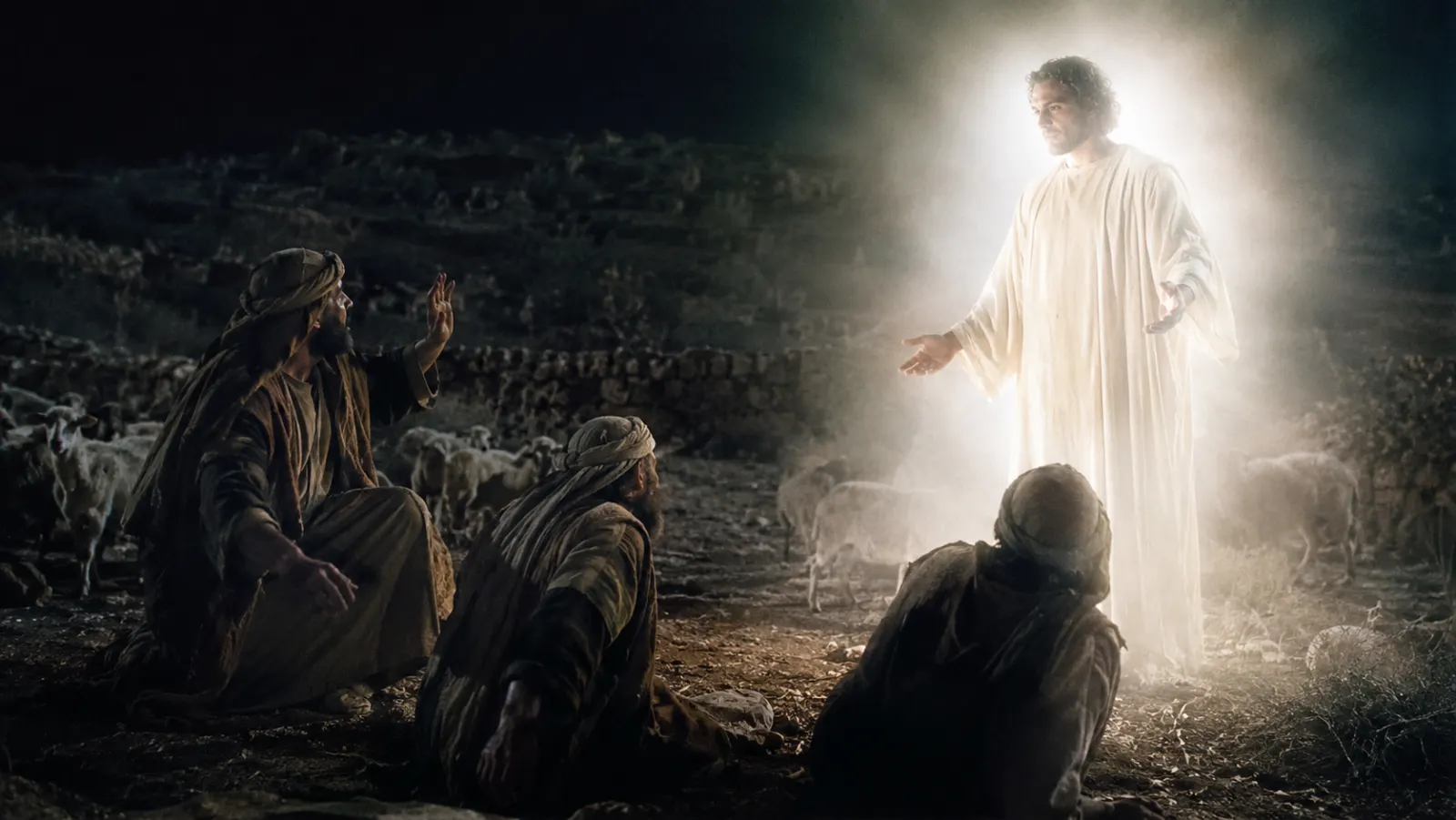
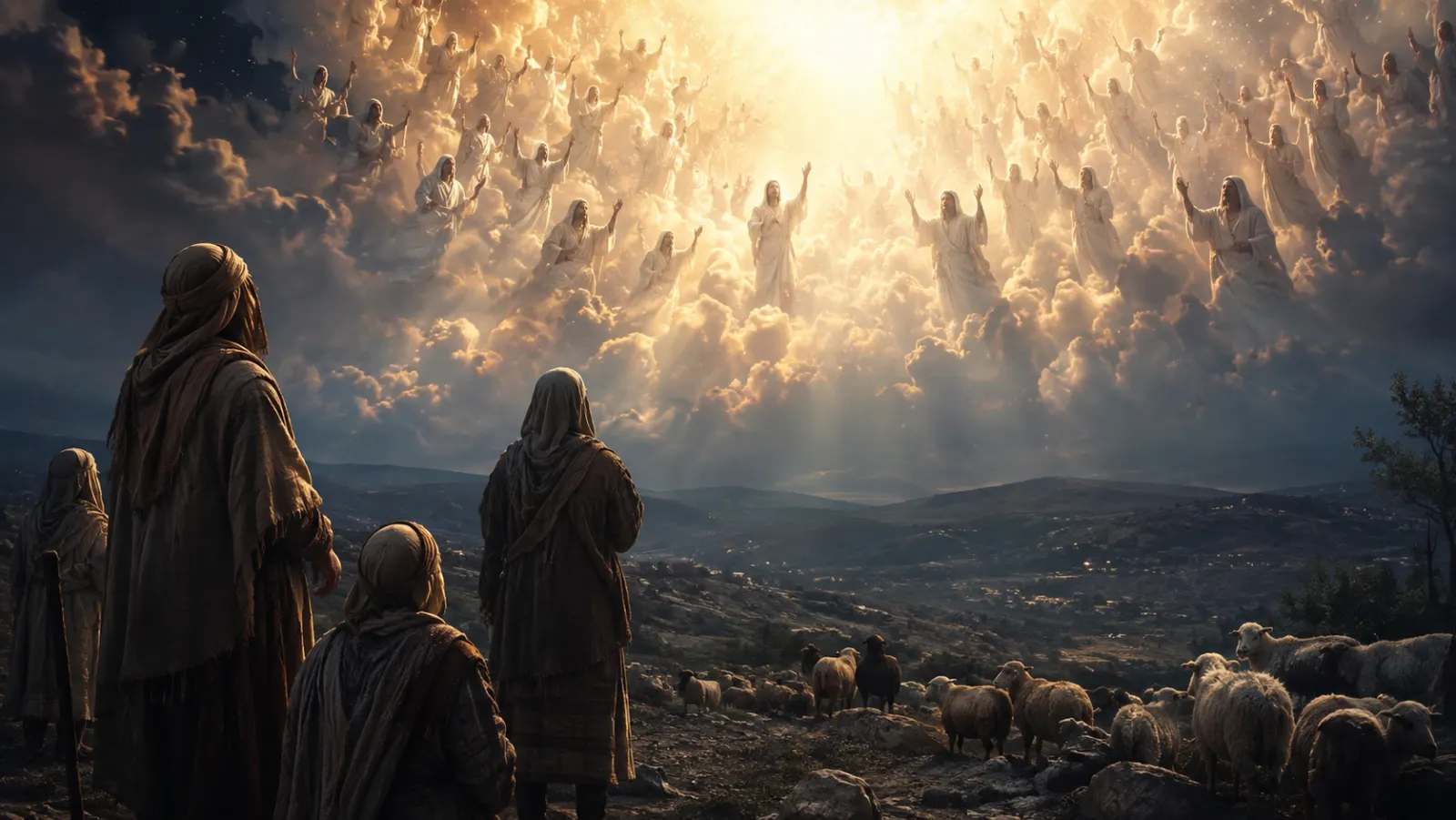
The shepherds of Luke 2 were not standing still with polished staffs beside a decorative flock. Shepherding was mobile, weather-exposed work built around water, grazing, protection, and constant attention.
The American Christmas imagination tends to freeze shepherding into a pose. A few men stand quietly under a star, sheep clustered at their feet, staffs upright like stage props. Real shepherding does not work that way. Animals move. Weather changes. Water has to be found. Stragglers wander. Predators and thieves are possible. Terrain matters.
Luke gives only a few details: shepherds are in the same region as Bethlehem, out in the fields, guarding their flock during the night. We should resist inventing what he does not tell us. But we can still reconstruct the kind of work his first readers would have recognized. The result is less sentimental and more human.
Bethlehem sits in hill country, not an endless green pasture
Bethlehem lies roughly five miles south of Jerusalem in the Judean hill country. The landscape is shaped by limestone ridges, terraced slopes, seasonal rainfall, fields, scrub, and pockets of grazing land. “Fields” in Luke should not automatically conjure a wide American meadow. Pastoral work in this environment involved using available land intelligently and moving animals through a patchwork of terrain.
Flocks could graze crop stubble after harvest, open ground, slopes, and areas unsuitable for intensive cultivation. Shepherding and farming were not always separate worlds. In settled communities, livestock could be part of a mixed household economy. That makes Luke’s shepherds easier to place inside a local rural system rather than imagining them as romantic nomads completely detached from Bethlehem.
A shepherd’s first skill was knowing where the flock could live
Sheep and goats need food and water, but the landscape does not provide both evenly. A capable shepherd had to know routes, wells, cisterns, seasonal vegetation, and the condition of the animals. Psalm 23’s language about pasture and water sounds beautiful because it draws on actual necessities. Good shepherding means getting vulnerable animals where they need to go.
This work required judgment rather than brute force. Different animals move differently. Young, pregnant, injured, or weak animals cannot always be driven at the pace of the strongest. Biblical shepherd imagery repeatedly depends on the idea that a good shepherd sees the condition of the flock. Luke does not describe those tasks that night, but the occupation he names carries that whole world behind it.
“Keeping watch” means more than staying awake
Luke’s wording highlights guard duty. Night watch would involve awareness of movement, sound, animals leaving the group, possible theft, and threats from predators. The exact local danger level at Bethlehem on that specific night is unknowable, but the biblical tradition assumes that shepherds may need to protect flocks. David recalls defending sheep from dangerous animals; Jesus later contrasts the good shepherd with the hired hand who abandons the flock when danger comes.
A night field is also simply hard on the body. Temperature drops after sunset in the hill country, especially outside summer. Sleep has to be managed. A fire may help depending on conditions. The point is not to dramatize every night as an attack. It is to remember that vigilance is labor. The shepherds are alert because animals have value and need protection.
Ancient flocks were economic assets, not pet collections
Sheep and goats contributed wool, hair, milk, meat, hides, manure, offspring, trade value, and sacrificial animals. Their importance varied by household and region, but losing animals could be economically painful. A flock represented stored livelihood moving on four legs.
That reality changes the emotional tone of Luke 2. The shepherds do not casually abandon a hobby when they decide to go to Bethlehem. The text does not explain how the flock is secured or whether some remain behind, so we should not invent a solution. But their decision to act “with haste” happens against the background of responsibility. The news is important enough to reorder the night.
Their tools were simple because the expertise was in the shepherd
A staff, sling, rope, bag, water skin, cloak, and perhaps other basic items could support the work, but ancient shepherding depended heavily on attention, memory, and experience. Modern ranching can use fencing, vehicles, GPS tags, veterinary systems, and powered water infrastructure. The ancient shepherd carried much more of the management system in his own habits and knowledge.
This is why biblical shepherd imagery becomes so relational. Sheep learn voices. Shepherds know the condition of animals. Guidance is physical and repeated. When Jesus later says the good shepherd knows his sheep, the metaphor draws power from an occupation where care is sustained over time rather than delivered through occasional inspection.
The night scene does not date Jesus’ birth with precision
Because the shepherds are outside at night, some readers argue Jesus could not have been born in December. Others use the same detail to argue for spring lambing season. The problem is that livestock practices vary with weather, elevation, rainfall, flock type, local custom, and the particular year. Luke does not present the shepherds as a calendar clue.
The safest historical conclusion is modest: flocks were being watched outside at night when the event occurred. That is meaningful narrative information, but it does not establish a month. The Gospel’s interest is not seasonal livestock scheduling; it is the startling fact that these workers become the audience for the announcement.
A realistic shepherd makes the biblical metaphor stronger
American readers often hear “shepherd” as a church word. Pastors shepherd congregations; Jesus is the Good Shepherd; Psalm 23 appears at funerals. The occupational reality underneath the metaphor can disappear. Recovering it restores weight: shepherding means guiding living creatures that can wander, weaken, panic, and need protection.
That makes the Christmas scene more than a quaint prelude to later theology. The people who hear “a Savior has been born” are practitioners of watchfulness and care. Luke does not tell us to turn them into symbols, but readers who know Israel’s Scriptures cannot miss that shepherding already belongs to the Bible’s language of kingship, leadership, and God’s own care for his people.
Sheep and goats were often managed together in the wider region
Biblical language can distinguish sheep from goats, yet pastoral economies in the Mediterranean and Near East often used both because they browse differently and provide different products. Luke simply says “flock,” so we should not insist on an all-white-sheep Christmas postcard. The important point is the managed group of animals under human care.
This matters visually and historically. Real flocks are uneven: young and old animals, different colors, animals that lag, press together, or wander. A historically grounded scene should look less like a department-store nativity and more like a working livestock environment. That realism helps readers feel why “keeping watch” is an active verb.
Bethlehem’s Davidic memory would have made shepherding resonate
Bethlehem was associated in Israel’s memory with David, the shepherd who became king. Luke does not explicitly say the Bethlehem shepherds are meant as new Davids, and we should resist turning every detail into a secret code. Still, readers formed by the Old Testament could hardly hear “Bethlehem” and “shepherds” without Davidic echoes nearby.
Those echoes enrich the scene without replacing its plain meaning. The angel announces a Davidic Messiah in David’s city to people practicing David’s former occupation. The narrative can carry both historical realism and scriptural resonance at the same time.
The word “shepherd” carried both practical and moral weight
Because shepherding required attentiveness, biblical writers could use it to describe leadership. Bad shepherds exploit or neglect; good shepherds feed, guide, and protect. Those metaphors only work because audiences knew the occupational demands behind them. The language is not decorative spirituality but a moral judgment drawn from work.
That background gives Luke’s scene a quiet resonance. The shepherds are not kings, but their occupation belongs to Israel’s vocabulary for kingship and care. The child they are sent to see will later describe his own mission through the image of a shepherd who knows and gives himself for the sheep.
The shepherds near Bethlehem were not porcelain figures. They were workers shaped by terrain, weather, animals, and responsibility. Their world smelled like livestock and earth. Their job required ordinary competence long before anything supernatural happened.
That historical realism serves Luke’s story. Heaven does not descend into a fantasy Christmas card. It interrupts a real night of work. The glory of God shines around people whose eyes are trained to watch the dark, and the message sends them from the flock toward the child in Bethlehem.