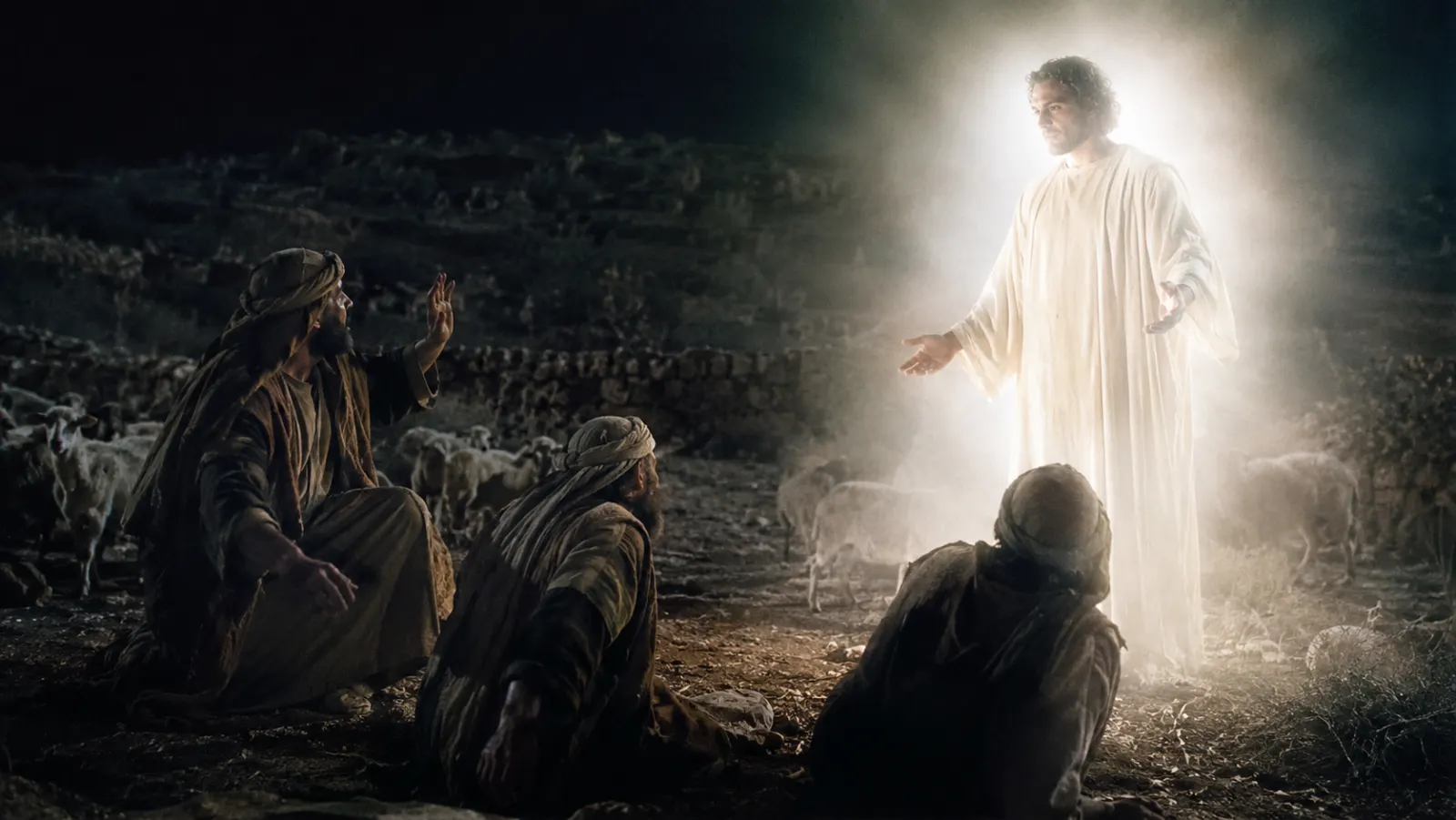
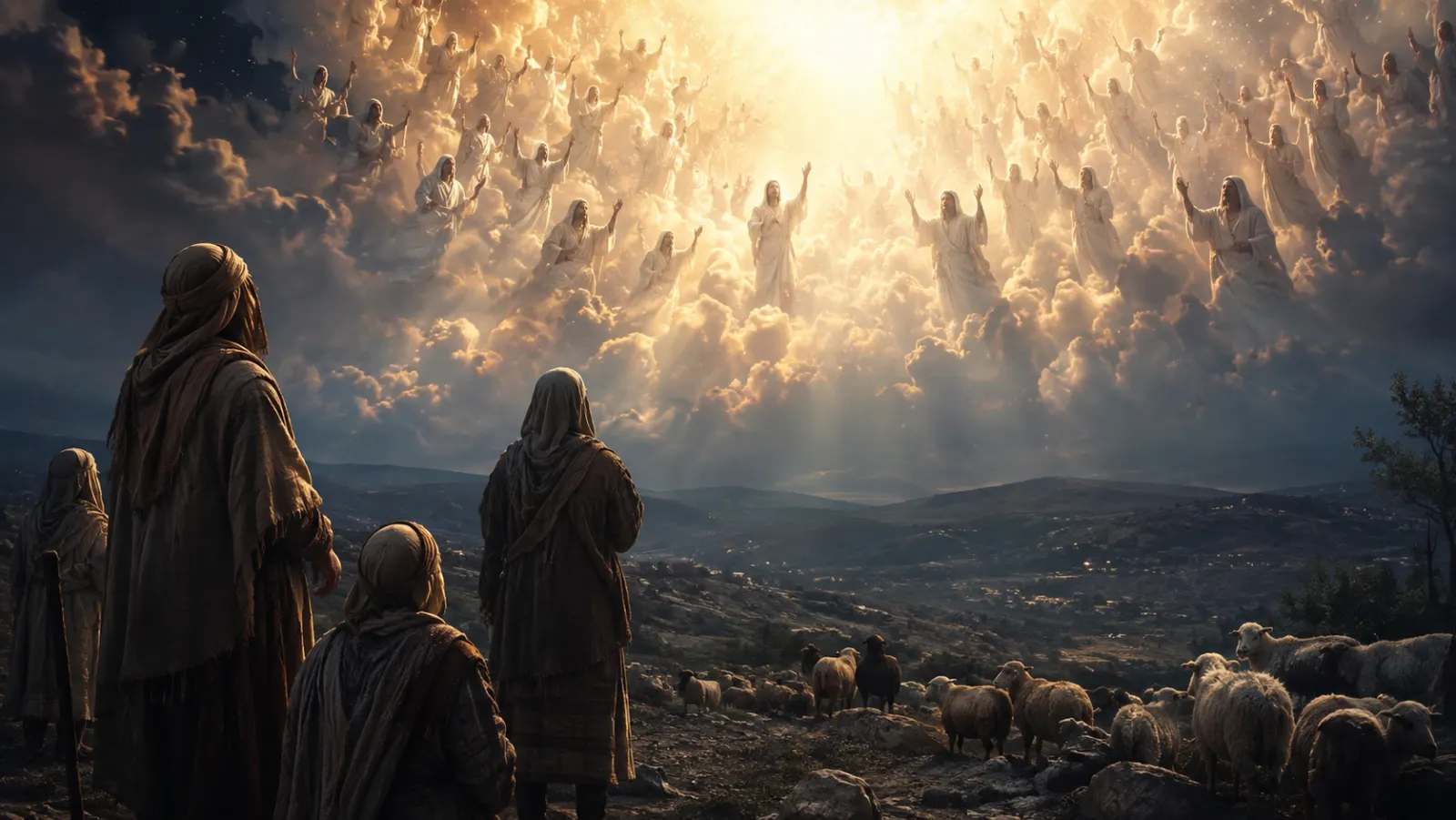
Luke could have placed the first public birth announcement in a palace, a priestly court, or a crowded city square. Instead, the news reaches people doing an ordinary, necessary job in the dark.
Every December, Americans encounter shepherds as part of the visual furniture of Christmas. They stand beside plastic mangers on suburban lawns, appear in children’s pageants wearing bathrobes and towels, and enter carols with a kind of soft-focus serenity. Luke’s shepherds are much less decorative. They are at work.
Luke 2 says they are out in the fields, keeping watch over their flock by night. That means responsibility, exposure, interrupted sleep, and the practical task of protecting valuable animals while most of the nearby town is indoors. The first people to hear the public announcement of Jesus’ birth are not off-duty religious specialists. They are people on the night shift.
The first audience is awake because somebody has to be
Night work has its own culture. Nurses, police dispatchers, warehouse crews, truck drivers, airport workers, security guards, line technicians, and parents with newborns know what it means to live while the rest of the world sleeps. The job still has to be done even when nobody is watching. Luke’s shepherds belong to that basic human world of necessary work.
We should not force a modern job category onto ancient shepherding, but the narrative detail matters. These men are not gathered for a spiritual retreat. They are carrying out a responsibility. The announcement of “good news of great joy” arrives in the middle of duty, not after the duties of ordinary life have been cleared away. Christmas begins, in Luke’s telling, by interrupting work.
Luke likes to move attention away from the obvious centers
This fits a larger pattern in Luke. Mary sings about the mighty being brought down and the humble lifted up. Jesus later announces good news to the poor and repeatedly places people of low public standing near the center of his stories. None of that means wealth, education, or public office are automatically evil. It means God’s action is not controlled by the usual ranking systems.
The shepherds fit that narrative instinct. They are not the only people who matter, and Luke never says that their occupation makes them morally superior. Their significance lies partly in the surprise: heaven’s announcement does not wait for the socially impressive. God’s message reaches working people in a field before it reaches anyone who might have expected an official briefing.
Ordinary work is not outside the reach of God
American Christianity can accidentally divide life into “spiritual” and “ordinary” zones. Church, prayer, mission trips, and Bible study count as obvious God-space; payroll, livestock, spreadsheets, maintenance calls, and midnight shifts can feel like the waiting room. Luke resists that division. The shepherds encounter God while doing the job in front of them.
That does not turn every workplace event into a hidden miracle. It does something more grounded. It says the God of the Gospel is able to meet people inside the material routines that keep communities alive. Fields, animals, fatigue, weather, and economic necessity are not beneath the story of redemption. The incarnation takes ordinary human life seriously because the Son of God actually enters it.
The shepherds are receivers before they are examples
It is tempting to turn every biblical character into a lesson about what we should do. “Be brave like David.” “Be faithful like Daniel.” “Be humble like the shepherds.” Luke starts somewhere else. Before the shepherds do anything admirable, they receive news. They are terrified, and the angel speaks reassurance before giving them a task.
That order matters in an American culture that often converts religion into self-improvement. Christmas is not first a story about becoming the sort of person God will notice. It is a story about God acting and announcing what he has done. The shepherds do respond with urgency, praise, and testimony, but those responses grow out of a gift that came to them first.
Their work helps the sign make sense without turning it into a code
The angel gives the shepherds a sign: they will find a baby wrapped in cloths and lying in a manger. Shepherds would certainly understand what a feeding place for animals was. That makes the sign concrete and recognizable. Luke does not say, however, that these particular shepherds raised sacrificial lambs for the Temple or that they instantly decoded the baby as a Passover symbol. Those popular claims go beyond what the text establishes.
The simpler connection is powerful enough. People who spend their nights around animals are told to look for a newborn in an animal feeding place. The heavenly announcement leads them toward an unmistakably earthly scene. God does not ask them to leave their knowledge of the real world behind; he uses a sign they can recognize.
The first movement after hearing is toward Jesus
Once the angels depart, the shepherds do not form a committee to analyze the experience. They say, in effect, “Let’s go see.” Luke emphasizes haste. Their response is active but not theatrical: they move from field to town, from message to the child, from extraordinary revelation to a particular family in a particular place.
That movement keeps the angels from becoming the center of the story. The supernatural spectacle is enormous, but its purpose is directional. The messengers point away from themselves. The shepherds follow the message to Jesus. A healthy reading of biblical angels should always preserve that direction: the wonder is real, but the wonder serves the revelation of God rather than competing with it.
Why this still lands in an American Christmas
Many Americans experience December as a collision of deadlines, travel, retail pressure, overtime, school events, caregiving, and expectations of perfect family joy. The shepherds offer a different emotional map. They are not waiting in ideal conditions. They are working in the dark when the announcement comes.
That is part of Luke’s pastoral force. The good news does not require a curated setting. It reaches people in the middle of responsibility. For the worker who cannot take Christmas Eve off, the parent who is exhausted, the person whose shift begins when others celebrate, and the believer who feels spiritually unremarkable, the field outside Bethlehem is a reminder that God’s attention is not reserved for the visible center.
Work is present in the Bible long before the modern “calling” conversation
American Christians often ask whether a job is a “calling,” and the question can become anxious: Did I choose the right career? Is my work meaningful enough? Luke does not answer those modern questions directly, but his scene refuses to make occupational prestige the measure of spiritual significance. The shepherds are not introduced because their résumé proves a special destiny. They are introduced because they are there, working, when God’s announcement comes.
That is a useful correction. Vocation in Scripture is larger than career optimization. A person can serve God in necessary, ordinary work that will never become a platform. The shepherds’ night suggests that faithfulness may look like staying awake, protecting what has been entrusted to you, and then responding when God redirects your attention.
The field also exposes the difference between visibility and importance
Modern American life repeatedly equates importance with visibility. The people who matter are the people with microphones, followers, titles, credentials, or access. Shepherding happens largely out of sight. Most of the night, nobody applauds a shepherd for preventing a sheep from wandering away. The value of the work is measured by what is preserved, not by how public the labor becomes.
Luke’s story quietly subverts our instinct to rank lives by audience size. The shepherds become central for a moment not because they engineered visibility but because God addressed them. Their significance is received. That distinction protects Christian humility: being seen by God is not the same thing as being seen by everyone.
The shepherds matter not because ancient shepherding was secretly glamorous, and not because God only loves people with humble jobs. They matter because Luke lets the birth of Jesus break into ordinary labor before it becomes public celebration.
The night shift heard first. Then they went, saw, told, and returned glorifying God. In that sequence, Christmas becomes more than a seasonal tableau. It becomes news that enters real life, finds people at work, and redirects their attention toward Christ.