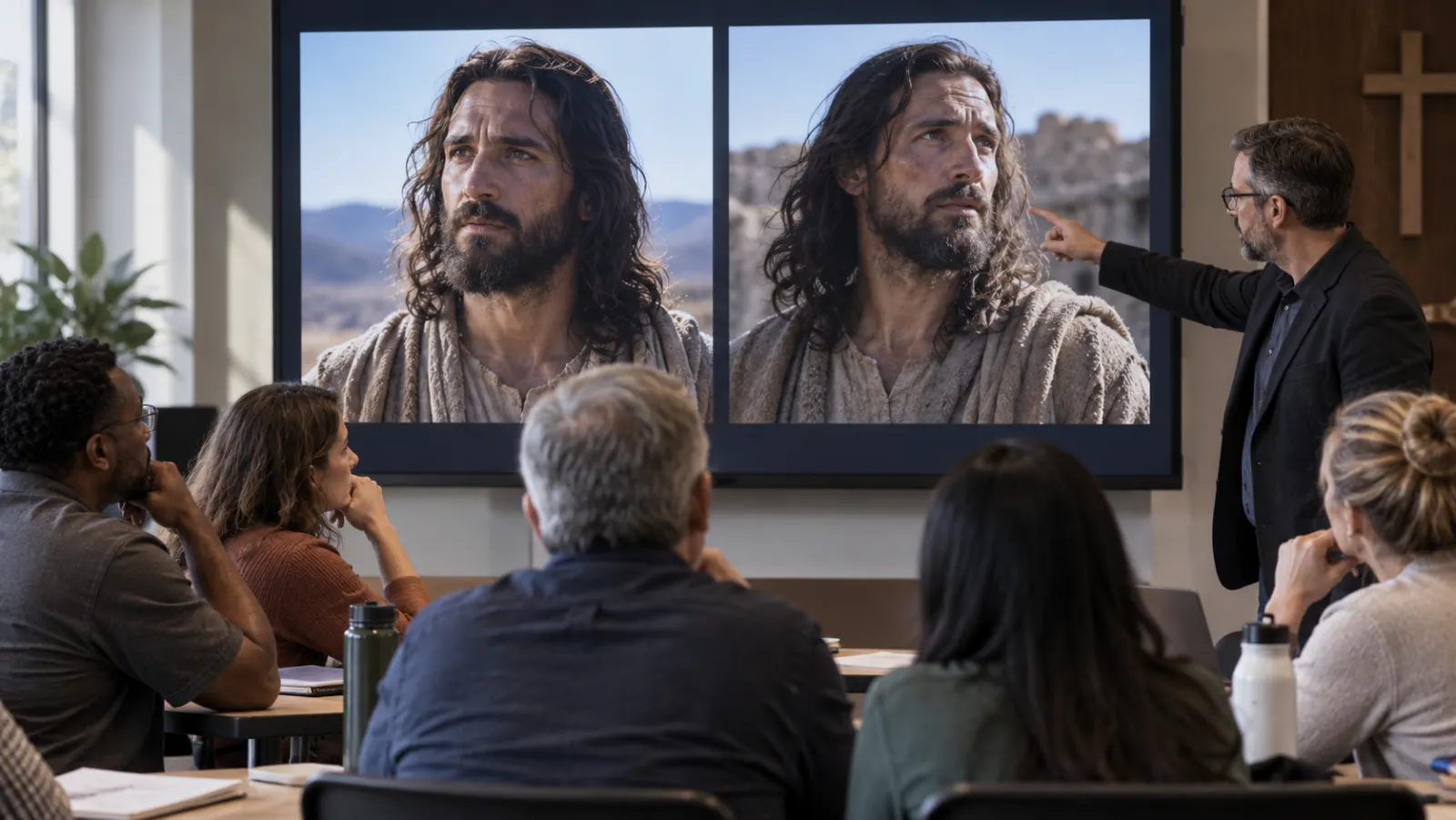
If Jesus only looked human, then hunger, temptation, obedience, pain, and death become theater. The Gospels insist on something far more consequential.
A superhero can put on ordinary clothes without becoming ordinary. That picture quietly shapes some Christian imaginations of Jesus: divinity hidden underneath, humanity worn on top. In that version, fatigue is makeup, temptation is scripted, and suffering cannot quite touch him. The New Testament will not let us keep that comfortable Christ.
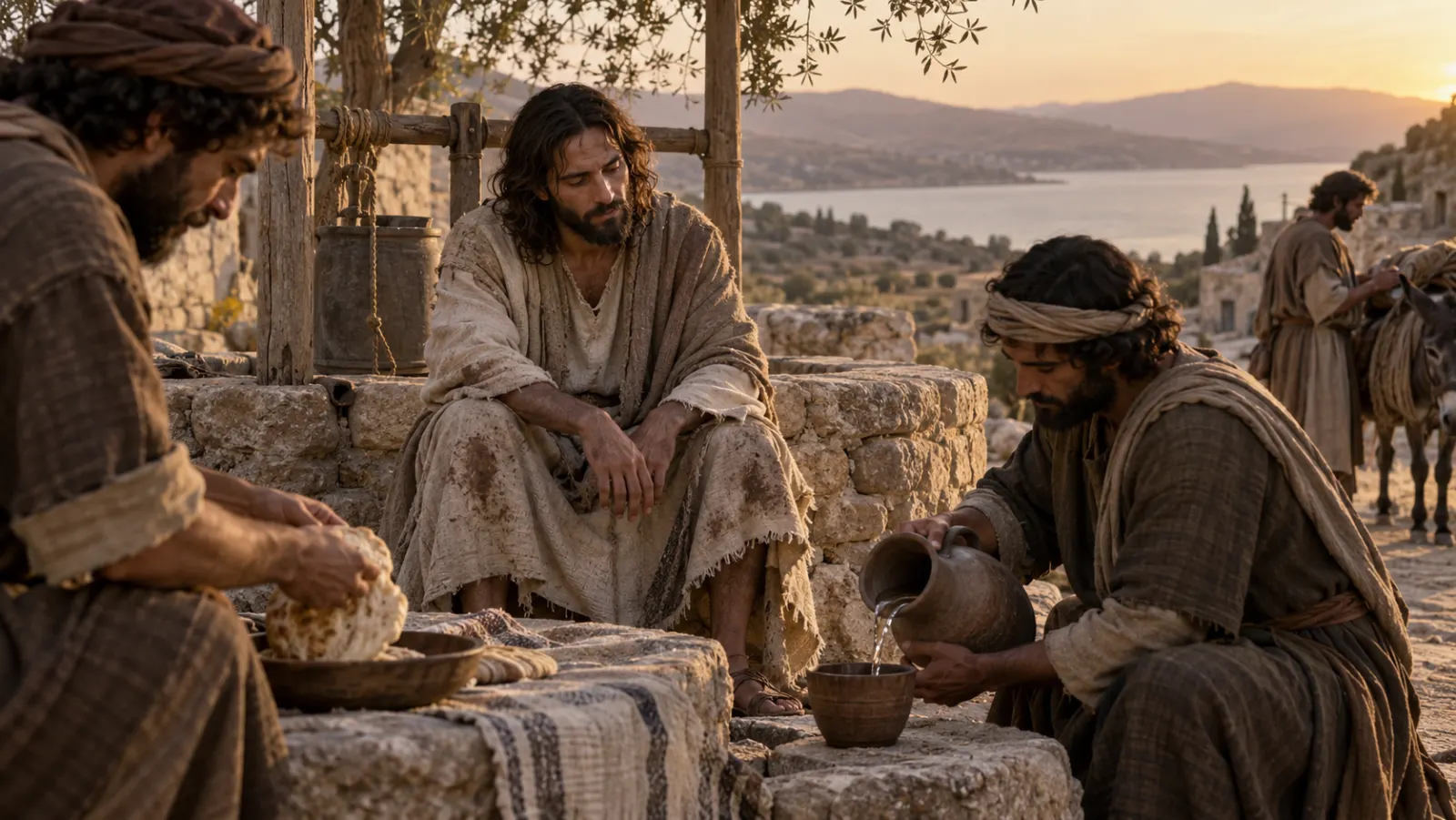
Jesus is tired beside a well, asleep in a storm, hungry in the wilderness, troubled before death, and dependent on others’ hospitality. These are not continuity errors in a story about God. They belong to the church’s confession that the Son became human.
An old shortcut with a modern appeal
Early Christians used the word Docetism for views that made Christ’s body or suffering only apparent. The shortcut protected a certain idea of divine purity, but at a terrible cost: it separated God from the material life Christians said he came to redeem. The same instinct returns whenever we are embarrassed by Jesus’ limits.
Real growth is not a defect
Luke says Jesus grew in wisdom and stature. That does not mean his divine identity slowly improved. It means the Son lived a genuine human development rather than downloading adult experience in infancy. Childhood, learning, craft, memory, and relationship belong to his humanity.
Temptation without pretending
Christians confess that Jesus did not sin, but that does not make temptation a fake exam with the answers exposed. Hebrews grounds his merciful help in his tested life. Sinlessness is not the absence of human pressure; it is faithful love under pressure.
Suffering was not observed from backstage
At the cross, Jesus does not watch a disposable body suffer on his behalf. The one person Jesus Christ suffers and dies in his human nature. Christian language must remain careful, yet its pastoral center is plain: God has not remained a spectator to human pain.
Why the distinction matters now
A costume-Christ can bless a costume-faith: polished worship that hides exhaustion, leaders who deny limits, and believers ashamed to need therapy, medicine, sleep, or help. Real humanity makes dependence ordinary and truthful confession possible.
Mystery without evasion
No analogy fully explains how one person is divine and human. The church’s classical language sets boundaries more than it supplies a mechanism. Jesus is not divided into two persons or blended into a third kind of being. Mystery is not permission to contradict the evidence of his human life.
Questions for embodied practice
To bring this reading into an actual congregation, begin with a precise question: Where have we imagined Jesus’ humanity as a disguise? Return to Hebrews 2:10–18, separate what the passage states from what we infer, and listen first to people who will live with the consequences. Then choose one bounded action, name who owns it, and set a review date. The incarnation will not let a conclusion remain safely general when bodies, homes, and relationships will carry its cost.
The answer may land differently across American lives: Why does real human growth matter? Income, race, region, age, disability, work schedule, gender, and family status can alter the experience without altering the gospel. A mature community asks for concrete cases, seeks relevant expertise, and permits disagreement without threatening belonging. Biblical application becomes more faithful when it can receive new evidence, repair harm, and explain what changed.
A pastoral way to work through “The Incarnation Is Not God Wearing a Costume” is to ask: What does Hebrews mean by tested compassion? Sincerity is not enough. Care requires consent, resources, limits, and accountability. A church should say what it can offer, what lies outside its competence, and which qualified partners it will involve. Prayer and study sustain the process; neither replaces professional attention nor permits another person's vulnerability to become institutional publicity.
To bring this reading into an actual congregation, begin with a precise question: Which human limits does our church treat as failures? Return to Hebrews 2:10–18, separate what the passage states from what we infer, and listen first to people who will live with the consequences. Then choose one bounded action, name who owns it, and set a review date. The incarnation will not let a conclusion remain safely general when bodies, homes, and relationships will carry its cost.
The answer may land differently across American lives: How can we honor mystery without using it as an escape? Income, race, region, age, disability, work schedule, gender, and family status can alter the experience without altering the gospel. A mature community asks for concrete cases, seeks relevant expertise, and permits disagreement without threatening belonging. Biblical application becomes more faithful when it can receive new evidence, repair harm, and explain what changed.
When this practice is reviewed, the community can record what happened after asking: Where have we imagined Jesus’ humanity as a disguise? The impression of those who designed the response is not enough. Receive voluntary testimony, notice unexpected costs, and identify who remained outside. If the practice did not produce truth, justice, care, and communion, changing it does not betray biblical conviction; it may be a humble way to obey more faithfully. Review 1 should end with a decision people can understand and see communicated.
When this practice is reviewed, the community can record what happened after asking: Why does real human growth matter? The impression of those who designed the response is not enough. Receive voluntary testimony, notice unexpected costs, and identify who remained outside. If the practice did not produce truth, justice, care, and communion, changing it does not betray biblical conviction; it may be a humble way to obey more faithfully. Review 2 should end with a decision people can understand and see communicated.
When this practice is reviewed, the community can record what happened after asking: What does Hebrews mean by tested compassion? The impression of those who designed the response is not enough. Receive voluntary testimony, notice unexpected costs, and identify who remained outside. If the practice did not produce truth, justice, care, and communion, changing it does not betray biblical conviction; it may be a humble way to obey more faithfully. Review 3 should end with a decision people can understand and see communicated.
When this practice is reviewed, the community can record what happened after asking: Which human limits does our church treat as failures? The impression of those who designed the response is not enough. Receive voluntary testimony, notice unexpected costs, and identify who remained outside. If the practice did not produce truth, justice, care, and communion, changing it does not betray biblical conviction; it may be a humble way to obey more faithfully. Review 4 should end with a decision people can understand and see communicated.
When this practice is reviewed, the community can record what happened after asking: How can we honor mystery without using it as an escape? The impression of those who designed the response is not enough. Receive voluntary testimony, notice unexpected costs, and identify who remained outside. If the practice did not produce truth, justice, care, and communion, changing it does not betray biblical conviction; it may be a humble way to obey more faithfully. Review 5 should end with a decision people can understand and see communicated.
The incarnation means God did not save us through playacting. Jesus’ obedience, compassion, tears, wounds, and death belong to a truly human story.
That truth gives Christian hope weight. The Savior knows creaturely life not as data gathered from above, but as the life he freely made his own.