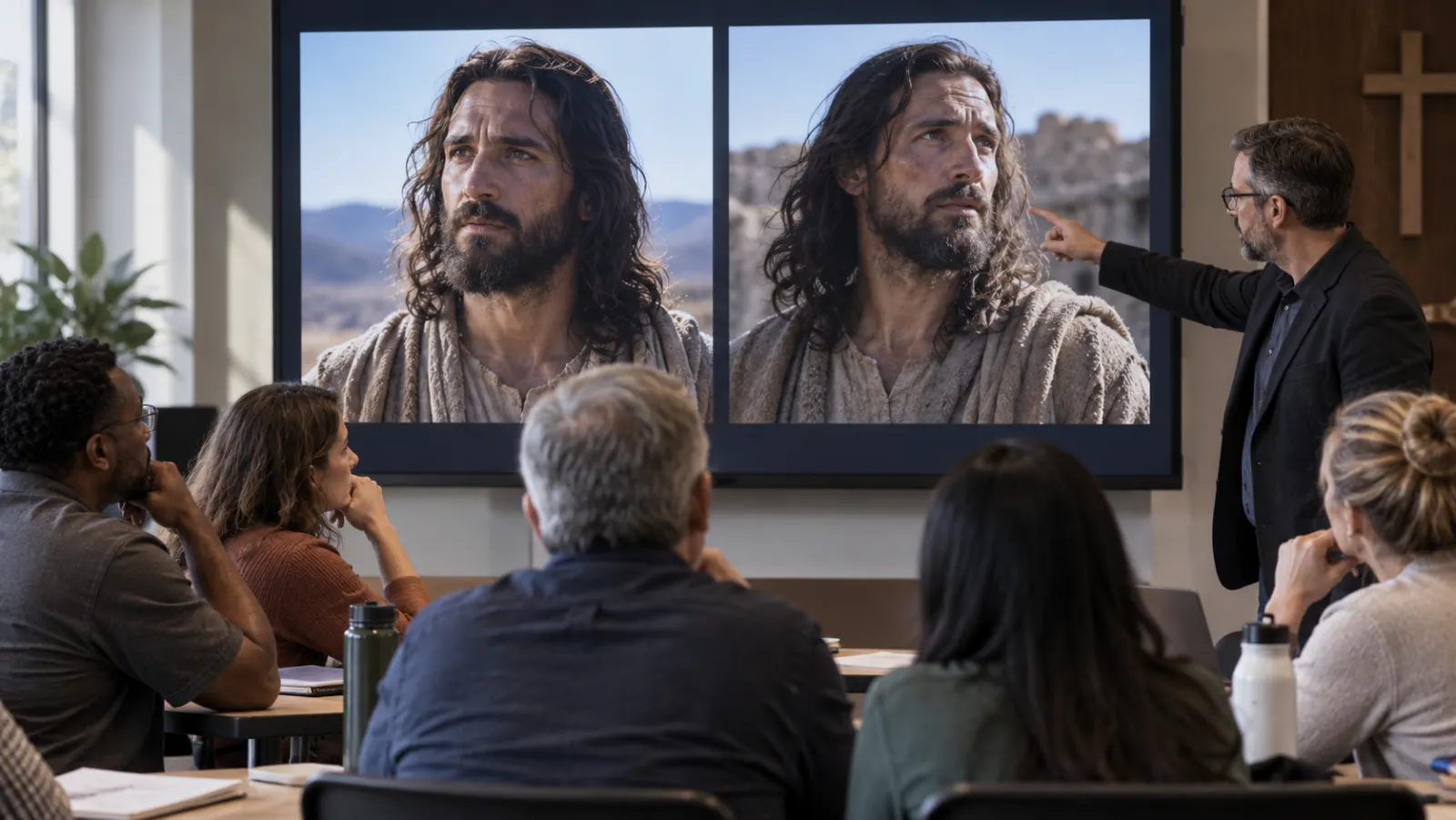
The Son of God did not grow up everywhere in general. He belonged to a small place, learned local habits, and was known by neighbors who could dismiss him.
Americans often answer the question Where are you from? with a mixture of pride and escape. A hometown can carry accent, family, class, race, football rivalries, grief, and the old version of us that refuses to disappear. Jesus knew that pressure. Before crowds named him teacher or Messiah, neighbors knew him as the local craftsman.
The incarnation is radically particular. The Son did not become a generic human assembled from universal traits. He became a Jewish man from Galilee, associated with Nazareth—a place obscure enough to provoke a joke.
Nazareth was not a blank backdrop
Archaeology points to a small Jewish settlement in the hill country of lower Galilee. Its residents lived near fields, stone houses, family networks, and larger centers touched by Roman power. We should resist pretending to know the layout of Jesus’ workshop, but the ordinary scale matters.
Particularity is not limitation of love
Some assume that universal significance requires freedom from local identity. Scripture shows the opposite. God’s promise travels through named people and places. Jesus’ Jewishness and Galilean formation do not reduce his relevance; they are the concrete route by which God addresses the world.
Familiarity can refuse surprise
Nazareth remembers Jesus before his public ministry and asks who he thinks he is. Hometowns can recognize pretense, but they can also imprison people in inherited categories. The scene warns churches against assuming that long acquaintance gives ownership of God’s work.
Place forms moral attention
Where we live trains what we notice: whose commute counts, which school has resources, whose water is trusted, which disaster receives a fundraiser, and who is called local. Following Jesus includes learning the histories and pressures of the actual place where a congregation worships.
Mobility has a cost
American mobility can create opportunity and freedom from harm. It can also produce congregations that consume neighborhoods without belonging to them. The incarnation does not demand romantic attachment to every hometown, but it challenges the fantasy that mature people need no rooted obligations.
God works through the overlooked
Nazareth never becomes impressive by imperial standards. That is part of the theological claim. God’s saving work does not wait for elite zip codes, national platforms, or cultural approval. A small place can be neither idolized nor despised.
Questions for embodied practice
To bring this reading into an actual congregation, begin with a precise question: What can we responsibly know about Nazareth? Return to Luke 4:14–30, separate what the passage states from what we infer, and listen first to people who will live with the consequences. Then choose one bounded action, name who owns it, and set a review date. The incarnation will not let a conclusion remain safely general when bodies, homes, and relationships will carry its cost.
The answer may land differently across American lives: Which local identities shaped Jesus’ human life? Income, race, region, age, disability, work schedule, gender, and family status can alter the experience without altering the gospel. A mature community asks for concrete cases, seeks relevant expertise, and permits disagreement without threatening belonging. Biblical application becomes more faithful when it can receive new evidence, repair harm, and explain what changed.
A pastoral way to work through “Jesus Had a Hometown” is to ask: How does familiarity distort our hearing? Sincerity is not enough. Care requires consent, resources, limits, and accountability. A church should say what it can offer, what lies outside its competence, and which qualified partners it will involve. Prayer and study sustain the process; neither replaces professional attention nor permits another person's vulnerability to become institutional publicity.
To bring this reading into an actual congregation, begin with a precise question: What history of our own neighborhood have we ignored? Return to Luke 4:14–30, separate what the passage states from what we infer, and listen first to people who will live with the consequences. Then choose one bounded action, name who owns it, and set a review date. The incarnation will not let a conclusion remain safely general when bodies, homes, and relationships will carry its cost.
The answer may land differently across American lives: Can we belong to a place without idolizing it? Income, race, region, age, disability, work schedule, gender, and family status can alter the experience without altering the gospel. A mature community asks for concrete cases, seeks relevant expertise, and permits disagreement without threatening belonging. Biblical application becomes more faithful when it can receive new evidence, repair harm, and explain what changed.
When this practice is reviewed, the community can record what happened after asking: What can we responsibly know about Nazareth? The impression of those who designed the response is not enough. Receive voluntary testimony, notice unexpected costs, and identify who remained outside. If the practice did not produce truth, justice, care, and communion, changing it does not betray biblical conviction; it may be a humble way to obey more faithfully. Review 1 should end with a decision people can understand and see communicated.
When this practice is reviewed, the community can record what happened after asking: Which local identities shaped Jesus’ human life? The impression of those who designed the response is not enough. Receive voluntary testimony, notice unexpected costs, and identify who remained outside. If the practice did not produce truth, justice, care, and communion, changing it does not betray biblical conviction; it may be a humble way to obey more faithfully. Review 2 should end with a decision people can understand and see communicated.
When this practice is reviewed, the community can record what happened after asking: How does familiarity distort our hearing? The impression of those who designed the response is not enough. Receive voluntary testimony, notice unexpected costs, and identify who remained outside. If the practice did not produce truth, justice, care, and communion, changing it does not betray biblical conviction; it may be a humble way to obey more faithfully. Review 3 should end with a decision people can understand and see communicated.
When this practice is reviewed, the community can record what happened after asking: What history of our own neighborhood have we ignored? The impression of those who designed the response is not enough. Receive voluntary testimony, notice unexpected costs, and identify who remained outside. If the practice did not produce truth, justice, care, and communion, changing it does not betray biblical conviction; it may be a humble way to obey more faithfully. Review 4 should end with a decision people can understand and see communicated.
When this practice is reviewed, the community can record what happened after asking: Can we belong to a place without idolizing it? The impression of those who designed the response is not enough. Receive voluntary testimony, notice unexpected costs, and identify who remained outside. If the practice did not produce truth, justice, care, and communion, changing it does not betray biblical conviction; it may be a humble way to obey more faithfully. Review 5 should end with a decision people can understand and see communicated.
When this practice is reviewed, the community can record what happened after asking: What can we responsibly know about Nazareth? The impression of those who designed the response is not enough. Receive voluntary testimony, notice unexpected costs, and identify who remained outside. If the practice did not produce truth, justice, care, and communion, changing it does not betray biblical conviction; it may be a humble way to obey more faithfully. Review 6 should end with a decision people can understand and see communicated.
Jesus’ hometown could not contain his mission, but it remained part of the truth about him. The risen Lord is still Jesus of Nazareth.
Christians honor the incarnation when they love places honestly: receiving their gifts, naming their sins, listening to neighbors, and refusing to believe that importance belongs only somewhere else.