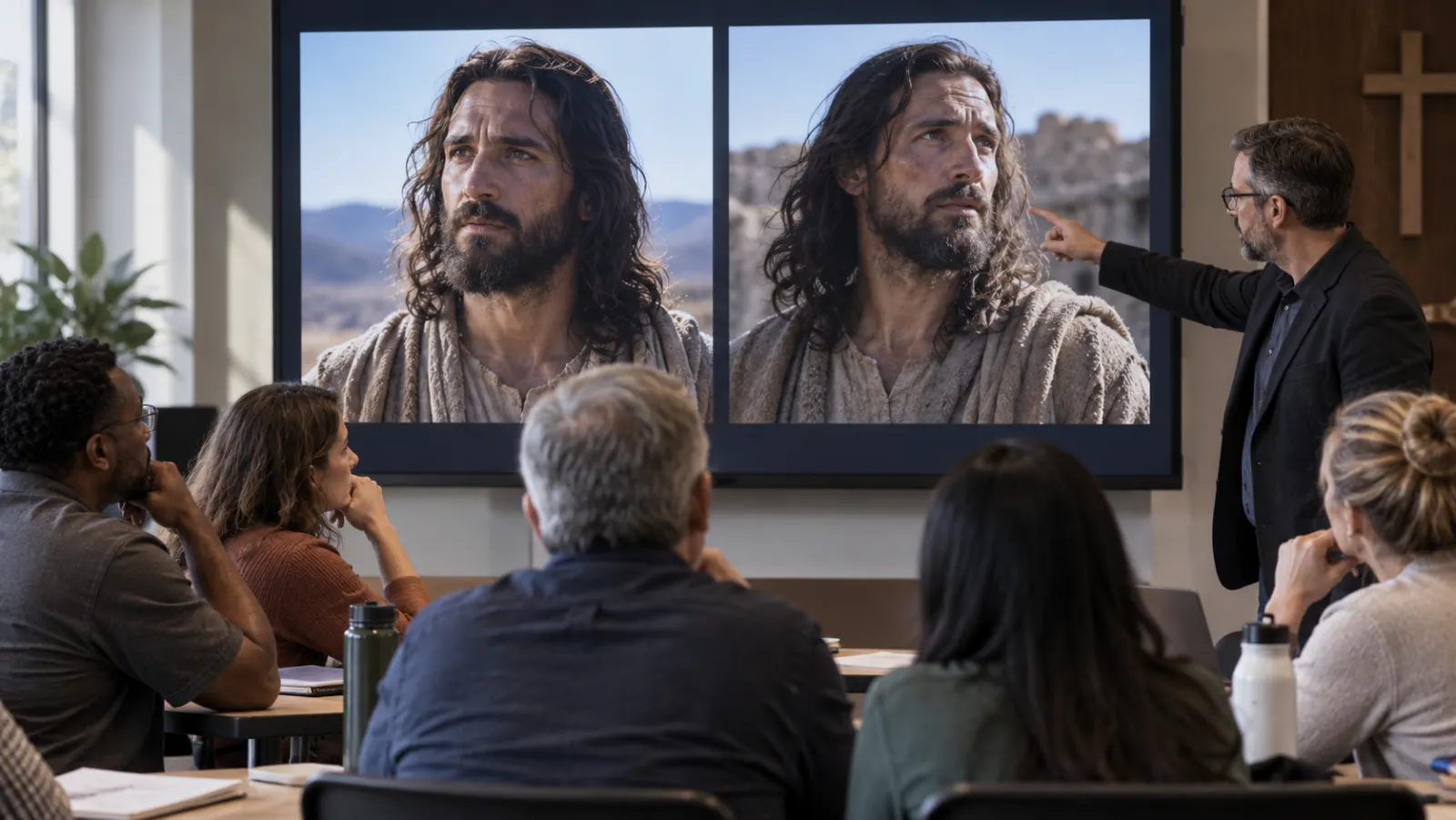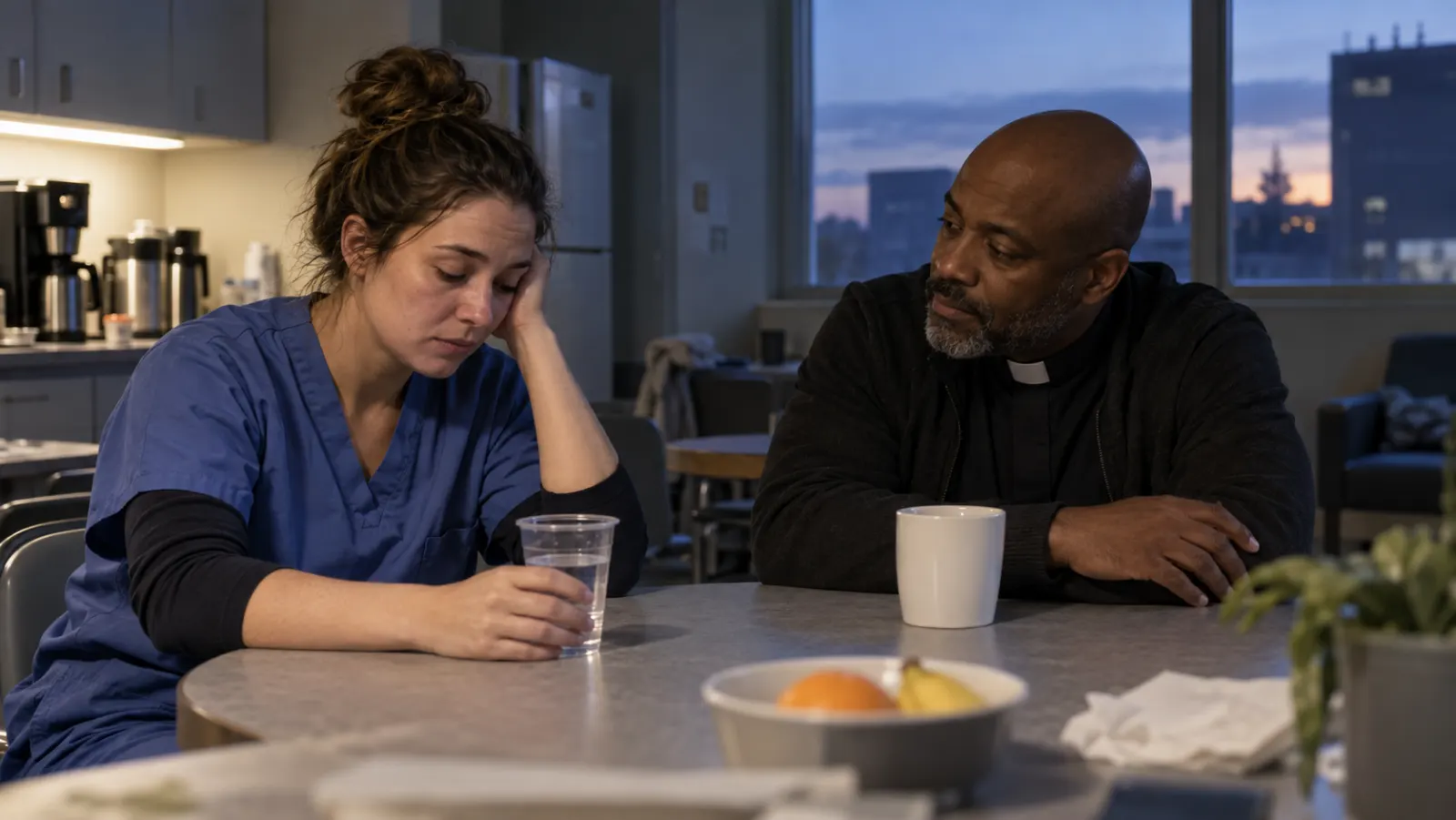
Jesus’ weariness is not a devotional decoration. It speaks to workers and caregivers whose limits are treated as inconveniences or failures.
You fall asleep during prayer, miss a child’s story, forget a familiar word, and wake already behind. The schedule says this is temporary, but temporary has lasted three years. In American workplaces and homes, fatigue is often treated as a private time-management problem even when staffing, caregiving, low wages, illness, or grief created it.
The Gospels say that Jesus sat by a well because he was tired from the journey. The detail is small and revolutionary. The one Christians worship did not merely understand fatigue as an observer. He inhabited the limits of a human nervous system and body.
Weariness is not the same as unfaithfulness
Jesus’ fatigue does not indicate spiritual failure. He sleeps, withdraws, receives food, and asks companions to keep watch. Christians can be irresponsible, but the mere fact of needing rest is not evidence that devotion is weak. Shame adds weight without restoring strength.
Rest is personal and structural
A quiet evening cannot repair a chronically unsafe workload. Workers may need staffing changes, predictable schedules, fair pay, clinical attention, family support, or legal protection. A church that offers a spa-themed sermon while praising exploitative labor has spiritualized a material problem.
Jesus receives care
The incarnate Son accepts meals, shelter, friendship, and ministry from others. Dependence is not beneath him. For exhausted leaders, that truth challenges the fantasy that indispensability is holiness. Receiving help can be an act of truth rather than a reluctant exception.
Compassion needs boundaries
Jesus notices crowds, and he also seeks solitude. Not every request becomes his assignment in the same moment. Christians can love neighbors without promising access they cannot sustain. Clear limits are kinder than resentful availability followed by collapse.
Prayer can become smaller
A tired person may not manage long reading plans or eloquent words. A breath, a psalm heard aloud, a request for daily bread, or silent consent to another person’s prayer can be faithful. The church should carry people rather than grade their devotional output.
Hope does not deny the body
Sometimes exhaustion signals depression, sleep disorder, infection, medication effects, or another condition requiring qualified care. Seeking medical or mental-health help is not a failure to trust God. Incarnational hope respects the body enough to take its warnings seriously.
Questions for embodied practice
To bring this reading into an actual congregation, begin with a precise question: What is producing this exhaustion? Return to John 4:4–8, separate what the passage states from what we infer, and listen first to people who will live with the consequences. Then choose one bounded action, name who owns it, and set a review date. The incarnation will not let a conclusion remain safely general when bodies, homes, and relationships will carry its cost.
The answer may land differently across American lives: Which need requires professional care? Income, race, region, age, disability, work schedule, gender, and family status can alter the experience without altering the gospel. A mature community asks for concrete cases, seeks relevant expertise, and permits disagreement without threatening belonging. Biblical application becomes more faithful when it can receive new evidence, repair harm, and explain what changed.
A pastoral way to work through “Does God Understand What It Is to Be Tired?” is to ask: What workload or expectation must change? Sincerity is not enough. Care requires consent, resources, limits, and accountability. A church should say what it can offer, what lies outside its competence, and which qualified partners it will involve. Prayer and study sustain the process; neither replaces professional attention nor permits another person's vulnerability to become institutional publicity.
To bring this reading into an actual congregation, begin with a precise question: Can I receive help without apology? Return to John 4:4–8, separate what the passage states from what we infer, and listen first to people who will live with the consequences. Then choose one bounded action, name who owns it, and set a review date. The incarnation will not let a conclusion remain safely general when bodies, homes, and relationships will carry its cost.
The answer may land differently across American lives: How can our church carry tired people this week? Income, race, region, age, disability, work schedule, gender, and family status can alter the experience without altering the gospel. A mature community asks for concrete cases, seeks relevant expertise, and permits disagreement without threatening belonging. Biblical application becomes more faithful when it can receive new evidence, repair harm, and explain what changed.
When this practice is reviewed, the community can record what happened after asking: What is producing this exhaustion? The impression of those who designed the response is not enough. Receive voluntary testimony, notice unexpected costs, and identify who remained outside. If the practice did not produce truth, justice, care, and communion, changing it does not betray biblical conviction; it may be a humble way to obey more faithfully. Review 1 should end with a decision people can understand and see communicated.
When this practice is reviewed, the community can record what happened after asking: Which need requires professional care? The impression of those who designed the response is not enough. Receive voluntary testimony, notice unexpected costs, and identify who remained outside. If the practice did not produce truth, justice, care, and communion, changing it does not betray biblical conviction; it may be a humble way to obey more faithfully. Review 2 should end with a decision people can understand and see communicated.
When this practice is reviewed, the community can record what happened after asking: What workload or expectation must change? The impression of those who designed the response is not enough. Receive voluntary testimony, notice unexpected costs, and identify who remained outside. If the practice did not produce truth, justice, care, and communion, changing it does not betray biblical conviction; it may be a humble way to obey more faithfully. Review 3 should end with a decision people can understand and see communicated.
When this practice is reviewed, the community can record what happened after asking: Can I receive help without apology? The impression of those who designed the response is not enough. Receive voluntary testimony, notice unexpected costs, and identify who remained outside. If the practice did not produce truth, justice, care, and communion, changing it does not betray biblical conviction; it may be a humble way to obey more faithfully. Review 4 should end with a decision people can understand and see communicated.
When this practice is reviewed, the community can record what happened after asking: How can our church carry tired people this week? The impression of those who designed the response is not enough. Receive voluntary testimony, notice unexpected costs, and identify who remained outside. If the practice did not produce truth, justice, care, and communion, changing it does not betray biblical conviction; it may be a humble way to obey more faithfully. Review 5 should end with a decision people can understand and see communicated.
When this practice is reviewed, the community can record what happened after asking: What is producing this exhaustion? The impression of those who designed the response is not enough. Receive voluntary testimony, notice unexpected costs, and identify who remained outside. If the practice did not produce truth, justice, care, and communion, changing it does not betray biblical conviction; it may be a humble way to obey more faithfully. Review 6 should end with a decision people can understand and see communicated.
God’s compassion is not the sympathy of someone who has never been tired. In Jesus, Christians meet a Lord who sat down by the road and asked for water.
That does not make every schedule change easy. It does make truthful rest, shared care, and resistance to dehumanizing work belong inside Christian faithfulness.