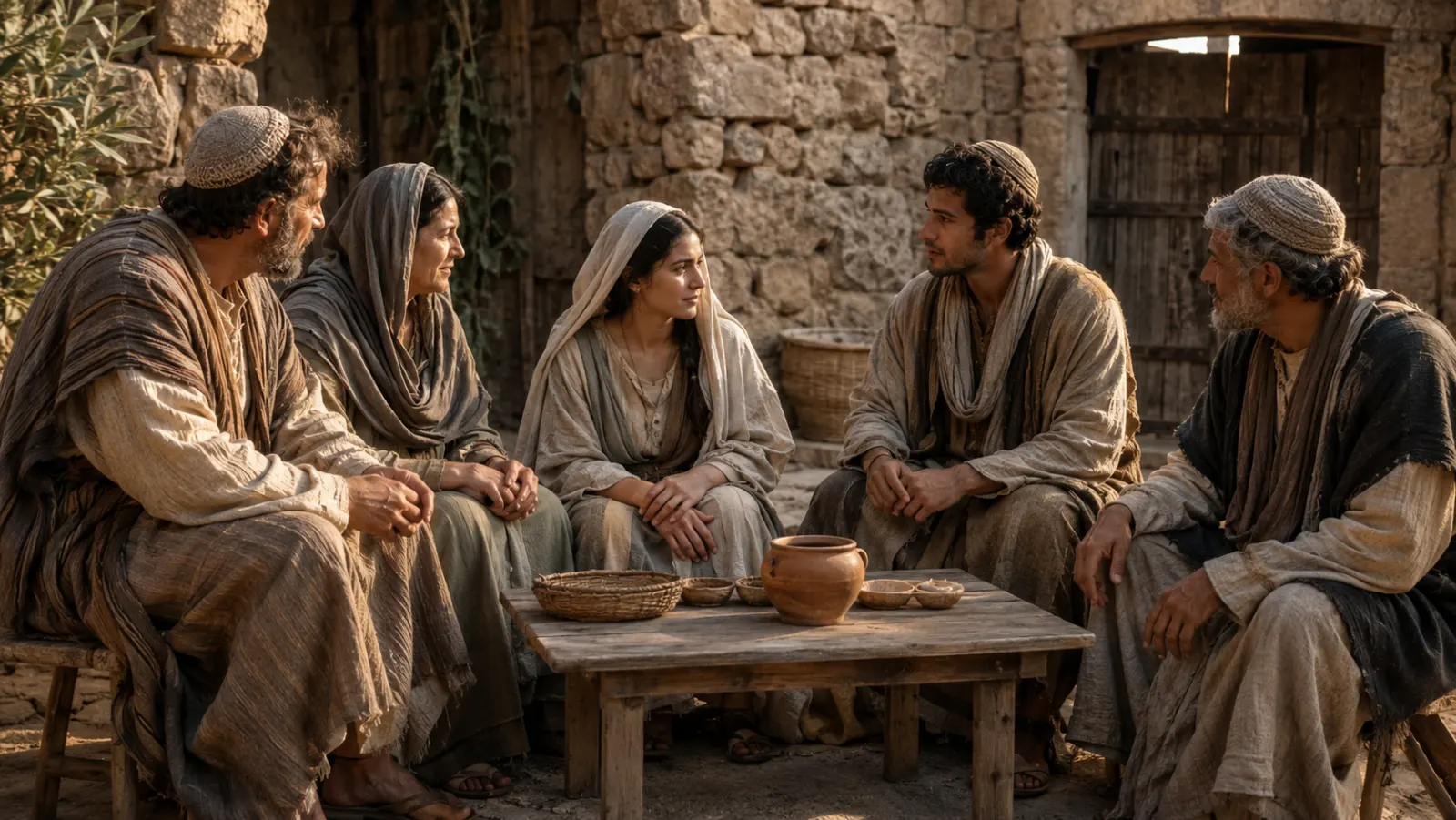
The couple's expected timeline is overturned by a calling neither could have placed on a planning board. Their response joins radical trust with practical, repeated responsibility.
The spreadsheet is not sinful. Neither is the retirement account, graduate-school timeline, fertility appointment, construction estimate, or calendar reminder to revisit a decision in six months. Planning is one way human beings honor limits. It becomes an idol only when we demand that reality request permission before changing.
Mary and Joseph are often used as proof that faithful people simply abandon plans. The Gospels show something more demanding. Their expected marriage and household are radically interrupted, yet they continue to make decisions: Mary travels to Elizabeth; Joseph receives her, names the child, leaves danger, reassesses a return, and settles in Nazareth. Calling disrupts control but does not cancel responsibility.
The original plan was not foolish
Betrothal aimed toward marriage, shared household, work, and family continuity. Nothing in the text treats that expectation as shallow. Mary and Joseph were not clinging to a sinful future that needed demolition. God's call enters a good, ordinary plan and gives it a form they could not have predicted.
That matters when disruption brings grief. A cancer diagnosis, lost pregnancy, layoff, disability, divorce, or caregiving crisis does not prove the earlier hope was faithless. Christians need not insult the life that might have been in order to receive the life now requiring courage. Lament and obedience can occupy the same prayer.
Guidance comes one step at a time
Neither Mary nor Joseph receives a complete itinerary. Gabriel tells Mary about the child and mentions Elizabeth. Joseph's first dream tells him to receive Mary and name Jesus. A later dream directs flight; another permits return; a warning redirects settlement. The family acts on enough light for the next faithful move.
Americans who love optimization often want calling to arrive as a ten-year strategy with measurable outcomes. Scripture more often provides a command, a promise, and room for wisdom. The absence of total information is not permission for carelessness, but it may be the condition in which trust becomes real rather than another method of control.
Saying God told me does not end discernment
Mary and Joseph receive unique revelation within the history of salvation. Modern Christians should be cautious about copying the form of their guidance. A vivid dream, inner impression, opportunity, or repeated thought may matter, but it does not carry automatic authority. It should be tested against Scripture, character, wise counsel, facts, obligations, and the likely effect on vulnerable people.
Claims of guidance become especially dangerous when they bind someone else. God told me to move does not erase a spouse's voice; God told me to start a ministry does not authorize hidden debt; God told me we should marry does not obligate the other person. Divine language should make us more accountable, not less available to questions.
A disrupted plan still needs a budget
The Gospels do not disclose the household's finances, and we should not invent them. They do show material decisions: travel, lodging, offerings, relocation, work, and return. Trust in providence occurs through bodies that need food and shelter. Joseph's obedience repeatedly includes logistics.
When a calling changes employment, housing, education, or caregiving, practical preparation can be an act of love. Count costs, seek advice, obtain insurance where possible, protect dependents, and plan for failure. Jesus' teaching about counting the cost does not oppose faith. It opposes enthusiasm that recruits others into burdens the leader has refused to examine.
Calling may preserve ordinary responsibilities
People sometimes imagine vocation as escape from boring duties into visible significance. Mary and Joseph's calling multiplies ordinary responsibility. A child must be fed, carried, protected, taught, and brought into the worshiping life of Israel. The world's redemption enters a household calendar.
Many callings look like staying rather than launching: caring for a parent, rebuilding trust, learning a trade, raising children, serving a small congregation, or doing public work honestly for decades. Visibility is not evidence of divine importance. Nazareth becomes the place where a world-changing promise spends years in obscurity.
Plans should be held communally
Mary goes to Elizabeth, and Joseph's choices place him in responsibility to Mary and Jesus. Discernment is personal but rarely private. Trusted community can expose self-deception, confirm gifts, identify risks, and supply resources. It can also become controlling, so counsel should help a person answer God rather than make the person dependent on the counselor.
Churches can improve vocational discernment by asking grounded questions. Who bears the cost of this plan? What commitments already exist? What evidence supports the opportunity? What would faithfulness look like if it fails? Is urgency coming from genuine need or from fear of missing significance? Honest questions do not quench the Spirit; they test whether our excitement knows how to love.
Open hands are not passive hands
James criticizes commercial confidence that speaks as though tomorrow were owned. His alternative is not refusing to plan; it is planning under the phrase if the Lord wills. That posture recognizes mortality and dependence. It can revise without collapsing because identity was never secured by the forecast.
Mary and Joseph's open hands remain busy. They consent, receive, travel, protect, return, work, worship, and parent. Surrender is not waiting for circumstances to arrange themselves. It is acting faithfully without demanding the guarantee that action will produce the future we pictured.
How to revise a plan without calling every setback God's message
Not every closed door is divine direction. Applications fail, markets change, people make mistakes, and unjust systems block good work. Christians can ask what God may teach through an event without declaring the event morally good or decoding it as a secret instruction. Providence is larger than our ability to interpret each interruption on arrival.
A practical review can begin with facts. What changed? Which commitments remain? Who is affected? What choices are actually available? What requires grief before decision? Prayer belongs inside that inventory, helping us seek wisdom and examine desire rather than replacing information with intensity.
Then set a time for the next decision. Some crises demand immediate protection; many allow a week, month, or season for counsel. Artificial urgency benefits manipulators and exhausted minds. Mary acts promptly where the message is clear, but the Gospels do not present constant haste as the definition of faith.
Finally, leave room for a modest next step. A calling may begin with one conversation, training course, budget adjustment, medical appointment, or boundary rather than a dramatic leap. The future God gives Mary and Joseph is immense, but their obedience repeatedly takes the size of today's action.
Couples and households should revisit disrupted plans together. One person's exciting opportunity may become another person's unpaid labor, isolation, or lost career. Naming those effects is not selfishness. Mary and Joseph's callings are distinct but joined; neither character is presented as irrelevant to the household's obedience.
A written rule of life can help after upheaval: a few commitments concerning prayer, sleep, money, work, relationships, and rest. It is not a new machine for control. It gives the household a way to notice when urgency is consuming everything that makes faithful response sustainable.
Disruption may also reveal that the old plan had become a refuge from relationship. A career target, ministry launch, or perfect household schedule can keep deeper questions at a distance. When the structure breaks, seek more than replacement. Ask what the plan was protecting, whose approval it promised, and whether the next version can make room for a more truthful life.
This examination should not become endless self-suspicion. Sometimes a job is simply lost and a new one is needed. Discernment matures when it can name ordinary cause, spiritual meaning, and practical response without forcing them into one dramatic explanation.
A five-year plan can be wise. It can help a family save, a student finish, a church repair its roof, or a caregiver survive a demanding season. Write it. Review it. Just leave enough theological margin to admit that a good God may lead through a future the document cannot contain.
Mary and Joseph do not teach us to despise preparation. They teach us to distinguish preparation from possession. Faith plans carefully, listens humbly, protects people, and moves when obedience becomes clear. Then it does the next ordinary task without requiring a preview of the final page.