American readers often call the period between Jesus’ childhood and public ministry the “lost years.” The phrase is catchy, but it can tempt us to fill a deliberate Gospel silence with legends, travel theories, or invented biographies.
If you search “What did Jesus do before age thirty?” online, the answers can become adventurous fast. One theory sends him to India. Another places him among desert mystics. Others build elaborate stories about apprenticeships, foreign travel, or secret schools. Americans are especially used to biography as a genre that explains every formative decade, so the missing years can feel like an unfinished chapter.
The canonical Gospels do not share that modern instinct. Luke gives one scene from Jesus at twelve, then compresses many years into a few sentences before introducing John the Baptist and Jesus’ public ministry. Mark and John begin even later. The silence is real—but it is a silence with boundaries. We know more than nothing, and much less than popular imagination often claims.
Luke gives us one window, then closes it
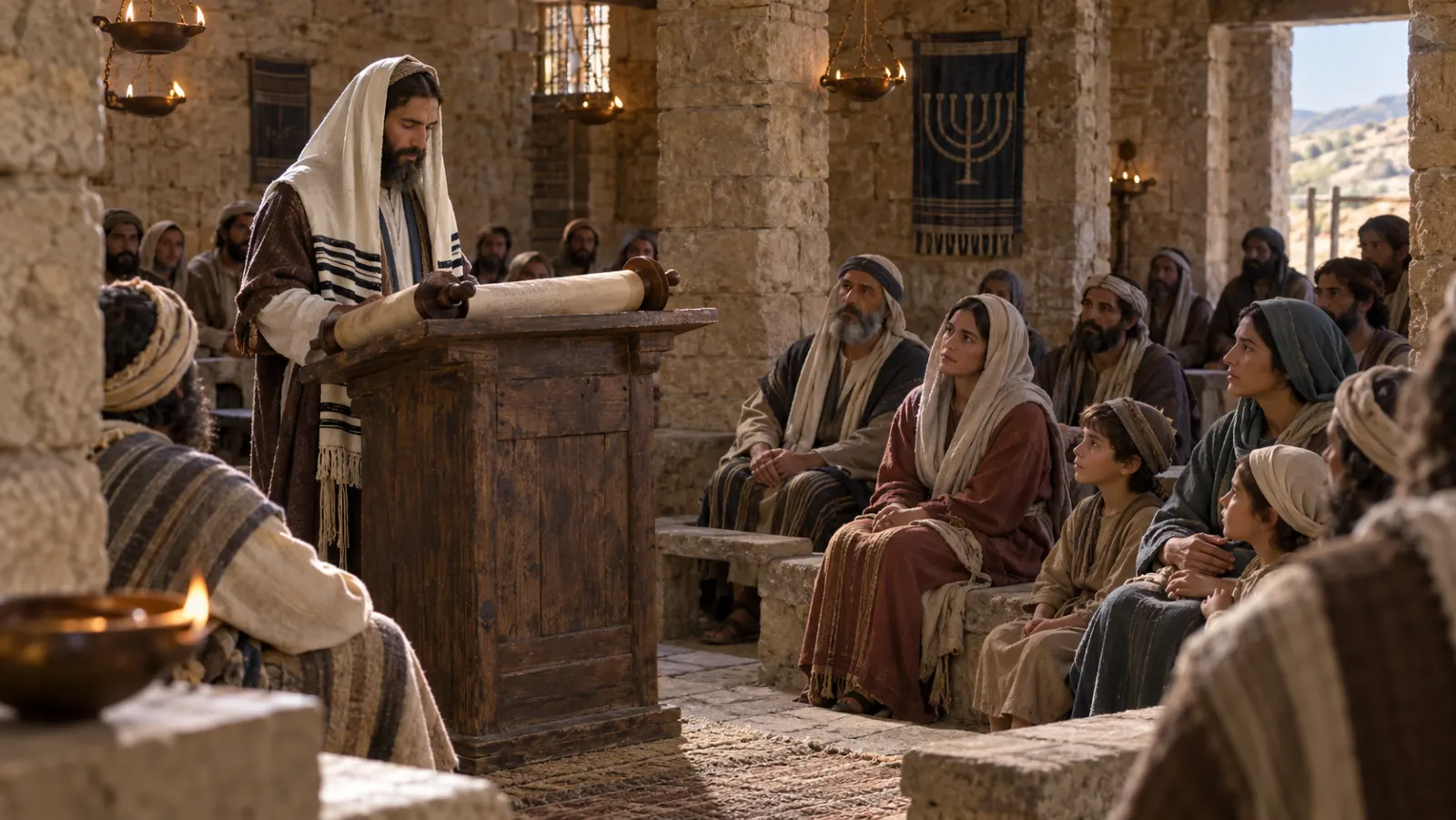
Luke’s account of the twelve-year-old Jesus in Jerusalem is the only canonical narrative scene between the infancy stories and the beginning of public ministry. Jesus travels with his family for Passover, remains in Jerusalem, speaks with teachers in the Temple, and returns to Nazareth. Luke then says he continued in submission to his parents and grew in wisdom, stature, and favor.
That summary matters. It gives the years a direction without giving us episodes. Jesus grows. He belongs to a Jewish household. He lives in Nazareth. He matures rather than appearing suddenly as a fully formed adult teacher. The Gospels affirm ordinary human development while refusing to turn that development into a collection of miracle stories.
The Gospels are ancient biographies, not modern documentary series
Modern celebrity biographies are expected to explain childhood influences, school years, first jobs, friendships, and turning points. Ancient biography worked differently. Writers selected scenes that illuminated identity and public significance. They could pass quickly over long periods that did not serve the narrative purpose.
That helps explain why the silence is not necessarily evidence that information was suppressed. Matthew, Mark, Luke, and John are not trying to satisfy every curiosity about Jesus. They concentrate on the events they believe reveal who he is: his proclamation of God’s kingdom, his actions, his death, and his resurrection. Luke’s childhood scene supports that larger purpose, then the camera moves forward.
Nazareth is the safest historical anchor
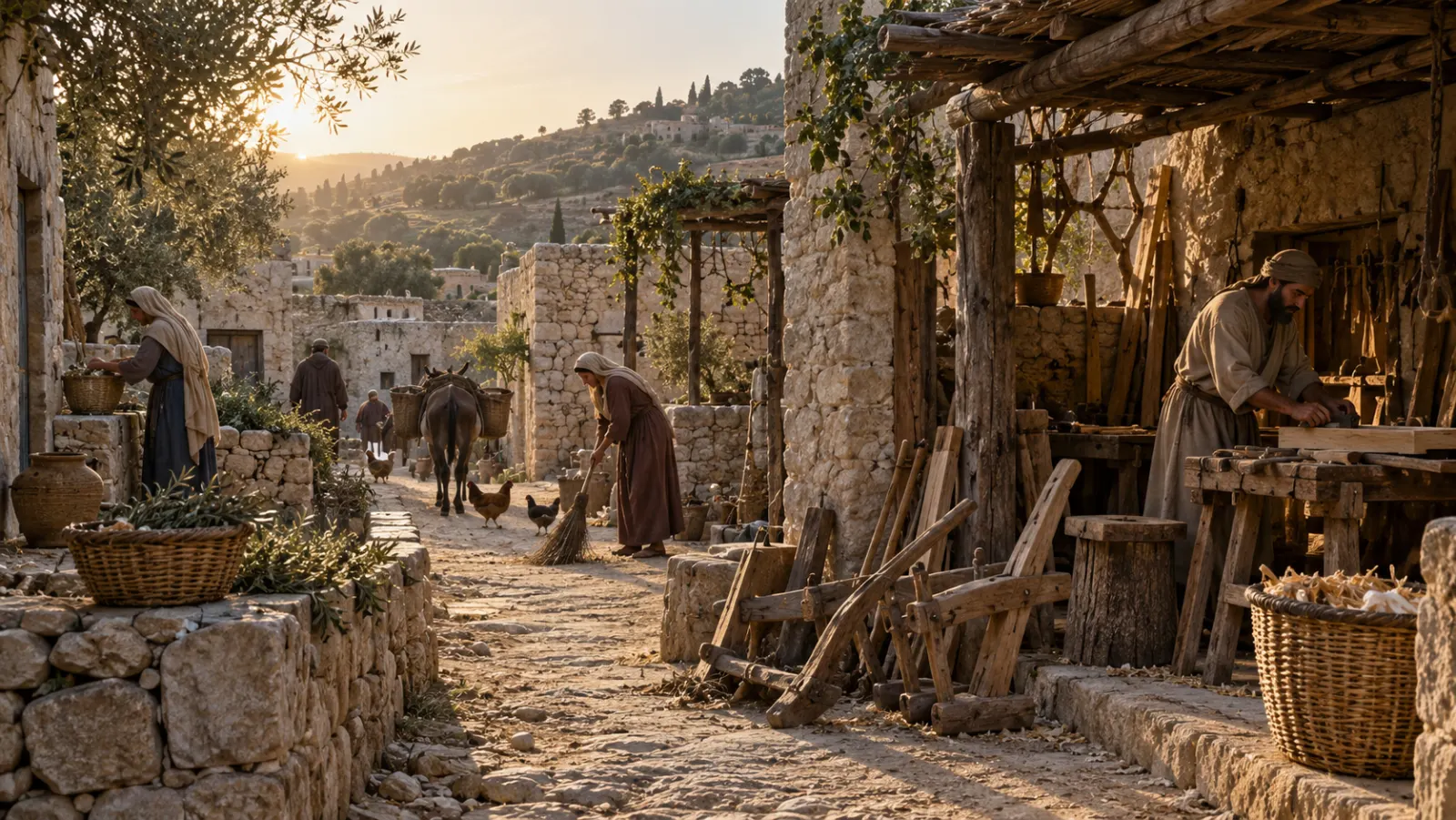
Whatever else we cannot reconstruct, the Gospels repeatedly associate Jesus with Nazareth. His adult contemporaries know him as Jesus of Nazareth, and people in his hometown remember his family and his local identity. Archaeology indicates that early first-century Nazareth was a small Galilean Jewish village, probably numbering in the hundreds rather than the thousands.
That is a much firmer starting point than theories of distant travel. Jesus’ formative world was Galilee: family networks, agriculture, craft work, Jewish Scripture, pilgrimage, synagogue life, and the political realities of Herodian rule. Nearby cities such as Sepphoris existed within the broader landscape, but the evidence does not allow us to write a travel itinerary for Jesus’ youth.
Later legends rushed into the silence
Christians in later centuries were curious too. Noncanonical infancy gospels filled Jesus’ childhood with spectacular wonders—clay birds coming alive, teachers being confounded, and other dramatic episodes. These texts are historically much later than the canonical Gospels and reflect devotional imagination rather than reliable first-century memory.
The same caution applies to modern claims that Jesus studied in India, Tibet, Britain, or Egypt during the “missing” years. Such theories often depend on late stories, misunderstood documents, or the argument that silence itself counts as evidence. It does not. A gap in our sources can invite questions, but it cannot carry the weight of a biography.
Ordinary work is not a disappointing answer
The adult Jesus is identified with the world of a tekton, a builder or craftsman, and his neighbors know him as part of a local family. The simplest historical reconstruction is therefore not glamorous: he likely spent much of these years within household and village life, working, learning, worshiping, and participating in the rhythms of Galilean Judaism.
For Americans trained to look for a dramatic “origin story,” that can feel anticlimactic. Yet Christian theology has a reason to resist that disappointment. The incarnation means the Son of God did not merely visit human life for a few public years. The hidden years affirm the weight of ordinary time—meals, work, family responsibility, Sabbath, seasons, and growth.
Silence protects us from turning Jesus into our preferred hero
Theories about the lost years often reveal as much about their inventors as about Jesus. A spiritual seeker imagines Jesus learning from eastern sages. A nationalist imagines him visiting a favored homeland. A romantic imagines a secret relationship. The blank space becomes a screen for modern desires.
The canonical restraint frustrates that habit. It makes us receive Jesus from the sources we actually have rather than manufacture the version we would prefer. That does not forbid historical reconstruction; responsible historians reconstruct context all the time. But context is different from pretending we possess events that no early source records.
The story resumes at the Jordan for a reason
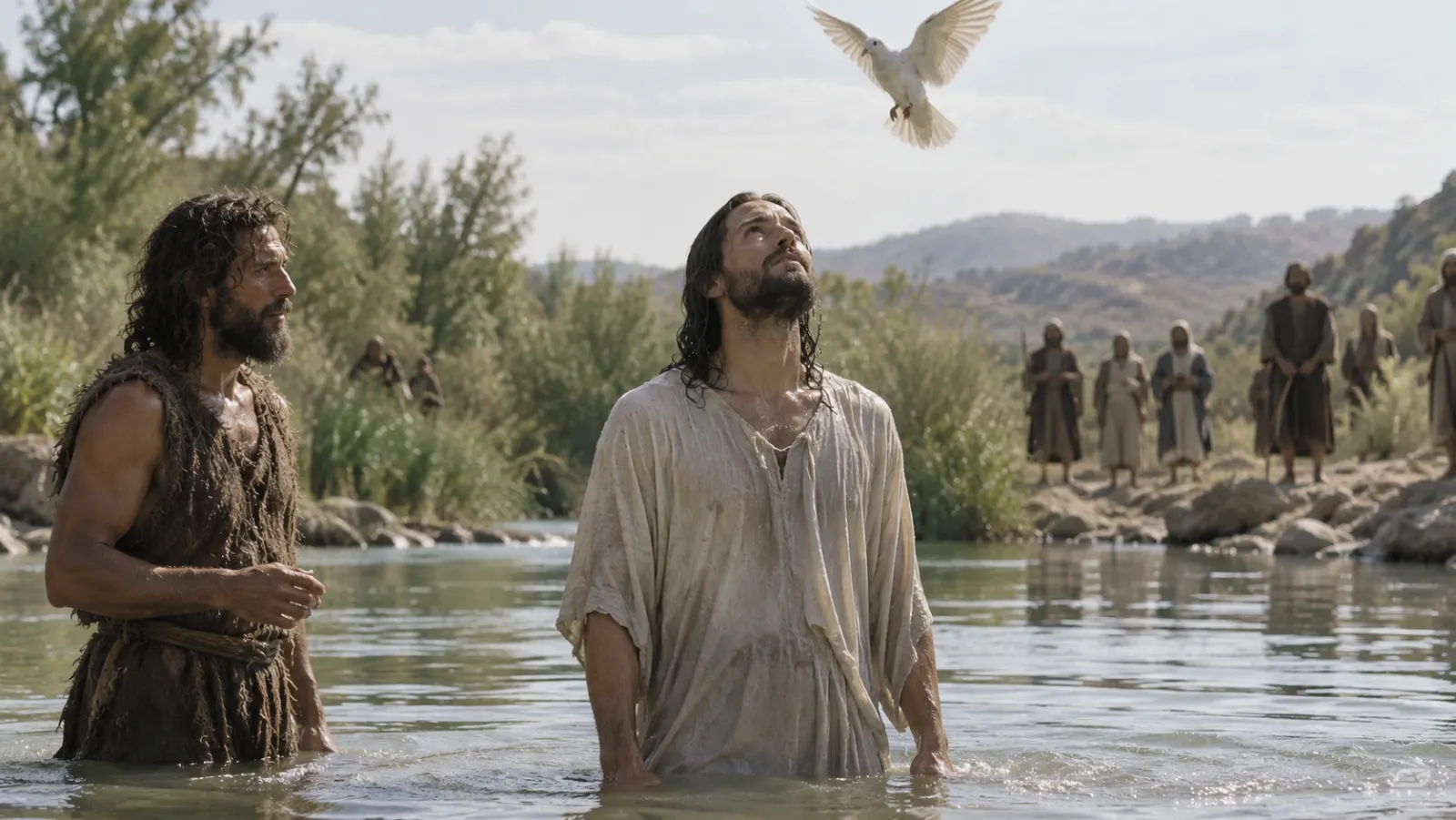
When the Gospels finally bring Jesus fully into view, he is not launching a private self-improvement project. He steps into John’s movement of repentance and expectation. At the Jordan, his identity and mission become public in a new way. The years of quiet formation give way to proclamation.
Luke places the transition carefully: Jesus has grown, John announces God’s coming action, Jesus is baptized, and then Jesus begins his work “about thirty” years old. The narrative is not embarrassed by the gap. It uses the gap to keep attention on the moment when the mission begins.
What we can infer from later hometown reactions
When Jesus eventually teaches in Nazareth, neighbors recognize his family and former place within the village economy. They do not react as though a mysterious traveler has returned after decades abroad. The force of their surprise depends on continuity: this is the person they think they already know.
That does not prove Jesus never traveled beyond Galilee during the hidden years. Jews traveled for pilgrimage, trade, family, and work. It does, however, make extravagant theories of a long secret education abroad less natural than the ordinary reading of the sources. The remembered Jesus belongs to Nazareth before he belongs to the road.
Pilgrimage itself may have widened his world
Luke explicitly shows the family traveling to Jerusalem for Passover when Jesus is twelve, and the Gospels later portray pilgrimage festivals as part of his adult life. Even a primarily local upbringing therefore need not have been geographically narrow. The road to Jerusalem exposed Galileans to crowds, priests, merchants, regional accents, and the scale of the Temple.
This is a useful correction to the false choice between “Jesus never left a tiny village” and “Jesus must have toured the ancient world.” A Jewish Galilean could live an ordinary local life while still participating in regional travel and a much larger religious culture.
Why the church should resist secret-history claims
Secret-history theories often market themselves by promising what the Gospels supposedly hide. That rhetorical move can be powerful because mystery sells. Yet a claim becomes historical not by being exciting but by being supported by early evidence that can be tested against other sources.
Christian confidence does not require pretending to know what the sources do not preserve. In fact, restraint is a better witness than sensational certainty. The ordinary years of Jesus can remain partly unknown without becoming spiritually empty. The canonical story asks us to trust what has been given rather than manufacture what has not.
The “lost years” are lost only if we assume every important life must be continuously documented. The Gospels make a different claim. Jesus’ ordinary years in Nazareth belong to his real humanity even when their details remain largely unknown.
Historical humility is not a failure of faith. It is a way of honoring the difference between what Scripture says, what archaeology can illuminate, and what later imagination supplies. The silence leaves room for wonder—but not for invented certainty.