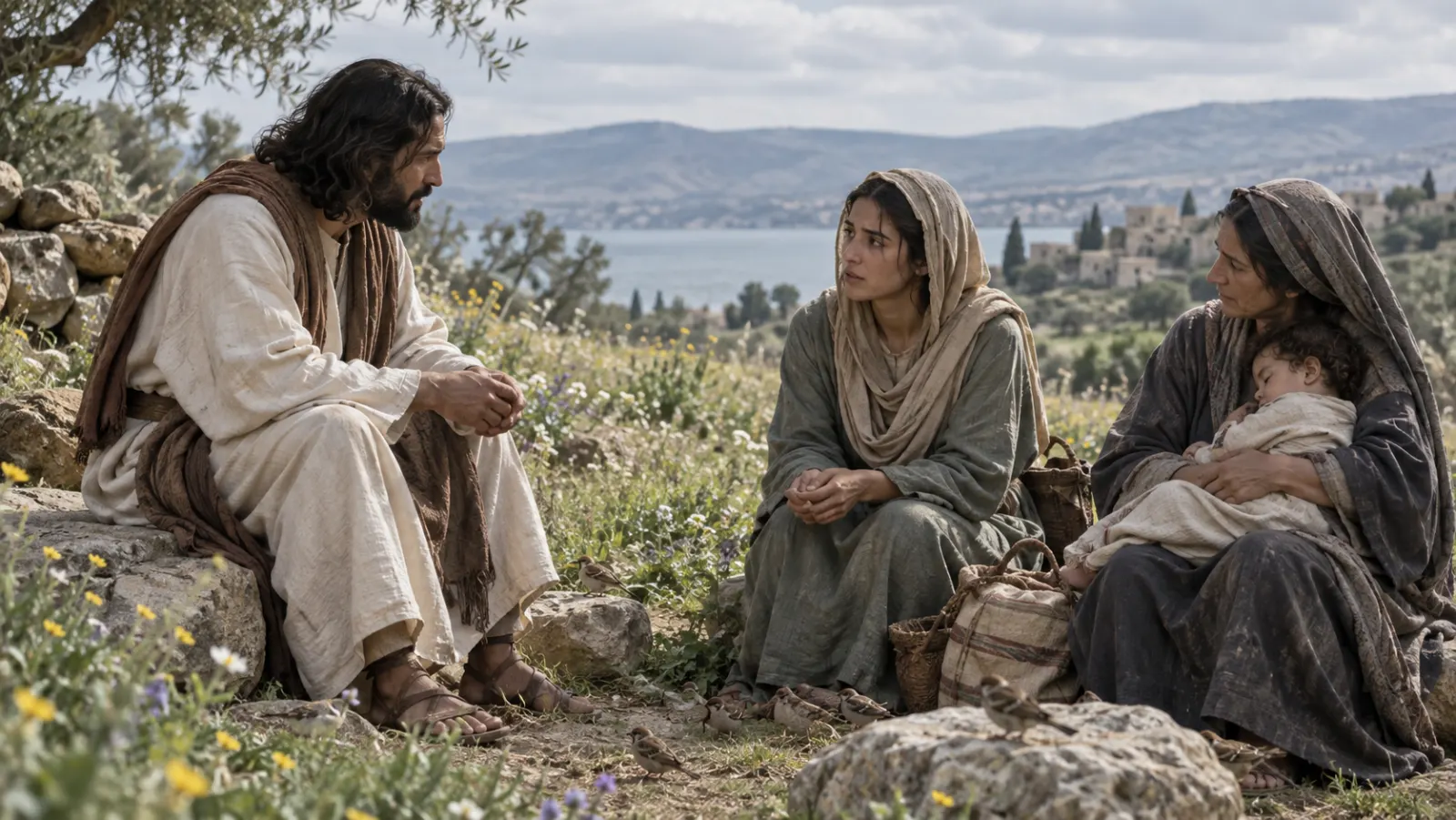
A trap about taxes becomes a question about images, ownership, and the limits of political authority.
Jesus is handed a coin, but the real currency in the scene is danger. Pharisees and Herodians approach together, an unlikely partnership joined by a question designed to injure him whichever way he answers. Support the tax and he can sound like a friend of occupation. Reject it and the empire has reason to notice.
His answer has been printed on arguments for tax compliance, religious liberty, limited government, and nearly every American arrangement of church and state. Yet the scene refuses to become a campaign slogan. Jesus first makes his questioners look at the object already moving through their hands.
The compliment is part of the trap
The visitors praise Jesus as truthful and impartial before asking what they have already framed as a yes-or-no test. Flattery tries to control the terms: prove your courage by giving the answer we can use. Jesus names their hypocrisy. Christian readers should notice how often public figures receive the same invitation—to perform authenticity inside a question designed for a clip. Wisdom may answer the deeper issue rather than accept a manipulative frame.
The coin reveals participation before anyone speaks
Jesus asks them to produce the tax coin, and they have it. The denarius carries imperial imagery and claims, yet it is present within a dispute staged in sacred space. His opponents are not observing the system from untouched purity. They participate in the economy they ask him to judge. The object does not settle the moral question, but it exposes how easily people demand simple answers about compromises they already make.
Giving back is not worship
The verb can carry the sense of returning what is due. Caesar’s coin circulates under Caesar’s administration, so paying a tax can be a limited civic act rather than confession that Caesar is lord. Governments legitimately organize common life, collect revenue, and enforce law; Christians may participate without treating public authority as divine. The distinction becomes urgent whenever a flag, leader, or nation asks for the trust that belongs to God.
The second half prevents a blank check
Give to God what belongs to God. Since the whole earth belongs to the Lord, Caesar’s sphere cannot be absolute. The state may receive taxes; it may not own conscience, redefine good by command, or demand evil. Christian traditions disagree about the boundaries of obedience in difficult cases, but they share a higher loyalty. Civil responsibility exists inside God’s claim, never outside it.
The image question reaches beyond metal
The text explicitly asks whose image and inscription appear on the coin. Christian readers naturally hear Genesis nearby: human beings bear God’s image. The inference should be made humbly, but it is powerful. Caesar may stamp currency; God has marked every person with creaturely dignity. A political order that treats people as disposable violates a claim older and deeper than its own seal.
No American party can become the kingdom
Parties coordinate action, and voting matters because policies affect neighbors. Yet a party asks members to accept coalitions, compromises, and changing platforms. The church loses its freedom when it treats one coalition as the vessel of God’s reign and excuses whatever protects access. Christians may reach different prudential conclusions while agreeing that every party must be judged by truth, justice, protection of life, and concern for vulnerable people.
Taxes are a moral question after they are paid
Debate often stops at whether government may collect. Biblical concern continues to how resources are raised, whom burdens fall upon, what common goods receive support, and whether corruption is restrained. Citizens can comply with law while advocating change, using transparent processes, and refusing fraud. Paying reluctantly does not make a person faithless; neither does asking whether a tax system serves neighbors fairly.
Religious liberty protects service as well as speech
American Christians often discuss freedom when a regulation burdens conviction. That concern can be legitimate. The same freedom also protects minority religions, people without faith, worship gatherings, charitable work, and conscience across disagreement. Seeking a privilege only for our group mistakes dominance for liberty. The image of God gives reason to defend the neighbor’s human dignity even when the neighbor’s creed is not ours.
Jesus escapes without evading the claim
His answer is not vague. It makes everyone in the scene responsible: rulers are limited, citizens owe real duties, and God claims the whole person. The trap wanted a label; Jesus gives an examination. What have we handed to politics that politics cannot rightfully own—our fear, hope, honesty, fellowship, or willingness to see another image-bearer?
Political theology begins with truthful scale
Not every school-board dispute is persecution, and not every policy disagreement is morally trivial. Inflated language makes discernment harder. Christians should identify what authority is acting, which law or proposal actually exists, who is affected, and what remedies are available. Accurate scale allows courage without panic. Caesar benefits when citizens are either apathetic or permanently terrified; both states make manipulation easier.
Conscience is formed, not merely asserted
A claim of conscience deserves respect, but sincerity alone does not make a judgment correct. Christian conscience is trained through Scripture, prayer, community, facts, and attention to neighbors who bear the consequences. Believers should be willing to explain their reasoning and hear correction. Conscience is not a private trump card that ends moral conversation. It is the accountable place where a person responds to God.
The church’s political witness includes restraint
Pastors may teach moral principles and address public injustice without telling members that the gospel has only one permitted answer to every prudential question. Restraint is especially important where leaders hold spiritual authority and members fear disappointing God. Churches can distinguish doctrine from policy judgment, disclose conflicts, and refuse candidate worship. Such clarity helps political participation remain discipleship rather than captivity.
Taxes are a moral argument about shared life
Americans rightly debate rates, priorities, waste, and the proper reach of government. Jesus’ answer does not settle a tax code, but it prevents taxation from becoming the whole definition of freedom. Roads, courts, public health, defense, schools, and aid distribute benefits and burdens among neighbors. Christians can argue for different policies while asking who gains, who pays, what evidence supports the claim, and whether the vulnerable are treated as expendable. Paying what is lawfully owed and advocating reform can both belong to responsible citizenship.
No flag bears the image that a person bears
Coins carry official images; human beings carry God’s. That distinction places immigrant and officer, unborn child and prisoner, partisan ally and ideological opponent under a dignity the state does not grant. Political systems may recognize or violate that worth, but they cannot create it. Christian public action should therefore be evaluated not only by winning but by how it speaks about people whose votes or status offer no advantage. Desecrating a neighbor to honor a national symbol reverses the hierarchy in Jesus’ question.
Civil disobedience needs moral discipline
When a law commands what believers understand to be evil, Christian tradition includes conscientious refusal. Such action should not be confused with irritation at losing a policy dispute. Responsible disobedience states the violated moral obligation, uses truthful means, considers effects on others, and is willing to accept legal consequences while seeking change. Community discernment helps test private certainty. The courage to resist Caesar is strongest when joined to the humility to admit that our reading may need correction.
Election seasons reveal what has been discipling us
Campaigns intensify fear, belonging, and the desire for simple villains. The habits formed beforehand determine whether a congregation can resist. Regular prayer for leaders of different parties, friendships across disagreement, careful news consumption, and teaching that distinguishes nation from kingdom are not seasonal accessories. They prepare believers to participate without surrendering imagination. If every sermon suddenly sounds like campaign messaging, the coin may be telling the church whose image it has begun to reflect.
Gratitude for country is not worship
National holidays can hold memory, grief, gratitude, and moral examination together. Christians may honor sacrifice and receive civic goods without declaring the nation innocent or chosen above others. Worship belongs to God alone. A mature patriot can tell the truth about injustice, learn from other peoples, and desire the country’s good without making its dominance a religious hope. The distinction protects both faith and citizenship from flattery.
The coin can go back to Caesar. The worshiper cannot. Political life remains important, morally serious, and strictly limited beneath the rule of God.
Jesus’ question still works when the faces on our currency and ballots have changed. Look at the image, recognize the temporary claim, and then remember whose image stands before you in every human neighbor.