
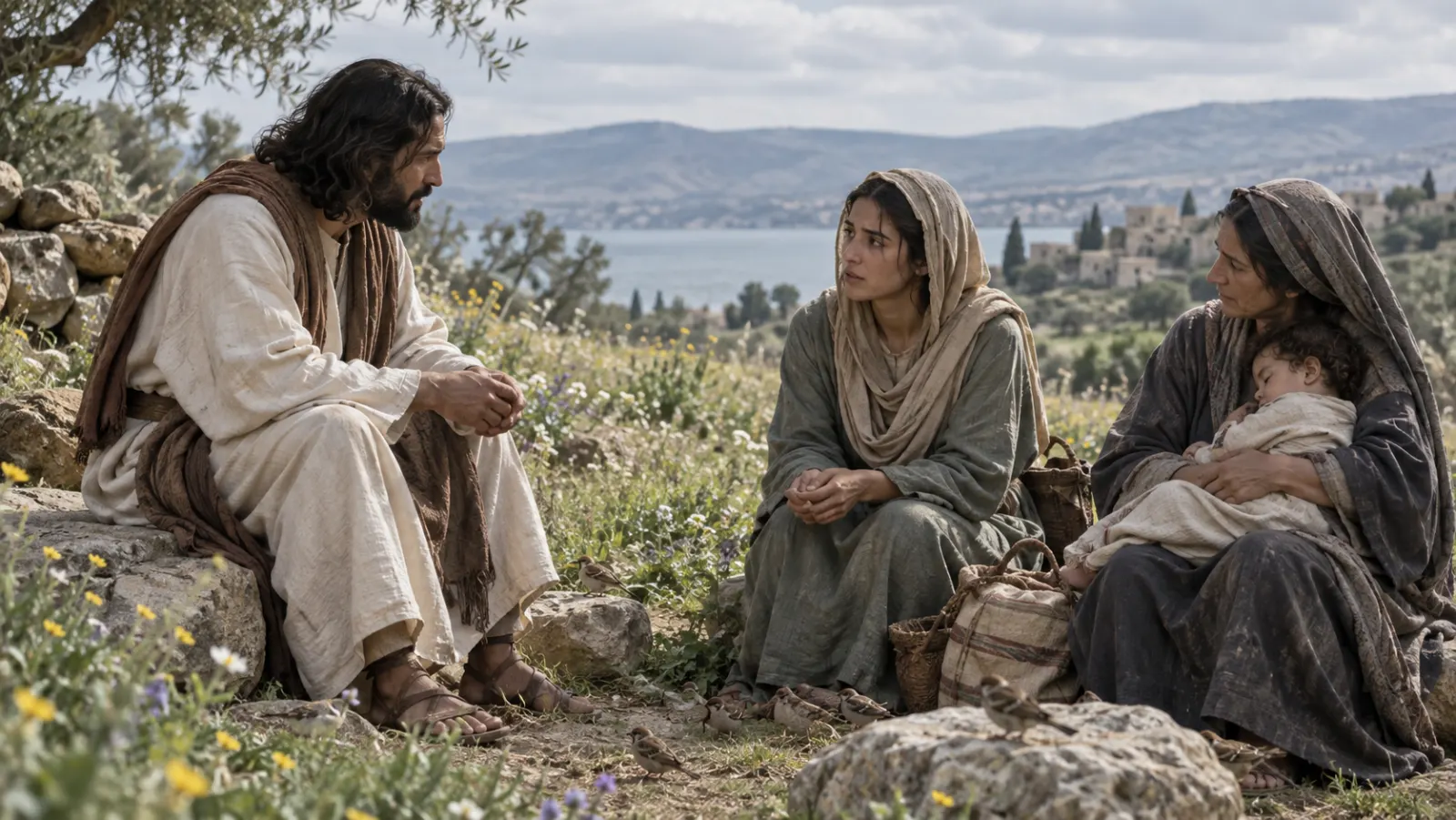
The birds and lilies are not weapons against people with anxiety disorders. Jesus’ teaching confronts divided allegiance and tomorrow’s tyranny while welcoming wise care.
Few Bible sentences have comforted anxious people as deeply as Jesus’ invitation to consider birds and lilies. Few have also been used so carelessly. A person describes panic, insomnia, intrusive thoughts, or the strain of an empty bank account and receives a verse as though Jesus had issued a simple command to stop having symptoms.
Matthew 6 is not a diagnostic manual, and worry is not identical to every condition described by modern medicine. Jesus speaks about allegiance, daily need, and the attempt to secure life through anxious mastery. His words can form Christian trust without turning illness into guilt or practical planning into unbelief.
The passage begins with two masters
The line immediately before the birds and lilies says no one can serve both God and wealth. That frame matters. Jesus is not scolding a random emotion in isolation; he is exposing the master that promises security and then demands endless attention. Money is useful, work is honorable, and households need budgets. Mammon becomes a lord when worth, safety, and moral permission all depend upon accumulation. Worry can reveal how completely that rival master has occupied the imagination.
Jesus speaks to people who knew material vulnerability
First-century Galilean hearers did not have guaranteed groceries, stable wages, or modern insurance. Food and clothing were not lifestyle accessories. To hear “do not worry” as advice from a comfortable teacher to relax would flatten the setting. Jesus knows today has trouble. He teaches poor and ordinary disciples to seek the Father’s kingdom together, not isolated consumers to visualize abundance. The plural prayer for daily bread stands behind the singular heart’s trust.
Birds are active creatures, not passive mascots
Birds do not run farms or storage barns, yet they search, build, feed young, and flee danger. The image does not condemn labor. It places labor inside creaturely dependence. We act, but we do not generate life itself. Americans often praise self-sufficiency as though needing anyone were failure. Jesus invites a humbler realism: our breath, weather, soil, bodies, neighbors, and opportunities arrive through networks we did not create. Gratitude can loosen the illusion of total control.
The lilies interrupt comparison
Clothing easily becomes a language of rank. Jesus compares field flowers with Solomon, the emblem of royal splendor, and declares that God’s ordinary creation exceeds the display. The point is not that clothing never matters, especially for a job interview, winter weather, or cultural belonging. It is that appearance cannot carry the weight of a life. The Father sees a person before brands, body shape, professional polish, or the impression managed on a screen.
An anxiety disorder is not proof of deficient faith
Brains and bodies can enter patterns of alarm that require clinical assessment and sustained care. Trauma, genetics, medication effects, illness, sleep, and environment may all matter. A pastor should not diagnose from a pulpit or tell someone to discontinue treatment. Prayer, therapy, medication, exercise, community, and medical investigation can belong together. Christians confess God as Lord of ordinary means as well as unexpected relief. Seeking skilled help may be an act of truth, not spiritual retreat.
Material threats deserve material responses
A worker facing eviction does not need only breathing exercises. A parent choosing between food and medicine is not suffering from an attitude problem. Trust in the Father calls the church toward shared bread, emergency assistance, fair employment, advocacy, childcare, and patient navigation of public resources. Jesus’ “do not worry” must never become a way for secure people to avoid the costly question of why their neighbor has reason to fear tomorrow.
Planning and worry are not synonyms
Jesus later praises servants who remain prepared, and Scripture honors prudent attention. A budget, insurance policy, evacuation route, calendar, or retirement contribution can be responsible stewardship. Worry becomes tyrannical when imagined futures consume today’s obedience and when preparation promises control it cannot deliver. A useful question is not merely “Did I plan?” but “After reasonable action, can I entrust what remains to God and return attention to the person and task before me?”
Today is a spiritual scale
Jesus narrows the horizon: tomorrow will bring its own concerns, and today has enough trouble. This is not denial of consequences. It is permission to live at the scale where faithfulness is possible. We cannot obey next Thursday in advance. We can make the call, take the prescribed dose, prepare dinner, ask forgiveness, attend the appointment, and pray now. Grace arrives in days because human lives do.
Churches can become less anxious places
Congregations communicate anxiety through frantic calendars, emergency fundraising, constant comparison, and leaders who cannot rest. A community can practice another rhythm: truthful financial reports, realistic volunteer expectations, paid leave, referral lists, quiet prayer, and testimony that includes unfinished stories. When people are allowed to need help without becoming projects, the birds and lilies sound less like a rebuke and more like an invitation into the Father’s care.
Prayer can be honest about the body
An anxious Christian does not need to edit prayer into confident religious language. The Psalms give permission to name racing thoughts, sleepless nights, bodily fear, and questions about God’s absence. A prayer may be no more than, “Father, I am afraid; help me take the next step.” Breath or grounding practices can accompany prayer without becoming magic formulas. If a practice increases distress, it can be changed. The goal is not a spiritual performance but bringing the actual person into God’s presence, where weakness is known and does not cancel belonging.
Friends should ask before explaining
When someone describes anxiety, the first faithful response is often a question: Do you want me to listen, pray, help with a task, or find professional support? Advice given too quickly can communicate that the listener needs discomfort to end. Companionship may include sitting in a waiting room, locating an in-network clinician, reducing an obligation, or making a safety plan with qualified guidance. If someone may harm themselves or is in immediate danger, crisis support is appropriate. Spiritual care never requires friends to act beyond competence.
Hope may look ordinary for a long time
Testimonies often compress recovery into a dramatic turning point. Many lives change through months of appointments, adjusted treatment, disrupted sleep, setbacks, prayer, and patient relationships. That story is not less Christian because it lacks a clean before-and-after. Churches can honor people who manage symptoms faithfully and those whose capacity remains limited. The Father’s care may be experienced through endurance, wise clinicians, protected employment, truthful friendship, and the rediscovery of small delights. Today’s grace is real even when tomorrow still requires care.
Jesus speaks to economic fear as well as private emotion
Food, drink, and clothing were not lifestyle accessories for Jesus’ first hearers. They were daily questions in an occupied agrarian economy. His images of birds and lilies do not float above rent, groceries, medical deductibles, or uncertain work. They announce that human worth is not established by purchasing power and that God’s reign creates a people who share. An anxious household may need more than reassurance; it may need a meal train, a benevolence grant with no humiliating interview, help navigating benefits, or an employer willing to offer a predictable schedule. The sermon becomes credible when a congregation’s common life makes tomorrow less frightening for someone.
Parents can resist passing fear on as wisdom
American parents receive a steady stream of warnings about schools, screens, safety, achievement, and the future. Some risks are real, yet a household organized around catastrophe teaches children that vigilance is the same as love. Parents can distinguish preparation from control: establish sensible routines, discuss danger in age-appropriate terms, and still allow exploration, friendship, and rest. Apologizing after anxiety becomes anger is part of discipleship. Children do not need adults who never feel afraid. They need adults who can name fear, seek help, and show that fear does not get the final vote.
The command redirects attention before it changes feeling
Jesus tells hearers to seek first God’s kingdom and justice. That is a direction for attention and action, not a demand to manufacture calm. A person may still feel a tight chest while preparing dinner, keeping an appointment, praying with a friend, or completing one necessary form. Obedience can coexist with symptoms. Over time, practiced attention may loosen worry’s claim to be the only narrator. Even when it does not, the disciple is not disqualified. Faithfulness can be measured by the next honest step rather than by the absence of distress.
Jesus does not stand over an anxious person demanding instant calm. He redirects disciples from rival mastery toward a Father who knows what bodies need. That trust can coexist with tears, treatment, careful plans, and a church carrying practical burdens.
The goal is not to prove faith by never feeling alarm. It is to let today belong to God: receiving the next breath, doing the next faithful thing, and refusing to let an imagined tomorrow take every gift already present.


