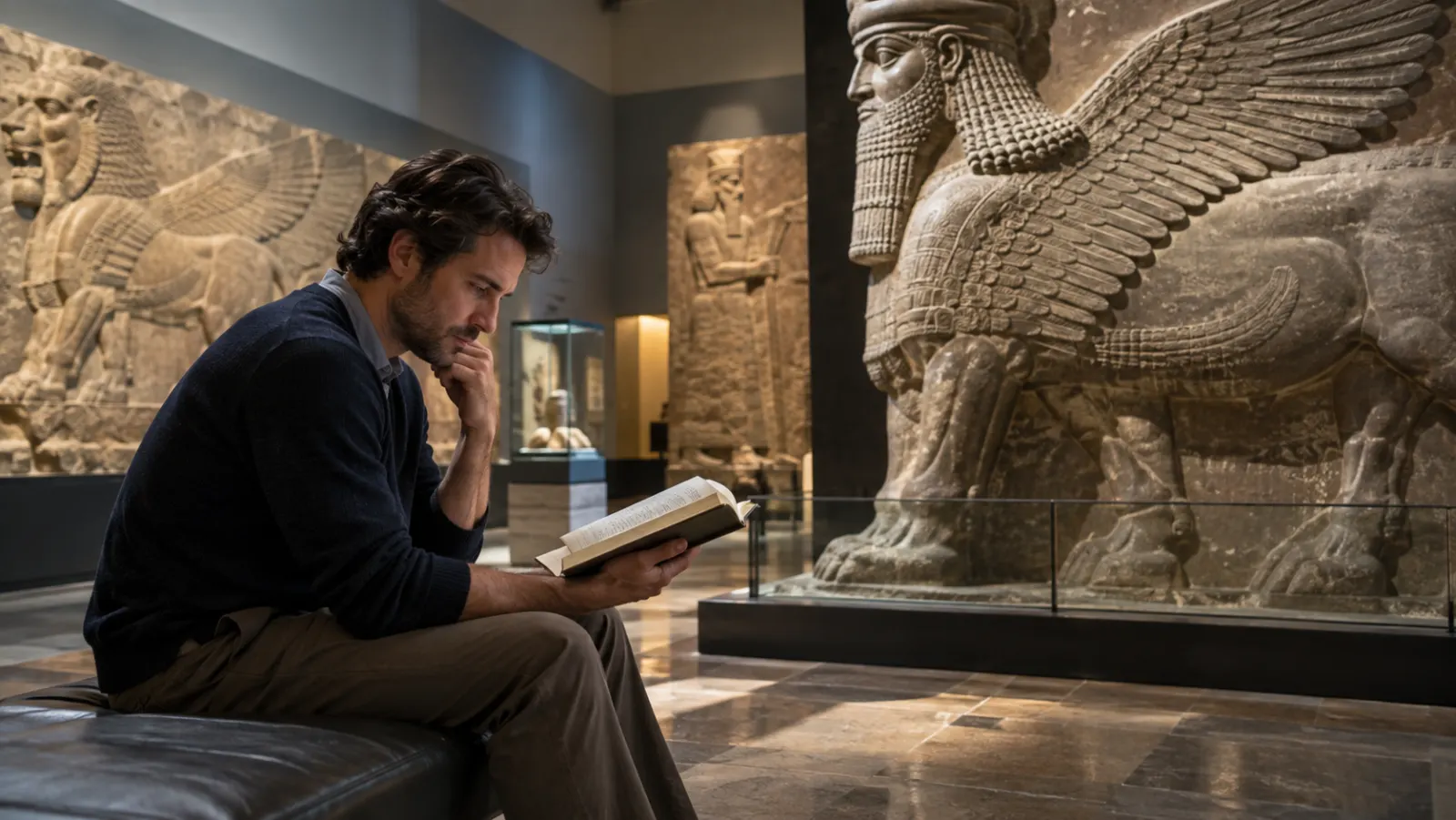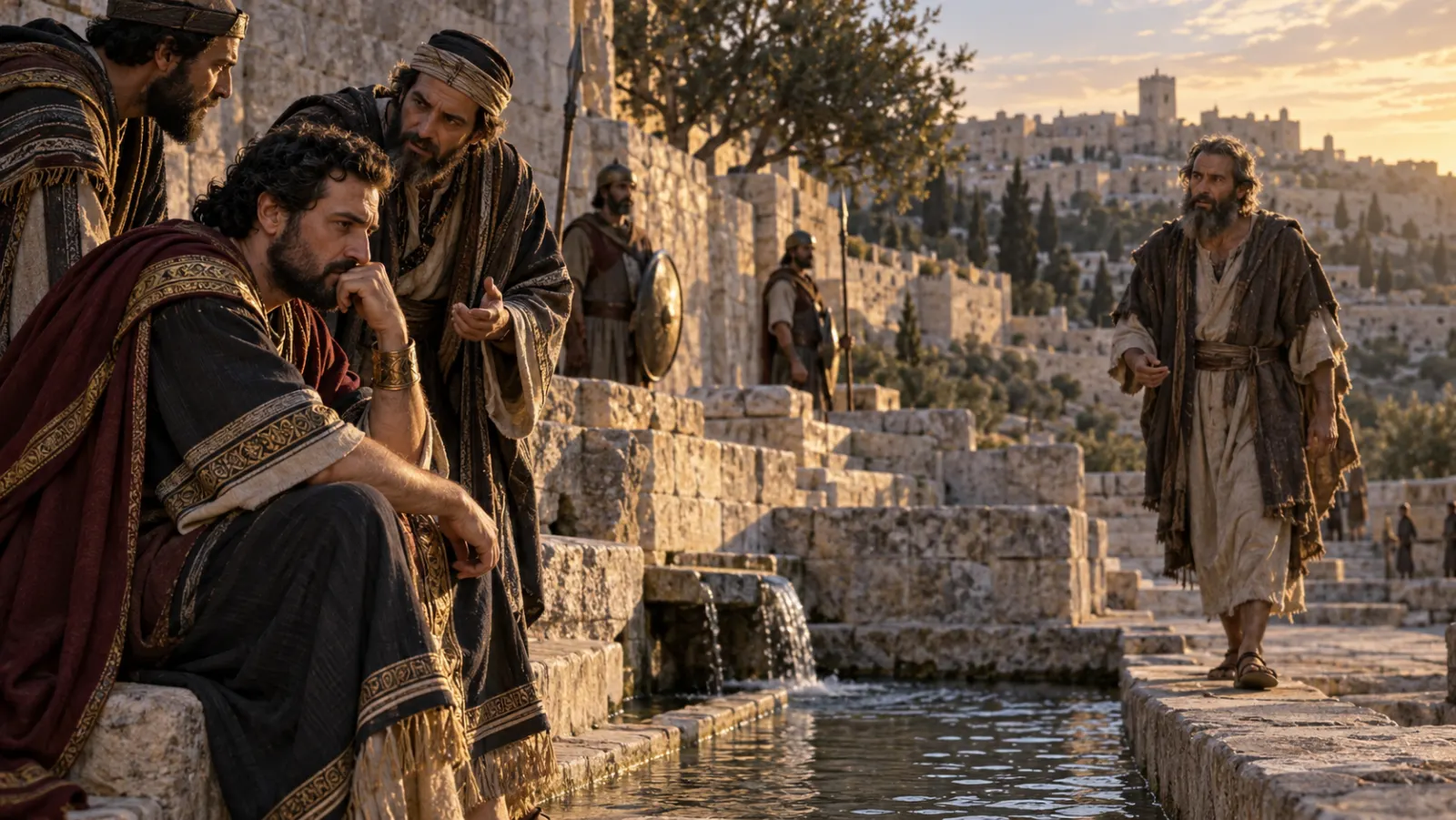
Micah 5 is not a generic celebration of small towns. It promises a Davidic ruler amid invasion, failed leadership, and longing for secure peace.
Bethlehem is small enough in Micah’s imagination to be overlooked and important enough to carry a dangerous memory. It is David’s town. When Jerusalem’s leaders fail, the prophet looks back toward the pasture where Israel’s unlikely king was found.
American readers often turn small places into symbols: authentic heartland, forgotten county, escape from the city. Micah does something more precise. He announces a ruler in a moment of siege and judges leaders who consume the people they were meant to protect.
Micah speaks after leadership failure
The book attacks officials, prophets and landowners who exploit neighbors. Bethlehem’s significance cannot be separated from that indictment. Hope comes from outside the compromised center, but it comes to establish justice, not to flatter the outskirts.
David’s hometown carries an unfinished promise
First Samuel remembers David as the youngest son summoned from sheep. Micah draws on that history while expecting a ruler whose reach and security exceed the old monarchy. The Christian claim is that Jesus fulfills this hope without repeating royal abuse.
Matthew places empire at the door
Magi ask Herod where the Messiah is born, and advisers quote Micah. The ruler in Jerusalem has information but treats the promised child as a threat. Biblical knowledge alone does not produce faithful allegiance.
Small-town virtue is not automatic
Rural American communities hold deep networks of care and also shortages of hospitals, jobs and housing. Cities hold opportunity and exploitation. Micah does not declare one zip code morally pure; he shows God free to begin where power is not looking.
The promised ruler shepherds
Micah describes standing, feeding and securing the flock. Leadership is measured by whether people can live rather than by the leader’s brand. Churches in overlooked places can embody that standard without pretending they can replace public institutions.
Questions for reading and living the promise
A congregational reading can begin with one focused question: What leadership failure surrounds Micah’s promise? Return to Micah 5:1–6, read what comes before and after, and distinguish the passage's claim from our inferences. Then name who would carry the consequences of an application, what further knowledge is needed, and one bounded action that can be reviewed. Prophecy was not given to make readers feel superior; it calls God's people toward trust, truth, and concrete obedience.
The question changes when it touches actual American lives: How does David’s story shape Bethlehem’s meaning? Region, income, race, age, disability, work schedule, gender, and immigration status can change the experience without changing the gospel. Listening for those differences keeps an application designed in one office from being imposed on everyone. Revising a plan when new evidence appears does not weaken faith. It can show that biblical authority was taken seriously enough to examine our habits.
To work responsibly with “Why Bethlehem Matters to Micah,” ask: Do we confuse biblical information with allegiance? A faithful answer includes consent, limits, resources, and someone accountable for follow-through. Prayer and study sustain the work, but they do not replace legal, medical, historical, or safeguarding expertise when it is needed. Nor do they permit another person's vulnerability to become evidence of institutional success. Mature Christian practice can state what it will do, what lies outside its competence, and when results will be reviewed.
A review should follow the first action: Which stereotypes do we place on rural and urban neighbors? The impressions of those who designed the response are not enough. Receive voluntary testimony, notice unintended costs, and identify who remained outside. If a practice produced fear, dependence, or silence rather than truth, justice, care, and communion, changing it need not betray biblical conviction. Interpretive humility becomes visible when an institution repairs harm and explains clearly what it learned.
This prophecy can become prayer without becoming a slogan: Does our leadership help ordinary people live securely? A faithful prayer names the historical setting, gives thanks for the fulfillment Christians recognize in Jesus, and asks for wisdom in the present. It then leaves room for people with different experiences to answer without pressure. The goal is not to extract an identical sentence from everyone, but to form a community able to stay together while learning patient obedience and admitting the limits of its knowledge.
When the team returns to the question—What leadership failure surrounds Micah’s promise?—it should record an understandable decision, the biblical reason for it, and a review date. If no one can describe how a relationship, budget, or practice would change, the application is still too general. Fulfillment in Christ does not eliminate the work of wisdom. It directs that work toward obedience that can be observed, corrected, and shared without manipulation. Review 1 should close with a communicated conclusion.
When the team returns to the question—How does David’s story shape Bethlehem’s meaning?—it should record an understandable decision, the biblical reason for it, and a review date. If no one can describe how a relationship, budget, or practice would change, the application is still too general. Fulfillment in Christ does not eliminate the work of wisdom. It directs that work toward obedience that can be observed, corrected, and shared without manipulation. Review 2 should close with a communicated conclusion.
When the team returns to the question—Do we confuse biblical information with allegiance?—it should record an understandable decision, the biblical reason for it, and a review date. If no one can describe how a relationship, budget, or practice would change, the application is still too general. Fulfillment in Christ does not eliminate the work of wisdom. It directs that work toward obedience that can be observed, corrected, and shared without manipulation. Review 3 should close with a communicated conclusion.
When the team returns to the question—Which stereotypes do we place on rural and urban neighbors?—it should record an understandable decision, the biblical reason for it, and a review date. If no one can describe how a relationship, budget, or practice would change, the application is still too general. Fulfillment in Christ does not eliminate the work of wisdom. It directs that work toward obedience that can be observed, corrected, and shared without manipulation. Review 4 should close with a communicated conclusion.
When the team returns to the question—Does our leadership help ordinary people live securely?—it should record an understandable decision, the biblical reason for it, and a review date. If no one can describe how a relationship, budget, or practice would change, the application is still too general. Fulfillment in Christ does not eliminate the work of wisdom. It directs that work toward obedience that can be observed, corrected, and shared without manipulation. Review 5 should close with a communicated conclusion.
When the team returns to the question—What leadership failure surrounds Micah’s promise?—it should record an understandable decision, the biblical reason for it, and a review date. If no one can describe how a relationship, budget, or practice would change, the application is still too general. Fulfillment in Christ does not eliminate the work of wisdom. It directs that work toward obedience that can be observed, corrected, and shared without manipulation. Review 6 should close with a communicated conclusion.
When the team returns to the question—How does David’s story shape Bethlehem’s meaning?—it should record an understandable decision, the biblical reason for it, and a review date. If no one can describe how a relationship, budget, or practice would change, the application is still too general. Fulfillment in Christ does not eliminate the work of wisdom. It directs that work toward obedience that can be observed, corrected, and shared without manipulation. Review 7 should close with a communicated conclusion.
Bethlehem matters because God’s promise moves through a particular place with a complicated history, not because smallness itself is holy.
Christians recognize Jesus as Micah’s ruler when power becomes shepherding, forgotten neighbors are seen, and peace is more than the prestige of the center.