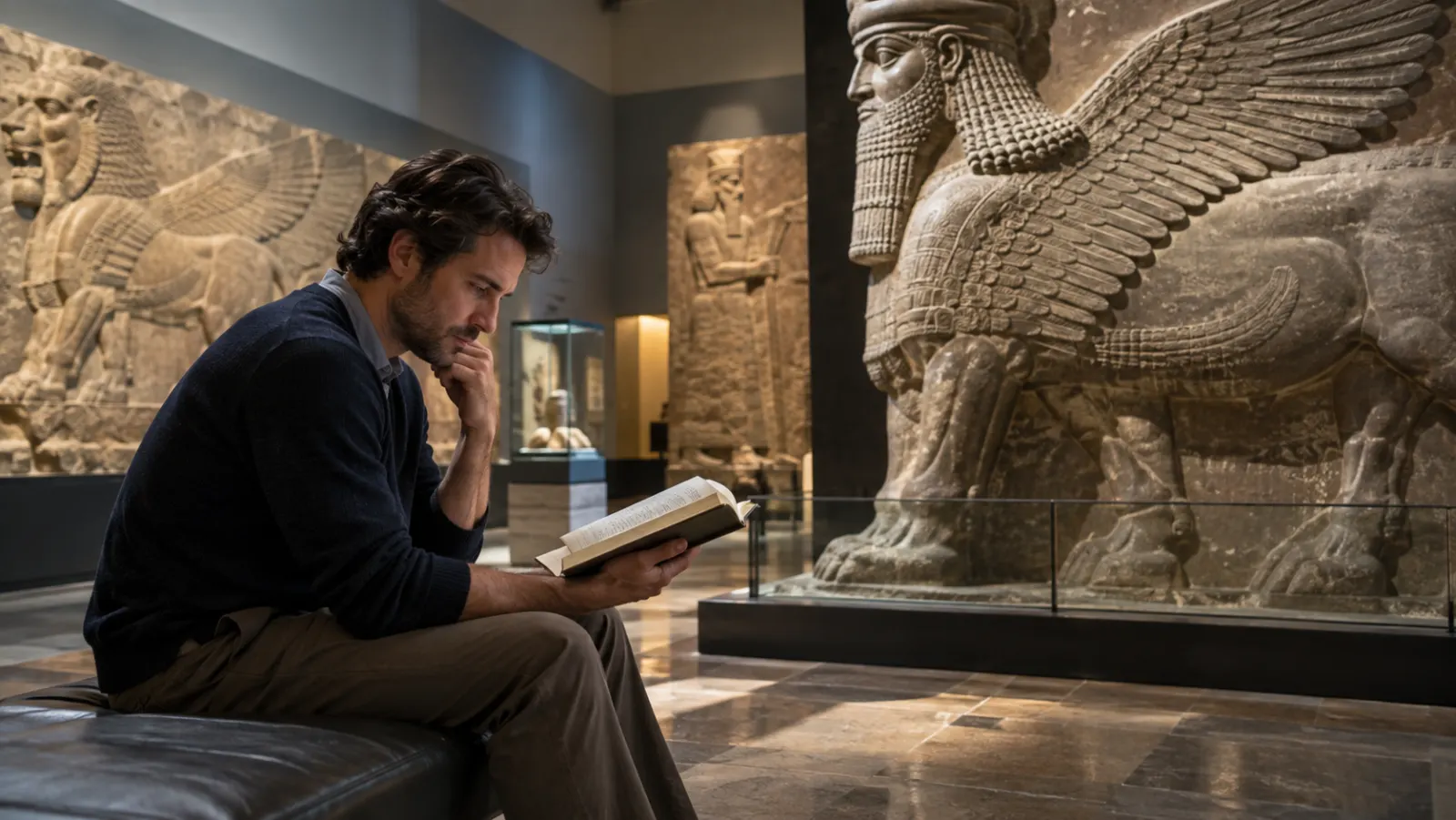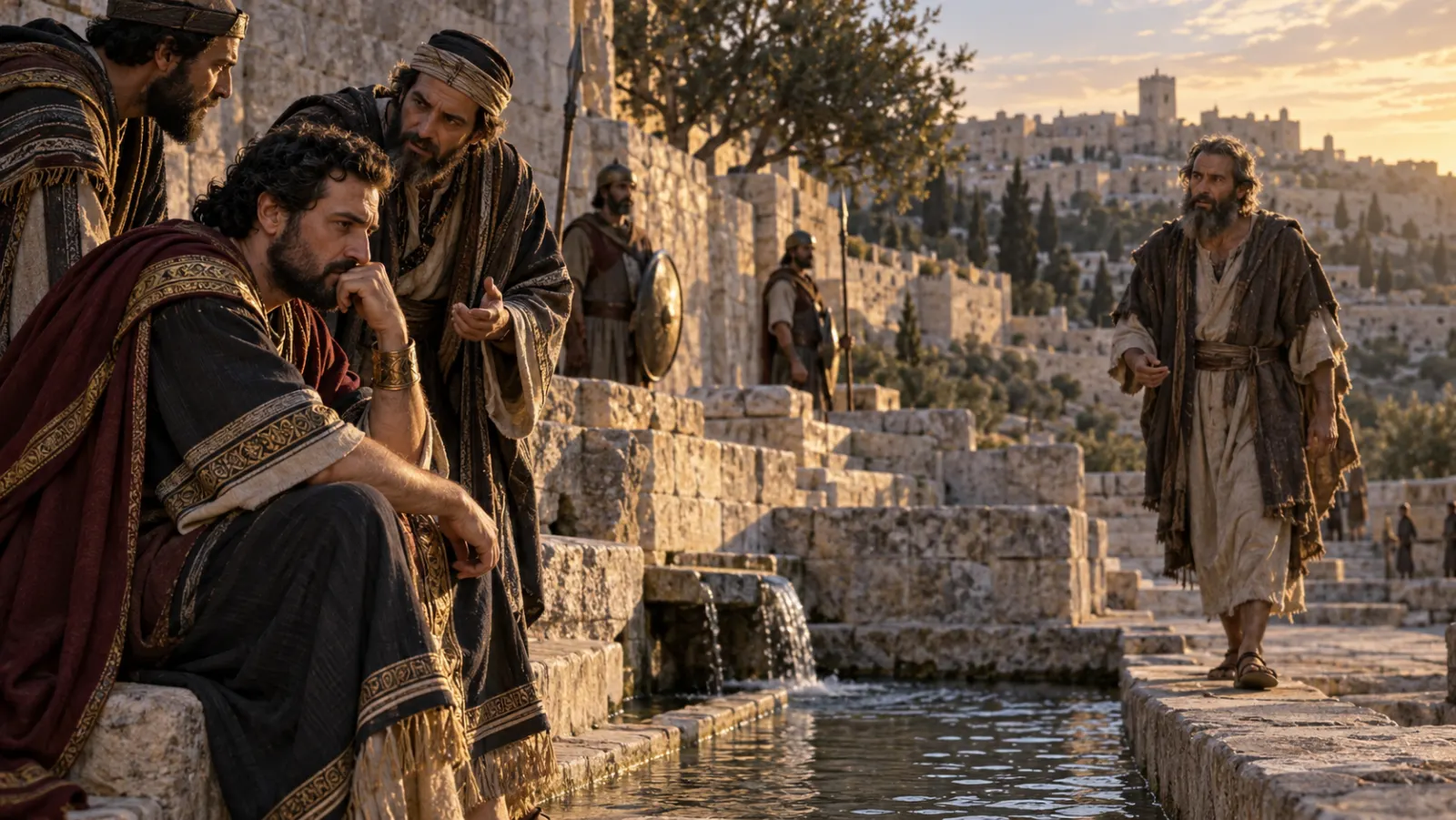
Hosea remembers Israel as God’s child; Matthew applies that story to Jesus after his family flees violence. Fulfillment here is recapitulation, not a prediction torn from context.
Matthew’s sentence can surprise careful readers. Hosea says, out of Egypt I called my son, but the prophet is plainly remembering the exodus, not forecasting a future child. Has Matthew ignored the context?
No. Matthew is inviting readers to see Jesus live Israel’s story: threatened by a murderous ruler, carried into Egypt, called out, tested and faithful. The fulfillment is a pattern brought to completion in the representative Son.
Hosea begins with parental love
God teaches Israel to walk, bends down and feeds the child. The chapter’s pain comes from rejected love, not abstract prediction. Its ending holds judgment and compassion in tension, revealing a God whose heart recoils from destruction.
Matthew’s Jesus recapitulates Israel
The Gospel moves from Egypt through water into wilderness. Jesus does not replace Israel as if God discarded a first plan; he embodies Israel’s calling and carries its story toward faithful obedience and blessing for the nations.
The holy family flees state violence
Matthew gives no sentimental travel scene. Joseph acts because Herod seeks the child’s life. The family depends on mobility, warning and refuge. Christian art should not erase the fear and material vulnerability implied by the journey.
Scripture forms posture, not instant policy
Immigration law involves borders, capacity, due process and security questions on which Christians may disagree. It does not follow that biblical texts dictate one bill. They do make contempt, falsehood and indifference toward displaced people incompatible with discipleship.
Welcome needs competence
Churches can learn local asylum and resettlement systems, protect personal information, support language access and partner with qualified organizations. Families should not owe a conversion story, photograph or political opinion in exchange for help.
Questions for reading and living the promise
A congregational reading can begin with one focused question: What is Hosea 11 saying before Matthew quotes it? Return to Hosea 11:1–11, read what comes before and after, and distinguish the passage's claim from our inferences. Then name who would carry the consequences of an application, what further knowledge is needed, and one bounded action that can be reviewed. Prophecy was not given to make readers feel superior; it calls God's people toward trust, truth, and concrete obedience.
The question changes when it touches actual American lives: How does Jesus relive Israel’s story? Region, income, race, age, disability, work schedule, gender, and immigration status can change the experience without changing the gospel. Listening for those differences keeps an application designed in one office from being imposed on everyone. Revising a plan when new evidence appears does not weaken faith. It can show that biblical authority was taken seriously enough to examine our habits.
To work responsibly with “Out of Egypt and the Gospel of a Refugee Child,” ask: Have we sentimentalized the family’s flight? A faithful answer includes consent, limits, resources, and someone accountable for follow-through. Prayer and study sustain the work, but they do not replace legal, medical, historical, or safeguarding expertise when it is needed. Nor do they permit another person's vulnerability to become evidence of institutional success. Mature Christian practice can state what it will do, what lies outside its competence, and when results will be reviewed.
A review should follow the first action: Which moral limits should govern policy disagreement? The impressions of those who designed the response are not enough. Receive voluntary testimony, notice unintended costs, and identify who remained outside. If a practice produced fear, dependence, or silence rather than truth, justice, care, and communion, changing it need not betray biblical conviction. Interpretive humility becomes visible when an institution repairs harm and explains clearly what it learned.
This prophecy can become prayer without becoming a slogan: What competent welcome can our church provide? A faithful prayer names the historical setting, gives thanks for the fulfillment Christians recognize in Jesus, and asks for wisdom in the present. It then leaves room for people with different experiences to answer without pressure. The goal is not to extract an identical sentence from everyone, but to form a community able to stay together while learning patient obedience and admitting the limits of its knowledge.
When the team returns to the question—What is Hosea 11 saying before Matthew quotes it?—it should record an understandable decision, the biblical reason for it, and a review date. If no one can describe how a relationship, budget, or practice would change, the application is still too general. Fulfillment in Christ does not eliminate the work of wisdom. It directs that work toward obedience that can be observed, corrected, and shared without manipulation. Review 1 should close with a communicated conclusion.
When the team returns to the question—How does Jesus relive Israel’s story?—it should record an understandable decision, the biblical reason for it, and a review date. If no one can describe how a relationship, budget, or practice would change, the application is still too general. Fulfillment in Christ does not eliminate the work of wisdom. It directs that work toward obedience that can be observed, corrected, and shared without manipulation. Review 2 should close with a communicated conclusion.
When the team returns to the question—Have we sentimentalized the family’s flight?—it should record an understandable decision, the biblical reason for it, and a review date. If no one can describe how a relationship, budget, or practice would change, the application is still too general. Fulfillment in Christ does not eliminate the work of wisdom. It directs that work toward obedience that can be observed, corrected, and shared without manipulation. Review 3 should close with a communicated conclusion.
When the team returns to the question—Which moral limits should govern policy disagreement?—it should record an understandable decision, the biblical reason for it, and a review date. If no one can describe how a relationship, budget, or practice would change, the application is still too general. Fulfillment in Christ does not eliminate the work of wisdom. It directs that work toward obedience that can be observed, corrected, and shared without manipulation. Review 4 should close with a communicated conclusion.
When the team returns to the question—What competent welcome can our church provide?—it should record an understandable decision, the biblical reason for it, and a review date. If no one can describe how a relationship, budget, or practice would change, the application is still too general. Fulfillment in Christ does not eliminate the work of wisdom. It directs that work toward obedience that can be observed, corrected, and shared without manipulation. Review 5 should close with a communicated conclusion.
When the team returns to the question—What is Hosea 11 saying before Matthew quotes it?—it should record an understandable decision, the biblical reason for it, and a review date. If no one can describe how a relationship, budget, or practice would change, the application is still too general. Fulfillment in Christ does not eliminate the work of wisdom. It directs that work toward obedience that can be observed, corrected, and shared without manipulation. Review 6 should close with a communicated conclusion.
When the team returns to the question—How does Jesus relive Israel’s story?—it should record an understandable decision, the biblical reason for it, and a review date. If no one can describe how a relationship, budget, or practice would change, the application is still too general. Fulfillment in Christ does not eliminate the work of wisdom. It directs that work toward obedience that can be observed, corrected, and shared without manipulation. Review 7 should close with a communicated conclusion.
Matthew reads Hosea as family history fulfilled in Jesus. The Son comes out of Egypt carrying Israel’s vocation and the memory of a dangerous road.
American Christians may debate policy, but they cannot make refugee families faceless. The Gospel they confess begins with a child whose safety required another country’s shelter. That memory should make every disagreement more truthful and every encounter more humane.