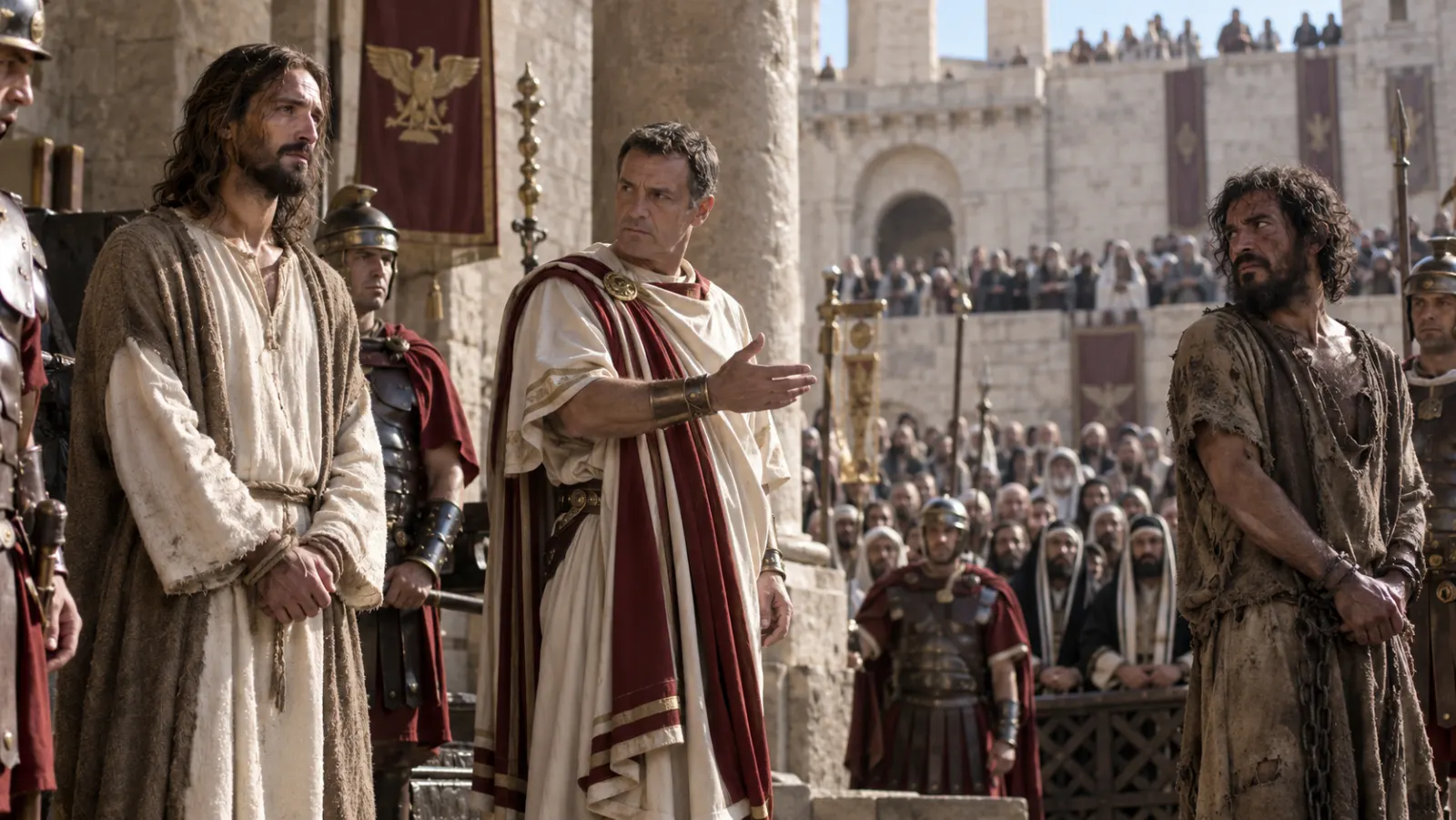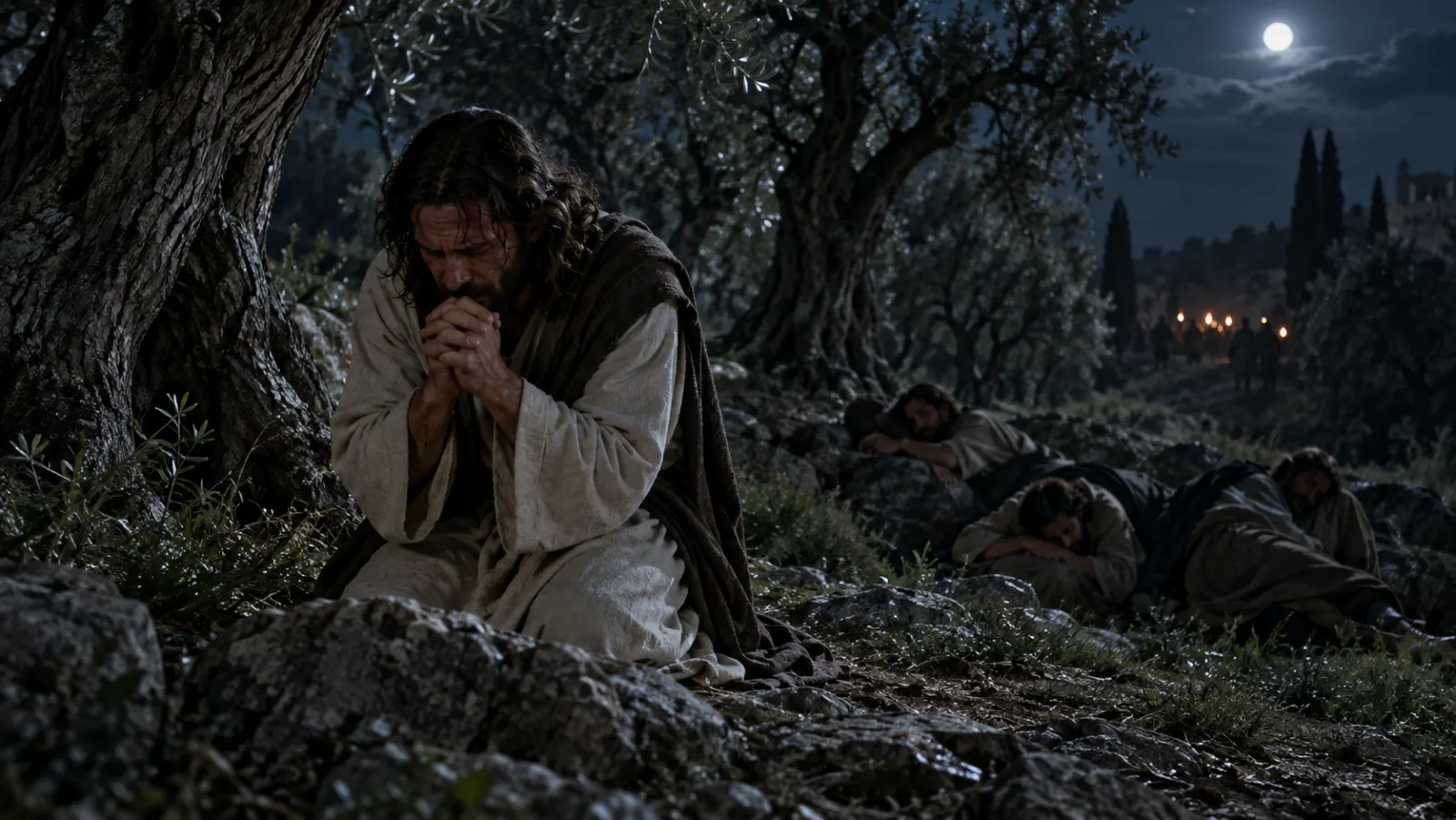
Judas is often explained with a single motive: greed. The Gospels give a more complicated portrait, while Matthew makes the payment itself part of a biblical pattern.
Thirty pieces of silver has become one of the most recognizable prices in Western culture. The phrase can be used for any betrayal done for money, even by people who have never read Matthew’s Gospel. That familiarity creates a risk: the number begins to feel like a simple historical receipt. Judas betrays Jesus, someone counts thirty coins, and greed explains the rest. Matthew is doing more than recording a transaction. He wants the reader to hear biblical echoes in the amount itself.
The Gospels agree that Judas became the insider who handed Jesus over, but they do not reduce his inner life to a psychological profile we can fully reconstruct. John associates him with theft. Luke and John speak of satanic influence. Matthew emphasizes the agreement for money and later Judas’s remorse. Rather than inventing a single motive with certainty, it is better to notice what the texts emphasize: betrayal from within the circle, a price that carries scriptural resonance, and a tragic attempt to undo what cannot simply be undone.
The exact coin is less certain than the amount’s narrative force
Matthew says thirty pieces of silver but does not identify the coin type in modern numismatic detail. Various proposals have been made, and older Christian art often imagines uniform coins in a purse. Historically, Temple shekels or other silver coinage could circulate in the region, but the Gospel’s theological interest is not primarily numismatic. Matthew’s reader is meant to notice “thirty” as a loaded biblical number.
That is a useful reminder about historical reading. We can ask what the coins may have been without pretending the text gives information it does not. The important claim is that money changed hands as part of the arrangement to hand Jesus over. The significance of the sum emerges most clearly when Matthew later connects the money and the potter’s field with prophetic Scripture.
Zechariah 11 gives the strongest echo
In Zechariah 11, a rejected shepherd is paid thirty pieces of silver, a valuation presented with bitter irony. The money is then thrown into the house of the Lord to the potter. Matthew’s account of Judas’s returned silver, the priests, and the purchase of the potter’s field deliberately recalls this imagery. The evangelist is not hiding the connection; he builds his narration so readers will see it.
The effect is theological. Jesus, the shepherd rejected by his people’s leaders, is valued cheaply. The betrayal price becomes a symbol of contempt. Matthew’s use of the prophets is complex and does not always fit modern habits of one-verse prediction and fulfillment. He often draws together scriptural themes and patterns. Here the point is less “a prophet predicted the exact coin count in a vacuum” and more “the tragedy of the rejected shepherd is happening again, now around Jesus.”
Exodus adds another possible association
Exodus 21:32 sets thirty shekels as compensation when an ox kills a slave. Christians have long connected that amount with Judas’s payment, seeing a further image of how cheaply Jesus was valued. Whether Matthew specifically intends that association is debated, and it should not be stated with the same confidence as the clear Zechariah link.
Still, the broader resonance is difficult to miss: thirty pieces of silver is not a glorious royal sum. The Passion narrative repeatedly presents the world’s distorted judgment of Jesus. He is hailed and then opposed, treated as dangerous and disposable, sold by a companion, and handed into a legal process shaped by power. The small sum fits that pattern of devaluation.
Greed may be part of Judas’s motive, but it is not the whole explanation
John portrays Judas as someone who stole from the common money bag, making greed a real element in the Gospel tradition. Yet thirty silver coins alone do not prove that financial gain fully explains the betrayal. Scholars and preachers have proposed political disappointment, disillusionment, an attempt to force Jesus’ hand, personal resentment, or other motives. The texts do not clearly endorse those reconstructions.
The safest approach is to keep the biblical emphases together. Judas is morally responsible. Money is involved. Satanic temptation or influence is part of the story in Luke and John. Judas later experiences remorse in Matthew. Human motives are often layered, and Scripture does not give us access to every layer. The mystery is part of the tragedy: someone who lived close to Jesus chose to hand him over.
The silver exposes the logic of betrayal
Betrayal turns a relationship into a transaction. Judas knows where Jesus will be away from the crowds and uses insider access as something that can be exchanged. That is why the money matters even if it is not the only motive. A companion becomes a source, intimacy becomes leverage, and trust becomes a commodity. The moral ugliness lies in that conversion.
For modern readers, the story therefore reaches beyond spectacular acts of treason. Communities and institutions can betray people whenever trust is traded for advantage, protection, reputation, or money. The Passion narrative shows how cheaply human systems can value a person when preserving power becomes the priority. Matthew’s thirty pieces of silver remain memorable because they give that corruption a sound: coins counted out for a friend.
Judas was one of the Twelve, and that is the deepest shock
The betrayal is painful not primarily because it comes from an obvious outsider but because Judas belongs to the chosen circle. He traveled with Jesus, heard the teaching, witnessed the works, and shared meals with the other disciples. The Passion therefore begins with a fracture inside the community closest to Jesus. Proximity to holy things does not guarantee a faithful heart.
That warning should be handled without morbid speculation. The Gospels do not invite Christians to guess who among them is “a Judas.” They invite self-examination. Religious familiarity can coexist with concealed disloyalty, and public association with Jesus can conceal private decisions moving in the opposite direction. The thirty pieces of silver make visible a betrayal that had already become possible within relationship.
Matthew’s account of Judas’s death should not be used carelessly
Matthew records Judas’s remorse, the return of the silver, and his suicide. Acts 1 describes his death and the field in different terms, creating a harmonization question that belongs to another discussion. Pastoral care requires special caution here. The text narrates a tragic death; it should never be used to romanticize suicide, to pronounce simplistic judgments on people who die by suicide, or to deepen shame for grieving families.
The theological emphasis in Matthew is the irreversible seriousness of the betrayal and the inability of returned money to undo it. Judas’s remorse is real, but the narrative is not a template for evaluating every despairing person. Holy Week should make Christians more compassionate toward human brokenness, not more reckless with it.
The price of Judas’s betrayal is historically concrete and theologically charged. Matthew preserves the transaction, then wraps the returned silver in the language of Israel’s prophets. The amount becomes part of the Gospel’s claim that Jesus is the rejected shepherd, shamefully valued and handed over by someone from his own circle.
We may never know every motive inside Judas’s heart, and the Gospels do not require us to invent one. The safer lesson is more disturbing. Closeness to Jesus does not make betrayal impossible, and sacred relationships can be converted into transactions. Thirty pieces of silver are not just the price of one ancient crime; they are a warning about what happens when loyalty acquires a market value.
Matthew’s treatment of the money finally turns the betrayal into a mirror of misplaced value. The silver looks tangible and useful; the relationship being traded is priceless. Holy Week repeatedly exposes that reversal. What human beings count as gain can become the instrument by which they reveal how badly they have misunderstood Jesus.