From Tatian’s second-century Diatessaron to modern chronological Bibles, readers have wanted one continuous story of Jesus. That instinct is understandable. The church, however, ultimately kept four Gospels.
American Bible publishers love chronology. You can buy a chronological Bible, a harmony of the Gospels, a Passion Week timeline, or a study chart that merges all four accounts into one sequence. The desire is ancient. Around the second century, the Christian writer Tatian produced the Diatessaron, a continuous narrative woven from Matthew, Mark, Luke, and John. For communities trying to hear the whole story in one flow, the idea is attractive. Why read four versions when we can make one complete version?
The answer is not that harmonies are wrong. They can be enormously useful. They reveal parallels, expose differences, and help readers think about sequence. The danger comes when the harmony quietly becomes the Gospel in our imagination and the four canonical books become raw material. The early church received four Gospels, and their plurality is part of the gift. A good harmony should therefore function like a map, not like a replacement landscape.
Christians have harmonized from very early on
Tatian’s Diatessaron, composed in the second century, is the most famous early example. He combined Gospel material into a single narrative and apparently used it widely in Syriac-speaking churches. The work shows that the desire to integrate the accounts is not a modern defensive response to skepticism. Christians have long wanted to know how the pieces fit together.
Later scholars produced tables, canons, and parallel-column editions rather than one blended text. Eusebius’s canon tables, for example, helped readers locate passages shared among the Gospels while keeping the books separate. That approach points toward a healthy balance: comparison without erasure.
A harmony can clarify sequence and context
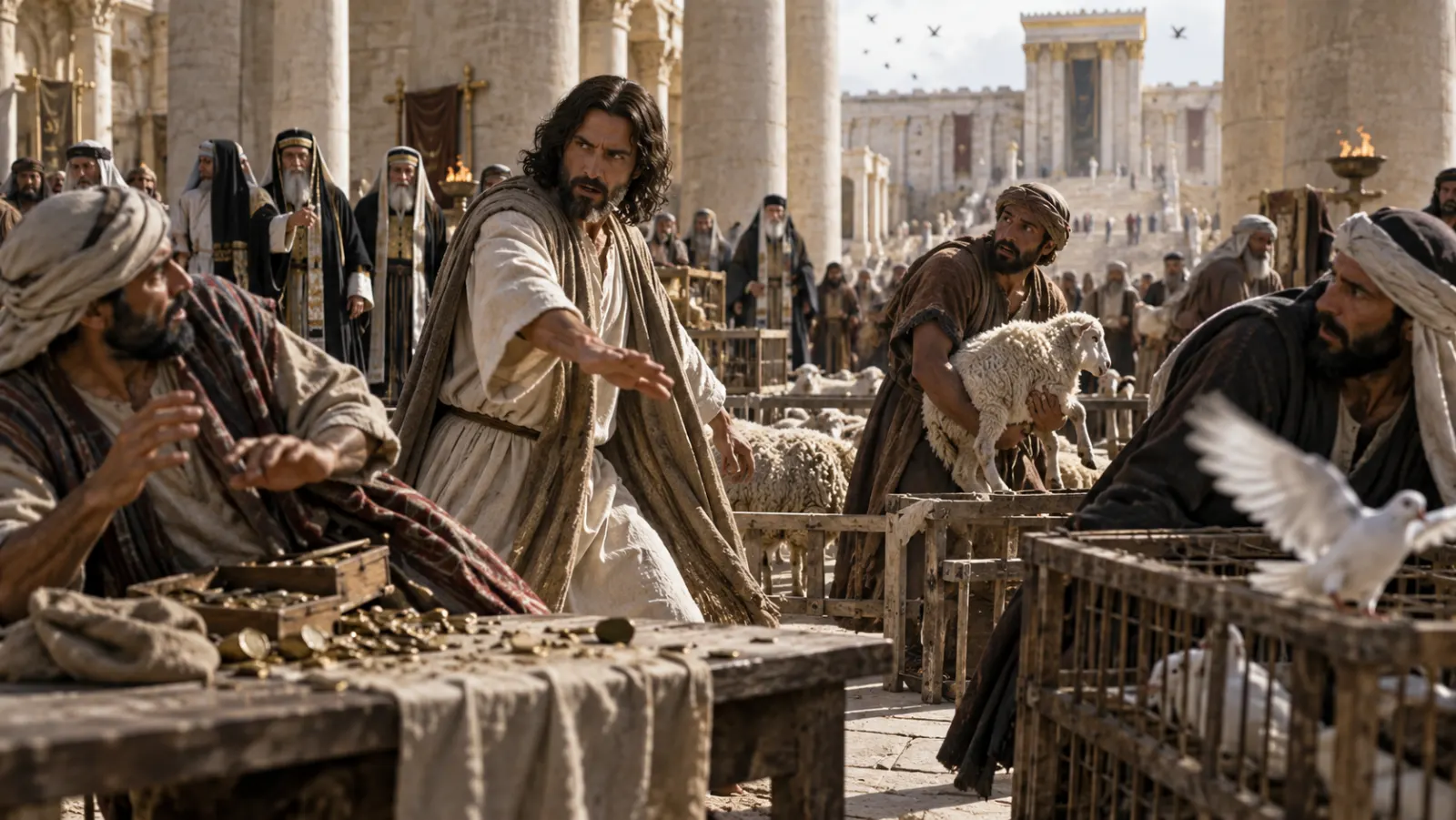
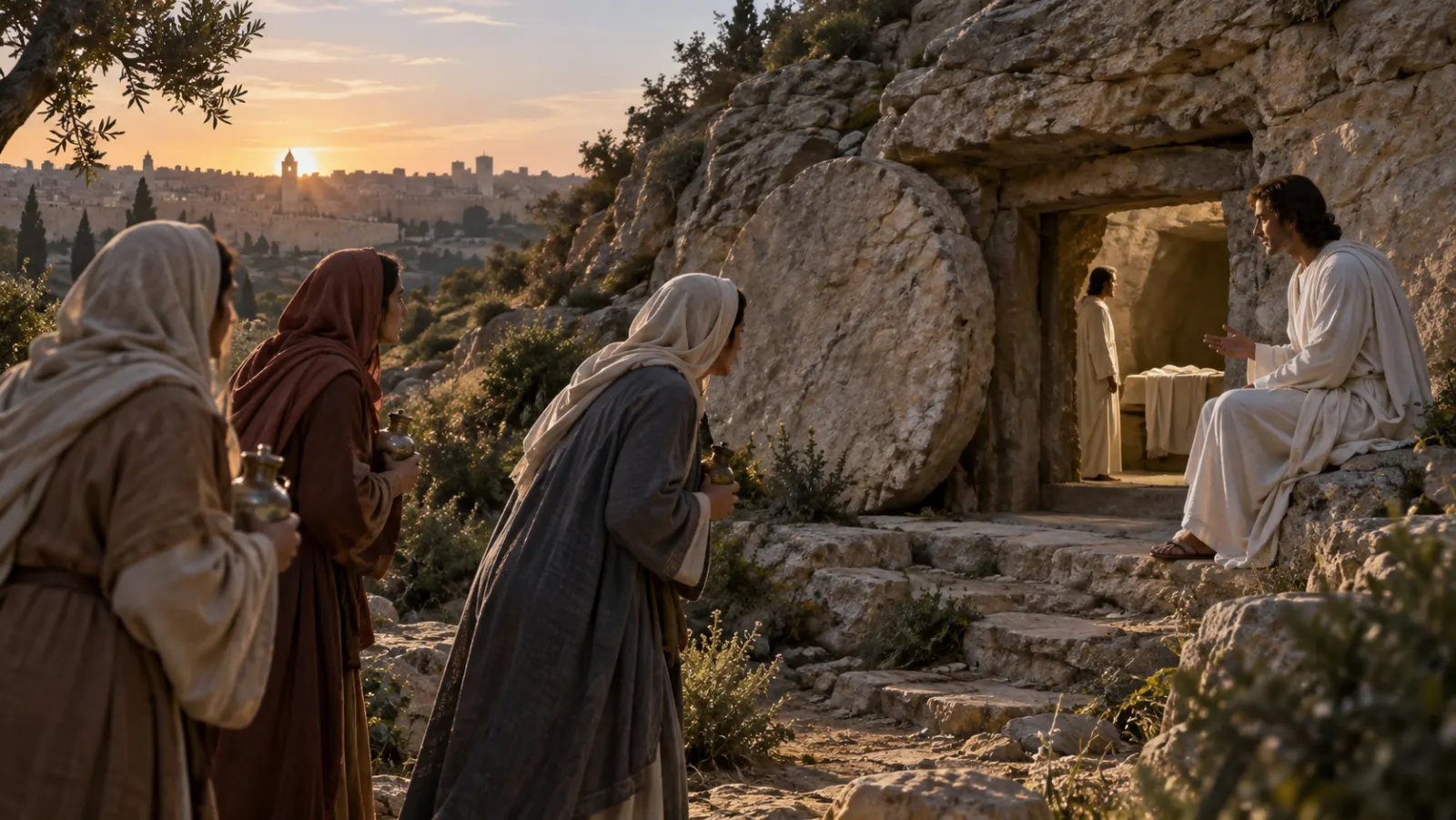
When events appear in several Gospels, a parallel arrangement lets readers see what each account includes or omits. It can clarify that John’s Temple cleansing is placed differently, that the feeding of the 5,000 is shared by all four, or that resurrection appearances unfold across multiple locations. For pastors and teachers, such tools reduce the chance of misremembering which Gospel says what.
Harmonies also help with geography. Jesus’ movements between Galilee, Judea, Jerusalem, and surrounding regions can be difficult to track when reading one Gospel at a time. A cautious chronological synthesis can illuminate the broad flow of ministry and sharpen historical questions.
But a composite story can erase literary purpose
Imagine taking four photographs from different angles and digitally blending them until no original image remains visible. The final picture might contain more objects, but it could lose composition. Something similar happens when Gospel details are combined too quickly. Matthew’s structure, Mark’s pacing, Luke’s narrative of salvation, and John’s sign-centered theology can disappear under a “complete” story none of the evangelists actually wrote.
This is especially common at Christmas and Easter. Nativity scenes merge Matthew and Luke. Resurrection retellings create a detailed morning schedule by splicing every movement. Such composites can be useful, but they should be recognized as secondary constructions. Canonical interpretation begins with the texts as they stand.
Harmonization can become speculative
The desire to remove every tension can tempt readers to invent repeated events. If two accounts place a similar saying differently, we may immediately claim Jesus said it twice. Sometimes he surely did. But when repetition is proposed only because the alternative makes us uncomfortable, the explanation becomes circular. The same risk appears when harmonies insert unmentioned trips, meetings, or calendar systems.
A disciplined harmony grades its claims. Some combinations are straightforward. Others are plausible. Others remain highly conjectural. Readers should know the difference. The Bible does not need help in the form of imagined facts presented as though they were inspired details.
Four Gospels provide theological depth a single account cannot
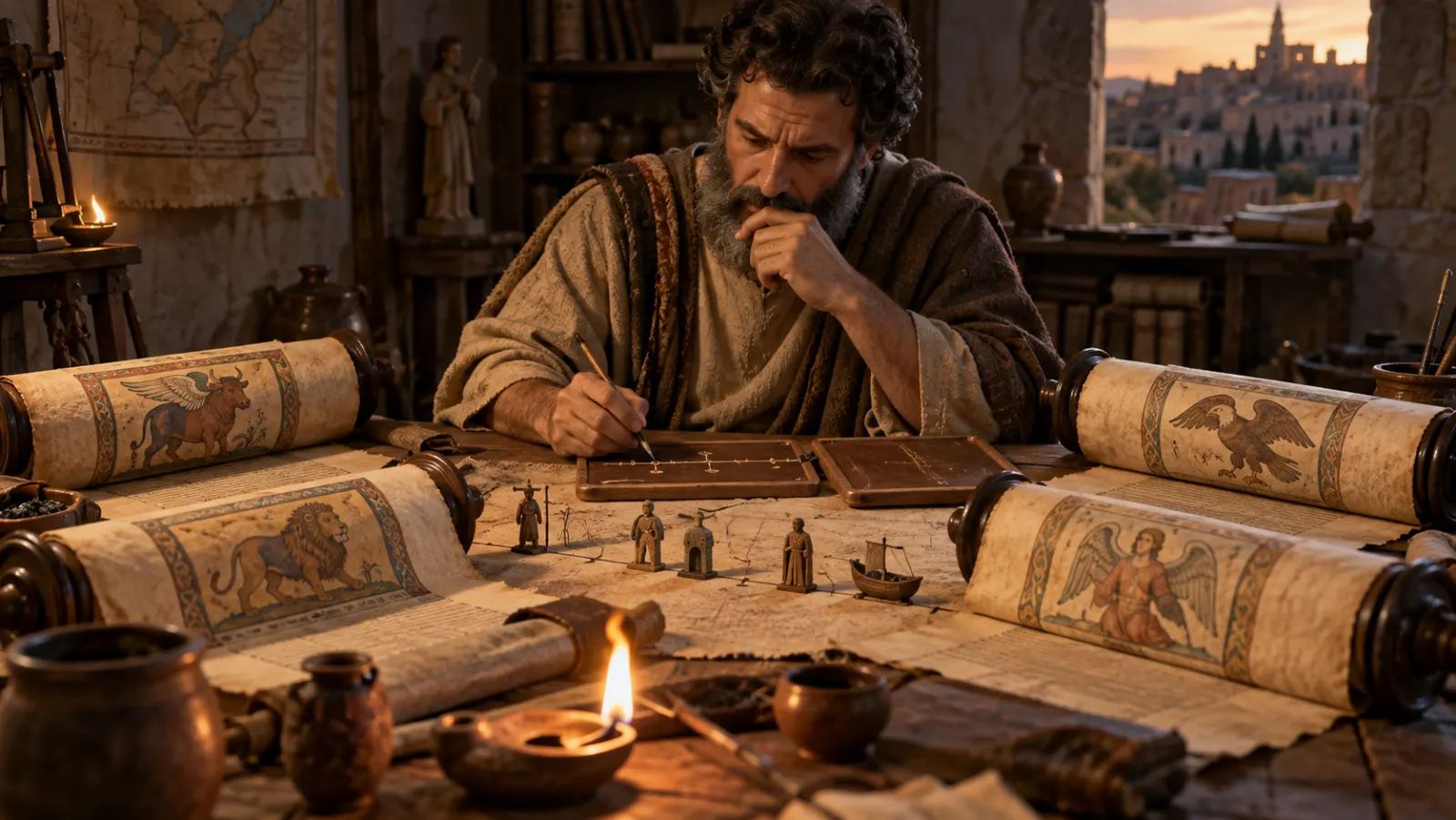
The church’s fourfold Gospel creates a kind of canonical depth perception. Mark’s stark emphasis on suffering stands beside John’s sustained reflection on glory. Matthew’s concentration on fulfillment and teaching stands beside Luke’s concern for salvation moving outward through Israel to the nations. The same Jesus is seen through genuinely distinct narrative lenses.
That plurality has theological value. It keeps Christians from reducing Jesus to one preferred theme. A reader who loves John’s language of eternal life must also face Mark’s suffering discipleship. A reader drawn to Matthew’s ordered teaching must also hear Luke’s songs, meals, outsiders, and reversals. Four witnesses discipline the church’s imagination.
Use harmonies as servants, not masters
The best practice is simple. Read each Gospel from beginning to end. Learn its structure and voice. Then use a harmony to compare parallels and explore historical relationships. When constructing a timeline, label uncertain points. When preaching a composite scene, tell listeners where the details come from. That transparency strengthens rather than weakens biblical teaching.
A harmony is at its best when it sends us back to Matthew, Mark, Luke, and John with sharper eyes. It should make the canonical books more visible, not less. The goal is not to conquer every chronological puzzle. It is to understand Jesus more faithfully through the witnesses the church actually received.
A practical rule for churches, teachers, and study Bibles
When teaching a harmonized episode, identify the sources. A pastor can say, for example, that Matthew names one detail, Luke another, and John adds a later scene. That small habit prevents listeners from assuming the composite appears word-for-word in one place. It also teaches congregations how the Bible actually works: four coordinated witnesses rather than a hidden master transcript.
Publishers and app designers can do something similar. Parallel columns are often more educational than a fully blended narrative because readers can see agreement and variation at once. Timelines should distinguish firm sequence from debated sequence. Footnotes can explain when a reconstruction depends on an inference. Those editorial choices model intellectual honesty rather than uncertainty for its own sake.
The deepest reason for restraint is theological. Christians believe the canonical form matters. God did not leave the church with one authorized mega-Gospel but with Matthew, Mark, Luke, and John. Whatever providence means in the formation of Scripture, it includes that fourfold shape. Harmonization should therefore serve the canon we received rather than silently correcting it into the form we think would have been more convenient.
Christians can and should harmonize the Gospels, but with humility. The practice has ancient precedent and real value. It can clarify chronology, geography, and complementary detail. Yet the church did not preserve Tatian’s single blended Gospel as a replacement for the four canonical accounts. That historical fact is worth pondering.
The fourfold Gospel is not an inconvenience waiting to be repaired. It is the form in which the testimony has come to us. Use charts. Compare columns. Build cautious timelines. But always return to the individual books. A good harmony does not make Matthew, Mark, Luke, and John disappear. It teaches us to hear them together without making them sound the same.
The same rule protects devotional reading. A family reading through Jesus’ life can certainly use a chronological guide, but it is worth pausing regularly to read the entire Gospel context from which each episode comes. That habit keeps the story from becoming a sequence of detached scenes and preserves the theological momentum of each book. Harmony should help readers notice connections; it should never make context seem optional.
That distinction is small in practice but decisive in interpretation. It lets a chronological tool remain genuinely useful without allowing it to become a substitute canon. The four Gospels can then be compared confidently while each retains the shape, pacing, and theological argument the evangelist actually gave it.
That is the difference between using a harmony and being ruled by one.