
The Lord’s Prayer
What Jesus Taught Us to Pray — and How to Pray It Today
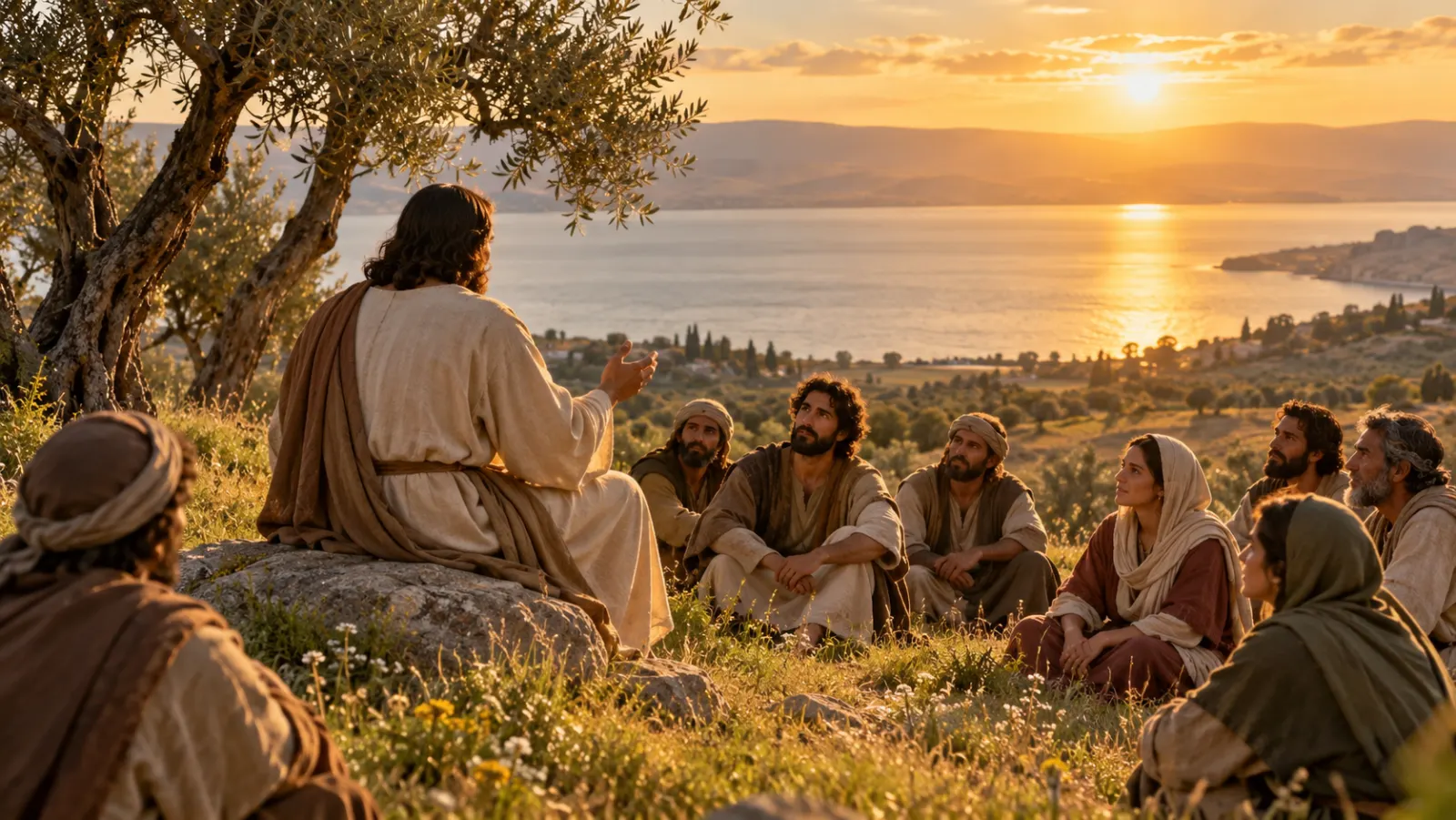
The Lord’s Prayer is one of the clearest places in Scripture where Jesus teaches His followers how to pray. Rather than giving a formula for empty repetition, He gives a pattern that begins with God’s name and kingdom, moves through daily dependence and forgiveness, and ends with a plea for protection from temptation and evil. This guide explores the prayer in its biblical setting and shows how its structure can shape Christian prayer today.
The passage
Our Father in heaven, may your name be kept holy.
Let your Kingdom come.
Let your will be done on earth as it is in heaven.
Give us today our daily bread.
Forgive us our debts, as we also forgive our debtors.
Bring us not into temptation, but deliver us from the evil one.
For yours is the Kingdom, the power, and the glory forever. Amen.
The passage: Matthew 6:9-13 Translation: World English Bible Updated
Biblical context
In Matthew 6, Jesus teaches about giving, prayer, and fasting in the Sermon on the Mount. He warns against practicing devotion in order to be seen by other people and against using many words as though length itself could force God to listen. Jesus then gives His disciples a model prayer addressed to the Father. The emphasis is not performance but relationship, reverence, dependence, forgiveness, and trust.
Jesus introduces the prayer as a model: “Pray like this.” The prayer therefore works both as words Christians may pray and as a framework that teaches what mature prayer should care about.
Related passages: Matthew 6:1-18 Luke 11:1-4
Understanding the passage
Our Father in heaven
Relationship and reverence
Jesus begins with relationship: God is addressed as Father. Yet the phrase “in heaven” prevents familiarity from becoming casual irreverence. Christian prayer begins with confidence that God welcomes His children and with humility before the One who is greater than us.
How to pray it today Begin by remembering who you are speaking to. Bring your needs honestly, but first let your heart settle in the truth that God is both near and holy.
May your name be kept holy
God’s honor
To hallow God’s name is to treat Him as holy and worthy. The first concern of the prayer is not our comfort or success but that God would be honored in our worship, choices, relationships, and public witness.
How to pray it today Ask that your words and actions would represent God truthfully. Pray against hypocrisy and for a life that reflects His character.
Let your Kingdom come. Let your will be done
God’s reign and our surrender
The prayer asks for God’s good rule to become increasingly visible and for His will to shape life on earth. This is not passive resignation. It is a request that our desires, communities, and actions come into greater alignment with God’s purposes.
How to pray it today Bring decisions, ambitions, conflicts, and plans before God. Ask not merely for approval of what you already want, but for courage to change direction when necessary.
Give us today our daily bread
Dependence and provision
Jesus teaches His followers to ask for ordinary needs. “Daily bread” includes the necessities of life and reminds us that dependence on God is not limited to crises. The plural “us” also prevents prayer from becoming entirely private; the needs of neighbors matter alongside our own.
How to pray it today Ask for what is genuinely needed today: food, work, strength, health, wisdom, shelter, or help. Then remember people whose daily needs are not secure.
Forgive us our debts, as we also forgive our debtors
Grace, repentance, and forgiveness
The prayer assumes that disciples continue to need forgiveness. It also connects receiving mercy with becoming merciful. Forgiveness does not call evil good, erase wise boundaries, or require immediate restoration of trust, but it refuses to make revenge the center of the heart.
How to pray it today Confess specific wrongs rather than only vague failure. Ask whom you need to forgive, where you need to apologize, and what responsible repair may be possible.
Bring us not into temptation
Spiritual vigilance
This petition recognizes human weakness. Mature prayer does not assume that good intentions alone are enough. We ask God to guard us when desire, fear, anger, pride, or pressure could pull us toward sin.
How to pray it today Name situations where you are vulnerable. Pray for wisdom to avoid unnecessary exposure to temptation and for courage to seek accountability or practical help.
Deliver us from the evil one
Protection from evil
Jesus teaches believers to take evil seriously without becoming superstitious or fearful. The prayer asks God for protection from forces, choices, systems, and spiritual influences that oppose what is good and true.
How to pray it today Ask for protection, discernment, and courage. Pray not only to be kept from harm but also to resist participating in harm toward others.
For yours is the Kingdom, the power, and the glory forever
Worship and confidence
The traditional doxology brings the prayer back to God’s rule, power, and glory. It reminds the worshiper that prayer does not end with fear about evil but with confidence that God remains worthy of trust and praise.
How to pray it today End by returning attention from your needs to God’s greatness. Let praise keep your requests from becoming the whole horizon of prayer.
What it teaches us
- Prayer begins with God before it turns to our needs.
- Christian prayer joins reverence and intimacy.
- God’s kingdom and will matter more than getting our own way.
- Ordinary material needs belong in prayer.
- Prayer is communal: Jesus teaches us to say “our,” “us,” and “we.”
- Receiving forgiveness and extending forgiveness belong together.
- Spiritual maturity includes admitting vulnerability to temptation.
- Prayer ends in trust, worship, and confidence in God.
How to pray it
You can pray the Lord’s Prayer exactly as it stands, slowly and attentively. You can also use each line as a doorway into your own words. Pause after each petition and name the people, needs, sins, decisions, and situations that connect with it. The goal is not to improve Jesus’ prayer but to let His priorities reshape ours.
- Read one line slowly.
- Restate its meaning in your own words.
- Connect it to one concrete part of your life.
- Pray for at least one other person, not only yourself.
- Move to the next line without rushing.
Questions for reflection
- Which part of the Lord’s Prayer do I tend to skip over most quickly?
- Do my prayers focus mainly on my plans, or do they make room for God’s kingdom and will?
- What does “daily bread” look like in my life right now?
- Is there a specific wrong I need to confess rather than describe vaguely?
- Is there someone I need to begin forgiving while still maintaining wise boundaries?
- Where am I most vulnerable to temptation at this stage of life?
- How could this prayer make my concern for other people more concrete?
Prayers inspired by this passage
A Prayer Following the Pattern Jesus Gave
Father in heaven, let my life honor Your name today. Let Your kingdom shape my priorities and Your will correct my plans. Provide what I truly need, and make me attentive to the needs of others. Forgive my sins and teach me to forgive without pretending harm did not matter. Guard me where I am weak, keep me from evil, and lead me in the way of Christ. Your kingdom is greater than my circumstances, and Your glory is worth more than my control. Amen.
A Prayer for Daily Provision and Trust
Father, give me today's bread — what is needed for this day rather than everything I wish I could control about tomorrow. Provide wisdom, work, rest, strength, and practical help. Keep me grateful for what I have and awake to people whose basic needs are uncertain. Teach me to receive without entitlement and to share without pride. Amen.
A Prayer for Forgiveness and Protection
Merciful God, forgive what is sinful in me and show me what needs repair. Free me from bitterness without asking me to deny truth or abandon wise boundaries. Guard me from the temptations I already know and from the ones I do not yet recognize. Give me humility to seek help, courage to walk away from what is harmful, and strength to choose what is faithful. Amen.
A pastoral note
The Lord’s Prayer is not a test of spiritual performance. A person may pray it when joyful, distracted, grieving, doubtful, or exhausted. Its strength is that Jesus gives us words and priorities when our own words are limited.