Zacchaeus Meets Jesus
Jesus Seeks the Lost and Changes a Life

Before You Read
Zacchaeus wants to see Jesus, but the crowd does not make it easy.
Jesus notices him anyway—and chooses to go to his house.
As you read, notice what Jesus does first and how Zacchaeus responds afterward.
The Bible Story
Jesus entered Jericho and was passing through the city.
A man named Zacchaeus lived there.
He was a chief tax collector, and he was rich.
Tax collectors worked with the Roman system, and many people distrusted them because tax collection could be connected with unfairness and abuse.
Zacchaeus had a bad reputation in the city. People knew him as a chief tax collector, and the crowd did not respect him.
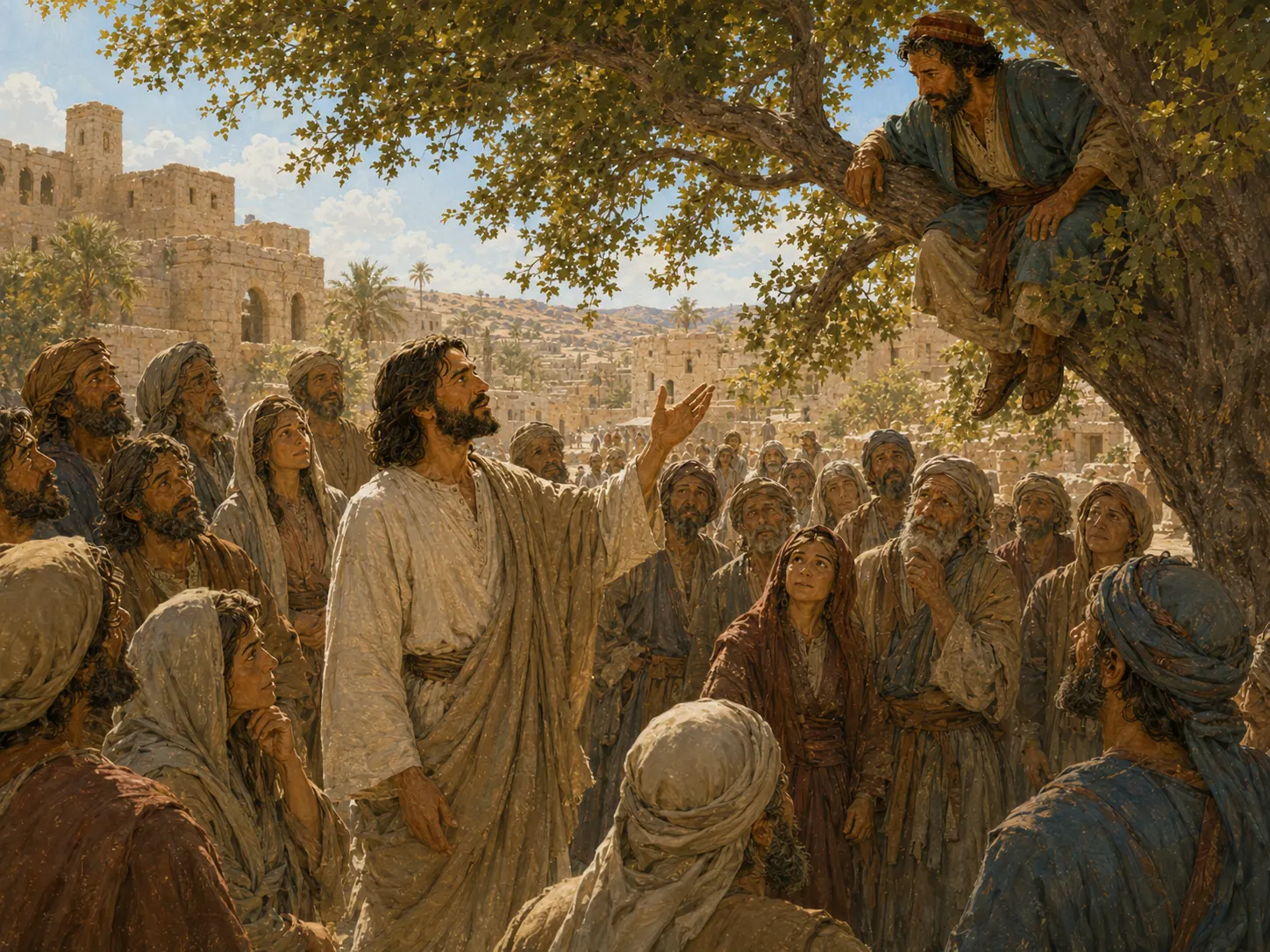
Zacchaeus wanted to see who Jesus was.
But he was short, and the crowd blocked his view.
So he ran ahead and climbed a sycamore-fig tree beside the road.
From the branches, he could finally see over the people.

When Jesus reached the place, He looked up.
He called Zacchaeus by name.
Jesus told him to come down quickly because He intended to stay at his house that day.
Zacchaeus hurried down and welcomed Jesus gladly.
The crowd reacted very differently.
People began to complain because Jesus had chosen to be the guest of a man they considered a sinner.
Jesus's decision did not mean that Zacchaeus's wrong choices did not matter.
Jesus was not pretending greed, dishonesty, or exploitation were harmless.
But Jesus was willing to enter the home of someone the crowd had already written off.
Something changed in Zacchaeus.
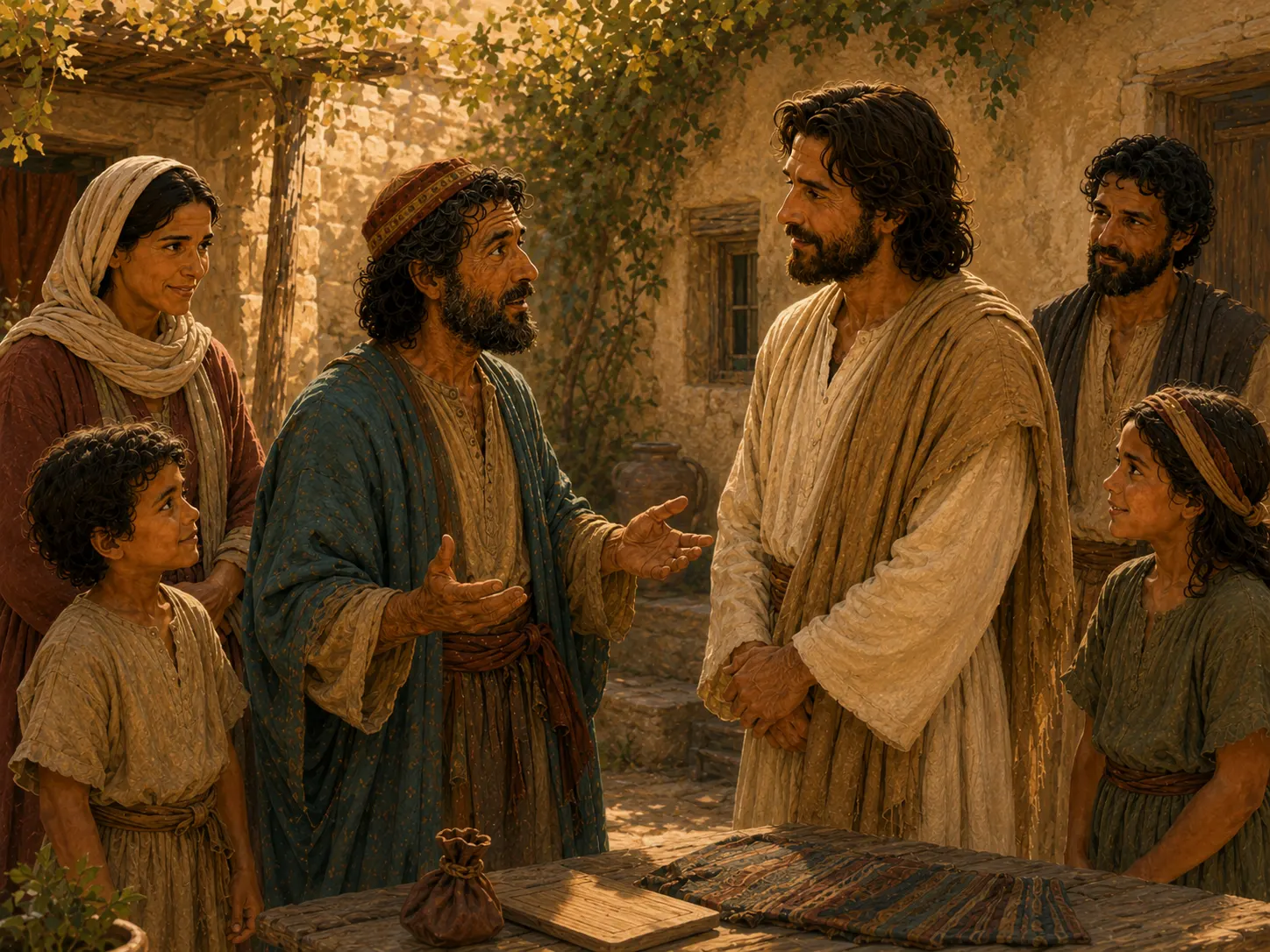
He stood and spoke to the Lord.
He said he would give half of his possessions to the poor.
He also said that if he had cheated anyone, he would repay four times the amount.
That response was more than a vague promise to 'be nicer.'
Zacchaeus named practical changes involving money, generosity, and restitution.
Repentance was becoming visible in what he was willing to do.
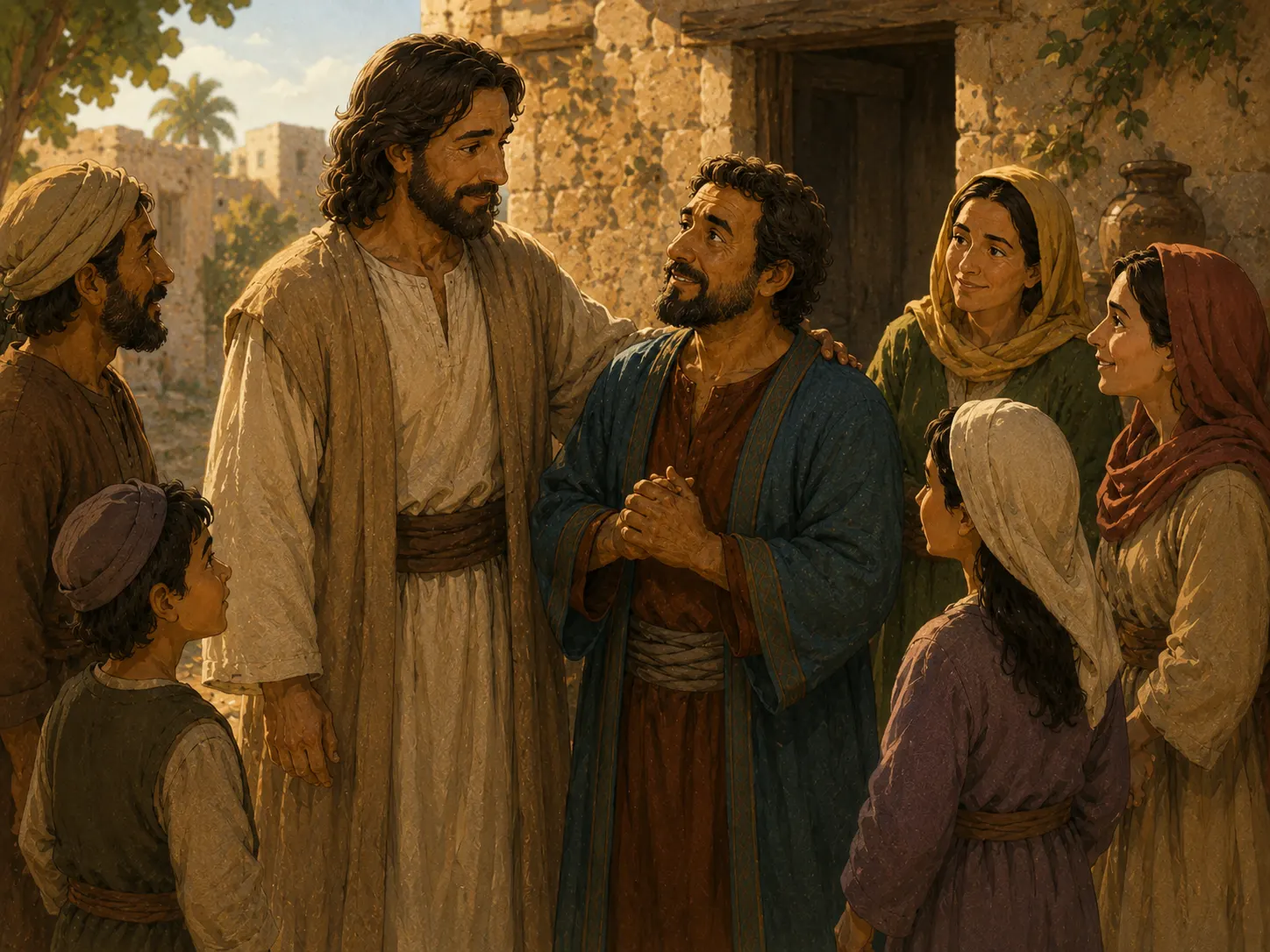
Jesus responded by declaring that salvation had come to that house.
He also identified Zacchaeus as a son of Abraham.
That mattered because the crowd had treated him like someone outside the circle of God's people.
Jesus did not erase Zacchaeus's responsibility.
He restored dignity while calling attention to real change.
Then Jesus explained His mission:
The Son of Man came to seek and to save the lost.
That statement helps us understand the whole scene.
Jesus noticed Zacchaeus before the crowd's judgment could have the final word.
He called him down from the tree.
He went to his home.
And His welcome was followed by repentance that affected how Zacchaeus handled wealth and wrongs against other people.
Zacchaeus was not trying to buy salvation with his money. Jesus had already sought him, called him by name, and entered his home. His generosity showed that meeting Jesus was changing the way he wanted to live.
Zacchaeus's generosity is evidence of a changed response to Jesus, not a price paid to purchase God's favor.
Zacchaeus chose to give half of his possessions to the poor, but Jesus did not announce a rule that everyone must give exactly the same amount. This was Zacchaeus's own concrete response to the mercy he had received.
His words were specific. He would be generous to the poor, and if he had cheated anyone, he would repay four times the amount.
His repentance was reaching into real life. It was changing how he thought about money, honesty, and people he may have wronged.
When we have wronged someone, saying 'sorry' may need to be joined with making things right where possible and safe.
Making things right can begin in simple, honest ways: returning what was taken, replacing what was damaged, telling the truth, or asking a trusted adult for help when the problem is too big to handle alone.
Children should never be pressured to repay adult financial debts or solve family money problems.
Jesus's welcome of Zacchaeus also challenges the crowd.
They were quick to define him only by his reputation.
Jesus saw a lost person worth seeking.
Zacchaeus's past mattered, but it did not place him beyond the reach of mercy.
Grace did not leave him unchanged.
It moved him toward generosity, honesty, and repair.
Zacchaeus had climbed a tree because he wanted to see Jesus. By the end of the day, Jesus had shown that He had come looking for people like Zacchaeus—the lost who needed mercy, forgiveness, and a changed life.
It is about the mission of Jesus to seek the lost and the kind of repentance that begins to reshape a person's life. It reaches the heart and the choices that follow.
What This Story Teaches Us
1. Jesus Seeks the Lost
Jesus notices Zacchaeus and initiates the encounter.
The crowd's judgment does not prevent Jesus from reaching him.
2. Grace Does Not Pretend Wrong Is Harmless
Jesus welcomes Zacchaeus without saying that exploitation or dishonesty are acceptable.
Mercy and truth belong together.
3. Repentance Produces Real Change
Zacchaeus responds with generosity and restitution.
His response affects money and relationships, not only feelings.
4. Salvation Is Not Bought
Zacchaeus does not purchase salvation by giving money.
His generosity is evidence of a changed response to Jesus.
5. Making Things Right Can Be Part of Repentance
When we have wronged someone, repentance may include returning, repairing, or replacing what we can.
Children should do this with trusted-adult help when needed.
6. Jesus Restores Dignity
Jesus calls Zacchaeus a son of Abraham.
He does not reduce him forever to his reputation or worst choices.
How It Fits into God's Bigger Story
Luke's Gospel repeatedly shows Jesus seeking people who are pushed aside, judged, or known mainly for their sin. Zacchaeus fits that larger pattern.
Jesus's words about seeking and saving the lost connect this story with the parables of Luke 15. God rejoices over the lost being found, and that mercy calls for a changed life.
Zacchaeus's response also shows that grace reaches practical areas such as money, honesty, and relationships. The Gospel does not separate spiritual change from everyday behavior.
Jesus is moving toward Jerusalem, where His saving mission will reach its climax in the cross and resurrection. The One who seeks Zacchaeus will give Himself to save the lost.
Talk About It
- Why did Zacchaeus climb a tree?
- What did Jesus do when He reached the place where Zacchaeus was?
- What does this story teach us about the kind of people Jesus seeks and welcomes?
- Why do you think Zacchaeus's response involved money and making things right?
- If you have taken, broken, or unfairly kept something, what is a safe first step toward making it right?
- How can our family practice both mercy and honesty when someone admits they were wrong?
A Short Prayer
Jesus, thank You for seeking people who are lost and for seeing more than a person's reputation or worst choices. Help us tell the truth when we have done wrong and make things right where we can. Give us generous hearts without making us think we can buy Your love. Help our family show both mercy and honesty, and give us wisdom to ask trusted adults for help when a problem involves money, damage, or conflict. Amen.
Try This Together
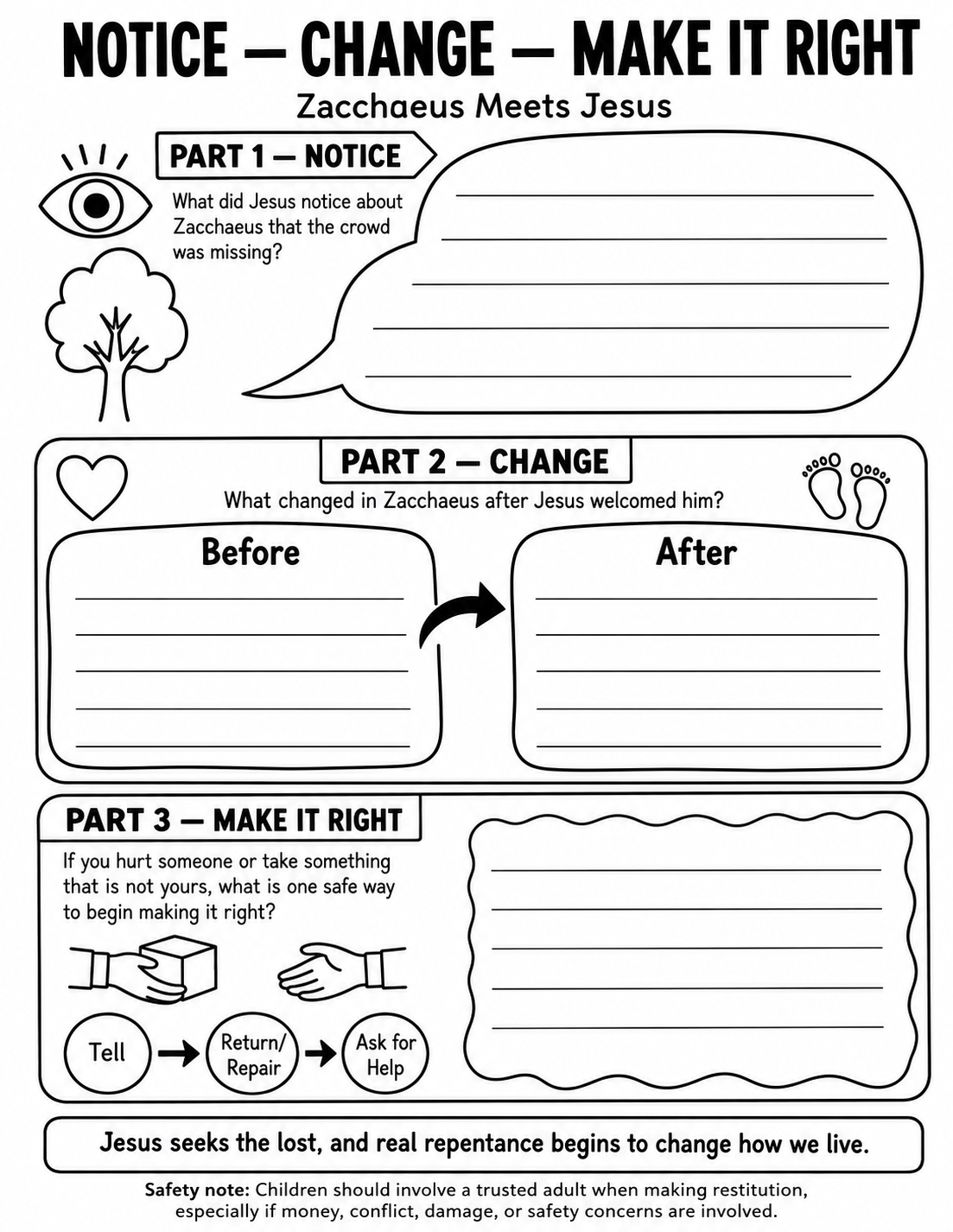
Notice — Change — Make It Right 10–15 min
You will need: Printable activity page, Pencil, Crayons or colored pencils if desired
- Under NOTICE, write what Jesus noticed about Zacchaeus that the crowd was missing.
- Under CHANGE, name one concrete change Zacchaeus chose to make.
- Under MAKE IT RIGHT, think of a safe example of how someone could repair a wrong choice.
- Talk about why saying sorry and making things right can belong together.
- Finish with the short prayer or your own prayer.
Connect Jesus's grace with concrete repentance without burdening children with adult financial responsibility.
Safety: Children should involve a trusted adult when restitution involves money, damage, conflict, or safety.
Memory Verse
“For the Son of Man came to seek and to save the lost.”— Luke 19:10
For Parents and Teachers
Do Not Make Height the Moral Point
Zacchaeus's height explains why he climbs the tree, but it is not the theological center.
Avoid jokes or body-based teasing.
Handle Tax Collectors Carefully
Tax collectors were often socially despised because of their association with Rome and possible exploitation, but not every tax collector should be described as automatically dishonest.
Luke gives enough information to show Zacchaeus's reputation without inventing specific crimes.
Repentance Is Concrete
Zacchaeus names specific responses involving generosity and restitution.
This is a strong opportunity to show children that repentance includes changed behavior, not just regret.
Do Not Teach That Money Buys Salvation
Jesus's welcome and saving mission come first.
Zacchaeus's financial response follows as evidence of change.
Keep Restitution Age-Appropriate
Children can return, replace, apologize, or ask for help when they have wronged someone.
They should not carry adult financial debts or solve serious restitution situations alone.
Connect the Story to Jesus's Mission
Luke 19:10 gives the story's clearest interpretive center.
Jesus came to seek and save the lost, and Zacchaeus's changed life shows the fruit of that encounter.