The Lost Son
A Father Welcomes His Son Home
Before You Read
Jesus tells this parable because people are criticizing Him for welcoming sinners.
The story is about two sons. One leaves home openly, while the other stays close but struggles with anger when mercy is shown.
As you read, watch what the father does for each son.
The Bible Story
Jesus told this parable while tax collectors and other people known as sinners were coming near to listen to Him.
Some religious leaders complained that Jesus welcomed such people and ate with them.
In response, Jesus told stories about what was lost being found.
One of those stories was about a father and his two sons.
The younger son came to his father and asked for the share of the family property that would one day belong to him.
The request was shocking because it treated the father's possessions as more important than life with the father himself.
Even so, the father divided his property between the two sons.
Not many days later, the younger son gathered what he had and traveled to a distant country.

There he wasted his wealth in reckless living.
Eventually, all the money was gone.
Then a severe famine came over that country, and the young man began to be in need.
He found work feeding pigs.
For Jesus's Jewish listeners, that detail made the son's situation feel especially low and desperate.
He became so hungry that even the food given to the pigs looked desirable to him.
No one gave him what he needed.
At last, he came to his senses.
He remembered that even his father's hired workers had enough food.
He knew he had sinned against heaven and against his father.
He decided to return home.
He planned to confess his wrong and ask to be treated not as a son, but as one of the hired workers.

So he started the long journey back.
While he was still far away, his father saw him.
The father was filled with compassion.
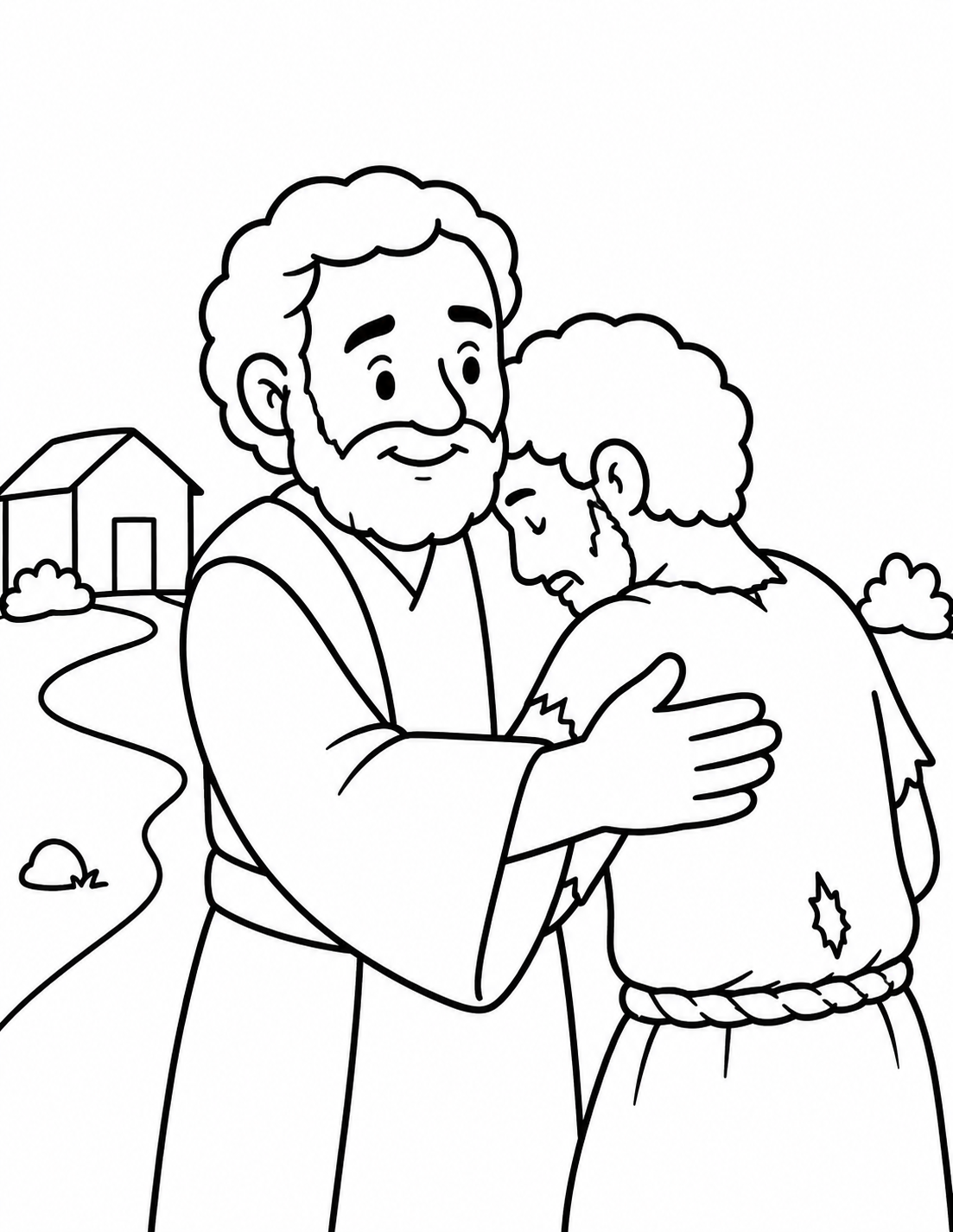
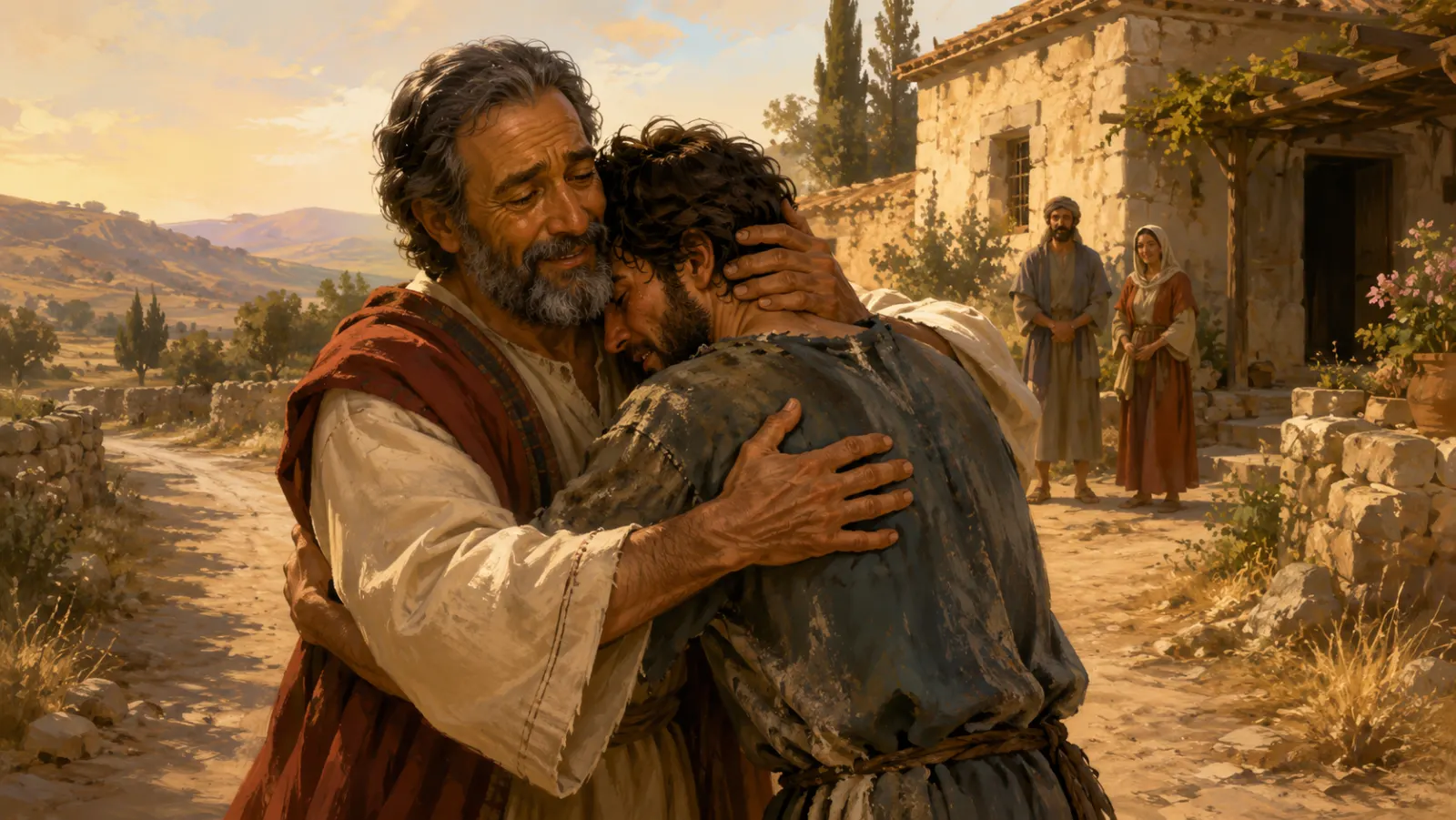
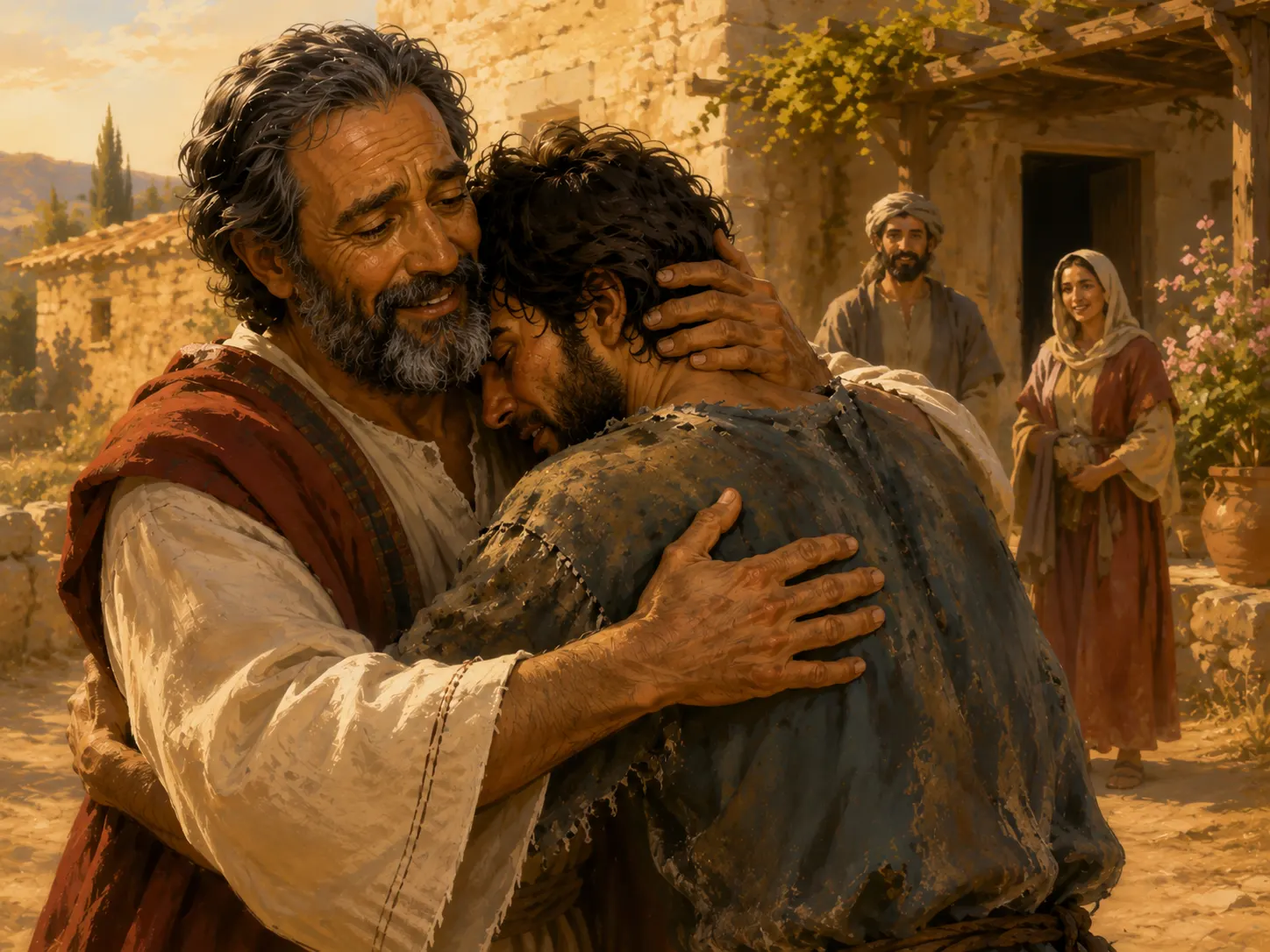
He ran to his son, embraced him, and kissed him.
The son began the confession he had prepared.
He admitted that he had sinned against heaven and against his father and was no longer worthy to be called his son.
But before the son could turn the whole speech into a request for hired-worker status, the father called for the best robe, a ring, and sandals.
He ordered a celebration.
His son had been as good as dead to the family, but now he was alive again.
He had been lost, but now he was found.
The house filled with joy.
But Jesus was not finished.
The older son had been working in the field.
When he returned and heard music and dancing, he asked what was happening.
A servant told him that his brother had returned and that their father had welcomed him home safely.
The older brother became angry.
He refused to go inside.
So the father came out to him too.
The older son complained that he had served his father for years and had not received a celebration like this.
He spoke of his younger brother with bitterness and distance.
He could see the younger son's failure clearly, but he could not rejoice in the father's mercy.
The father answered him tenderly.
He reminded the older son that he was always with him and that what the father had was his.
But the return of the lost brother was a reason to celebrate.
The younger brother had been lost and was found.
Jesus ended the parable there. He did not tell His listeners whether the older son finally went inside.
We are not told whether the older brother finally entered the celebration.
That ending invites the listener to consider both brothers.
The younger son was openly lost and needed to return.
The older son stayed near the father, yet his anger showed that his heart also needed mercy.
The father went out toward both sons.
He welcomed the repentant younger son and pleaded with the resentful older son.
The parable shows that God's mercy is generous toward sinners who turn back to Him.
It also warns that religious obedience can become proud and joyless when a person believes mercy should belong only to people who deserve it.
The father's welcome did not pretend the younger son's choices had been harmless. The son had left, wasted what he had been given, and returned knowing he had done wrong. Yet the father met his repentance with mercy.
The younger son's actions caused real loss and pain.
But repentance was met not with humiliation, but with compassion and restored relationship.
Jesus told this parable while people were criticizing Him for welcoming sinners. Through the father and both sons, He showed the joy of mercy and also the danger of resenting mercy when it is given to someone else.
Through the father in the parable, Jesus shows the joy of mercy when the lost are found.

What This Story Teaches Us
1. Sin Can Be a Rejection of Relationship
The younger son wanted the father's possessions while leaving the father behind.
His choices brought real loss and brokenness.
2. Repentance Means Turning Back
The younger son recognized that he had sinned and returned home.
He did not pretend that nothing had happened.
3. The Father's Mercy Takes the Initiative
The father saw his son from far away and ran to him.
The welcome begins with the father's compassion, not with the son proving that he deserves restoration.
4. Mercy Creates Joy
The father celebrates because the lost son has returned.
Jesus tells the parable where people are criticizing Him for welcoming sinners.
5. The Older Brother Needs Grace Too
The older brother obeyed outwardly but resented mercy shown to his brother.
Jesus shows that pride and bitterness can also keep a person from sharing the father's joy.
6. Forgiveness Is Not a Rule Against Safety
This parable is about God's mercy and repentance, not about forcing people back into unsafe relationships.
Children should always involve trusted adults when a relationship includes fear, abuse, threats, or danger.
How It Fits into God's Bigger Story
Throughout the Bible, God calls people to turn back to Him and repeatedly shows mercy to those who repent. Jesus tells this parable as part of a group of stories about the joy of finding what was lost.
The father's welcome helps Jesus's listeners understand why He receives sinners instead of treating them as people beyond hope. Mercy does not pretend sin is harmless; it creates a way home for the repentant.
The older brother also matters in God's bigger story. People can appear close to God while still resisting His mercy toward others. Jesus invites His hearers not only to return when they are lost, but also to rejoice when grace reaches someone else.
Christians understand the cross and resurrection as the clearest expression of the mercy Jesus proclaimed. Through Him, sinners are called to turn back to God and are welcomed by grace rather than by earning their way home.
Talk About It
- What did the younger son do after receiving his share of the family's property?
- What made the younger son decide to return home?
- What does the father's response help us understand about God's mercy?
- Why do you think the older brother found it difficult to celebrate his brother's return?
- What is the difference between admitting that something was wrong and pretending it never mattered?
- How can our family celebrate when someone makes a good choice to turn back, apologize, or ask for help?
A Short Prayer
God, thank You for Your mercy and for welcoming people who turn back to You. Help us tell the truth when we have done wrong instead of hiding or making excuses. Keep our hearts from becoming proud or angry when You show mercy to someone else. Teach our family to rejoice in repentance, practice forgiveness wisely, and ask trusted adults for help when a situation is unsafe. Thank You for the grace You give us through Jesus. Amen.
Try This Together
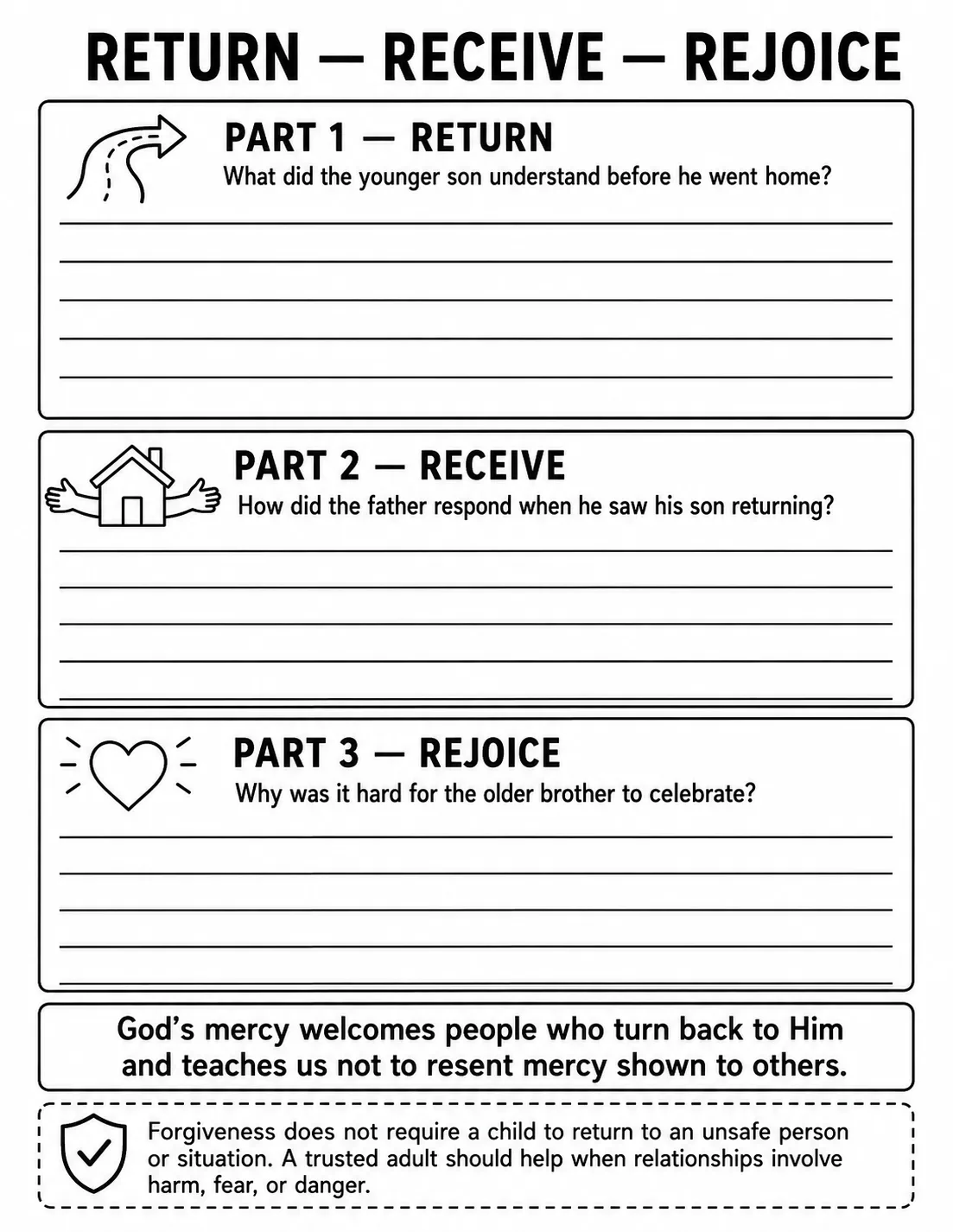
Return — Receive — Rejoice 10–15 min
You will need: Printable activity page, Pencil, Crayons or colored pencils if desired
- Under RETURN, write what the younger son realized before going home.
- Under RECEIVE, describe how the father responded when he saw his son.
- Under REJOICE, talk about why the older brother struggled to celebrate.
- Think of one simple way your family can encourage someone who admits a mistake and is trying to make things right.
- End with the short prayer or your own prayer.
Help children see repentance, mercy, and the danger of resentment without pressuring them to ignore safety or healthy boundaries.
Safety: Do not use the activity to pressure a child to reconcile privately with someone who has frightened, threatened, abused, or harmed them.
Memory Verse
“For this son of mine was dead and is alive again; he was lost and is found.”— Luke 15:24
For Parents and Teachers
Keep Both Sons in the Story
The younger son's return is powerful, but Jesus does not end the parable there.
The older brother's resentment directly addresses the criticism in Luke 15:1–2.
Repentance Is More Than Feeling Bad
The younger son recognizes his sin and actually turns toward home.
Avoid presenting repentance as earning the father's love; the father's compassion is already active before the son's full speech is completed.
Do Not Shame Poverty or Family Estrangement
The son's hunger is part of the parable's crisis, but real families experiencing poverty should not be treated as though their circumstances prove moral failure.
Avoid careless comparisons between the parable and a child's difficult family situation.
Forgiveness and Safety Are Different Questions
God's mercy does not require a child to return to an abusive, threatening, or unsafe person.
Forgiveness may coexist with boundaries, supervision, legal protection, or continued distance.
The Older Brother Is Not a Cartoon Villain
His anger exposes pride, resentment, and a transactional view of relationship.
The father goes out to him too, which keeps mercy at the center even in the final scene.
Connect the Parable to Jesus's Ministry
Jesus tells this story because people object to His welcome of sinners.
The parable helps children understand why mercy and joy surround repentance in Jesus's ministry.