The Last Supper
Jesus Serves His Disciples and Prepares Them for the Cross

Before You Read
Jesus knows that His arrest and death are very near.
During a final Passover meal, He serves His disciples and gives them signs to help them understand what He is about to do.
As you read, notice how Jesus combines humble service with the promise of His saving sacrifice.
The Bible Story
Jesus knew that the time of His suffering and death was drawing near.
During the Passover season, He prepared to share a final meal with His disciples.
Jesus sent disciples ahead to make the arrangements, and that evening He gathered with the Twelve.
The meal took place in Jerusalem.
Passover reminded God's people of how He had rescued Israel from slavery in Egypt.
That old story of rescue formed the background for what Jesus was about to say and do.
During the meal, Jesus knew that one of His disciples would betray Him.
He told the group that one of them would turn against Him.
The disciples were deeply troubled and began asking who it could be.
Jesus did not turn the meal into a public spectacle of accusation.
Judas was there with the others, and betrayal was already moving toward its terrible end. Jesus knew what was coming, yet He continued to speak and act with purpose.
Yet Jesus continued to speak and act with purpose.
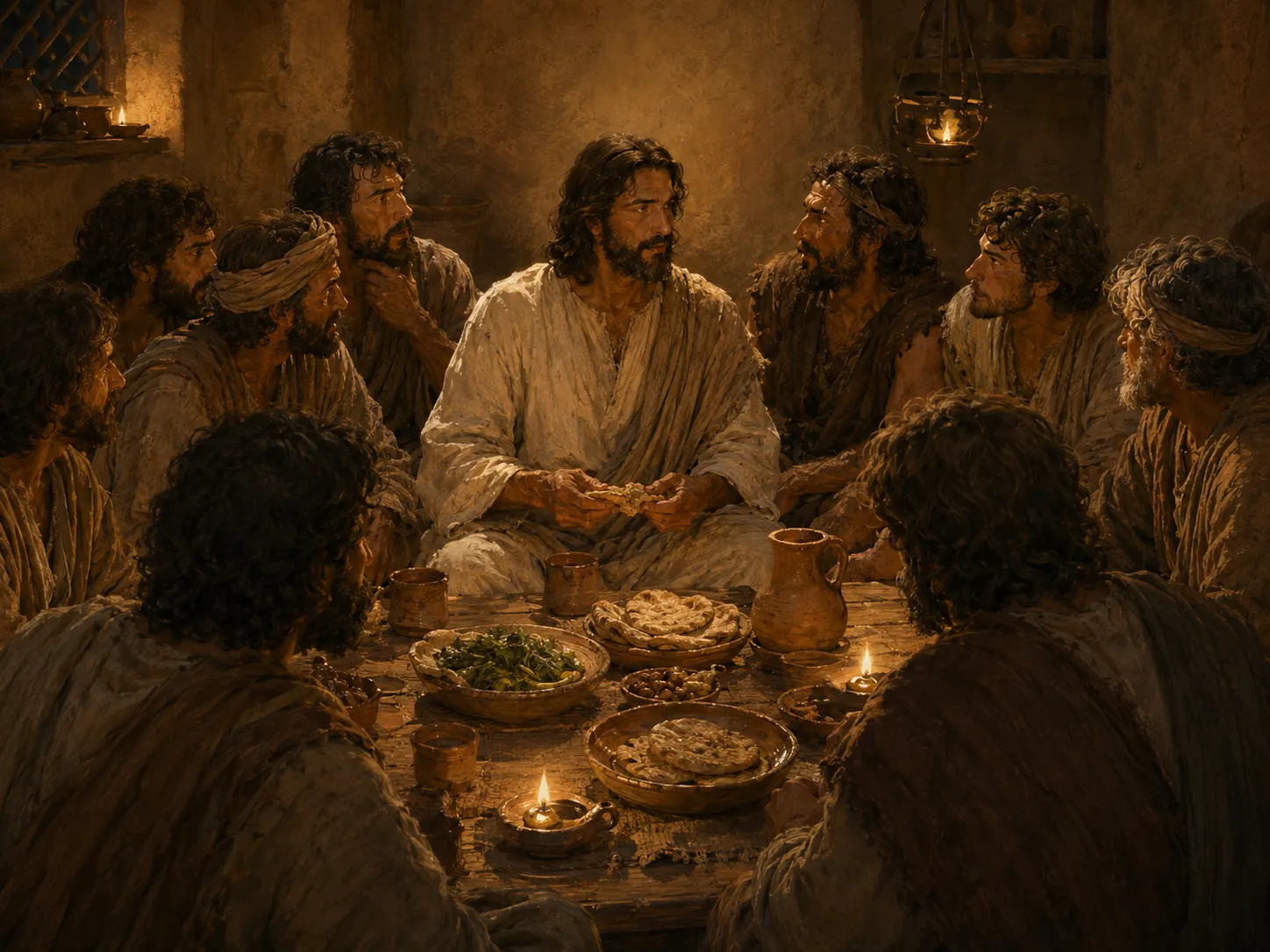
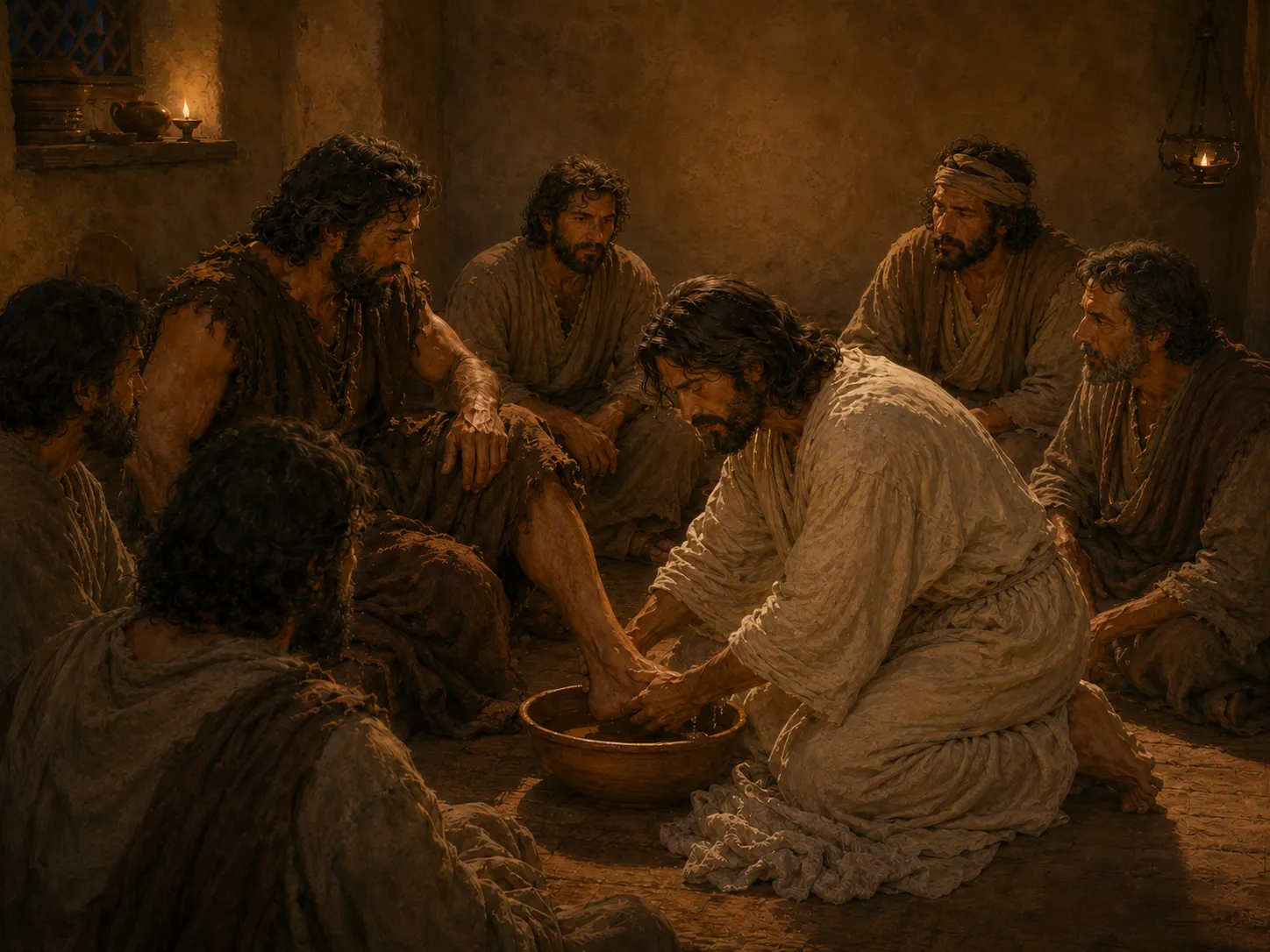
Then Jesus rose from the meal, wrapped a towel around Himself, poured water into a basin, and began washing His disciples' feet.
Foot washing was the work of a servant in a world where dusty roads made feet dirty.
The disciples were surprised that their Teacher would take such a lowly role.
Peter objected at first.
He did not think Jesus should wash his feet.
But Jesus told him that this act mattered and that Peter needed to receive what Jesus was doing.
Then Jesus returned to His place and explained the lesson.
If He, their Lord and Teacher, had served them in this humble way, they should also serve one another.
Jesus did not teach that leaders become important by demanding attention.
He showed that greatness in His kingdom includes humble service.
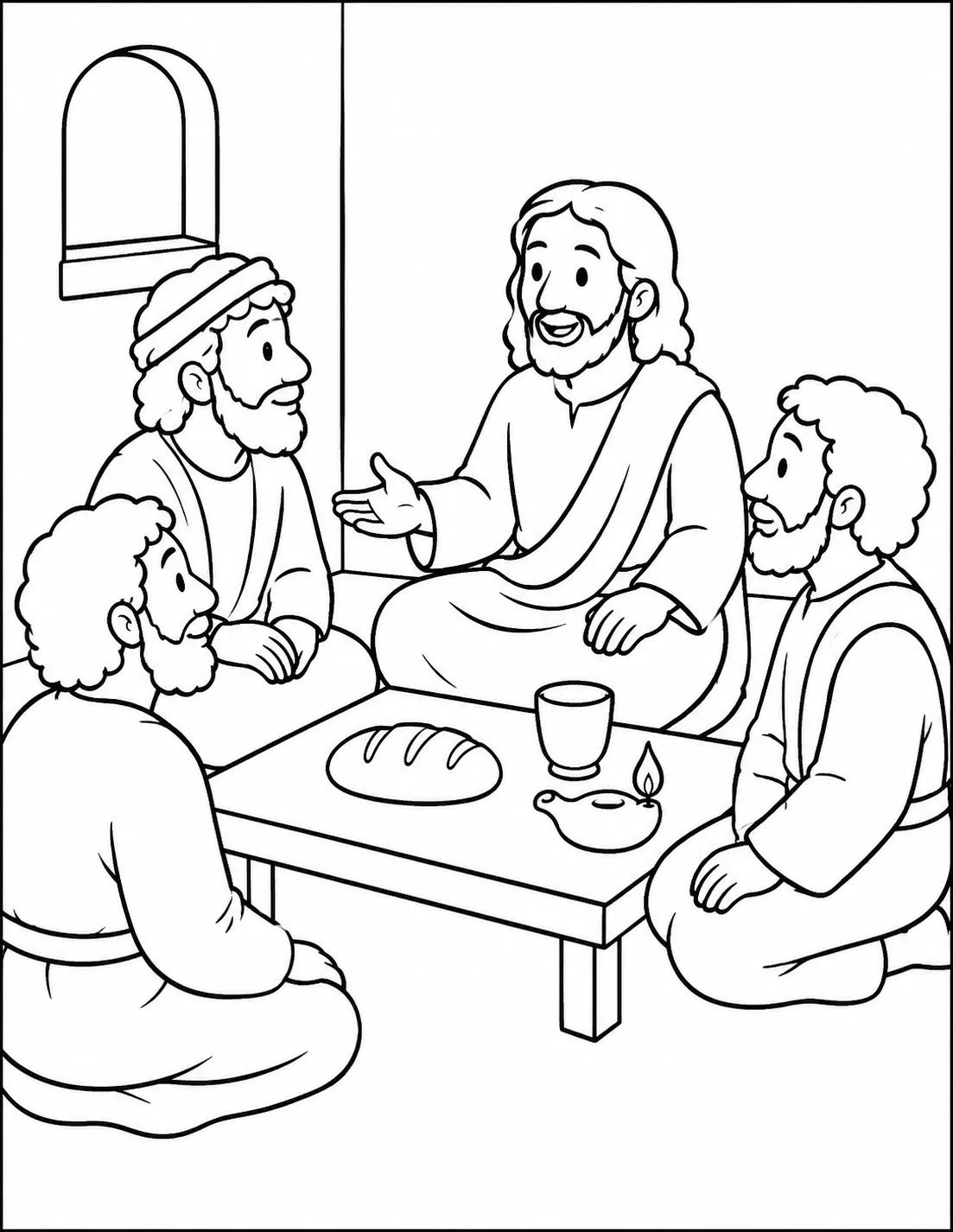
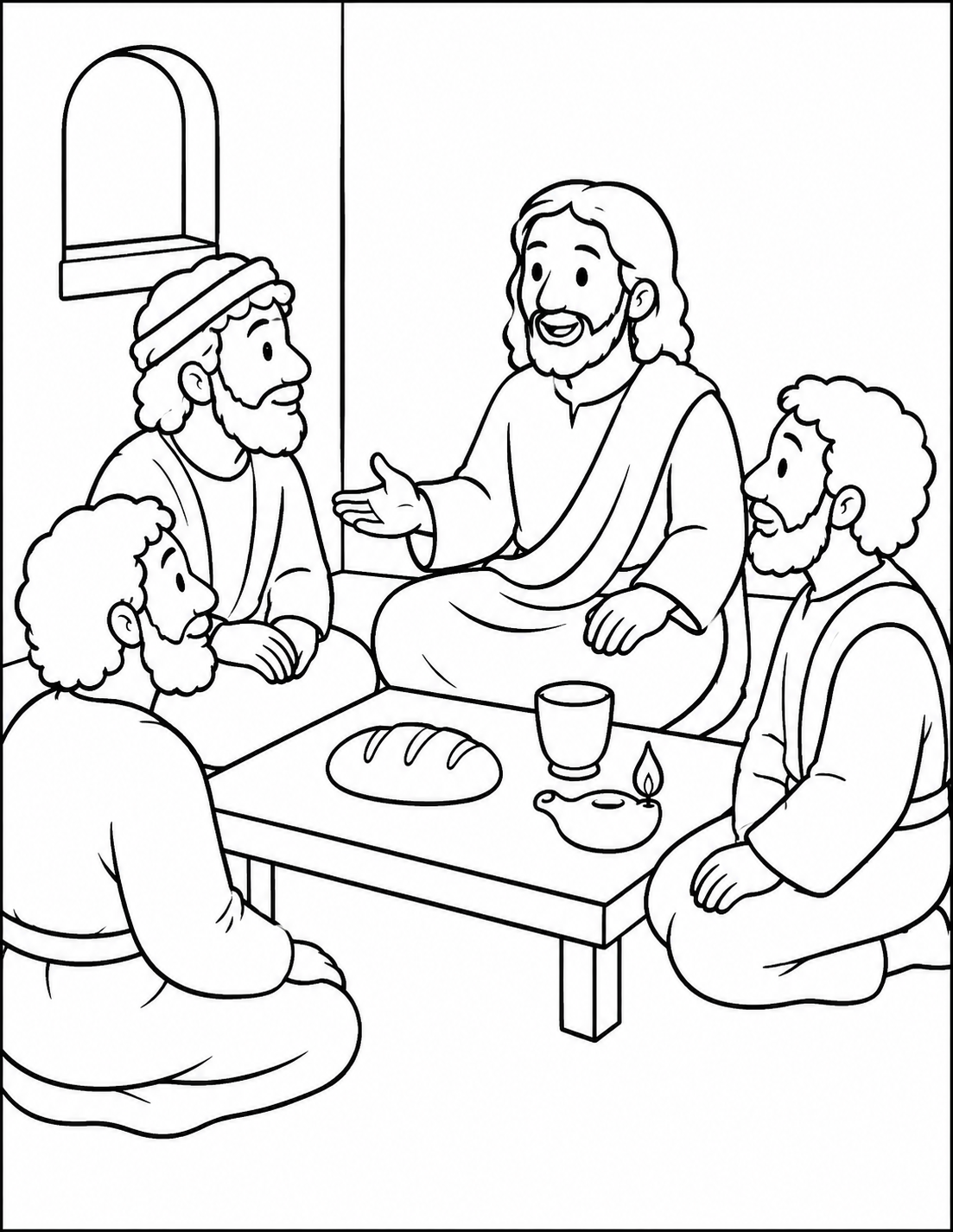
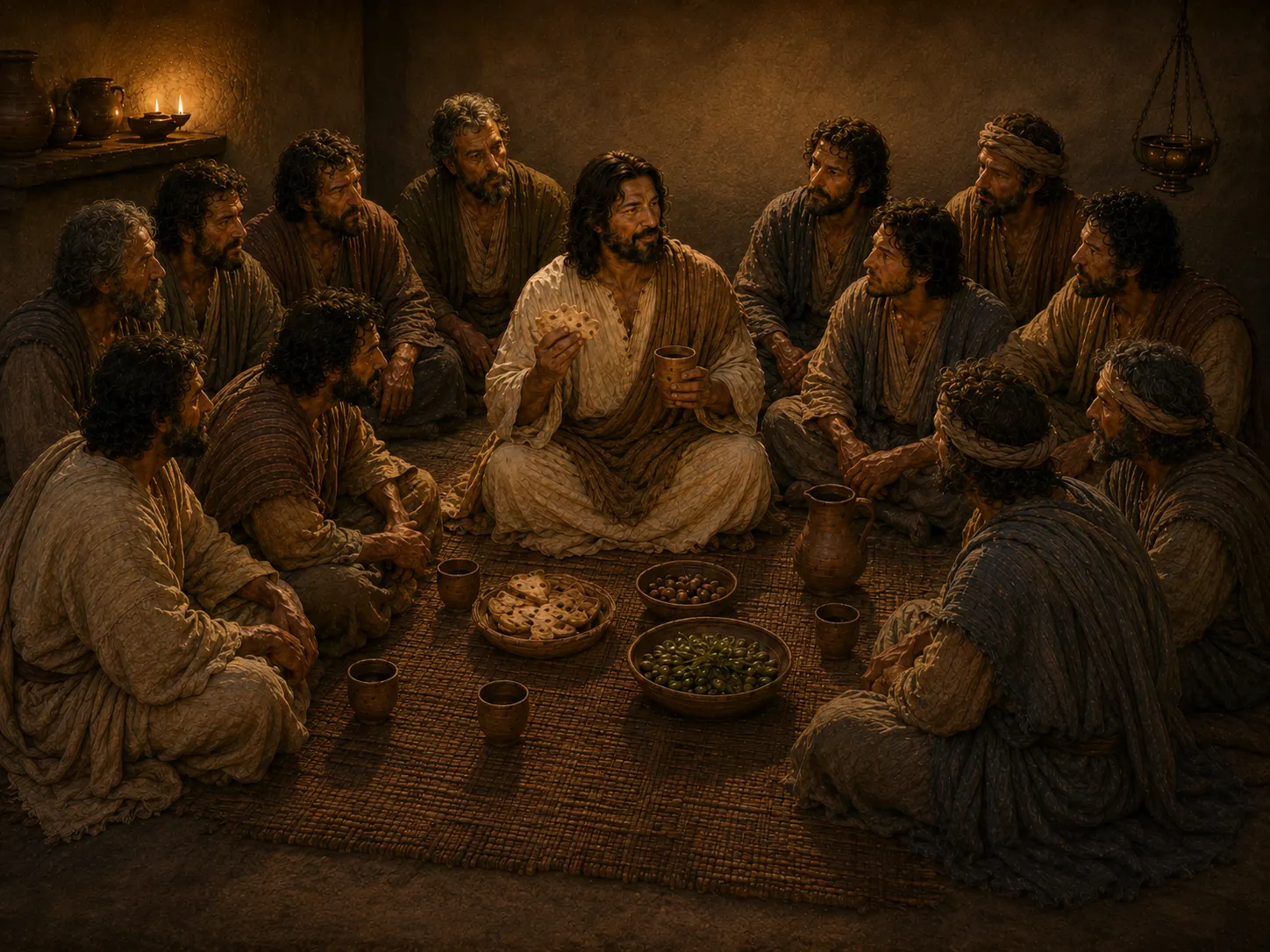
During the meal, Jesus took bread.
He gave thanks, broke it, and gave it to His disciples.
He told them that the bread pointed to His body, given for them.
Then He took the cup.
He gave thanks and shared it with them.
He spoke of His blood of the covenant, poured out for many for the forgiveness of sins.
Jesus told them that the cup was connected with the new covenant in His blood. His coming death would bring God's promised rescue into focus in a new and deeper way.
Jesus was helping His disciples understand that His coming death would not be an accident or a meaningless tragedy.
He was giving Himself for them.
The bread and the cup would help His followers remember Him.
Jesus wanted His followers to remember Him. Whenever they later shared the bread and the cup together, they would look back to this night and to the sacrifice He was about to make.
The bread and the cup were not meant to draw attention away from Jesus. They pointed His followers back to Him—to His body given for them, His blood poured out, and the new covenant He was bringing.
But all center the meal on Jesus, His saving death, and the promise of the new covenant.
The disciples did not yet understand everything that would happen.
They were still learning what Jesus's kingship, service, and sacrifice meant.
Their final meal together held sorrow, love, warning, promise, and hope.
Jesus knew betrayal was near.
He knew His friends would be frightened and scattered.
He knew the cross was coming.
Still, He served them.
He fed them.
He taught them.
He gave them signs to remember His sacrifice.
And He called them to love one another as people shaped by His own love.
The disciples could not yet see the whole road ahead. They did not know how frightened they would soon become or how quickly the night would change.
Church practices involving Communion should follow the guidance of a child's family and local church.
Foot washing, where practiced, should always respect personal boundaries and never be forced.
But Jesus was preparing them with more than a meal. He was giving them words and actions they would remember when the cross no longer seemed like a distant possibility.
Jesus remained at the center of it all.
He serves.
He gives Himself.
He prepares His followers for the cross.
He called His disciples to remember His saving love and to let that love shape the way they served one another.
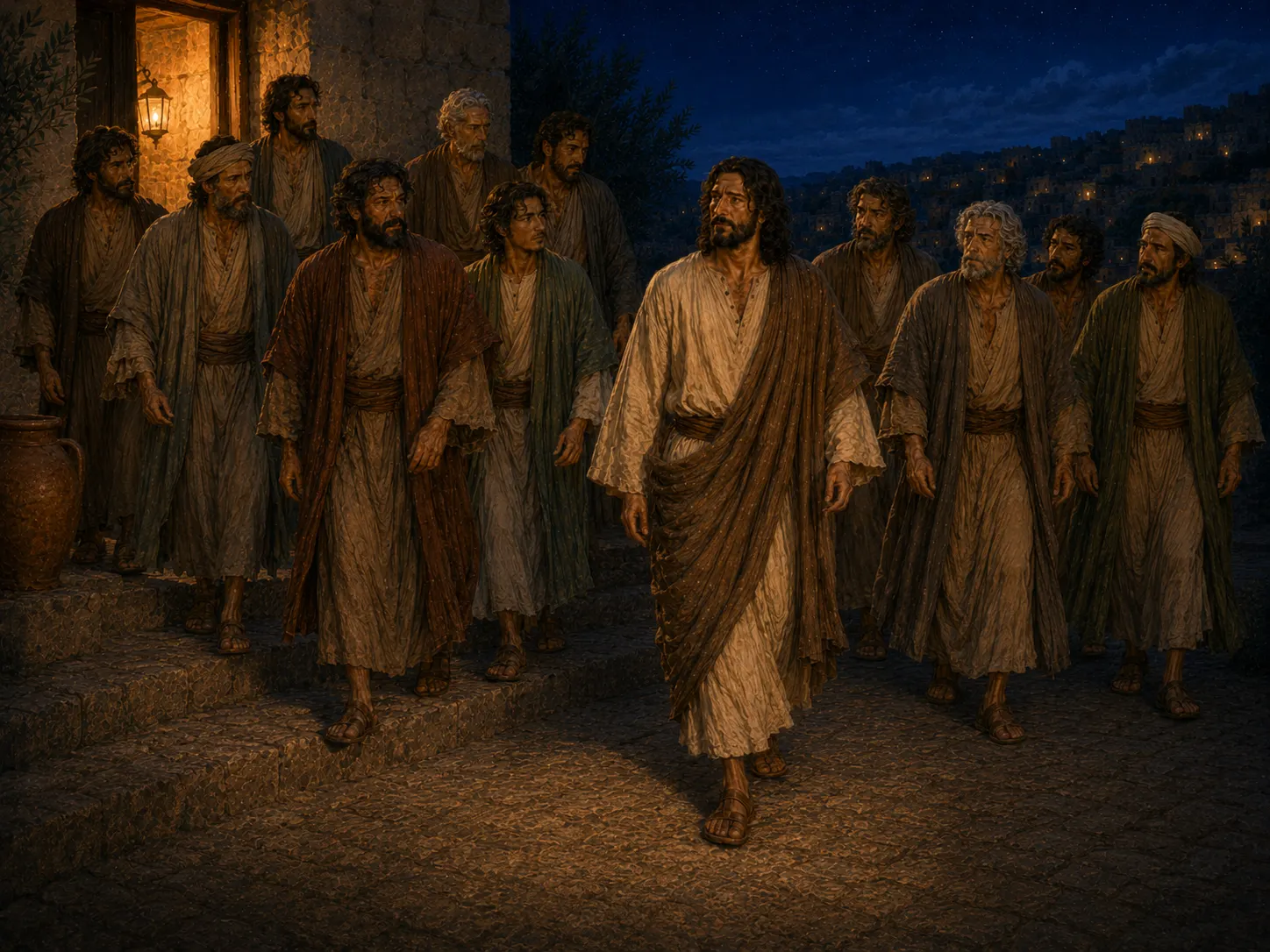
Soon, Jesus and His disciples would leave the meal and go toward the Mount of Olives.
The night would become darker.
But Jesus was still moving willingly toward the work He had come to accomplish.
What This Story Teaches Us
1. Jesus Knows What Is Coming
Jesus is not surprised by the events leading to the cross.
He prepares His disciples for what His death will mean.
2. Jesus Shows Greatness Through Service
By washing feet, Jesus takes the role of a servant.
He teaches His disciples that leadership in His kingdom is not about demanding status.
3. The Bread and Cup Point to Jesus's Sacrifice
Jesus connects the meal with His body and blood given for others.
His death will bring the promised new covenant into focus.
4. Jesus's Followers Are Called to Remember
The bread and cup become signs through which Christians remember Jesus's saving work.
The focus is Jesus, not performing a ritual perfectly.
5. Betrayal Does Not Stop Jesus's Purpose
Jesus knows betrayal is near, yet He continues to serve, teach, and move toward the cross.
Human sin does not take control of God's saving purpose.
6. Service Must Respect Safety and Dignity
Jesus's humble service should inspire practical love, not boundary violations.
Children should never be pressured into unwanted touch or unsafe acts of service.
How It Fits into God's Bigger Story
The Last Supper takes place in the setting of Passover, the feast that remembered God's rescue of Israel from slavery. Jesus uses that rescue-shaped meal to prepare His disciples for an even greater act of salvation.
His words about the covenant connect with God's promise to make a new covenant with His people. Jesus identifies His coming death as central to that promise.
The foot washing also reveals the kind of King Jesus is. He does not save through pride or self-protection, but through humble, self-giving love.
The next events will lead directly to betrayal, arrest, the cross, and resurrection. The bread, the cup, and Jesus's service help His followers understand that He goes toward the cross willingly for their salvation.
Talk About It
- What two important things did Jesus do during the final meal with His disciples?
- Why was it surprising that Jesus washed His disciples' feet?
- What do Jesus's service and His words about the bread and cup teach us about His love?
- Why do you think Jesus wanted His disciples to remember Him through the bread and the cup?
- What is one way you can serve someone without ignoring safety or personal boundaries?
- How can our family remember Jesus's saving love and practice humble service together?
A Short Prayer
Jesus, thank You for serving Your disciples and for giving Yourself for sinners. Help us remember Your saving love and understand that Your greatness is full of humility and mercy. Teach us to serve others without seeking praise, and give us wisdom to respect safety and personal boundaries. Help our family follow Your example with grateful hearts as we remember the cross and the new covenant You came to bring. Amen.
Try This Together
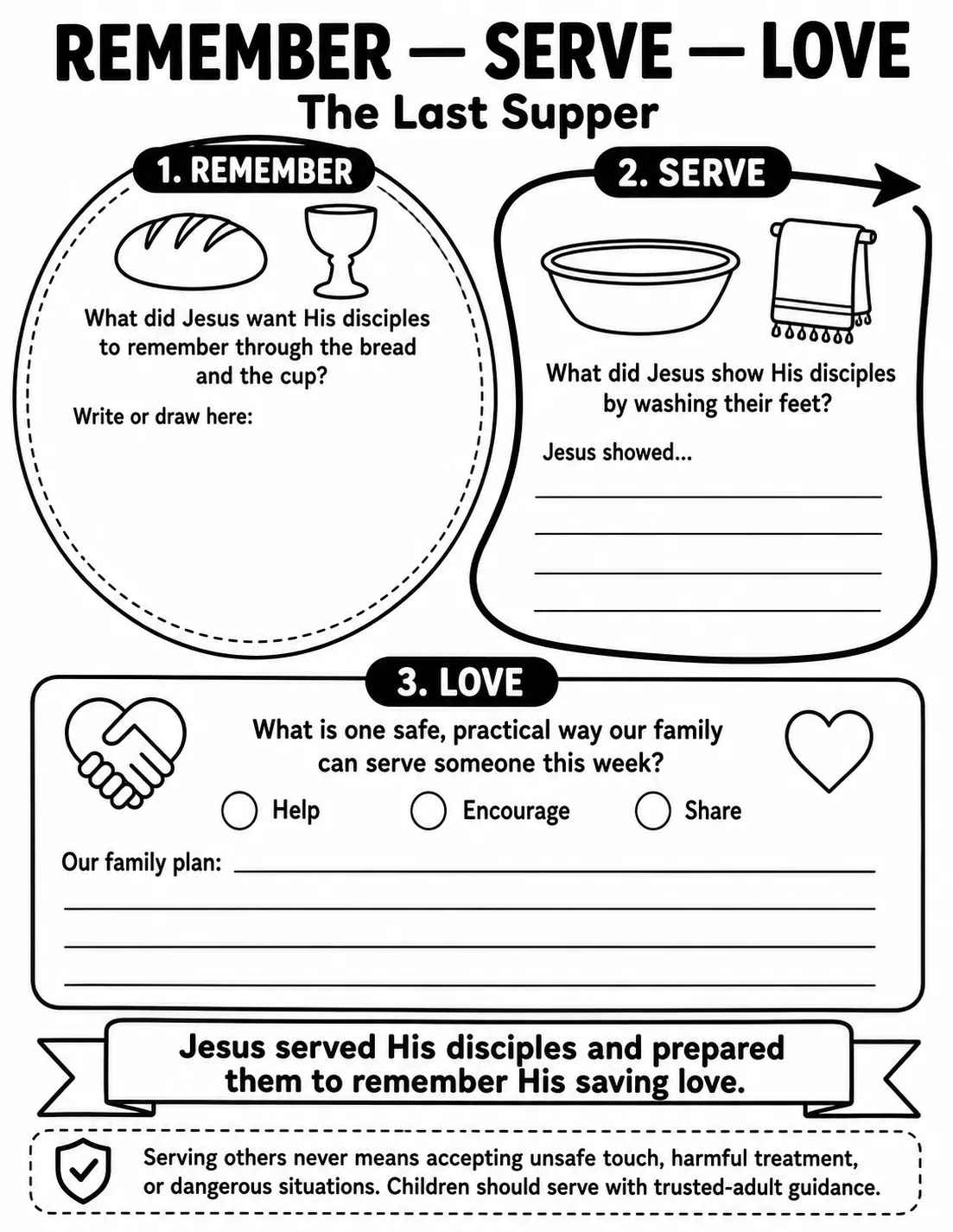
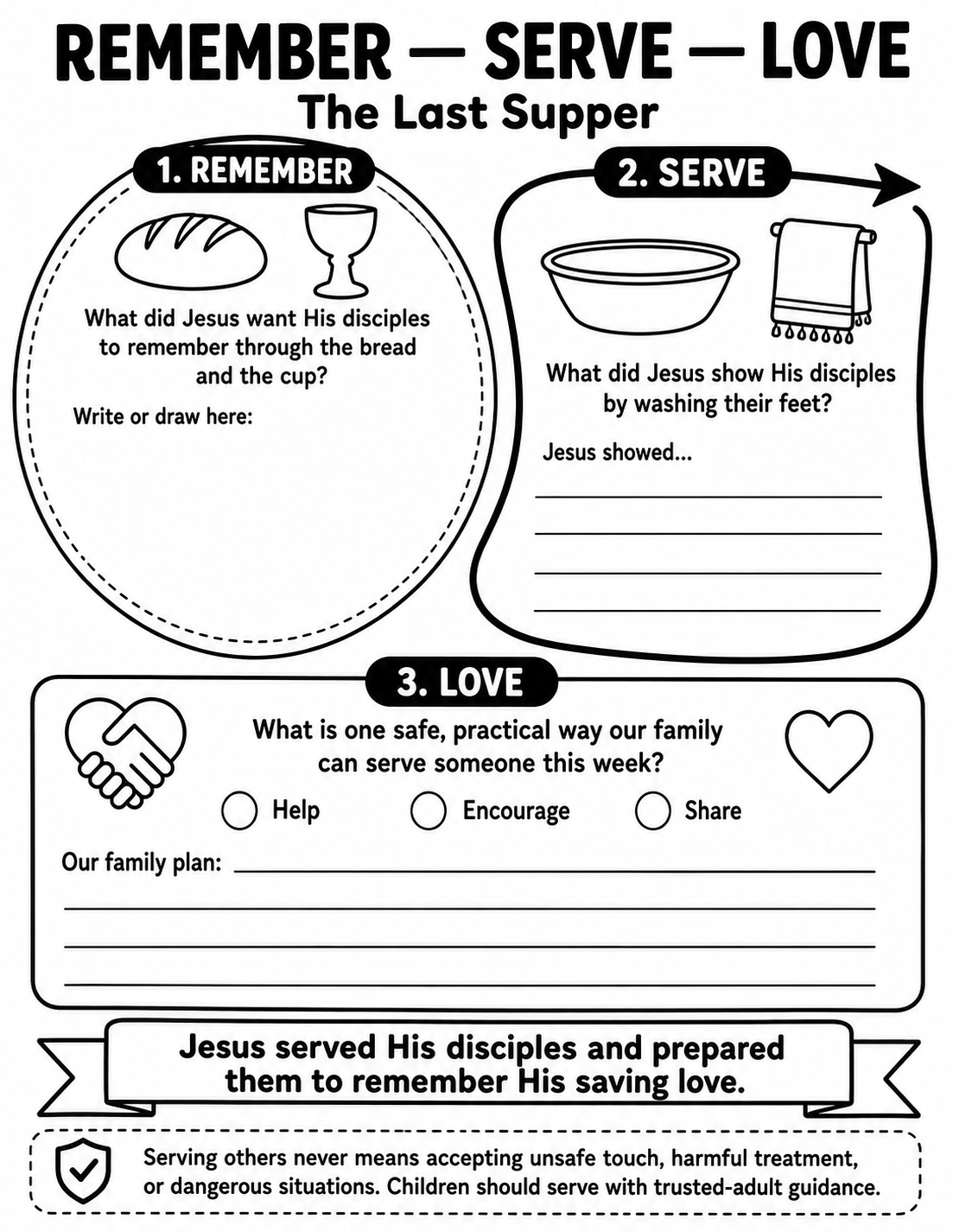
Remember — Serve — Love 10–15 min
You will need: Printable activity page, Pencil, Crayons or colored pencils if desired
- Under REMEMBER, write what the bread and cup point to in this story.
- Under SERVE, describe what Jesus showed by washing His disciples' feet.
- Under LOVE, choose one safe practical act of service your family can do together.
- Talk about how real service respects the other person's dignity and boundaries.
- Finish with the short prayer or your own prayer.
Connect Jesus's sacrifice and servant-hearted love with safe, practical family application.
Safety: Do not pressure children to reenact foot washing, touch others, or perform service that feels unsafe or uncomfortable.
Memory Verse
“Do this in remembrance of me.”— Luke 22:19
For Parents and Teachers
Keep Passover Context Without Overloading the Story
The meal takes place in Passover context, which connects Jesus's words with God's rescue of Israel.
Avoid adding later Seder customs as though every modern practice is explicitly described in the Gospel accounts.
Handle Communion Carefully
Different Christian traditions understand the Lord's Supper in different ways.
Keep the child-facing story centered on Jesus's command, His sacrifice, remembrance, and the new covenant rather than denominational disputes.
Do Not Demonize Judas Visually
Judas's betrayal is serious, but he should not be given stereotypical villain features or ethnic coding.
The next story will address his betrayal more directly.
Foot Washing and Boundaries
Jesus's act is a model of humble service.
It should never be used to pressure children into unwanted physical contact or forced reenactment.
Keep Sacrifice Child-Appropriate
Jesus's words about His body and blood point toward the cross.
Explain the saving meaning clearly without graphic descriptions of injury or blood.
Connect the Meal to the Cross
The theological center is Jesus preparing His disciples for His self-giving death.
The story should lead naturally into betrayal, crucifixion, and resurrection rather than ending as a general lesson on being helpful.