The First Passover
God Makes a Way to Rescue His People

Before You Read
This story includes the most serious judgment in the Exodus story and the death of firstborn sons in Egypt.
We will name what happened clearly without graphic details or frightening images.
As you read, notice the instructions God gives His people, how they prepare to leave, and why Passover becomes a story families are told to remember.
The Bible Story
After nine plagues, Pharaoh still refused to let the Israelites leave Egypt.
God had warned Pharaoh again and again.
Now God told Moses that one final and terrible judgment was coming.
The firstborn in Egyptian households would die.
This was not another event to treat lightly or turn into a frightening spectacle.
It was a serious judgment at the end of a long conflict with Pharaoh’s oppression and refusal.
Before that night came, God gave the Israelites careful instructions.
Each household was to prepare a lamb for a special meal.
If a household was too small, it could share with a nearby household.
The animal was to be a one-year-old male without defect, taken from the sheep or goats.
At the appointed time, each household prepared the lamb as God had instructed.
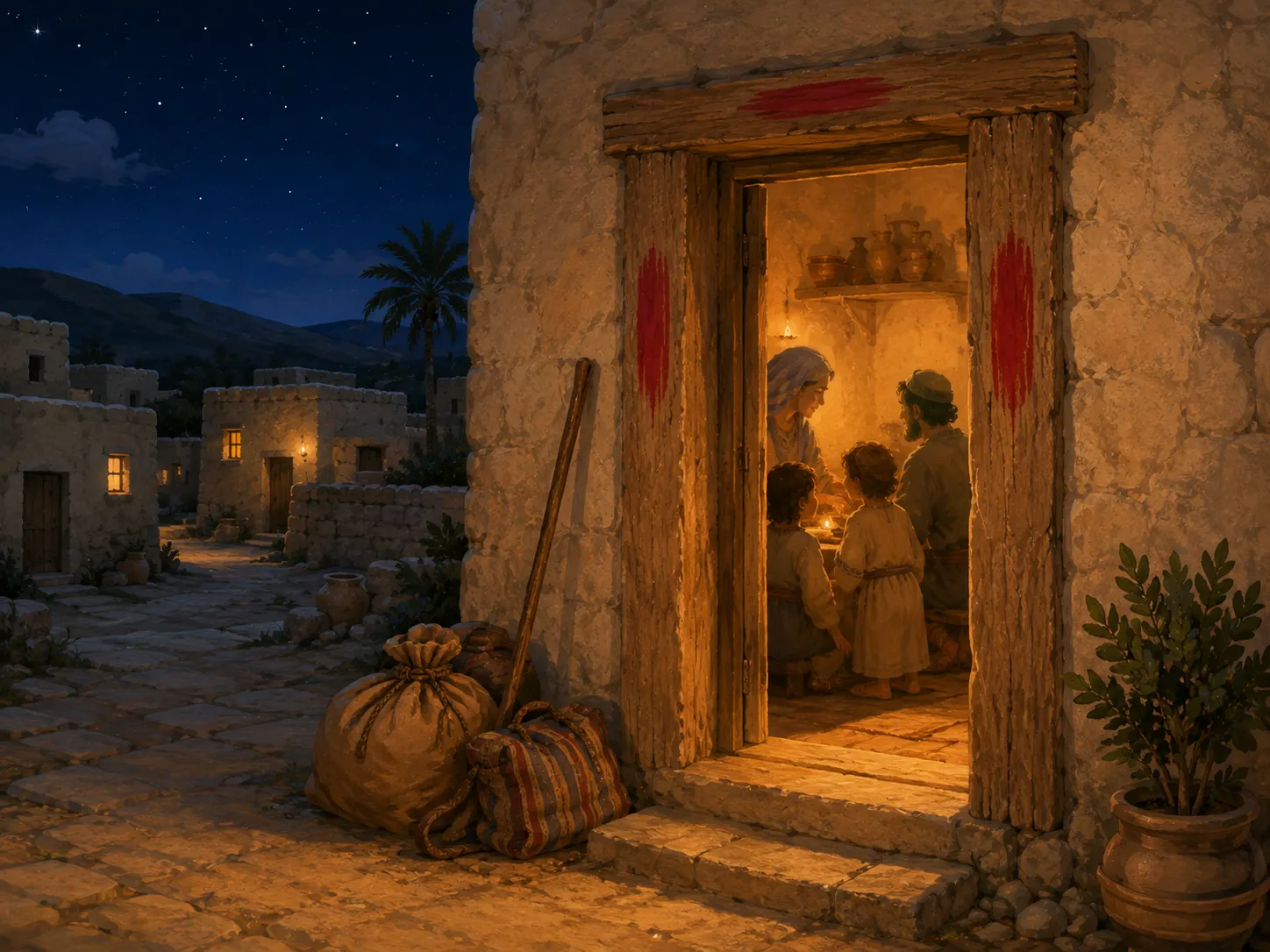
God told the families to take some of the blood and put it on the two doorposts and the top of the doorway.
The blood was not magic.
It was a sign connected to God’s promise and His instructions for that night.
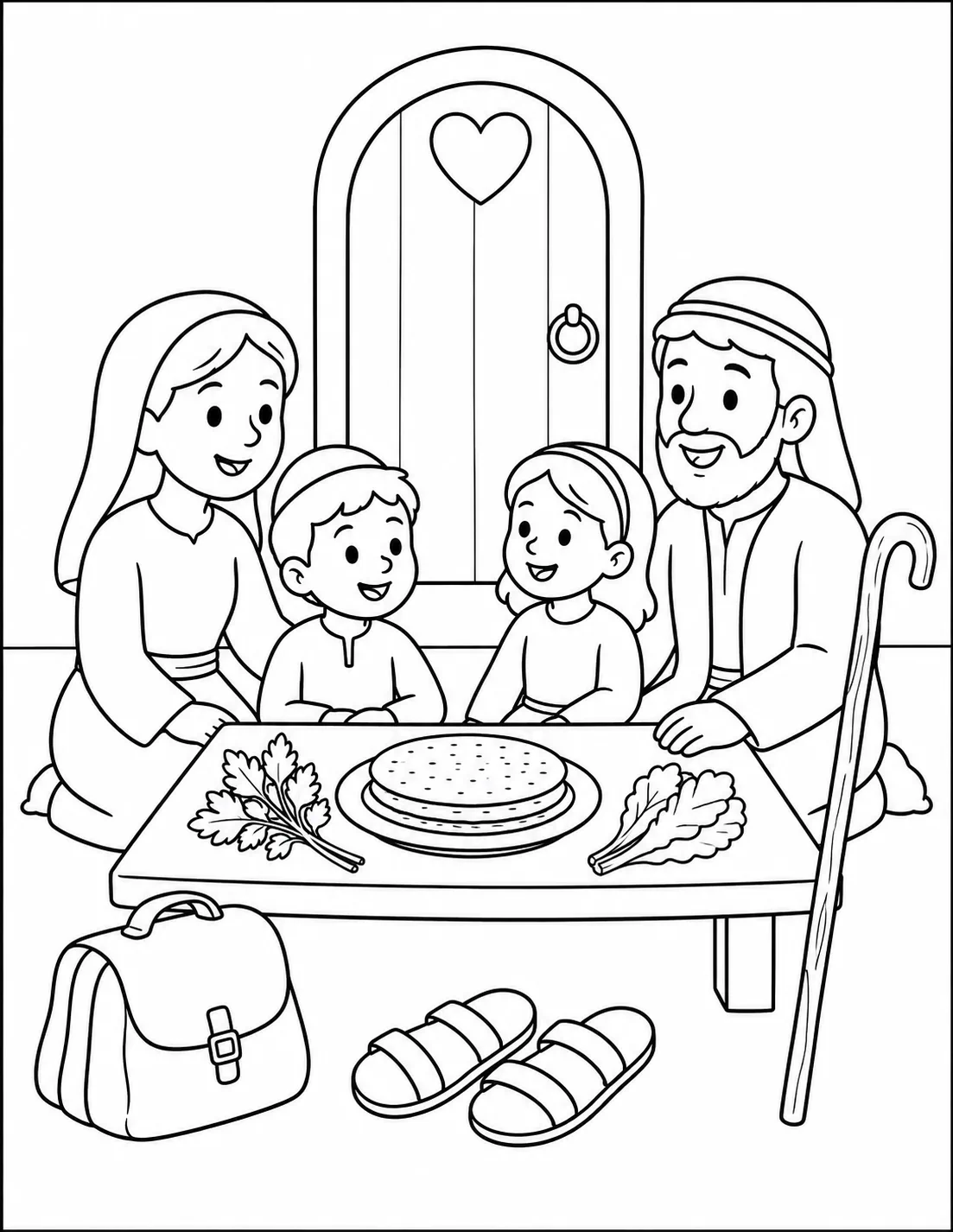
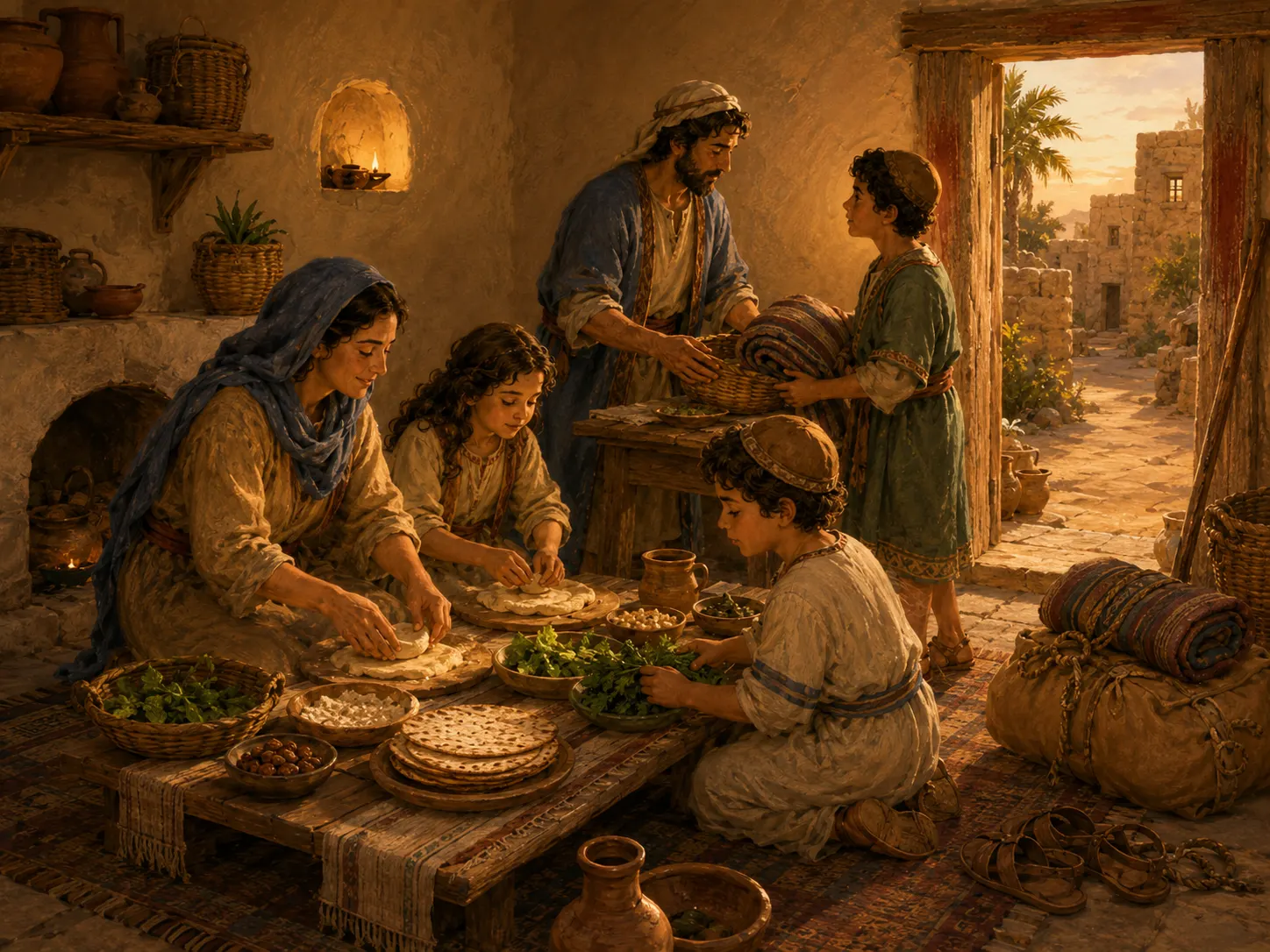
Inside their homes, the families prepared to eat together.
They roasted the lamb and ate it with unleavened bread and bitter herbs.
The bread had no time to rise.
The bitter herbs helped the people remember the bitterness of slavery.
This was not a relaxed feast with nowhere to go afterward.
The Israelites were told to eat ready for a journey.
They wore their sandals.
They kept their staffs nearby.
Their belongings were prepared.
They were waiting for God to bring them out of Egypt.
God promised that when judgment passed through the land, the marked homes would be spared.
The sign on the doorway showed that the household had trusted and followed God’s instruction.
That night became known as Passover because judgment would pass over those homes.
The Israelites were not spared because they were morally perfect.
They depended on the way of protection God had provided.
Night fell over Egypt.
Families remained inside as God had instructed.
At midnight, the final judgment came.
The firstborn sons in Egyptian homes died.
Grief spread throughout the land.
A great cry rose across Egypt.
It was a terrible and sorrowful night.
In the Israelite homes that had followed God’s Passover instructions, the families were spared.
Then Pharaoh called for Moses and Aaron during the night.
After resisting for so long, he finally told the Israelites to leave.
He told them to go and worship their God.
Across Egypt, people urged the Israelites to leave quickly.
They feared that more death might come if the Israelites stayed.
The Israelites prepared to go immediately.
Their bread dough had not had time to rise.
They carried kneading bowls wrapped in cloth.
They gathered simple travel bags and household belongings.
According to God’s earlier instruction, the Israelites asked the Egyptians for silver, gold, and clothing.
The Egyptians gave them these things as they urged them to depart.
This was not a secret raid or random looting.
It happened openly as Egypt pressed Israel to leave.
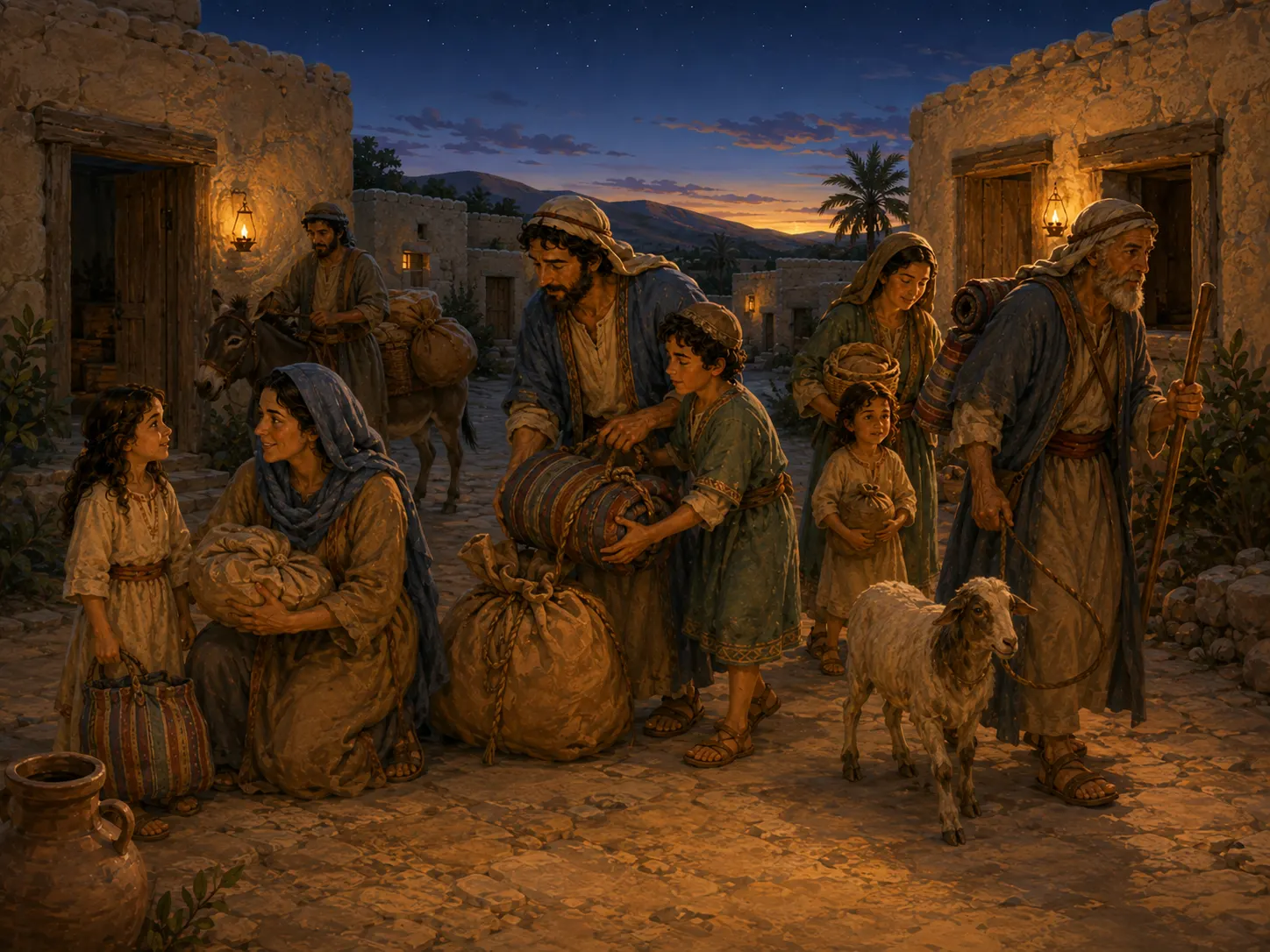
Families stepped out from the homes where they had waited through the night.
Parents gathered children.
Older people prepared for the road.
Animals were brought along.
Walking staffs were lifted.
Bundles were tied and carried.
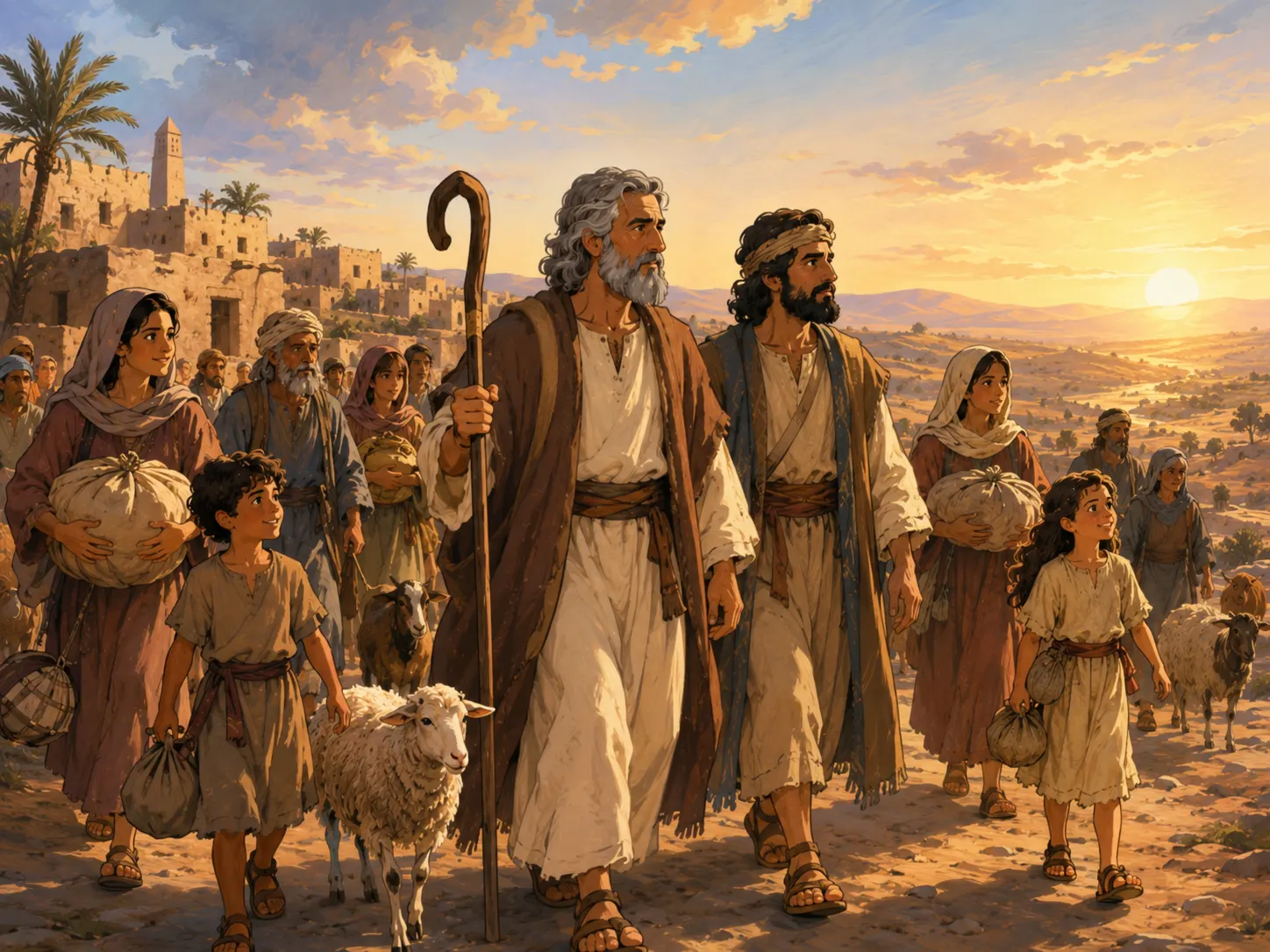
A great crowd began moving out of Egypt.
Other people also went with them.
After generations of slavery, Israel was finally leaving the land of their oppression.
They had not yet reached the promised land.
They did not yet know every difficulty that lay ahead.
But they were no longer staying under Pharaoh’s forced labor.
Moses and Aaron went with the people.
The same Moses who had once fled Egypt was now helping lead Israel out.
The rescue was not Moses’s achievement.
God had acted faithfully according to His covenant promises.
God also told Israel that this night was to be remembered.
Passover would become a memorial for future generations.
Children would ask why their families kept this special meal.
Parents would tell them about the night God brought His people out of slavery in Egypt.
Remembering was not meant to be empty repetition.
It was a way for one generation to teach the next what God had done.
God's rescue at Passover would be remembered for generations.
Many years later, Jesus would share a Passover meal with His disciples before going to the cross.
But on this first Passover night, Israel was preparing to leave Egypt at last.
God judged Egypt, provided a way for His people to be spared, and brought them out from slavery.
The journey was only beginning.
Pharaoh would soon change his mind again.
Israel would find itself trapped between Pharaoh’s army and the sea.
The next story is God Parts the Red Sea — Israel Escapes Egypt.
What This Story Teaches Us
1. God Provided a Way for His People to Trust His Promise
The Israelite households did not invent their own method of protection.
They followed the instructions God had given for that night.
2. Judgment Is Serious, Not Entertainment
The death and grief in Egypt should be spoken about with seriousness.
Freedom from oppression is good news, but suffering itself is not something to enjoy.
3. Israel Was Not Spared Because They Were Better People
The story does not teach that Israelites were morally perfect while Egyptians were simply bad.
Israel depended on God’s promised provision.
4. God’s Rescue Became a Story Families Were Told to Remember
Passover was meant to be explained to future generations.
Remembering what God had done became part of teaching children the story of Israel’s rescue.
5. Christians Later See Passover as Part of a Bigger Biblical Pattern
The New Testament later uses Passover language when speaking about Jesus.
That later connection should not erase the first meaning of Passover as God’s rescue of Israel from Egypt.
How It Fits into God's Bigger Story
Passover becomes one of Israel’s central memorials of God’s rescue from slavery.
Future generations are told to remember the Exodus and teach it to their children.
In the New Testament, Christians are given further Passover connections that help explain Jesus’s saving work, including the description of Christ as our Passover sacrifice in 1 Corinthians 5:7.
The Christian connection grows from the Exodus story rather than replacing it.
Talk About It
- What final warning did God give before Israel left Egypt?
- What did each Israelite household prepare?
- Where was the blood placed?
- What foods were part of the Passover meal?
- Why did the families eat ready to travel?
- What happened in Egypt that night?
- What did Pharaoh finally tell Israel to do?
- Why did God want Israel to remember Passover in future generations?
A Short Prayer
God, thank You for keeping Your promises and for hearing people who suffer. Help us treat serious parts of Scripture with humility, remember what You have done, and tell Your story faithfully to the next generation. Amen.
Try This Together
Tell the Rescue Story in Order
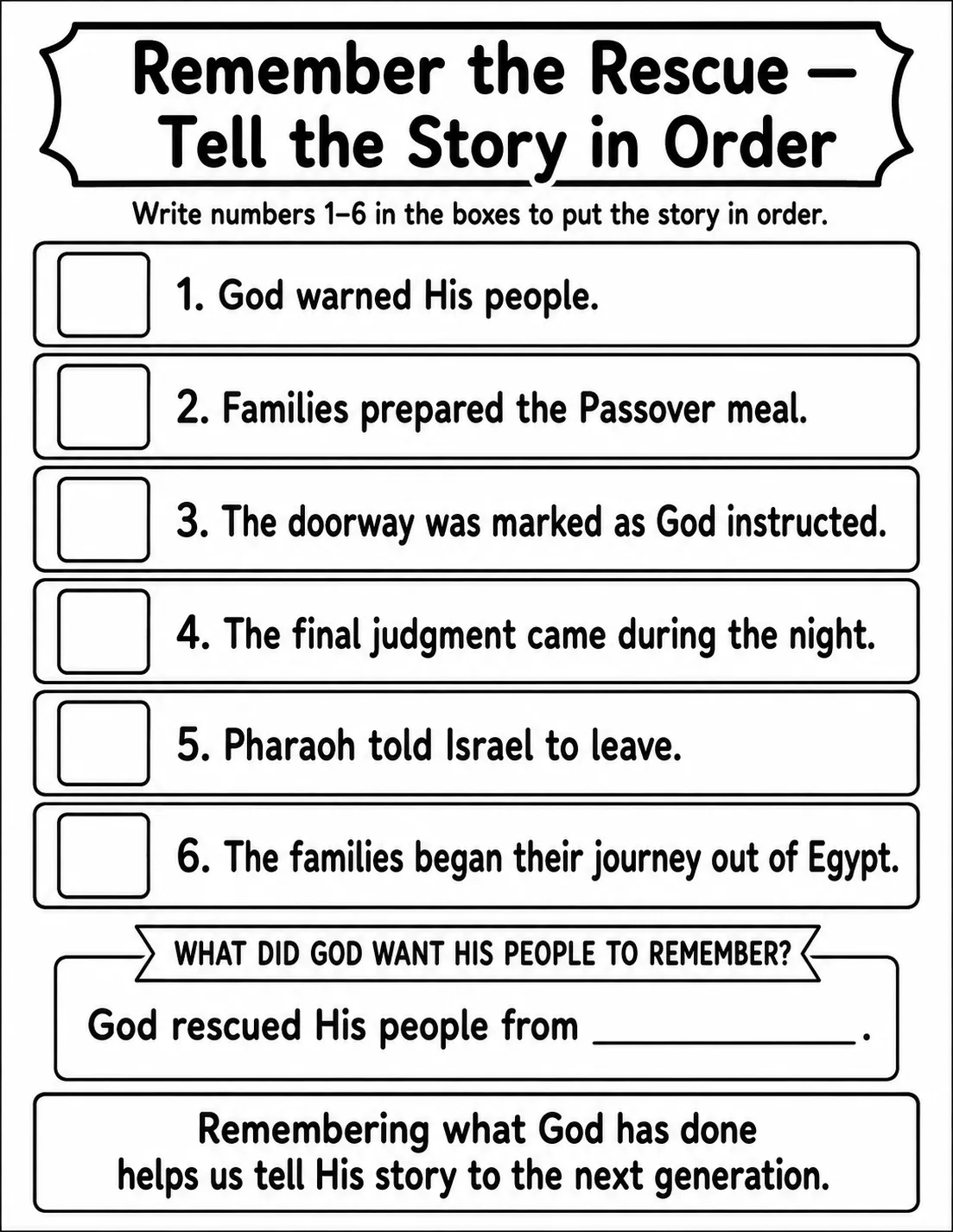
- Use the printable to put six Passover events in order.
- After the sequence is complete, retell the story aloud in your own words.
- Ask which moment shows preparation, which shows judgment, and which shows rescue.
- Finish by naming why Israel was told to remember Passover.
Memory Verse
“When I see the blood, I will pass over you.”— Exodus 12:13
For Parents and Teachers
Handle the Death of the Firstborn Without Graphic Detail
Children should understand that real death and grief occurred in Egypt.
Do not add graphic descriptions, frightening speculation, or visual scenes of dead children.
Do Not Turn the Destroyer into a Horror Character
A visual angel-of-death or grim-reaper character is unnecessary and can distort the tone for young children.
Keep illustrations centered on households, preparation, and departure.
The Blood Is Not Magic
The doorway sign matters because God establishes it as part of His instruction and promise.
Avoid language suggesting an independent magical power in the substance itself.
Do Not Celebrate Egyptian Grief
Israel’s liberation from slavery is good news.
The suffering that accompanies judgment should still be treated with gravity and compassion.
Do Not Use the Story to Demand Unsafe Obedience
God’s unique command in this biblical event is not a model for adults demanding unquestioning personal obedience from children.
Children should seek trusted help when a person asks them to do something unsafe, harmful, or secretive.
Where the Story Goes Next
Israel has left Egypt, but Pharaoh will soon change his mind and pursue them.
The people will find themselves trapped between Pharaoh’s army and the sea.
The next story is God Parts the Red Sea — Israel Escapes Egypt.