Stephen Remains Faithful
Stephen Trusts Jesus Even When Following Him Is Costly
Original age-appropriate retelling based on Acts 6–7.

Before You Read
Stephen's story includes people becoming very angry with him and eventually killing him because he continued to speak about Jesus. We will tell that part carefully. The Bible does not teach children to stay in dangerous situations or allow other people to hurt them.
As you read, notice where Stephen's courage came from, how he served others, and how he continued trusting Jesus even when the people around him became angry.
The Bible Story
The church in Jerusalem kept growing. More and more people were becoming followers of Jesus. They learned together, prayed together, shared what they had, and cared for people who needed help.
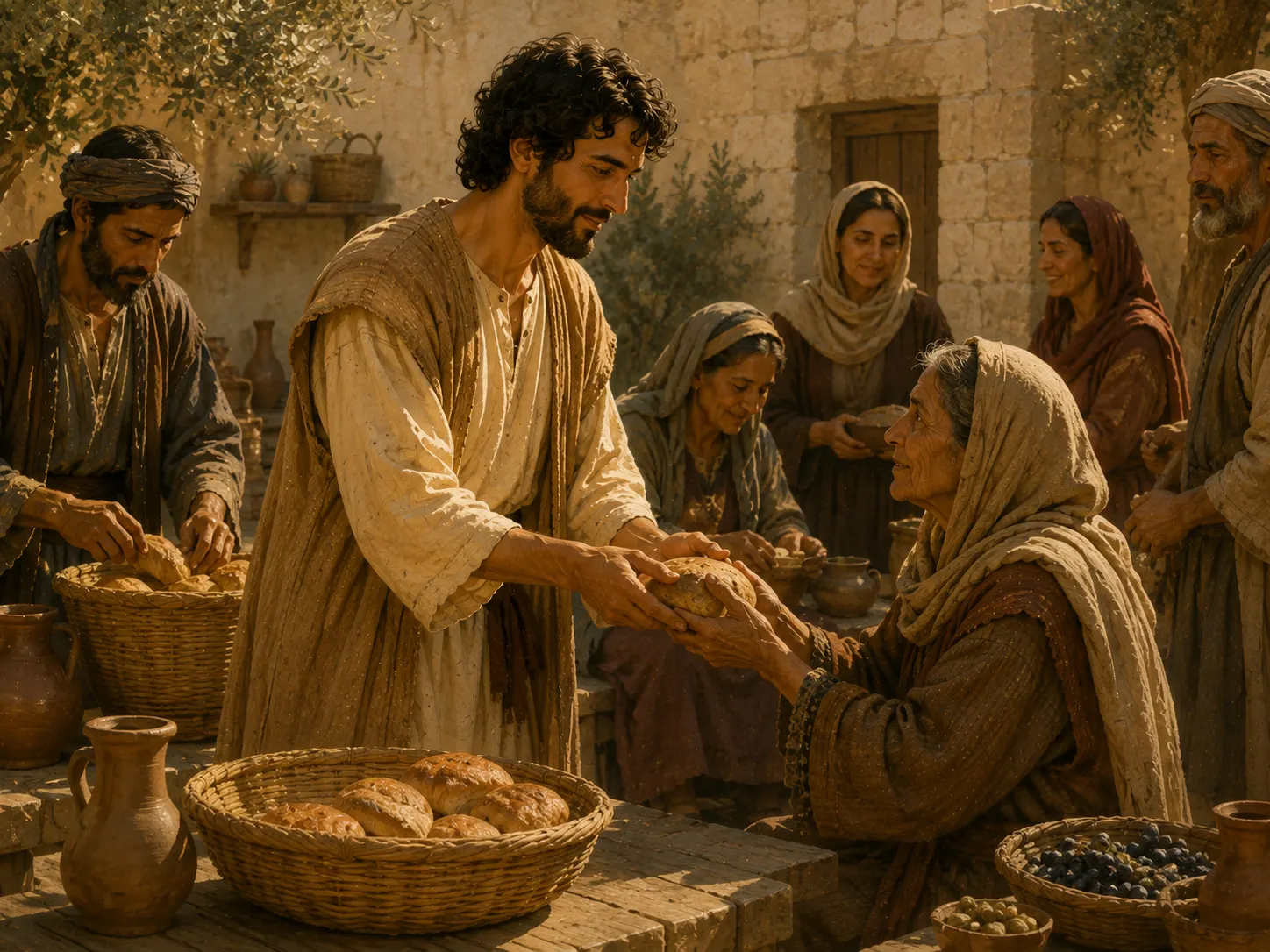
As the number of believers grew, a problem appeared. Some widows were not receiving the daily help they needed. The apostles knew that caring for these women mattered. They also knew they needed to continue praying and teaching God's Word. So the believers chose seven trustworthy men to help with this important work.
One of them was Stephen. Stephen was known as a man full of faith and the Holy Spirit. He did not begin by standing before a crowd or trying to become important. He was ready to serve. The apostles prayed for Stephen and the other men and entrusted this work to them. The church continued to grow, and many more people heard God's Word.
Stephen also spoke about Jesus, and God worked through him in remarkable ways. Some people began arguing with him, but they could not overcome the wisdom with which he spoke. Instead of accepting what Stephen was saying, some of his opponents secretly persuaded people to make false accusations against him.
Soon Stephen was taken before the council. People stood up and said things about him that were not true. Everyone in the council looked at Stephen. Even surrounded by accusations, Stephen did not answer with panic or hatred. The Bible says that his face appeared to them like the face of an angel. Then the high priest asked Stephen whether the accusations were true, and Stephen began to speak.
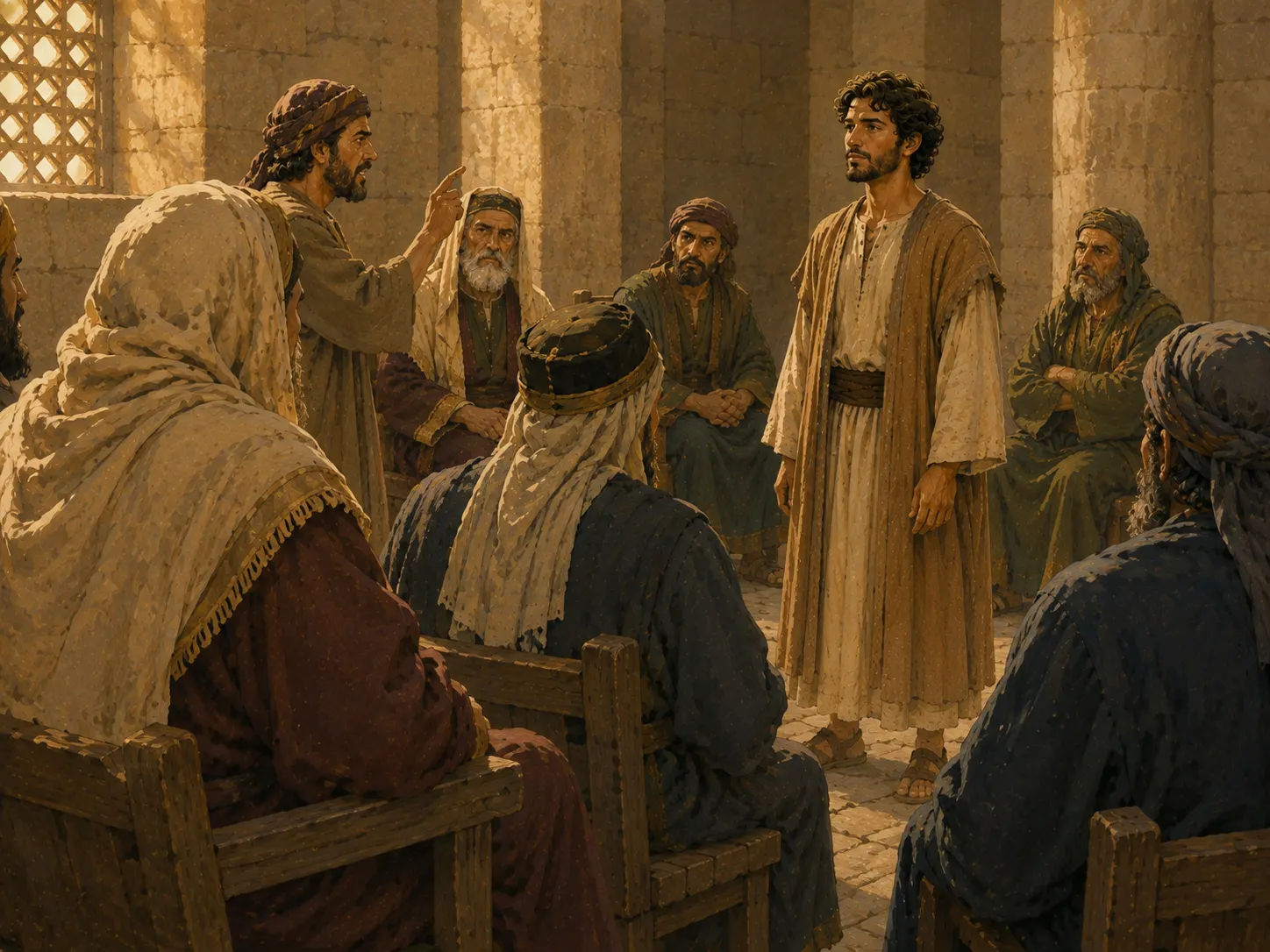
Stephen did not simply tell the council about himself. He reminded them of the story of what God had been doing for generations. He spoke about Abraham and God's promises. He told them about Joseph, whose own brothers rejected him even though God was with him.
Stephen also spoke about Moses. At first, the Israelites did not understand that God was using Moses to rescue them. Yet God sent Moses to lead His people out of Egypt. Stephen reminded the council about the wilderness, the tabernacle, the temple, and the long history of God's people. Again and again, God had been faithful. And again and again, people had resisted what God was doing.
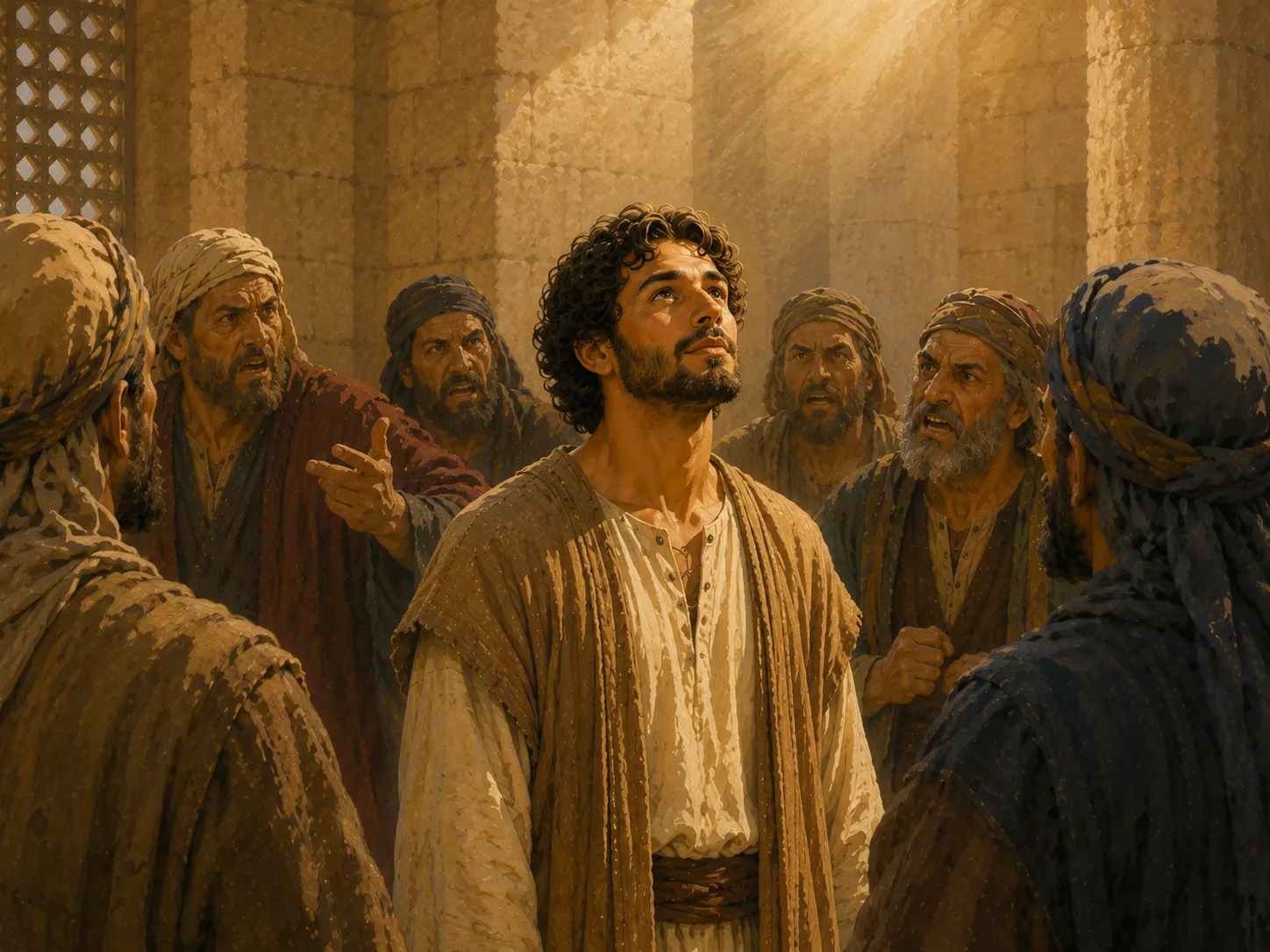
Then Stephen spoke very directly to the leaders. Their ancestors had rejected God's messengers, and now they had rejected Jesus, the Righteous One. The people listening understood what Stephen was saying, and they became furious.
But Stephen remained focused on God. Filled with the Holy Spirit, he looked toward heaven. He said that he could see heaven open and the Son of Man standing at the right hand of God. Stephen was speaking about Jesus—the risen Lord he trusted.
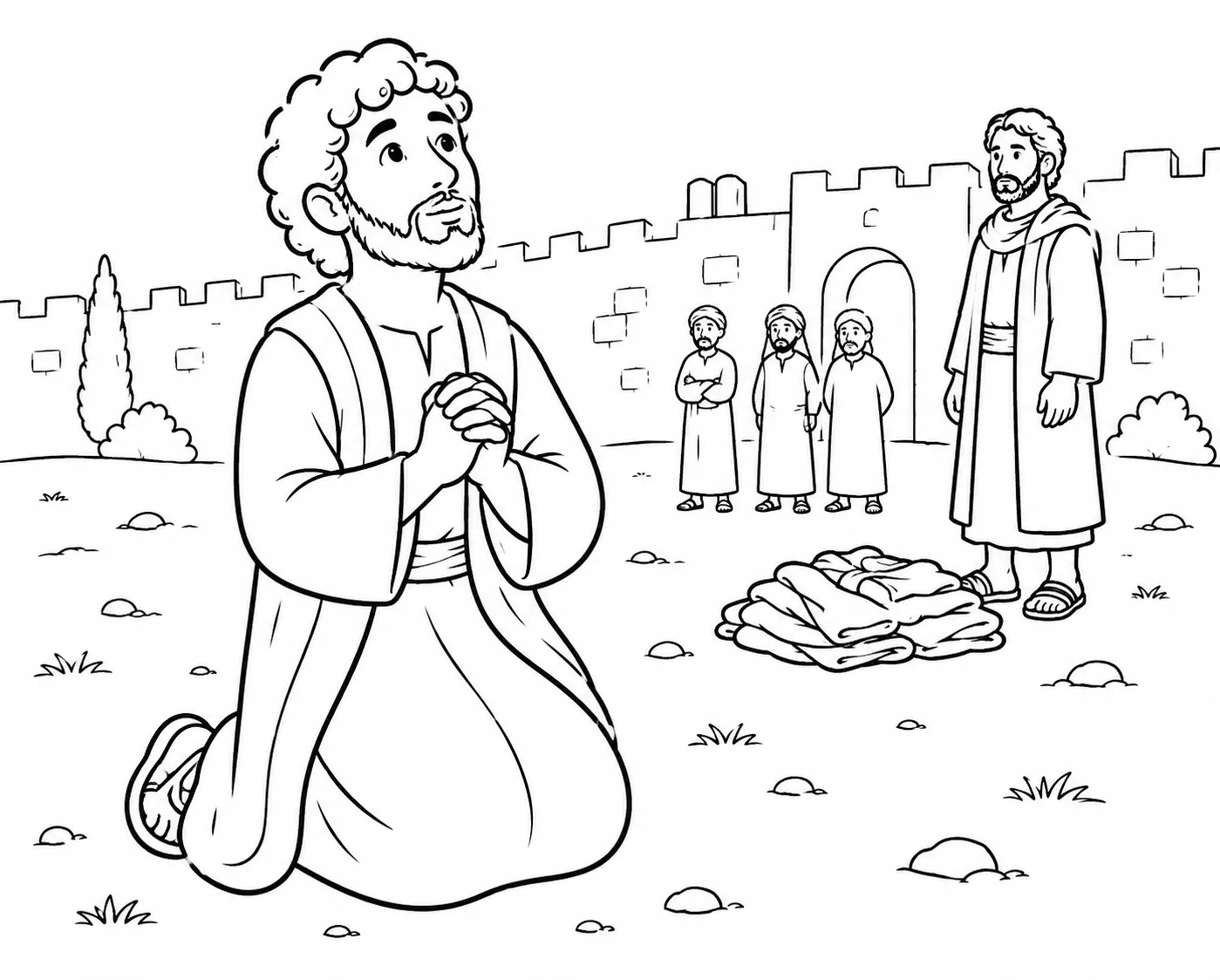
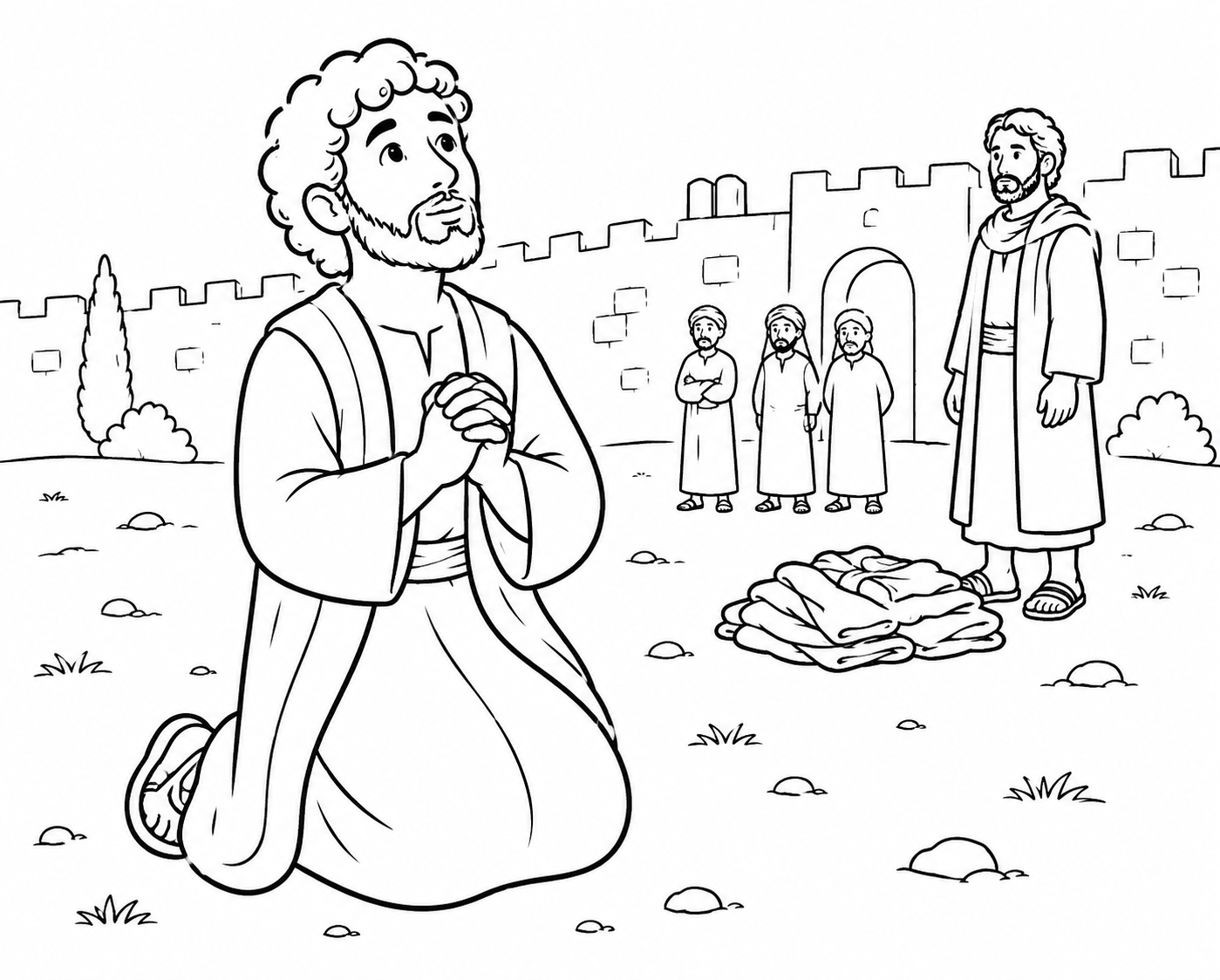
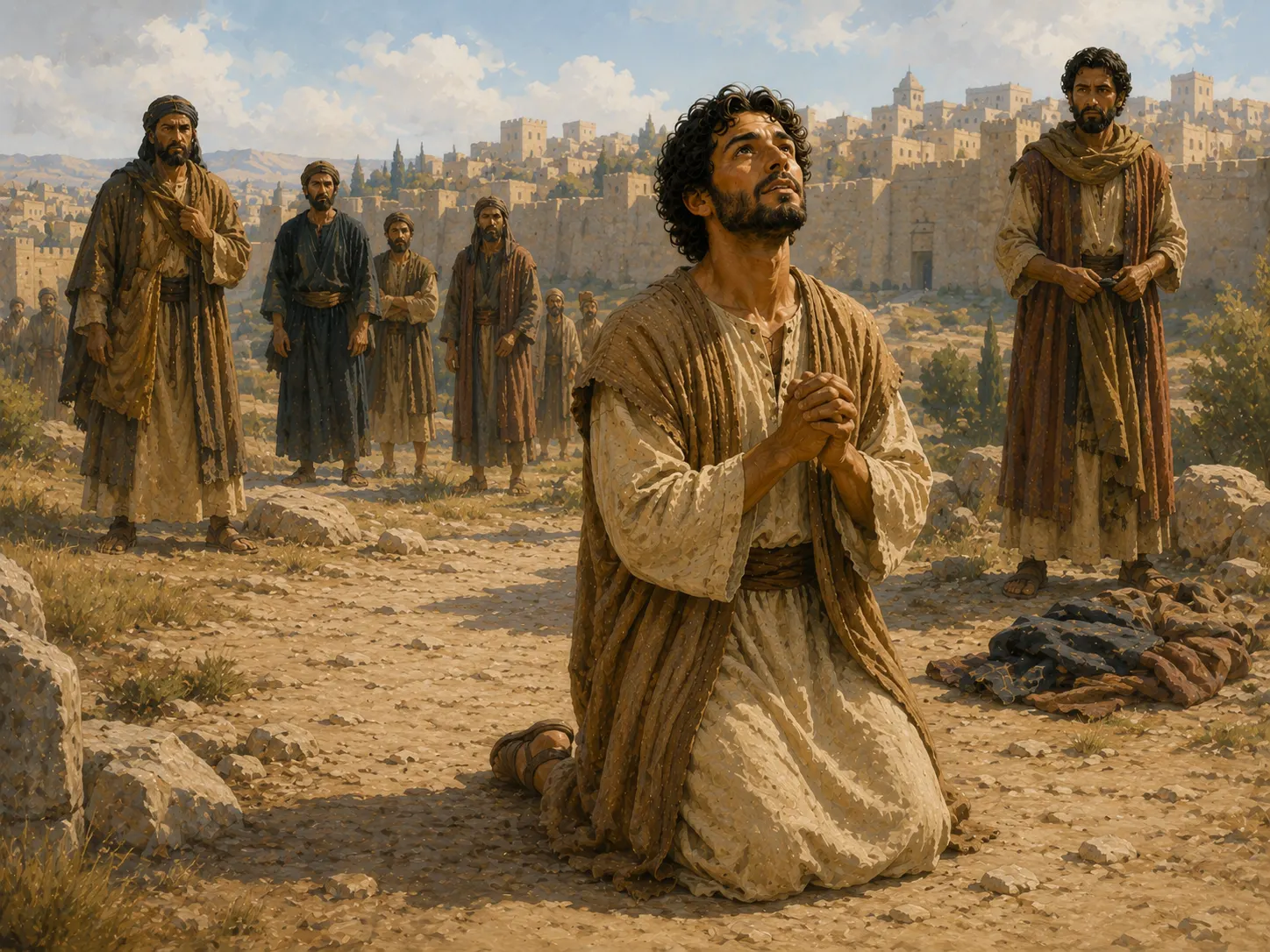
The crowd did not want to listen anymore. They shouted and rushed toward Stephen. They took him outside the city. There, they began throwing stones at him. The people taking part laid their outer clothes at the feet of a young man named Saul. This is the first time Saul appears in this part of the story.
Stephen knew that his life was in danger. Yet even then, his trust remained in Jesus. As the stones were being thrown, Stephen prayed, "Lord Jesus, receive my spirit." Then he prayed for the people who were hurting him and asked the Lord not to hold their sin against them. Stephen was not saying that their violence was acceptable. What they were doing was terribly wrong. But he refused to answer hatred with hatred.
Then Stephen died. The people who killed him had taken his life, but they had not taken away his trust in Jesus. Stephen had served, spoken the truth, and remained faithful to the end. And his story was not the end of what God was doing. Saul had been there. Soon Saul himself would encounter the risen Jesus, and his life would change in a way almost no one expected.
What This Story Teaches Us
Faithfulness Begins with Serving
Stephen was first introduced as a trustworthy believer chosen to help care for people in need. Following Jesus includes humble, practical service.
God Gives Wisdom and Courage
Stephen did not depend on showmanship or his own importance. The Holy Spirit gave him wisdom and helped him remain faithful when people opposed him.
God Has Been Faithful Throughout His Story
Stephen reminded the council that God had faithfully worked through Abraham, Joseph, Moses, and Israel's history. His speech showed that God's work was leading toward Jesus.
Stephen Pointed to Jesus
Stephen's courage was not mainly about being brave. He trusted the risen Jesus and continued telling the truth about Him even when it became costly.
Forgiveness Does Not Make Harm Right
Stephen prayed for the people who were hurting him, but their violence was still wrong. Children should never remain in danger to imitate Stephen; they should move toward safety and tell a trusted adult.
How It Fits into God's Bigger Story
Stephen looked back across Israel's history and showed that God had remained faithful even when people rejected the messengers He sent.
That pattern reached its clearest point in Jesus, the Righteous One. Jesus was rejected and killed, but God raised Him from the dead. Stephen trusted the risen Jesus and saw Him as the exalted Son of Man.
Stephen's death did not stop the good news. Persecution would scatter believers into new places where they continued speaking about Jesus. Saul, who was present at Stephen's death, would soon encounter the risen Jesus and become a powerful witness to the gospel.
Talk About It
- What work was Stephen chosen to help with in the growing church?
- What happened when some people could not successfully argue against Stephen?
- What does this story teach us about God's faithfulness and about Jesus?
- Why did Stephen keep speaking the truth even when the people around him became angry?
- If someone becomes angry, threatening, or violent toward you, what should you do instead of trying to copy Stephen's situation?
- How can our family tell the truth, forgive others, and still use wise boundaries when someone does something wrong?
A Short Prayer
Jesus, thank You for being with Stephen and helping him remain faithful. Help us love what is true and have courage to do what is right. Teach us not to answer anger with anger or hatred with hatred. Give us wisdom to move toward safety and tell trusted adults when someone threatens or hurts us. Help us forgive without pretending that wrong things are right. Keep our hope in You. Amen.
Try This Together
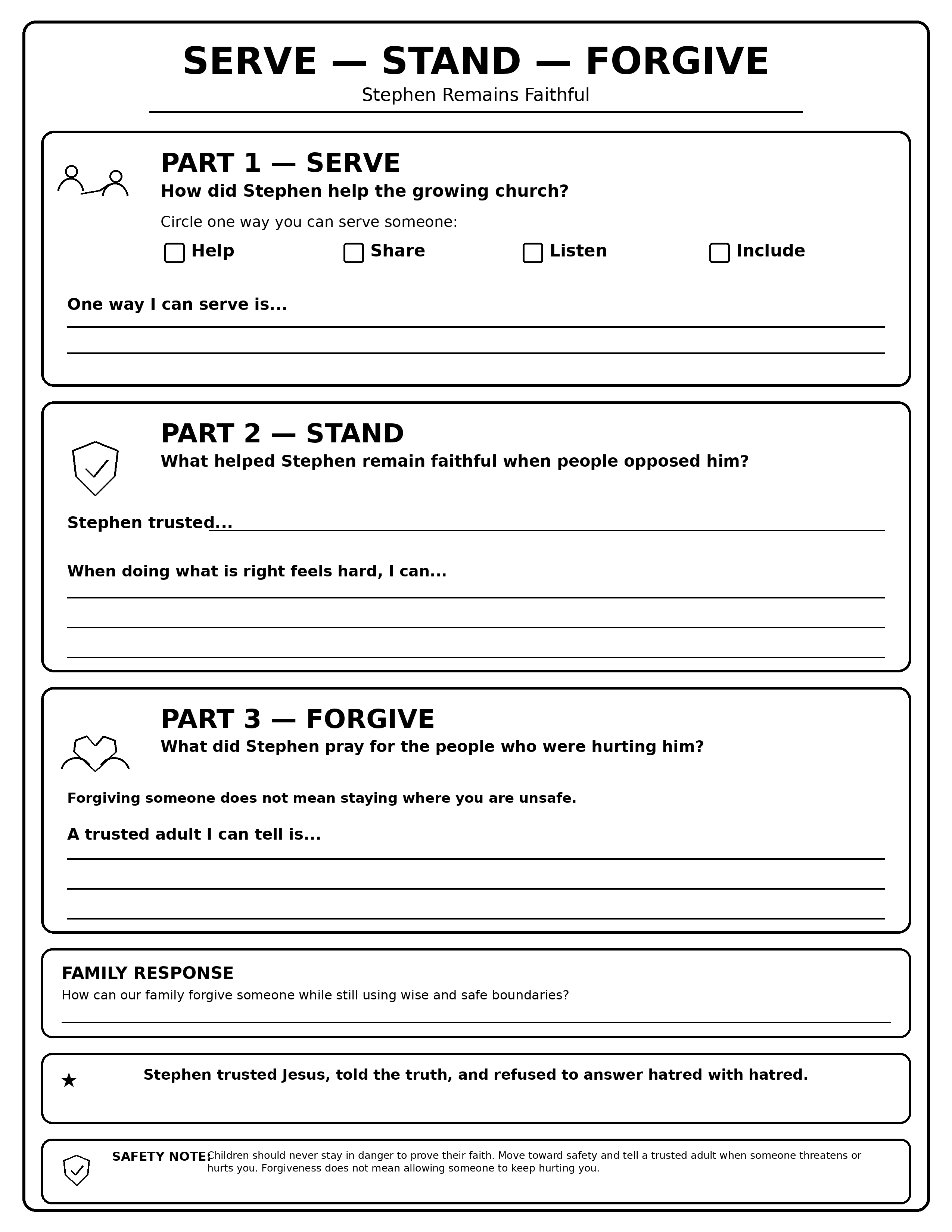
Faithful and Wise 10–15 min
You will need: Paper, Crayons or markers
- Think of one situation where doing what is right might be difficult, such as telling the truth, including someone who is left out, admitting a mistake, or refusing to join unkind behavior.
- Finish the sentence: I can ask Jesus to help me be faithful when...
- Draw or write one safe and wise response you could choose in that situation.
- Name at least two trusted adults you could tell if someone threatened, frightened, or hurt you.
- Pray together for courage, wisdom, kindness, and safety.
Help children connect faithfulness to Jesus with truthful choices, wise boundaries, and seeking help from trusted adults when a situation is unsafe.
Safety: Do not create role-play involving threats, violence, stoning, martyrdom, or children proving faith by enduring harm. Keep examples ordinary, age-appropriate, and safe.
Memory Verse
“Lord Jesus, receive my spirit.”— Acts 7:59
For Parents and Teachers
Stephen's story includes false accusations, mob violence, death, forgiveness, and the first appearance of Saul in this part of Acts. Present the violence truthfully but without graphic detail, and keep the theological center on Stephen's service, Spirit-given witness, trust in Jesus, and refusal to answer hatred with hatred.
Historical Context
Acts 6 describes tension in the rapidly growing Jerusalem church over the daily distribution of food to widows. Seven respected men, including Stephen, were chosen to help. Acts 7 records Stephen's long defense before the council, where he retells major parts of Israel's history and confronts his hearers with their resistance to God's messengers and rejection of Jesus.
Keep the Story Centered on Jesus
Stephen's courage comes from his trust in the risen Jesus and the work of the Holy Spirit.
Do not reduce the story to a generic lesson about toughness, bravery, or standing up to bullies.
Handle Stephen's Death Without Graphic Detail
Children can be told plainly that people threw stones at Stephen and killed him without describing injuries, blood, or physical suffering in detail.
Visuals should emphasize prayer, faithfulness, and solemnity rather than the mechanics of violence.
Teach Forgiveness Together with Safety
Stephen prayed for his attackers, but that did not make their actions right.
Explain that forgiveness can exist alongside boundaries, consequences, adult intervention, and moving away from danger.
Summarize Stephen's Speech as Story
Acts 7 covers a large sweep of Israel's history. For ages 6–9, preserve the main theological movement without turning the narrative into a compressed history lecture.
Emphasize God's faithfulness, repeated human resistance, and Stephen's claim that the leaders rejected Jesus, the Righteous One.
A Question Your Child May Ask
“Does following Jesus mean I should stay if someone is hurting me?”
No. Stephen's story describes an extraordinary situation in the early church. Children should move toward safety and tell a trusted adult when someone threatens, frightens, or hurts them. Forgiving someone does not mean staying where that person can keep hurting you.
Common Misunderstandings
- Stephen's faithfulness does not mean Christians should seek suffering or danger.
- Forgiveness does not mean violence is acceptable, consequences are unnecessary, or immediate reconciliation is required.
- Stephen's calmness should not be used to shame children for feeling afraid in dangerous situations.
- The description of Stephen's face like the face of an angel does not require a halo, glow, or supernatural facial transformation.
- Stephen's vision should not be used to invent a physical depiction of God the Father.
- Children should not reenact Stephen's death or throw objects at one another as a Bible activity.
Safeguarding
Children should never be encouraged to prove faithfulness by enduring preventable harm. If a child is threatened, frightened, abused, or hurt, the appropriate response is to move toward safety and tell a trusted adult. Forgiveness must never be presented as permission for continued access, secrecy, or repeated harm.