Saul Meets Jesus
Jesus Stops Saul and Gives His Life a New Direction
Original age-appropriate retelling based on Acts 9:1–19.
Before You Read
Saul was not looking for Jesus. In fact, Saul believed that the people who followed Jesus were wrong. He had been trying to stop them, and many Christians were afraid of him.
But on the road to Damascus, Saul was about to discover something that would change his life completely: Jesus was alive—and Jesus knew exactly who Saul was. As you read, notice that Jesus did not only stop Saul. He began changing the direction of Saul’s whole life.
The Bible Story
Saul was determined to stop the followers of Jesus. He went to the high priest and asked for letters giving him authority to search for believers in Damascus. If he found men or women who followed the Way, he planned to arrest them and bring them back to Jerusalem.
Saul set out for Damascus with other men. The journey was long, but Saul knew what he intended to do when he arrived. The followers of Jesus had good reason to be afraid of him.

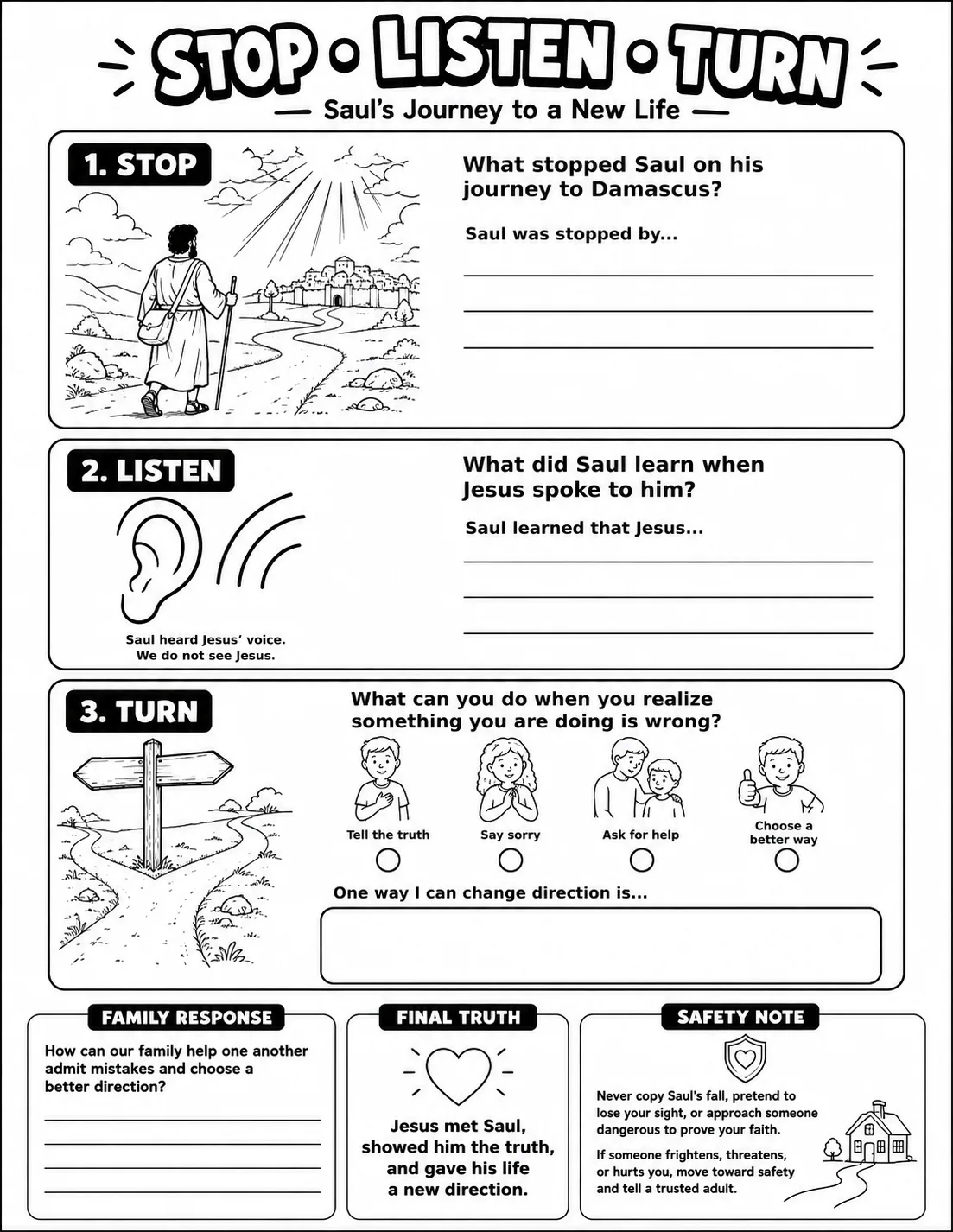
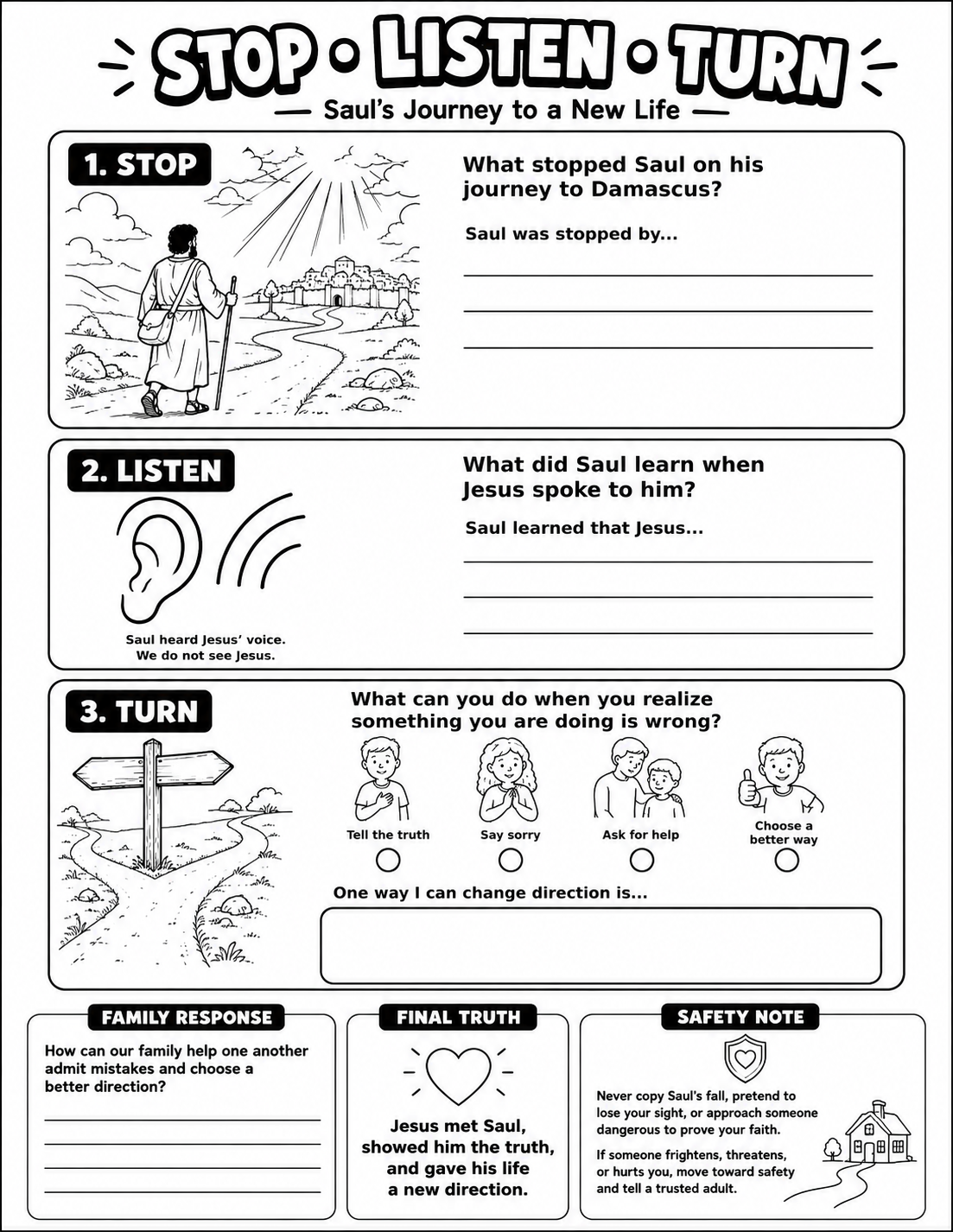
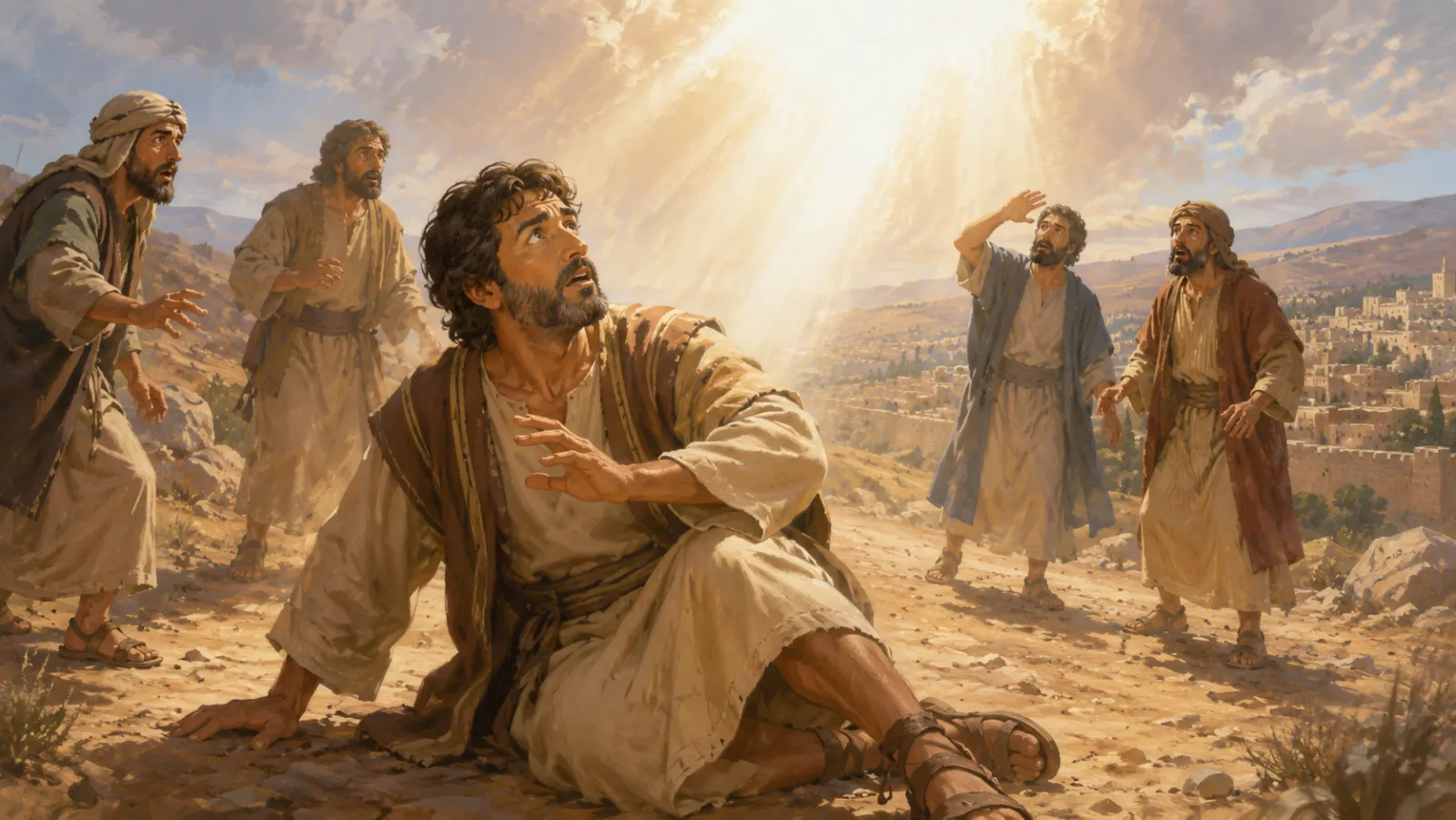
As Saul came near Damascus, something happened that he never expected. Suddenly, a light from heaven flashed around him. Saul fell to the ground. Then he heard a voice: ‘Saul, Saul, why do you persecute me?’ Saul asked, ‘Who are you, Lord?’ The answer changed everything: ‘I am Jesus, whom you are persecuting.’
Jesus was alive. The people Saul had been trying to stop really did belong to Him. When Saul attacked Jesus’s followers, Jesus took it personally. Saul had thought he was fighting against a false message. Now he discovered that he had actually been fighting against the risen Jesus.
Jesus told Saul to get up and go into Damascus. There he would be told what he was to do. The men traveling with him were astonished. They knew something extraordinary had happened, but Saul was the one to whom Jesus spoke.

Saul stood up and opened his eyes, but he could not see. His companions took him by the hand and led him into Damascus. For three days Saul could not see, and he did not eat or drink. The confident man who had begun the journey knowing exactly what he planned to do now had to be guided by others.
Meanwhile, there was a disciple in Damascus named Ananias. The Lord spoke to him in a vision and told him to go to the house where Saul was staying. Ananias knew exactly who Saul was. He had heard about the harm Saul had done to believers in Jerusalem, and he knew why Saul had come to Damascus.
Ananias did not pretend that the danger was unimportant. He told the Lord what he had heard about Saul. But the Lord told Ananias to go. God had a purpose for Saul. Saul would carry the name of Jesus before Gentiles, kings, and the people of Israel.

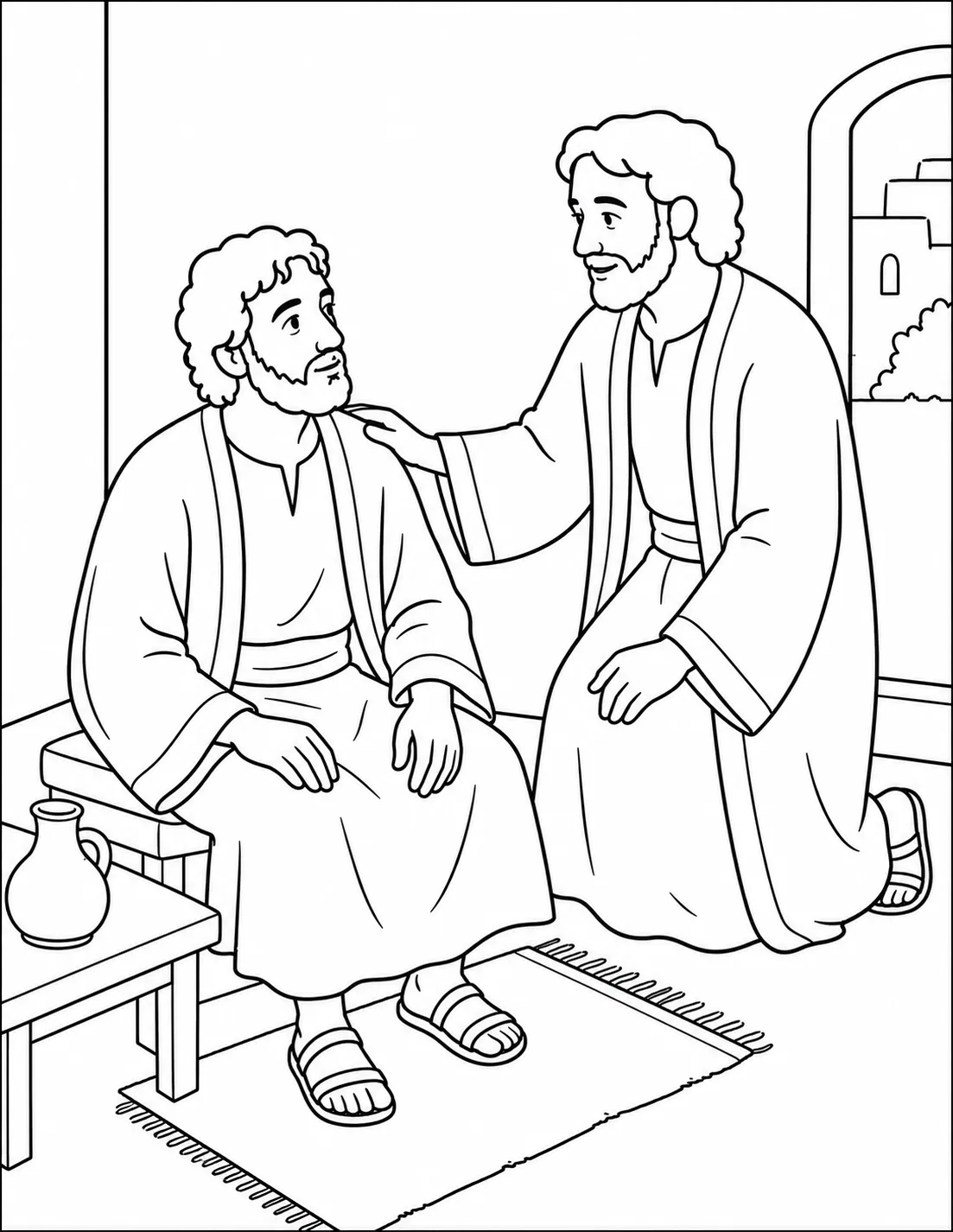
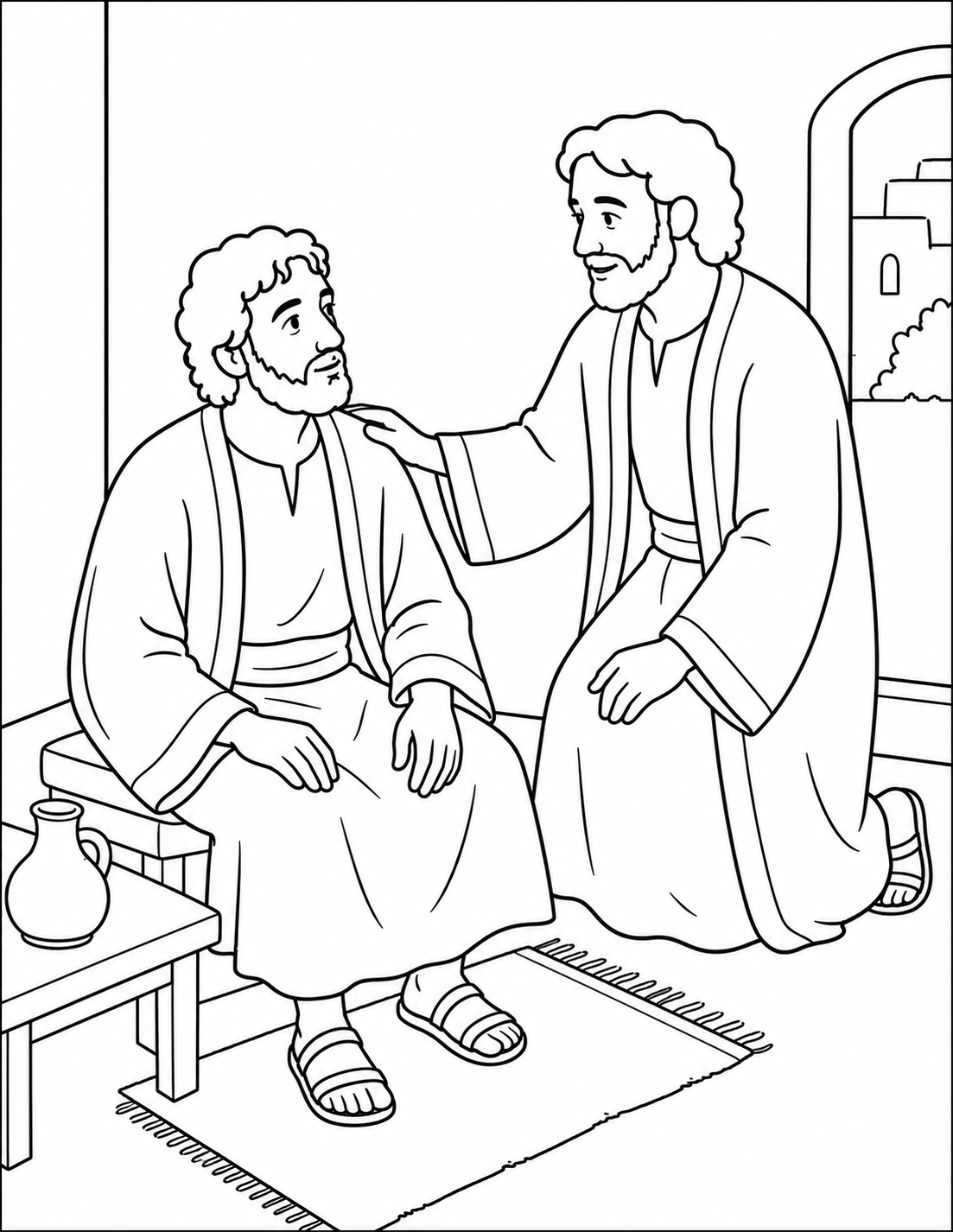
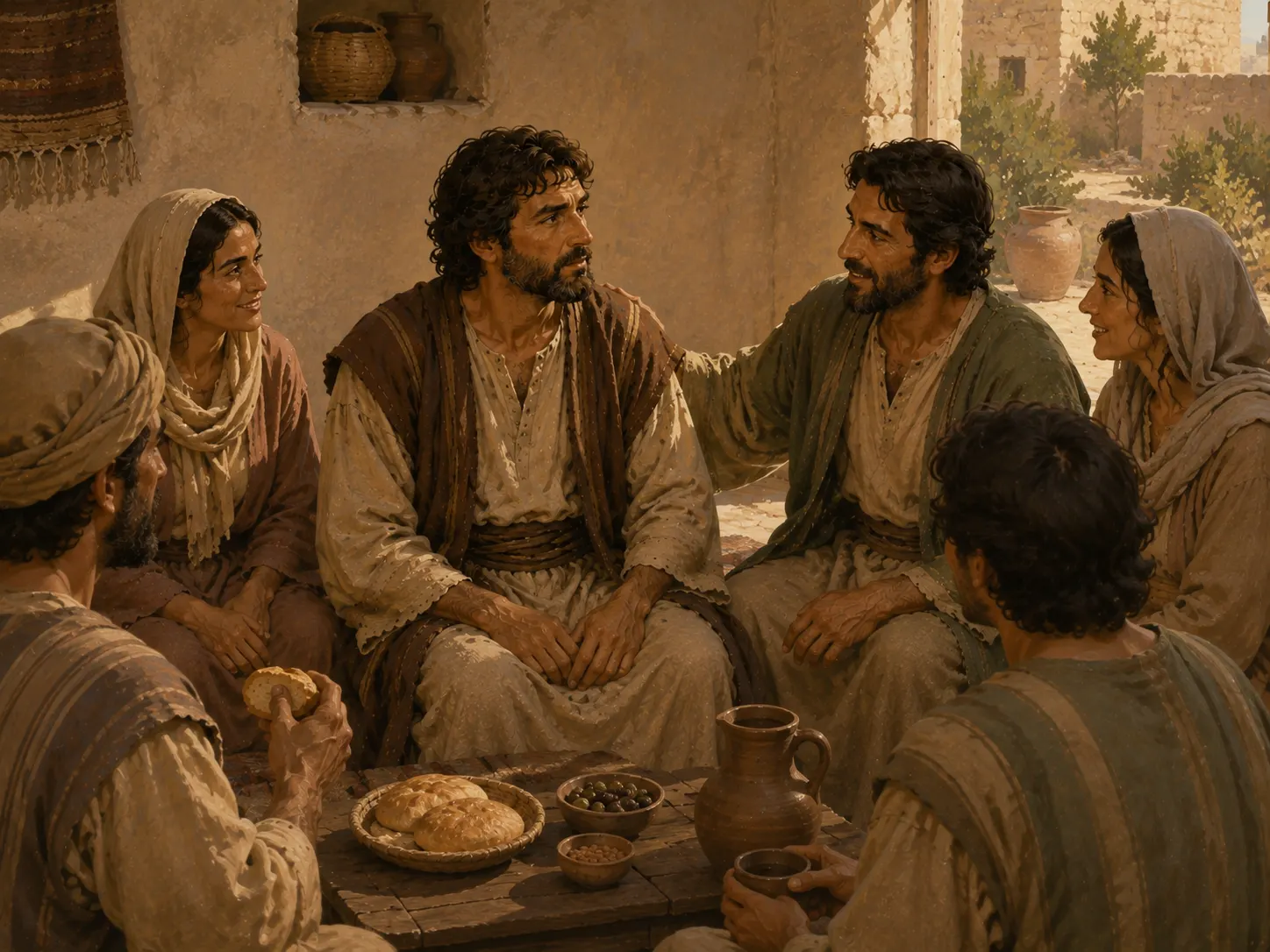
So Ananias obeyed. He entered the house and went to Saul. Instead of treating Saul only as the frightening enemy he had heard about, Ananias addressed him as ‘Brother Saul.’ He explained that Jesus—the same Jesus who had appeared to Saul on the road—had sent him.
Ananias placed his hands on Saul. Immediately something like scales fell from Saul’s eyes, and he could see again. Saul got up and was baptized. Then he ate some food and regained his strength.
Saul had begun the journey to Damascus intending to capture followers of Jesus. He entered the city unable to see and dependent on other people for help. But Jesus had met him on the road. Saul now knew that Jesus truly was alive.
Jesus had stopped Saul, confronted him with the truth, and begun giving his life an entirely new direction. The man who had tried to silence the message about Jesus would soon begin telling others that Jesus is the Son of God. Saul stayed with the disciples in Damascus for a time. The believers who had once had reason to fear his arrival would now begin seeing evidence that Jesus had truly changed the direction of his life. This was only the beginning of the work Jesus would do through him.
What This Story Teaches Us
Jesus Takes the Initiative
Saul was not searching for Jesus. The risen Jesus stopped him, spoke the truth to him, and began changing the direction of his life.
Grace Does Not Pretend Wrong Is Right
Jesus confronted Saul about persecuting His followers. Grace did not erase the seriousness of Saul’s actions; it met him with truth and opened a new way forward.
Jesus Identifies with His People
Jesus asked Saul why he was persecuting Him. Harming Jesus’s followers mattered personally to the risen Lord.
Ananias Was Honest About Danger
Ananias did not pretend Saul’s history was harmless. He told the Lord about his concern and then obeyed a specific instruction from God.
Jesus Gives a New Direction
Saul began the journey trying to stop the message about Jesus. After meeting the risen Jesus, his life began moving in a completely different direction.
How It Fits into God's Bigger Story
The good news about Jesus had begun spreading beyond Jerusalem even while Saul tried to stop it. The risen Jesus was building His church.
Jesus chose Saul, one of the church’s fiercest opponents, for a new purpose. Saul would later be known as Paul and would carry the good news of Jesus far beyond Damascus.
Saul’s story shows that God’s rescue plan moves forward by grace. Jesus can forgive, transform, and send people who once seemed very far from Him.
Talk About It
- What was Saul planning to do when he reached Damascus?
- What happened when Saul came near Damascus, and what did Jesus say to him?
- What does this story teach us about Jesus’s grace and His power to change the direction of a life?
- Why was Ananias concerned about visiting Saul, and why did he finally go?
- When you discover that something you believed or did was wrong, what can you do instead of hiding it or pretending it did not happen?
- How can our family show grace to someone while still being wise about safety, trust, and healthy boundaries?
A Short Prayer
Jesus, thank You that Your grace can reach people wherever they are. Help us listen when You show us that something needs to change. Give us courage to admit when we are wrong, turn toward what is true and good, and follow You. Thank You for people who help us learn and grow. Teach us to trust Your truth, receive Your grace, and walk in the new direction You give. Amen.
Try This Together
New Direction 10–15 min
You will need: Open floor space, Optional paper and crayons or markers
- Choose a safe starting point in the room and walk several normal steps in one direction.
- Have a trusted adult say, “New direction!” Stop safely, turn, and walk in a different direction.
- Explain that Saul’s change was much deeper than changing which way he walked. Jesus confronted him and changed the direction of his life.
- Draw or write one choice where you sometimes need to stop and choose a better direction, such as telling the truth, apologizing, including someone, asking for help, or choosing kindness instead of getting even.
- Talk with a trusted adult about one wise next step.
Help children connect Saul’s changed direction with admitting wrong choices and choosing what is true and good.
Safety: Do not reenact Saul falling to the ground, losing his sight, persecution, arrest, or any dangerous part of the story.
Memory Verse
“If anyone is in Christ, the new creation has come: The old has gone, the new is here!”— 2 Corinthians 5:17
For Parents and Teachers
Acts 9 should not be reduced to a generic story about a “bad man becoming good.” The theological center is the risen Christ’s initiative, confrontation, grace, and call.
Historical Context
Saul traveled toward Damascus with authority to arrest followers of Jesus. Damascus already had a community of believers, showing how quickly the message about Jesus had spread beyond Jerusalem.
Keep Jesus at the Center
Jesus initiates the encounter, identifies Himself to Saul, confronts Saul’s persecution, and gives him a new direction.
Do not reduce the story to self-improvement, bravery, or simply changing your mind.
Speak Carefully About Blindness and Disability
Saul’s temporary loss of sight belongs to this extraordinary biblical event.
Never imply that blindness, illness, or disability reveals a person’s sin, weak faith, spiritual condition, or lack of God’s love.
Respect Ananias’s Wise Concern
Ananias honestly tells the Lord what he knows about Saul’s danger.
Do not teach children that faith requires ignoring warning signs or approaching someone who has harmed or threatened them.
Distinguish Grace, Change, Trust, and Boundaries
Jesus’s grace can genuinely transform a person, but past harm should not be denied or minimized.
Forgiveness or conversion does not require a child to abandon safe boundaries or grant immediate trust.
A Question Your Child May Ask
“Did Saul become blind because blind people have done something wrong?”
No. In this particular story Saul temporarily could not see after his extraordinary encounter with Jesus. The Bible does not teach that blindness or disability means a person has sinned more, has weak faith, or is being punished.
Common Misunderstandings
- Saul’s temporary blindness must not be generalized into a theology of disability or punishment.
- Grace does not mean that Saul’s harmful actions did not matter. Jesus confronted him directly.
- Ananias’s concern about Saul was understandable, not faithless.
- Children should not be told to approach dangerous people because Ananias approached Saul after a specific instruction from God.
- A person claiming to have changed does not automatically require immediate trust, access, or reconciliation.
- Children do not need a dramatic conversion experience like Saul’s in order for faith in Jesus to be real.
Safeguarding
Children should never reenact persecution, arrest, violent falling, blindness, or laying hands on another child as though they can reproduce Saul’s experience. If someone frightens, threatens, manipulates, or hurts a child, the child should move toward safety and tell a trusted adult.