Peter and John Help a Man
God Heals a Man, and Peter Points People to Jesus
Original age-appropriate retelling based on Acts 3:1–26.
Before You Read
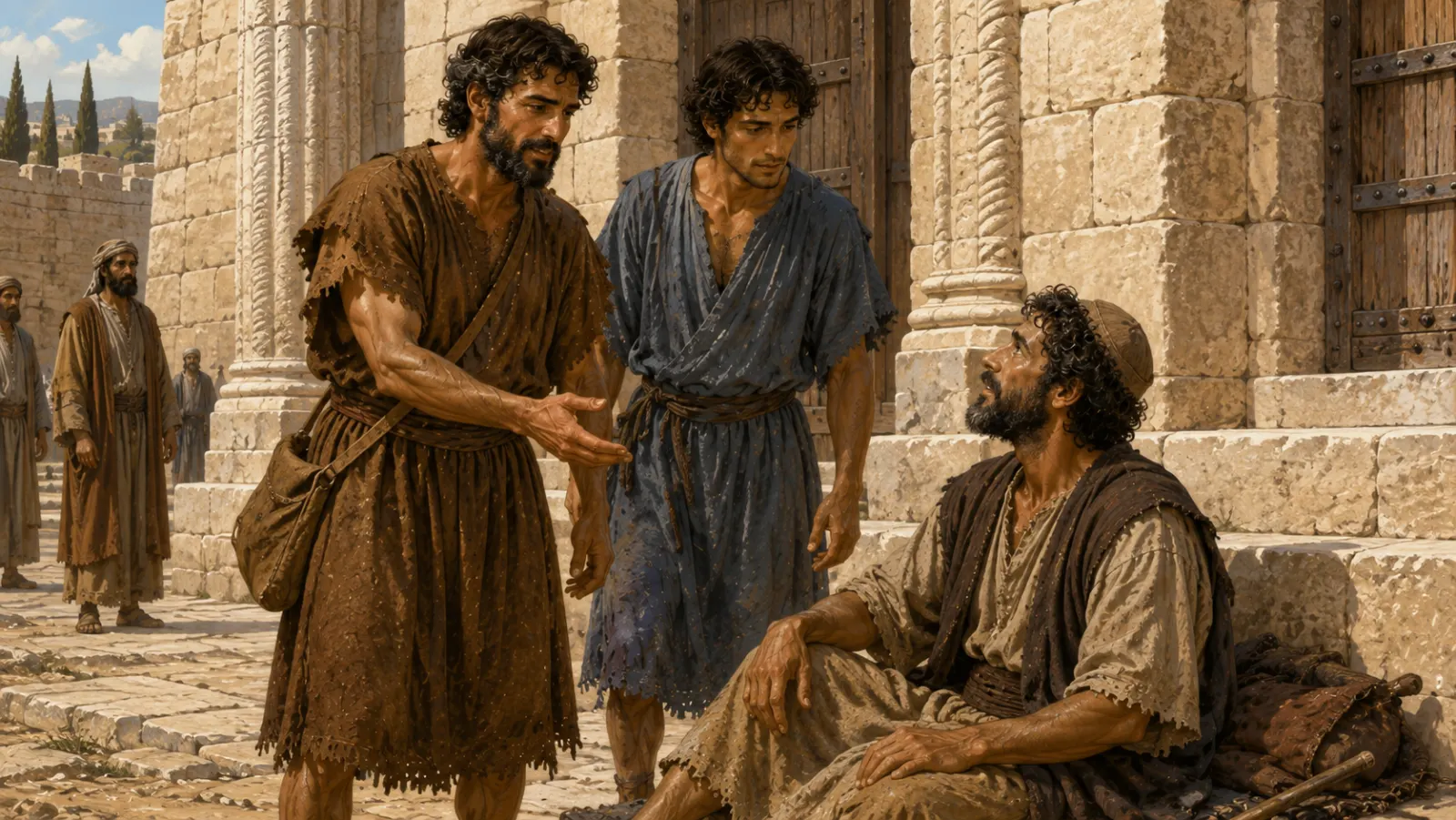
The Holy Spirit had come, and Jesus's followers were boldly telling people that He was alive. One afternoon, Peter and John went to the temple to pray, just as many Jewish people did.
At the temple gate, they met a man who had spent his whole life unable to walk. He expected Peter and John to give him a little money. Instead, something happened that no one in the temple could ignore.
The Bible Story
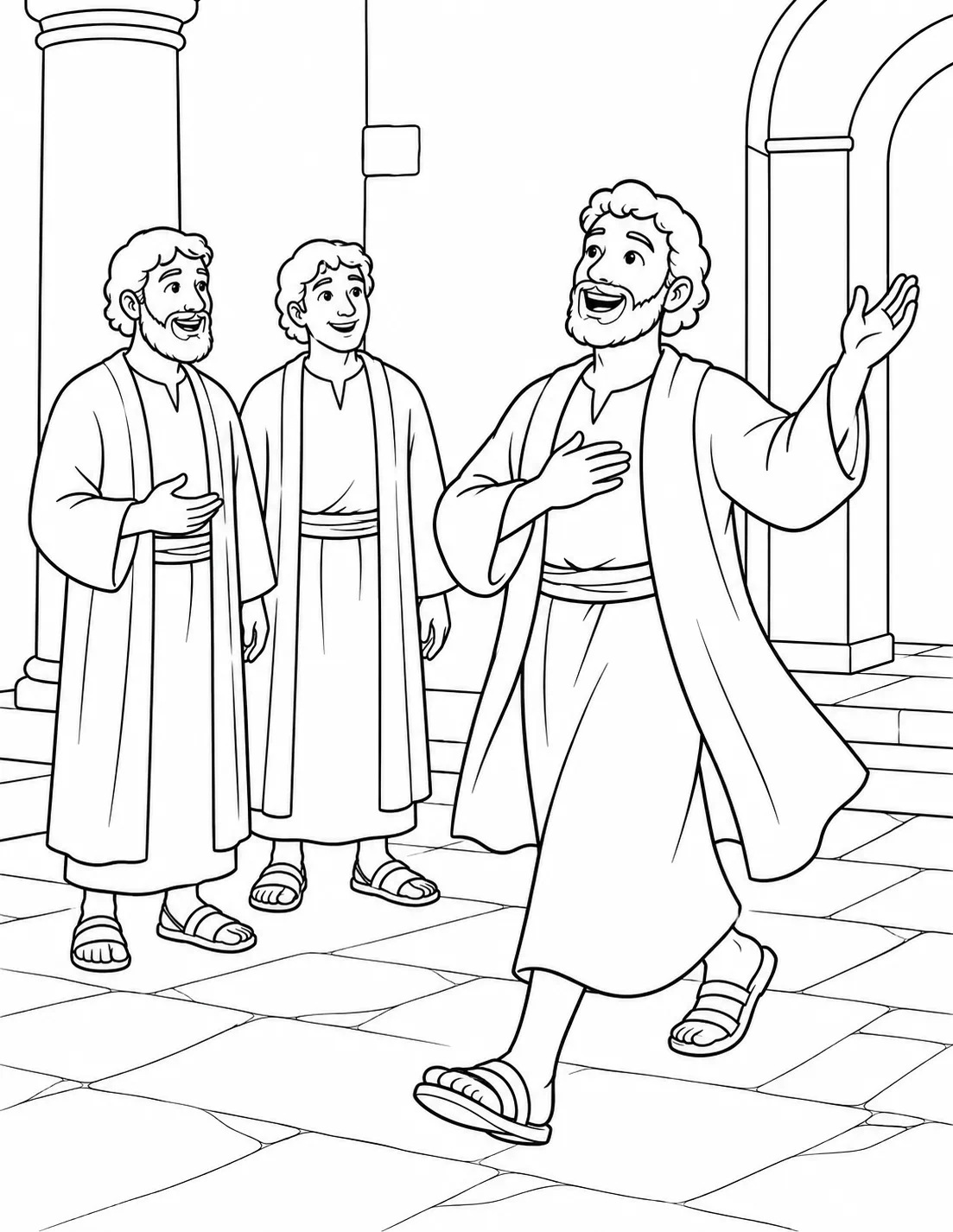
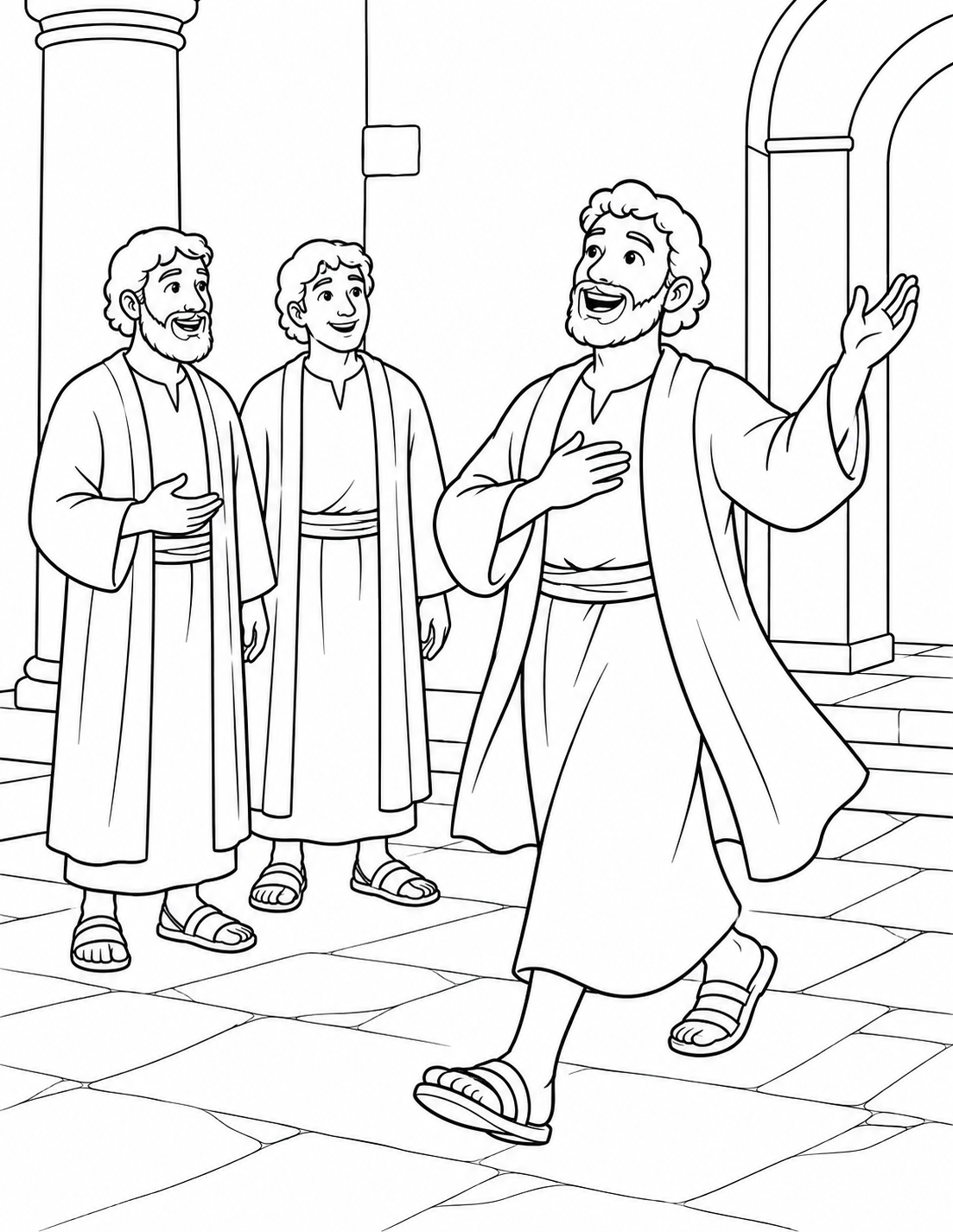
Peter and John were going up to the temple in Jerusalem for the afternoon time of prayer. Near one of the temple gates, called Beautiful, was a man who had been unable to walk since birth. Every day, other people carried him there and placed him near the gate so he could ask those entering the temple for money.
When the man saw Peter and John about to enter, he asked them for help. Peter looked directly at him, and John did too. Peter told him to look at them. The man gave them his full attention because he expected that they were about to give him something.
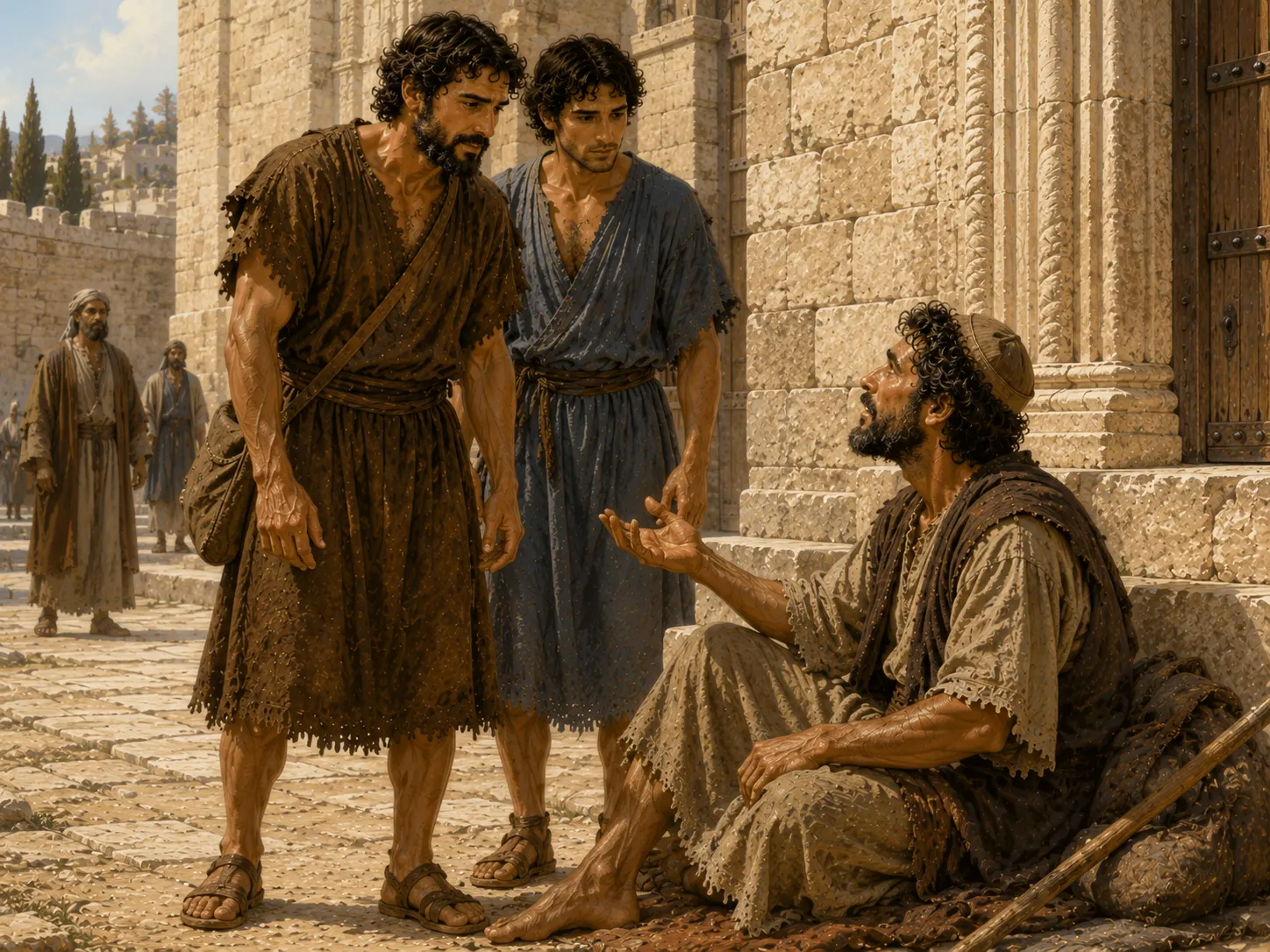
But Peter did not have silver or gold to offer. Instead, he told the man that he would give what he did have. In the name of Jesus Christ of Nazareth, Peter told him to walk. Then Peter took him by the right hand and helped him up.
Immediately, strength came to the man's feet and ankles. He sprang to his feet and stood. Then he began to walk. For a man who had never been able to walk, every step was something astonishingly new. He went with Peter and John into the temple courts, walking and jumping and praising God.
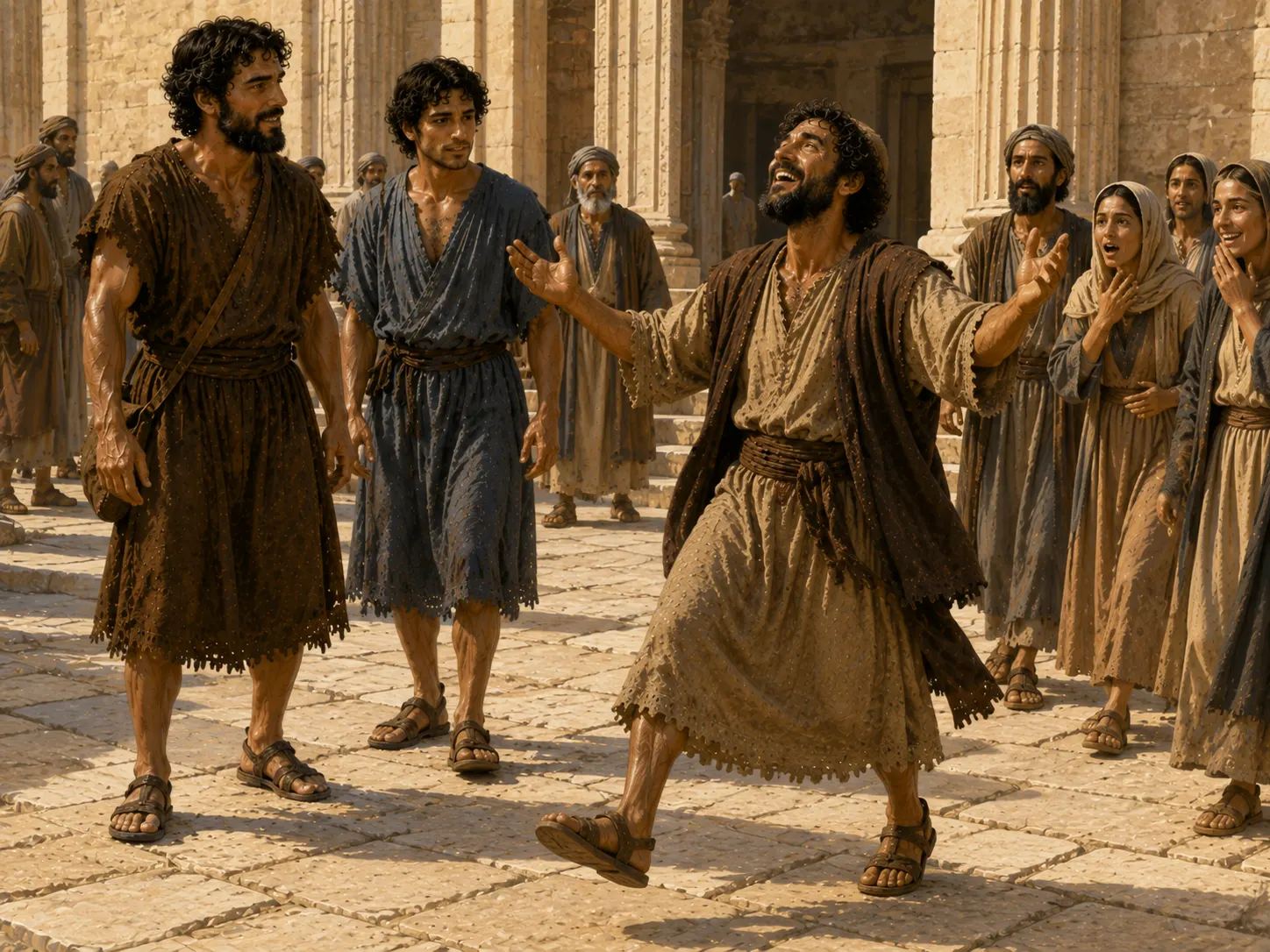
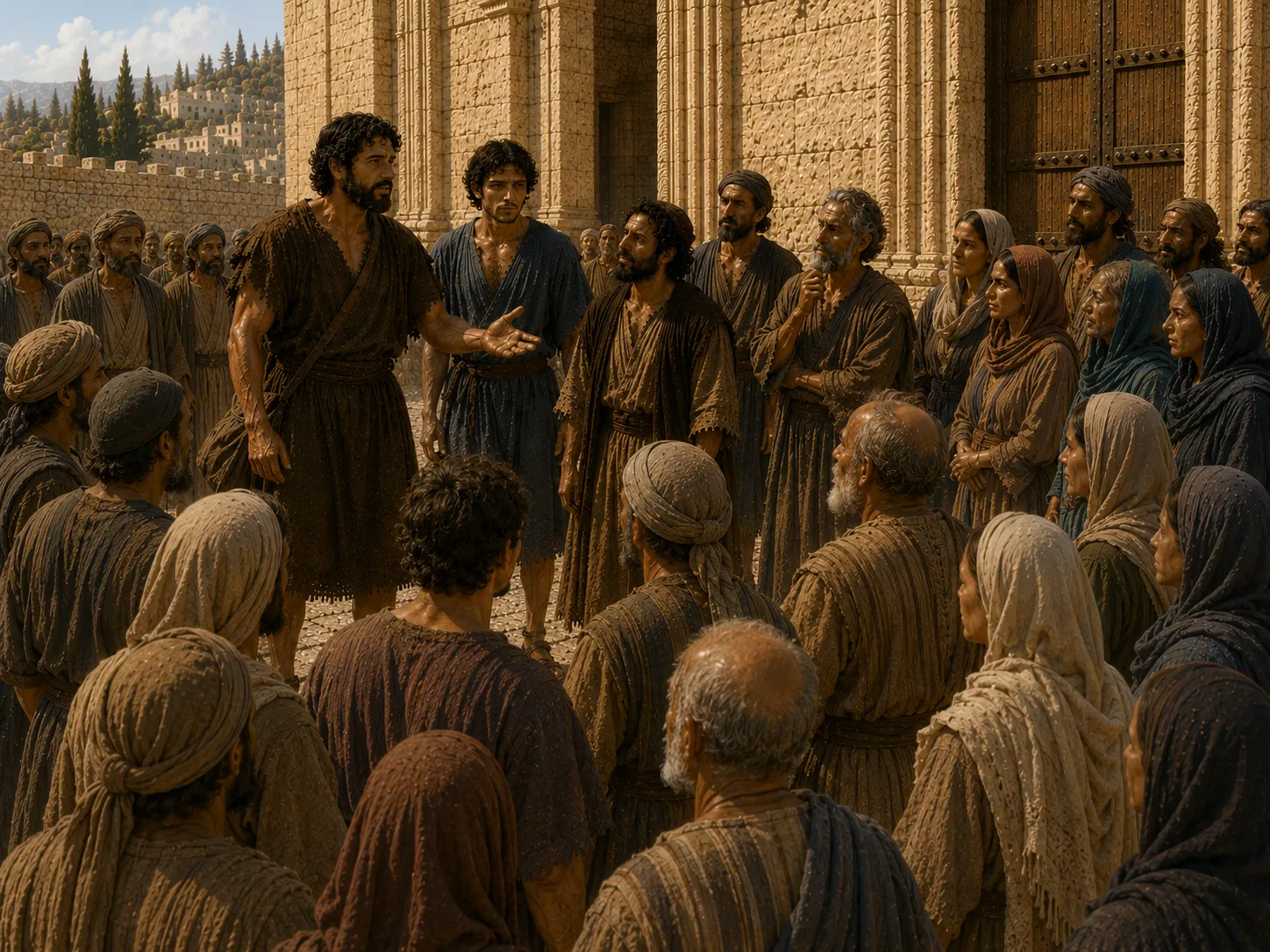
The people in the temple saw him walking and praising God. They recognized him as the same man who had sat at the Beautiful Gate asking for help. They were filled with wonder and amazement. The man stayed close to Peter and John, and a crowd hurried toward them at the place called Solomon's Colonnade.
Peter saw the way everyone was staring at him and John. He did not accept the attention as though the miracle had happened because he was powerful or unusually holy. He asked why they were looking at the two apostles as if they had made the man walk by their own power.
Then Peter pointed the crowd to Jesus. He spoke about the God of Abraham, Isaac, and Jacob and explained that God had glorified His servant Jesus. The people had rejected Jesus and He had been killed, but God raised Him from the dead. Peter and John could say this boldly because they were witnesses that Jesus was alive.
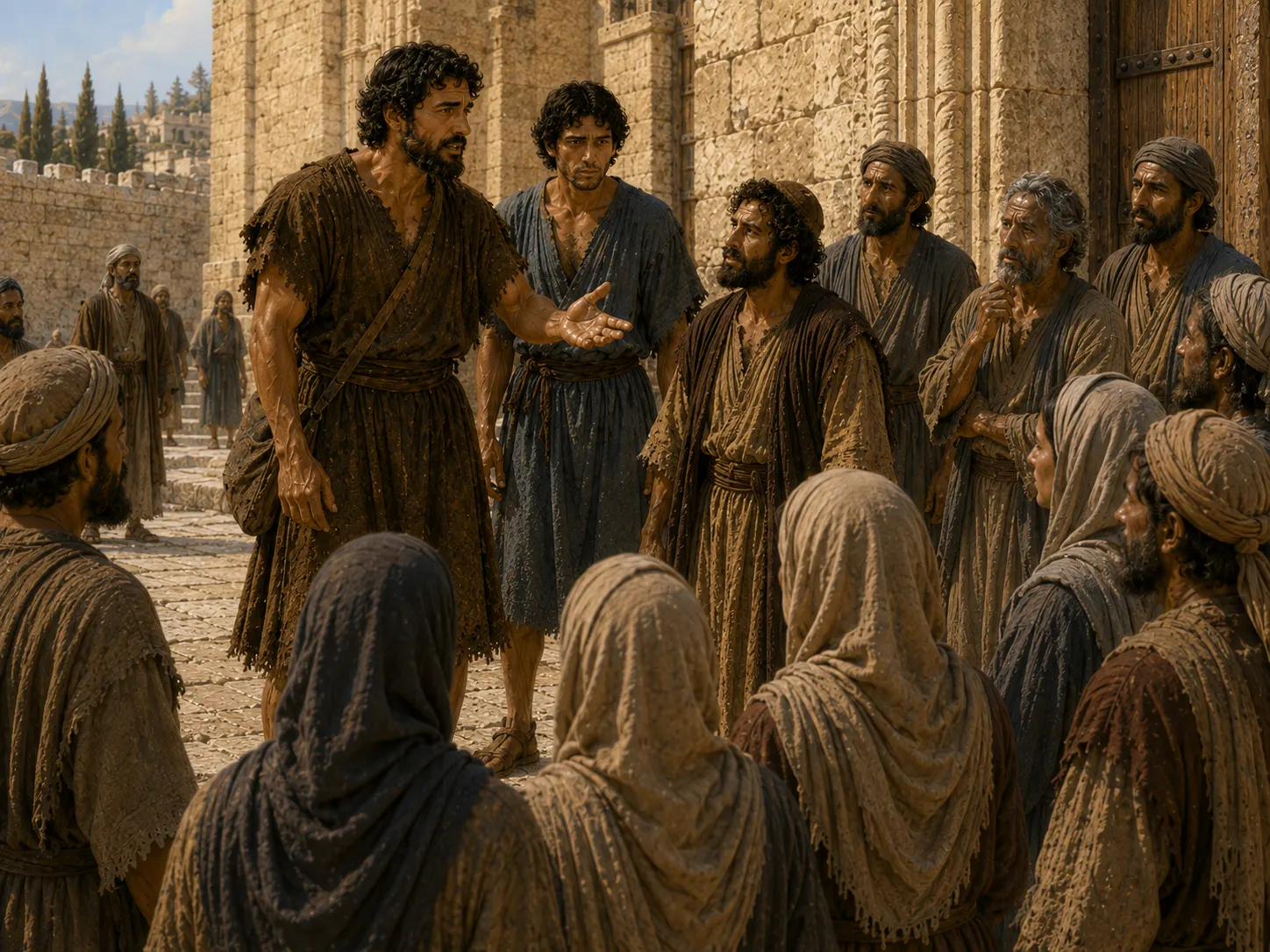
Peter told the crowd that Jesus had made the man strong. The power had not come from Peter or John. The man standing beside them was someone the people knew, and now everyone could see what God had done through Jesus.
Peter did not stop with the miracle. He told the people that they needed to turn back to God. He spoke about forgiveness and about times of refreshing that come from the Lord. He reminded them that God had been speaking through His prophets for generations and that His promises were being fulfilled in Jesus.
Peter explained that Jesus was the promised One God had sent. God's rescue plan had not begun that afternoon at the temple gate. It stretched back through the story of God's people, and now Peter was calling the crowd to listen, turn to God, and receive what God was offering through Jesus.
The day had begun with a man sitting beside a familiar gate, asking for enough money to get through another day. Now he was standing among the people, able to walk and praising God. Everyone could see that something remarkable had happened.
And when the crowd looked at Peter and John in amazement, the apostles did not make themselves the heroes. Peter pointed beyond himself to Jesus—the One who had been rejected and killed, whom God raised from the dead. The healing drew people's attention, but Peter wanted their attention to lead them to the risen Jesus.
What This Story Teaches Us
God's Power Belongs to God
Peter refused to act as though the man had been healed by Peter's own power or goodness. The miracle pointed beyond the apostles to God.
Peter Points People to Jesus
When the crowd gathered, Peter used their attention to tell them about Jesus, who had been killed and whom God raised from the dead.
People Are Never Props
The man at the gate was a person with dignity before and after he could walk. His value did not begin with his healing.
God Calls People to Turn Back to Him
Peter did not present the healing as entertainment. He called the listeners to turn to God and spoke to them about forgiveness and God's promises.
This Story Is Not a Promise That Everyone Will Be Healed Now
Christians may pray for healing, but Acts 3 does not teach that every illness or disability will be healed in this life or that a person who is not healed has too little faith.
How It Fits into God's Bigger Story
Jesus had risen from the dead and sent the Holy Spirit. Now His followers were continuing His mission in Jerusalem, speaking openly about Him and showing that the good news of God's kingdom was still moving forward.
The healing at the temple was a sign that pointed to the risen Jesus. Peter connected what had happened with God's promises through Abraham, Moses, and the prophets. Jesus was not separate from God's long rescue story; He was the One toward whom that story had been moving.
Acts will continue to show the good news spreading farther and farther. Sometimes God works through remarkable signs, and sometimes His people remain faithful through suffering. In every case, Jesus—not the messenger—is the center of the gospel.
Talk About It
- Where were Peter and John going when they met the man at the gate?
- What did the man expect Peter and John to give him, and what happened instead?
- What does this story teach us about God's power and about Jesus?
- Why did Peter refuse to let the crowd think that he and John had healed the man by their own power?
- How can we treat people who are sick, disabled, or need help with dignity and kindness?
- When something good happens through us or our family, how can we be thankful without trying to make ourselves look important?
A Short Prayer
God, thank You that Jesus is alive and that Your power belongs to You. Thank You for seeing every person with love and dignity. Help us care for people without treating anyone like a problem, a lesson, or a spectacle. When good things happen, keep us from making ourselves the center. Help us point to Jesus with humility, courage, and kindness. Please comfort people who are sick, disabled, hurting, or waiting for answers to prayer. In Jesus's name, amen.
Try This Together
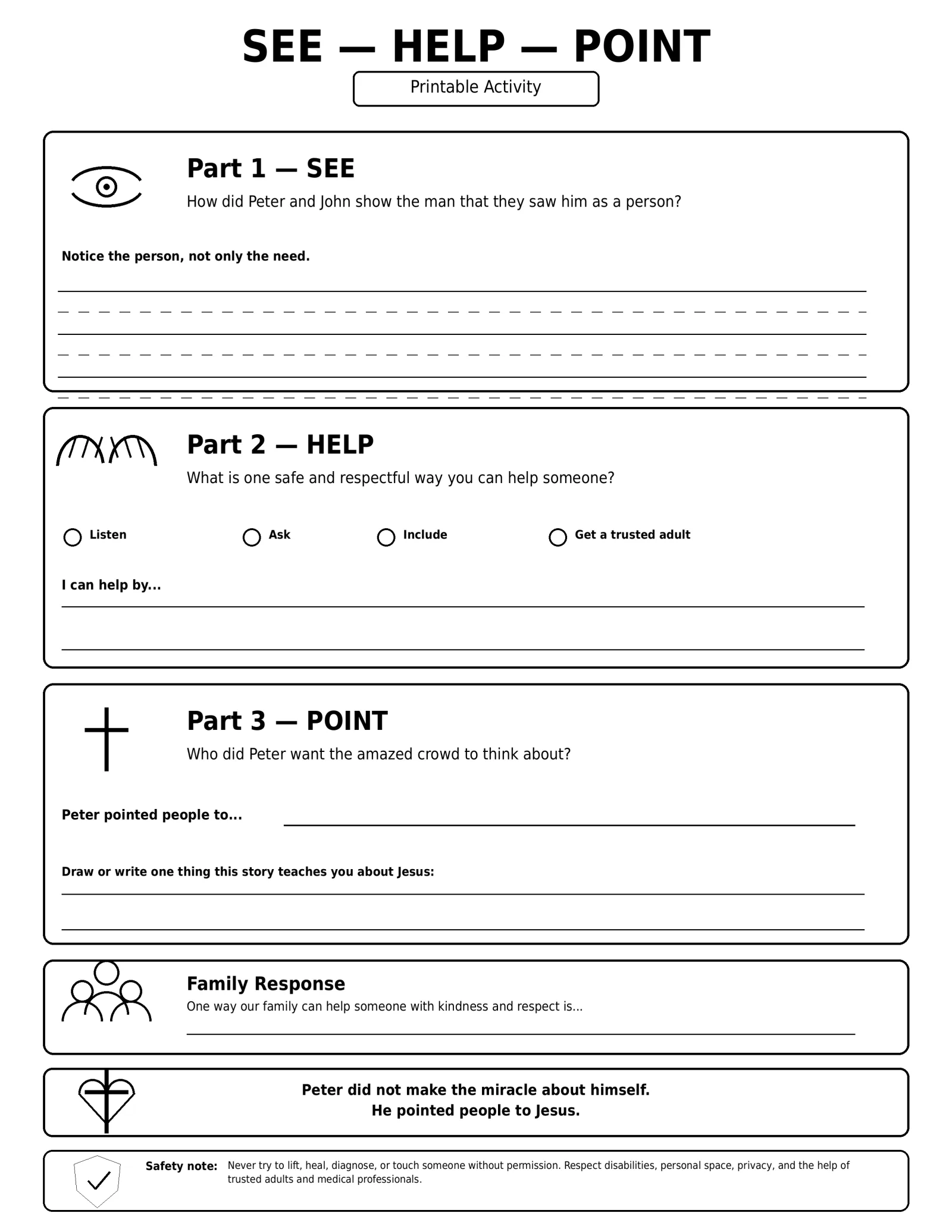
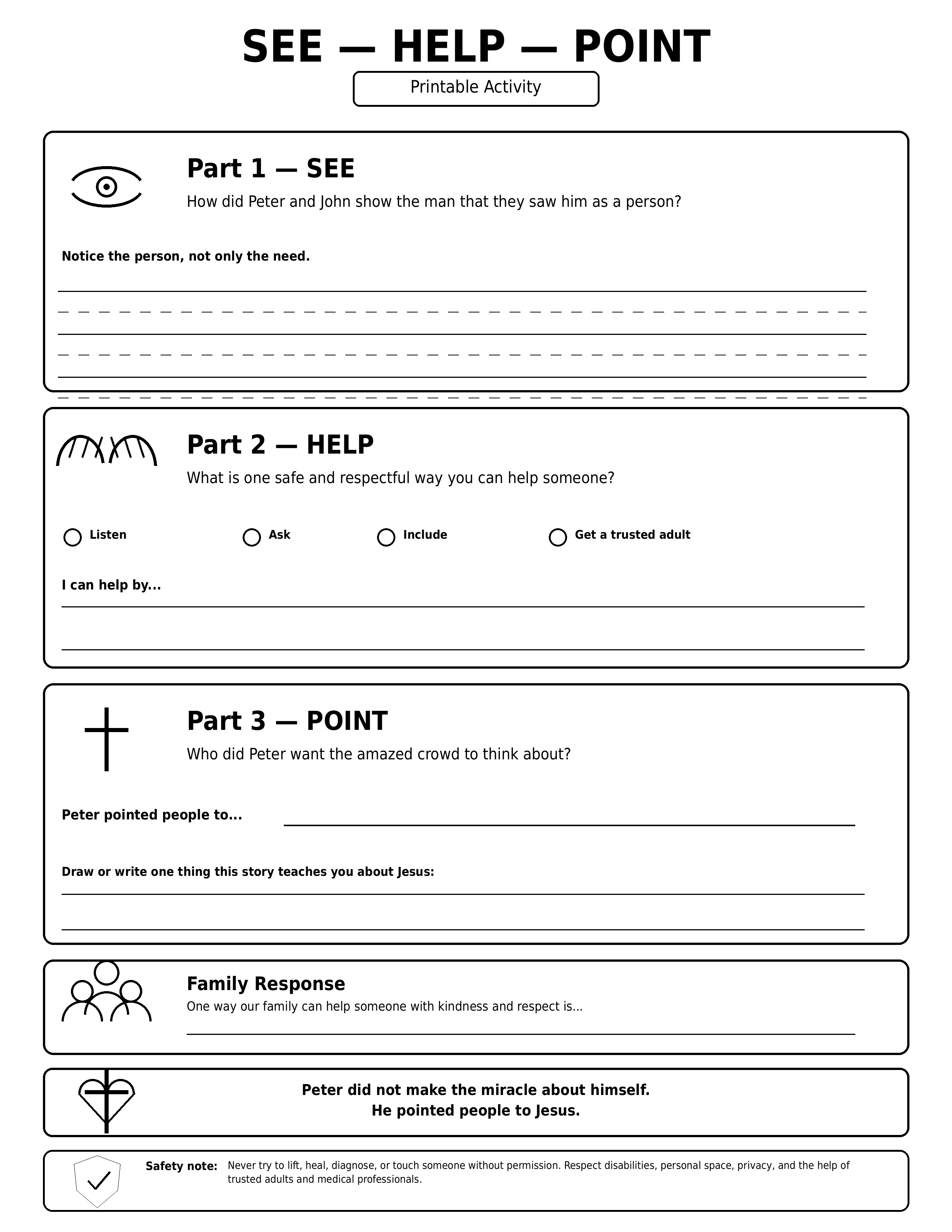
See — Help — Point 10–15 min
You will need: Paper, Crayons or markers
- Divide a sheet of paper into three areas labeled SEE, HELP, and POINT.
- Under SEE, draw or write one way you can notice when someone may need kindness or practical help.
- Under HELP, draw or write one safe, respectful way your family could help without embarrassing or pressuring that person.
- Under POINT, write or draw a reminder that Christians can thank God and point to Jesus instead of trying to get praise for themselves.
- Choose one ordinary act of kindness your family can do this week.
Help children practice noticing people with dignity, thinking about practical care, and remembering that Christians point to Jesus rather than seeking praise.
Safety: Do not ask children to touch, lift, heal, diagnose, or publicly pray over a disabled or sick person. Respect privacy, consent, personal space, and appropriate adult or medical care.
Memory Verse
“It is Jesus' name and the faith that comes through him that has completely healed him, as you can all see.”— Acts 3:16
For Parents and Teachers
Acts 3 contains a dramatic physical healing. Keep the story centered on God's power and Peter's witness to Jesus, while protecting the dignity of children and adults who live with disability, chronic illness, pain, or unanswered prayers.
Historical Context
Peter and John were going to the Jerusalem temple at the regular time of prayer. The healed man was known to people who regularly passed the gate called Beautiful, so his sudden ability to walk drew immediate public attention. Peter's speech at Solomon's Colonnade interprets the sign by directing the crowd to Jesus.
Protect the Dignity of Disabled People
Do not speak as though disability makes a person less complete, less useful, or less loved by God.
Avoid reenactments in which a child pretends to be disabled so others can 'heal' them.
Talk About Healing Without Making False Promises
God is able to heal, and Christians may pray for healing.
Do not tell children that enough faith guarantees physical healing or that unanswered prayer means God has rejected them.
Keep Peter's Witness Centered on Jesus
Peter explicitly refuses the crowd's admiration as though the miracle came from his own power or godliness.
The teaching emphasis should move from the sign to Jesus's death, resurrection, and God's call to turn back to Him.
Teach Safe, Respectful Helping
Children can learn compassion without being made responsible for another person's medical, physical, or spiritual condition.
Helping should respect consent, privacy, personal space, and the guidance of responsible adults.
A Question Your Child May Ask
“If God healed this man, why doesn't He heal everyone who asks?”
The Bible shows that God can heal, and Christians can pray for healing. But the Bible does not promise that every sickness or disability will be removed right now. A person who is not healed is not less loved by God and does not have less value.
Common Misunderstandings
- Peter is not a magical healer or miracle-working celebrity.
- The man's worth does not begin when he is able to walk.
- Acts 3 does not promise that every faithful Christian will receive physical healing in this life.
- A lack of physical healing must never be blamed on a child's or family's lack of faith.
- Prayer for healing should never replace appropriate medical care or responsible adult help.
- The miracle serves Peter's witness to the crucified and risen Jesus rather than functioning as entertainment.
Safeguarding
Never pressure a child to attempt healing, touch or lift another person, disclose medical information, stop treatment, or interpret unanswered prayer as spiritual failure. Disabled and sick children should be fully included and treated with the same dignity as every other child.