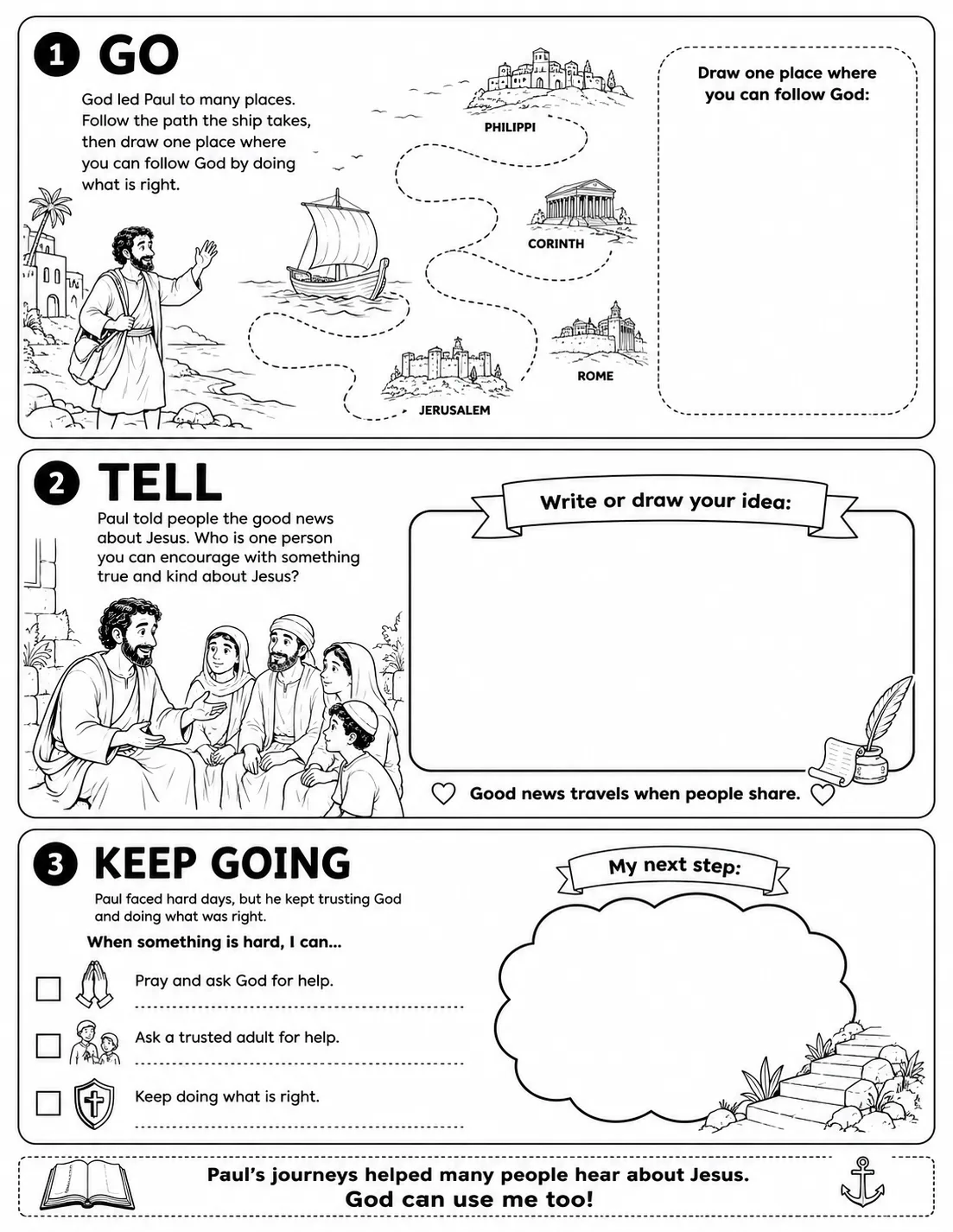
Paul’s Missionary Journeys
Carrying the Good News from City to City
Original age-appropriate retelling based on selected key events in Acts 13–28.

Before You Read
Have you ever started a trip without knowing everything that would happen along the way? Paul traveled farther and farther so that people in new places could hear the good news about Jesus.
Acts 13–28 covers many years, cities, helpers, and difficult moments. This story follows the main thread: God guided Paul, other believers served alongside him, and the message about Jesus kept moving outward all the way to Rome.
The Bible Story
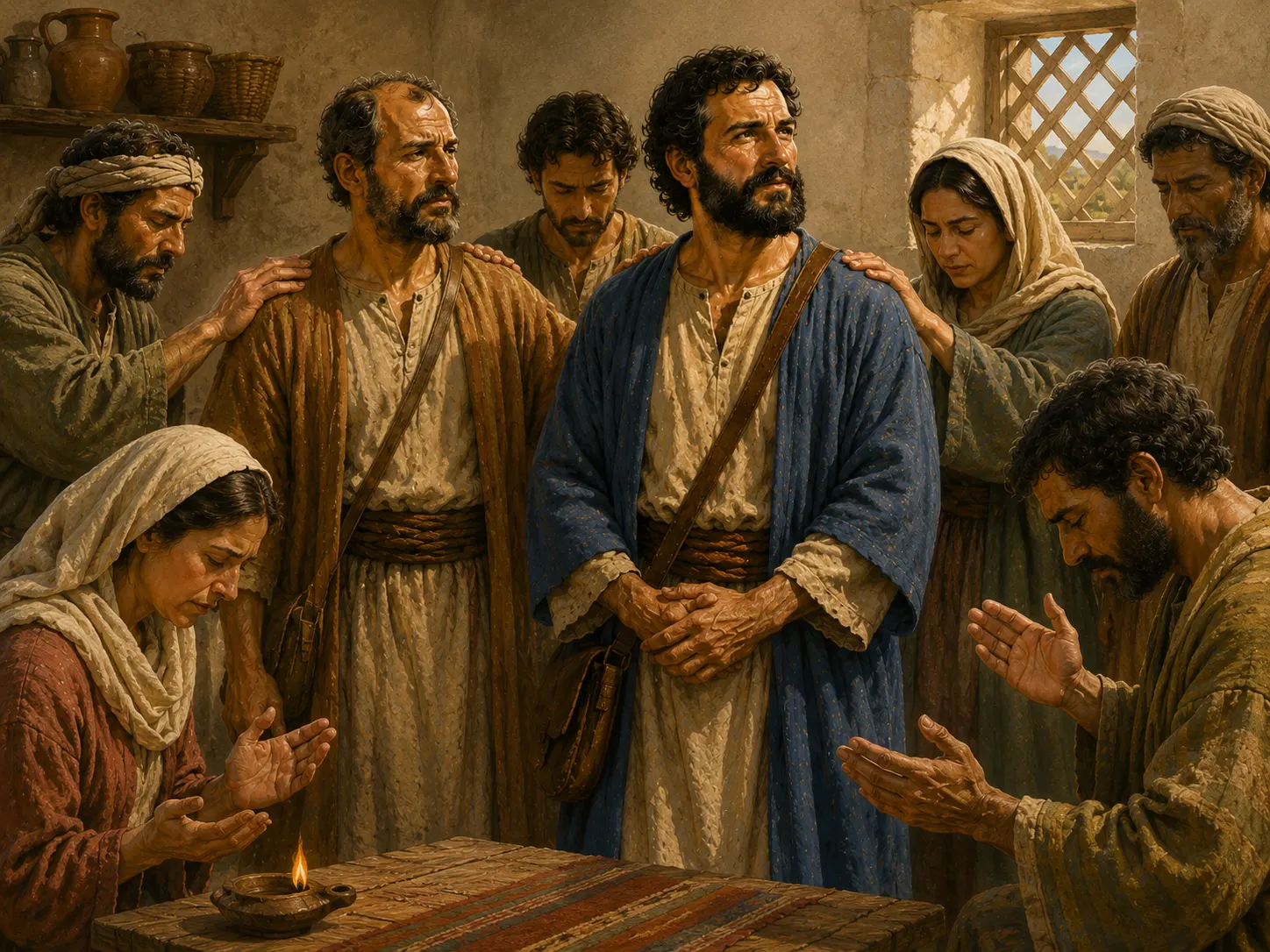
In Antioch, a church of believers worshiped God, prayed, and listened for His leading. Among their teachers were Barnabas and Saul, who was also called Paul. The Holy Spirit directed the church to set Barnabas and Paul apart for special work. After fasting and praying, the believers placed their hands on them and sent them out. Paul and Barnabas were beginning a journey that would carry the good news about Jesus into new places.
They traveled by land and sea, entering towns where many people had never heard the message they were bringing. Paul taught from the Scriptures and explained that God's promises pointed to Jesus. Some people listened with joy and believed. Others argued with Paul and Barnabas or tried to stop them. The missionaries could not control how people responded, but they kept speaking truthfully about Jesus and moved on when it was time to go.
In places such as Pisidian Antioch, Iconium, Lystra, and Derbe, new believers began to gather. Paul and Barnabas encouraged them to keep trusting the Lord. Then they returned through several of the same towns, strengthening the young churches and helping them grow. At last they came back to Antioch, where they told the church what God had done and how the good news had reached many people who were not Jews.
Later, Paul set out again. This time Silas traveled with him. Paul wanted to strengthen believers, but God also redirected their plans. They were prevented from going into some places they had expected to visit. Then, during the night in Troas, Paul saw a vision of a man from Macedonia asking for help. Paul and his companions understood that God was calling them to take the good news across the sea into Macedonia.
In Philippi, people heard about Jesus and some believed. Paul and Silas also faced serious trouble there and spent a night in prison. Even in that frightening place they prayed and trusted God. A jailer and his household heard the good news about Jesus, and the believers in Philippi were encouraged. This was one part of a much larger journey, so Paul and Silas continued on to other cities.
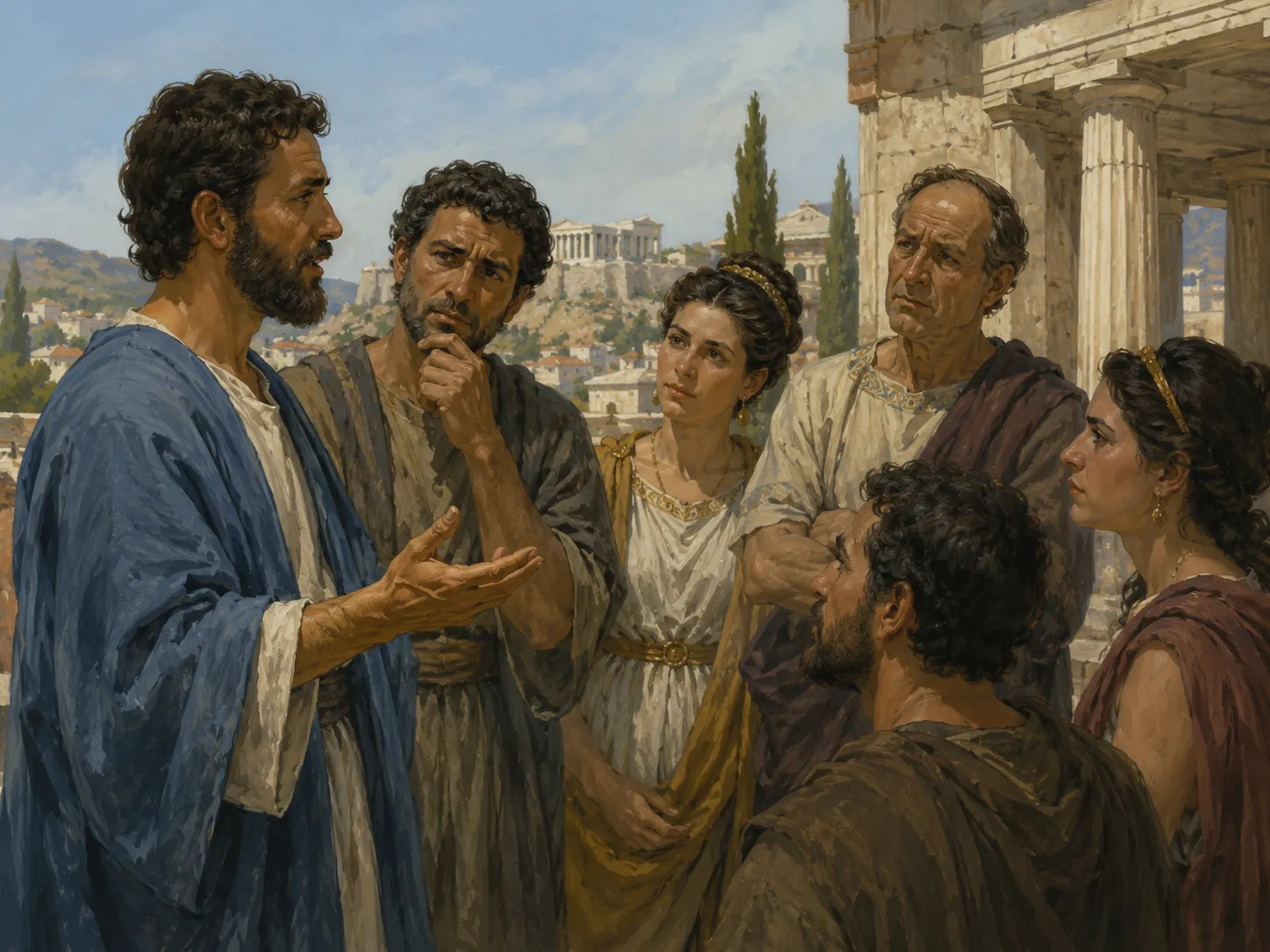
Paul eventually came to Athens, a city filled with idols. He spoke with people in the marketplace and later addressed a group who liked to discuss new ideas. Paul told them about the God who made the world and gives life to everyone. He explained that God was calling people to turn to Him, and he told them about Jesus being raised from the dead. Some laughed, some wanted to hear more, and some believed.
Paul kept traveling and teaching. He spent long stretches of time in places such as Corinth and Ephesus, helping believers understand the good news and live as followers of Jesus. Other Christians worked alongside him. Paul was important, but he was never the whole mission by himself. God was using many faithful people, many churches, many conversations, and many ordinary acts of service as the message about Jesus spread.
After years of travel, Paul began making his way toward Jerusalem. He knew the road ahead might be difficult. Friends cared about him and warned him about the trouble he could face. Paul did not think following Jesus meant that every journey would be safe or easy. He wanted to remain faithful to the work Jesus had given him: to testify to the good news of God's grace.
In Jerusalem, a disturbance broke out and Paul was taken into Roman custody. Later he was brought before rulers and officials. Those situations were serious, but they also gave Paul opportunities to speak. He told what Jesus had done in his life and explained the hope he had because of Jesus. Eventually Paul appealed to Caesar, as a Roman citizen could do. That meant he would be sent to Rome.
The voyage to Rome became dangerous. A fierce storm battered the ship for many days, and the people on board began to lose hope. Paul stood among them and encouraged them. God had assured him that everyone traveling on the ship would survive, even though the ship itself would be lost. Paul urged the people to take courage and to eat so they would have strength for what was ahead.

The ship finally ran aground near the island of Malta and broke apart, but everyone reached land safely. The people of the island showed the travelers unusual kindness. After spending time there, Paul continued toward Rome. Storms, delays, opposition, and imprisonment had changed many of his plans, but they had not stopped him from belonging to Jesus or from speaking about Him.
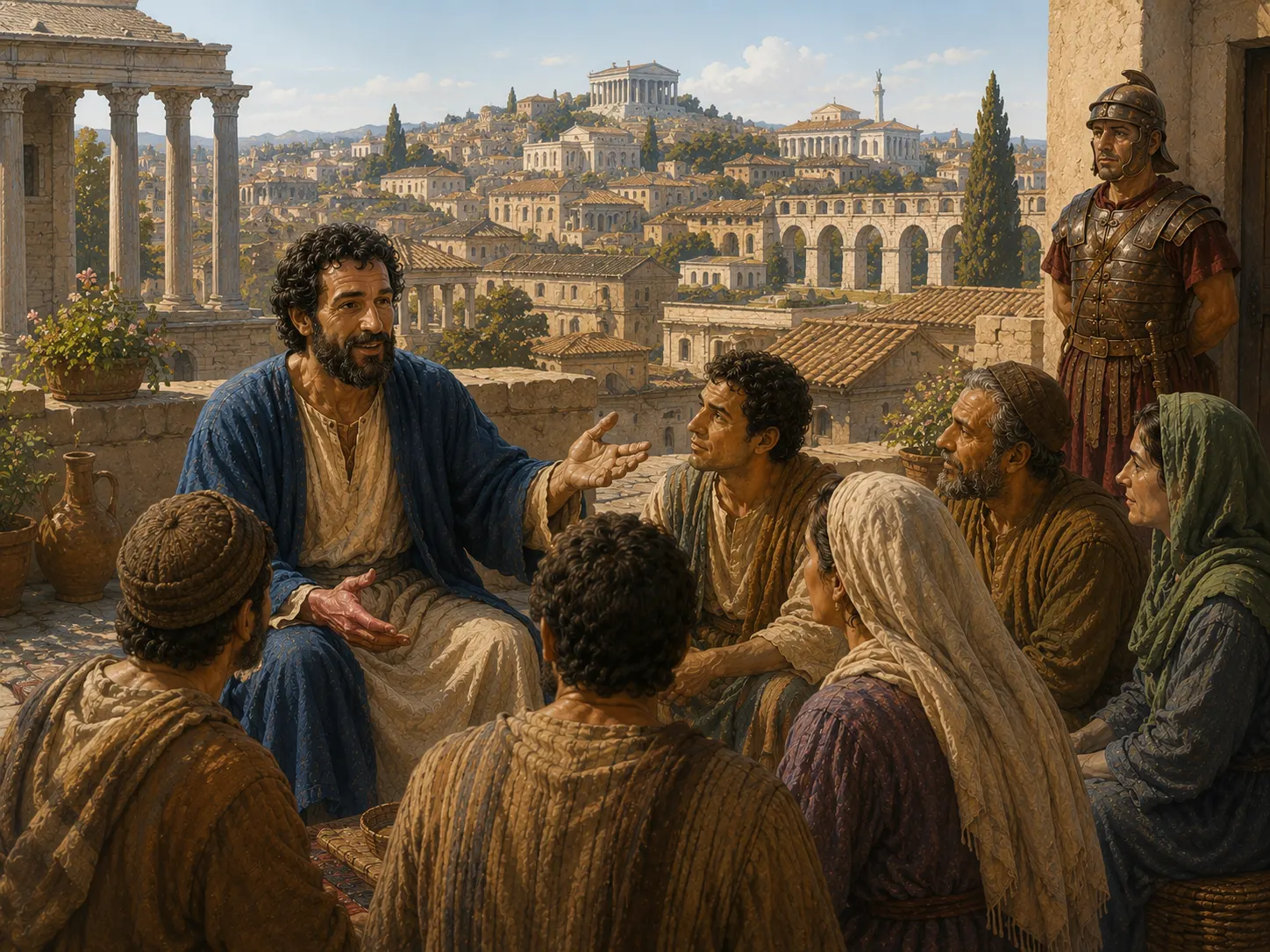
At last Paul arrived in Rome. He was still under guard, but he was allowed to live in a rented house. People came to visit him there, and Paul welcomed them. He taught about the kingdom of God and about the Lord Jesus Christ. Acts ends with Paul still doing the work Jesus had given him. From Antioch, across seas and roads, through welcoming homes, difficult cities, courtrooms, and a storm, the good news about Jesus had traveled all the way to Rome.
What This Story Teaches Us
Jesus Sends His People with Good News
Paul's journeys were not mainly about adventure or seeing new places. The church sent him out so that people could hear the good news about Jesus.
God Can Guide Changed Plans
Paul did not always go where he first expected. In Acts, God redirected his path toward Macedonia. Following God can include waiting, changing plans, and listening for wise direction.
People Respond in Different Ways
Some people believed Paul's message, some wanted to hear more, and some rejected it. Paul was responsible to speak faithfully about Jesus; he could not force anyone to believe.
Hardship Does Not Mean God Has Abandoned Us
Paul faced opposition, arrest, delay, and a dangerous storm. The story does not pretend these things were easy, but they did not stop God's purposes or Paul's witness.
The Mission Is Bigger Than One Person
Barnabas, Silas, local churches, and many other believers served alongside Paul. God spread the good news through a whole community of faithful people, not through one hero acting alone.
How It Fits into God's Bigger Story
At the beginning of Acts, Jesus told His followers that they would be His witnesses from Jerusalem outward to distant places. Paul's journeys show that promise unfolding as the good news crosses regions, cultures, roads, and seas.
Paul did not invent a new message for each city. Again and again, he pointed people to the God who made them, to God's promises, and to Jesus Christ, who died and was raised.
Acts ends in Rome with Paul still teaching about God's kingdom and about Jesus. The book closes without saying that the mission is finished. The good news is still moving outward through Jesus' people.
Talk About It
- Why did the church in Antioch send Paul and Barnabas out?
- What different responses did people have when Paul told them about Jesus?
- What does this story teach us about the way God guided Paul when his plans changed?
- Why did Paul keep speaking about Jesus even when the journey became difficult?
- What can you do when you want to be faithful to Jesus but something feels difficult or uncertain?
- How can our family pray for, encourage, and support people who faithfully tell others about Jesus?
A Short Prayer
God, thank You for guiding Paul and the other believers as they carried the good news about Jesus to many places. Help us remember that following You is not always easy, but You are faithful. Give us wisdom when plans change, courage to tell the truth with love, and hearts that encourage other believers. Help our family pray for people who share the good news and faithfully follow Jesus wherever You lead. Amen.
Try This Together
Go — Tell — Keep Going 10–15 min
You will need: Paper, Crayons or markers
- Divide a sheet of paper into three large areas labeled GO, TELL, and KEEP GOING.
- Under GO, draw a simple road or path and name one place where God has already put your family to love and serve people.
- Under TELL, write or draw one simple truth about Jesus that your family is thankful for.
- Under KEEP GOING, write or draw healthy ways to respond when something is difficult: pray, ask a trusted adult for help, encourage one another, and make a wise new plan.
- Finish by praying for missionaries, church leaders, and ordinary Christians who tell others about Jesus.
Help children connect Paul's journeys with God's guidance, the good news about Jesus, and faithful perseverance.
Safety: Do not reenact dangerous travel, imprisonment, storms, shipwrecks, arrests, or other hazardous events from Paul's journeys. Children should participate in travel and outreach only with responsible adult supervision and appropriate safety planning.
Memory Verse
“He proclaimed the kingdom of God and taught about the Lord Jesus Christ—with all boldness and without hindrance!”— Acts 28:31
For Parents and Teachers
Acts 13–28 covers many years and includes opposition, physical violence, imprisonment, legal hearings, dangerous travel, and a shipwreck. For ages 6–9, select the narrative thread carefully so the story remains about God's guidance and the spread of the gospel rather than becoming a catalog of dangers or travel stops.
Historical Context
Paul's missionary work took place across the eastern Roman Empire. Travel involved Roman roads, sea routes, local synagogues, public discussion, homes, workshops, and growing house churches. Antioch served as an important sending church, while Rome forms the geographical ending of Acts.
Keep the Story Focused
Do not try to include every city, speech, miracle, conflict, companion, and legal detail from Acts 13–28. The child-level through-line is that God guided Paul and the church as the good news about Jesus moved outward.
Do Not Make Paul the Hero of the Gospel
Paul showed courage and perseverance, but the story should not imply that his personality or toughness was the source of the mission's power. Keep the focus on God, the risen Jesus, and the work God was doing through His people.
Handle Danger Without Spectacle
The storm, arrest, imprisonment, and opposition can be named honestly without graphic violence, panic imagery, or action-movie framing. Children do not need frightening visual detail to understand that the journey was difficult.
Connect Mission with Community
Notice the sending church, traveling companions, local believers, hospitality, teaching, encouragement, and prayer. Christian mission in Acts is communal rather than individualistic.
A Question Your Child May Ask
“If God was guiding Paul, why did so many difficult things happen?”
God's guidance does not mean every road will be easy or free from trouble. In Acts, Paul still faced opposition, delay, and danger. God remained faithful, gave him opportunities to speak about Jesus, and helped His church keep growing.
Common Misunderstandings
- Acts 13–28 covers several journeys and many years; it should not be presented as one short uninterrupted trip.
- Paul was not a lone superhero. Barnabas, Silas, Timothy, local believers, churches, and many other Christians served alongside him.
- God's guidance does not mean believers will always know every step in advance or avoid hardship.
- Not everyone who heard Paul believed; faithfulness is not measured by forcing a response.
- The preservation of the people during the Acts 27 shipwreck was a specific promise in that biblical event, not a guarantee that faithful people will never be injured in dangerous situations.
- The Philippi prison episode should be referenced briefly here rather than retold in full because it already has its own story in the series.
Safeguarding
Do not ask children to reenact arrests, imprisonment, violent opposition, dangerous sea travel, shipwrecks, or hazardous missionary journeys. When discussing courage, clearly distinguish faithful witness from taking unsafe risks. Children should follow responsible adult supervision and normal safety rules.