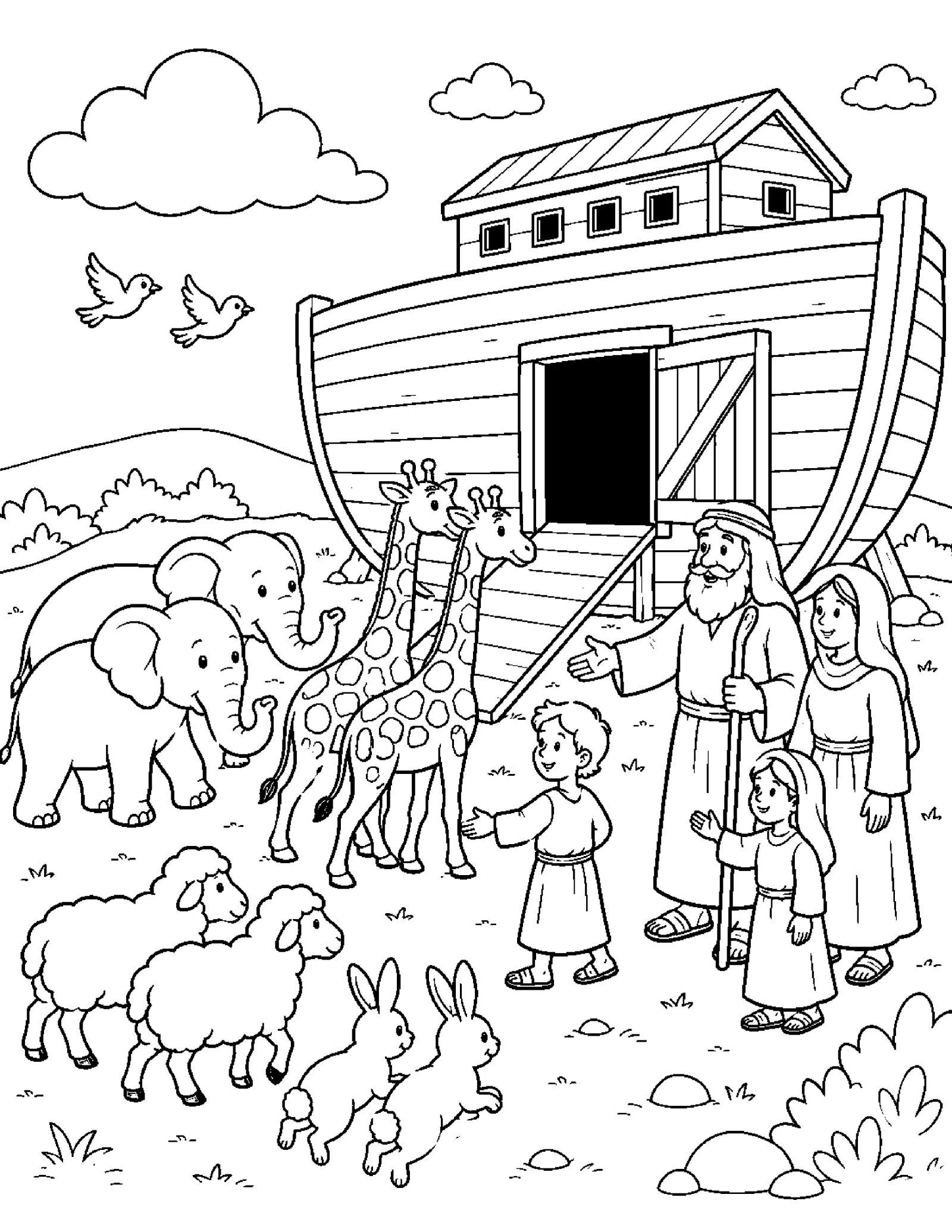
Noah and the Ark
Trusting God When No One Else Did
Original retelling based on Genesis 6:5–9:17.

Before You Read
Have you ever had to keep working even when you could not yet see the result?
Noah lived in a world where people had become cruel and violent. God gave him a difficult command and a promise of rescue.
Noah showed his trust by obeying God step by step.
The Bible Story
Many generations had passed since Adam and Eve left the garden.
The number of people on the earth had grown, but sin had grown too.
People hurt one another. The strong used their power against the weak. Violence, dishonesty, selfishness, and cruelty filled the land.
God saw not only their public actions but also the thoughts and plans hidden inside their hearts.
Human evil was not a small problem that could be ignored. The world God had made good had become deeply corrupted.
God was grieved by what people had chosen to become.
He decided to judge the violent world through a great flood.
But one man received God’s favor.
His name was Noah.
Noah was a righteous man who walked with God.
That does not mean Noah had never sinned or that he had earned God’s rescue by being perfect.
It means that Noah trusted God and lived differently from the violent people around him.
Noah had a wife and three sons named Shem, Ham, and Japheth. His sons also had wives.
God told Noah that the earth was filled with violence and that judgment was coming.
Then God gave Noah an unusual command.
He was to build an enormous ark from wood.
The ark would need rooms inside, a protective covering, an opening near the top, and a door in its side.
God even gave Noah the ark’s measurements.
This would not be a small boat for a few animals. It would be a huge wooden vessel with space for Noah’s family, many animals, and the food they would need.
God promised to establish His covenant with Noah and preserve his family through the coming flood.
Noah listened.
He began the long work of building exactly what God had commanded.
His family could cut and shape timber, lift beams, fasten boards, seal the structure, prepare rooms, and gather food.
Day after day, Noah kept working because he trusted the One who had warned him.
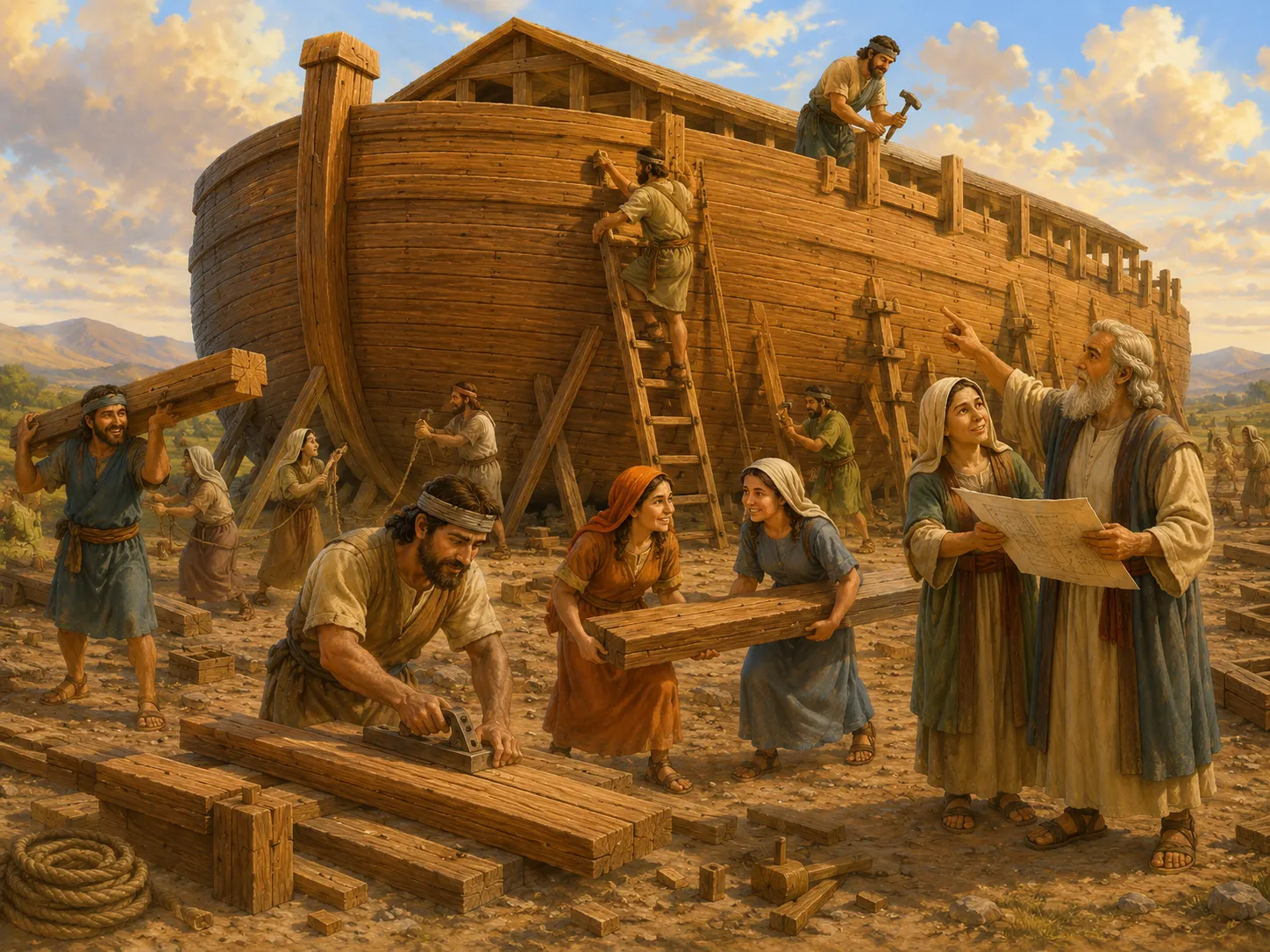
Noah and his family kept working until the ark was ready.
It also does not describe a crowd standing nearby and mocking Noah.
What it clearly tells us is that Noah did everything God commanded him to do.
When the ark was ready, God told Noah to enter with his whole household.
God would preserve Noah, his wife, his sons, and their wives.
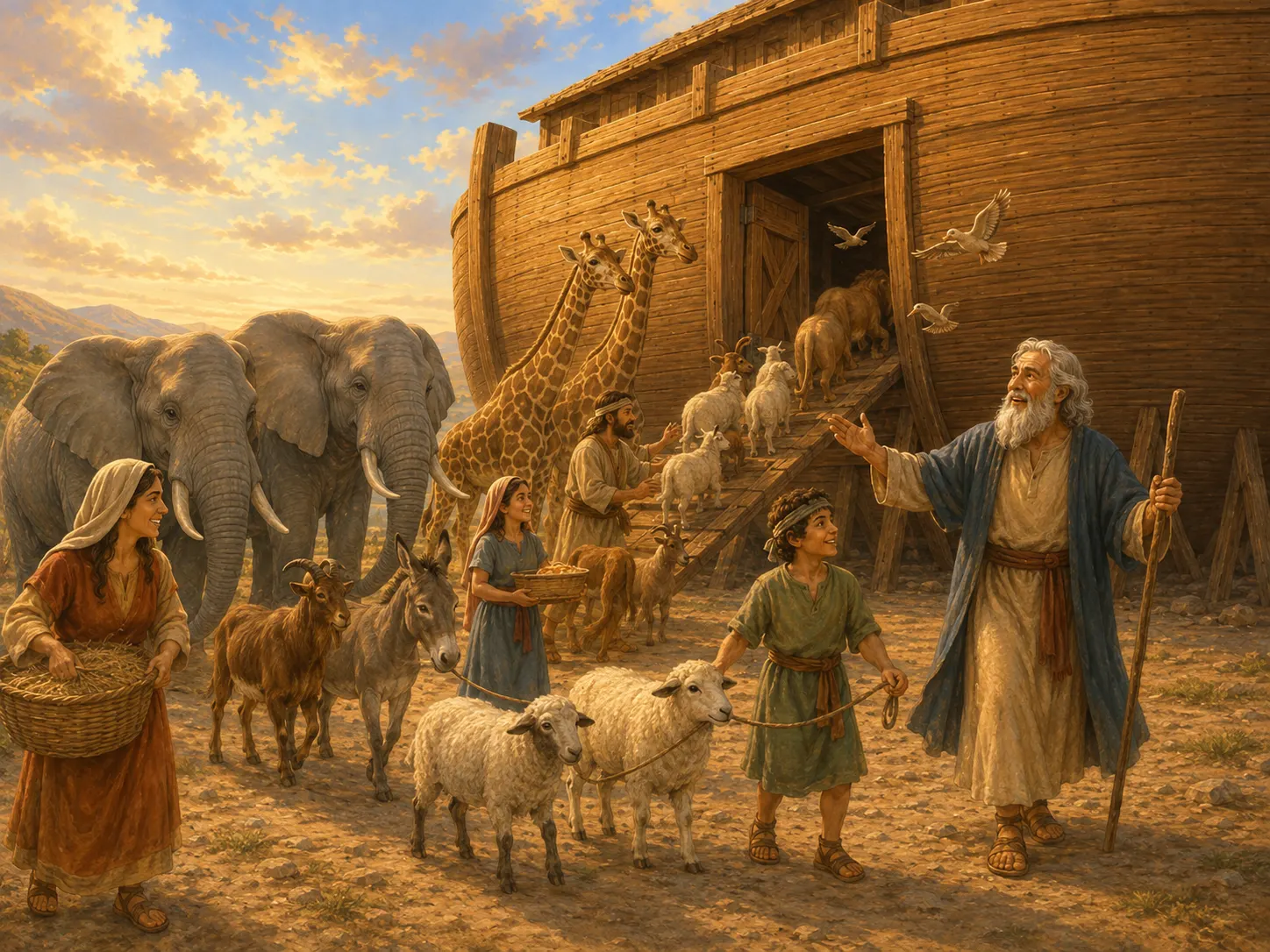
The animals came according to their kinds.
There were land animals, small creatures, and birds.
God also gave Noah instructions about different kinds of animals, and Noah obeyed.
Noah did not need to invent the rescue plan.
God had told him what to build, who would enter, and what food to store.
The family brought supplies into the ark.
They prepared places for the animals and stored what people and animals would need during the long wait.
Then Noah, his family, and the animals entered the ark.
When everyone was inside, the Lord shut them in.
After seven days, the rain began.
Water poured from the sky, and the sources of the great deep broke open.
The rain continued for forty days and forty nights.
The water rose around the ark.
Soon the huge vessel lifted from the ground and floated.
The waters continued rising until the land disappeared beneath them.
Everything outside the ark was swept away in the judgment God had warned about.
Inside the ark, Noah’s family was safe, but life was not easy or lazy.
They had animals to feed, spaces to clean, supplies to manage, and one another to care for.
They heard the rain strike the roof and felt the ark move on the water.
They could not step outside or see when the waiting would end.
They had to keep trusting God in a crowded place filled with daily work.
Then God remembered Noah and all the animals with him, and He began to bring the waters down.
This does not mean God had forgotten them.
It means that God turned toward them to act faithfully according to His promise.
God sent a wind over the earth, and the waters began to go down.
The rain stopped, and the sources of the deep were closed.
The ark came to rest on the mountains of Ararat.
Still, Noah waited.
As the water continued falling, the tops of mountains became visible.
Noah opened the ark’s covering and sent out a raven.
The raven flew back and forth while the waters dried from the earth.
Then Noah sent out a dove to see whether the water had gone down enough.
The dove found no dry resting place and returned to the ark.
Noah waited seven more days and sent the dove out again.
This time the dove returned in the evening.
In its beak was a freshly picked olive leaf.
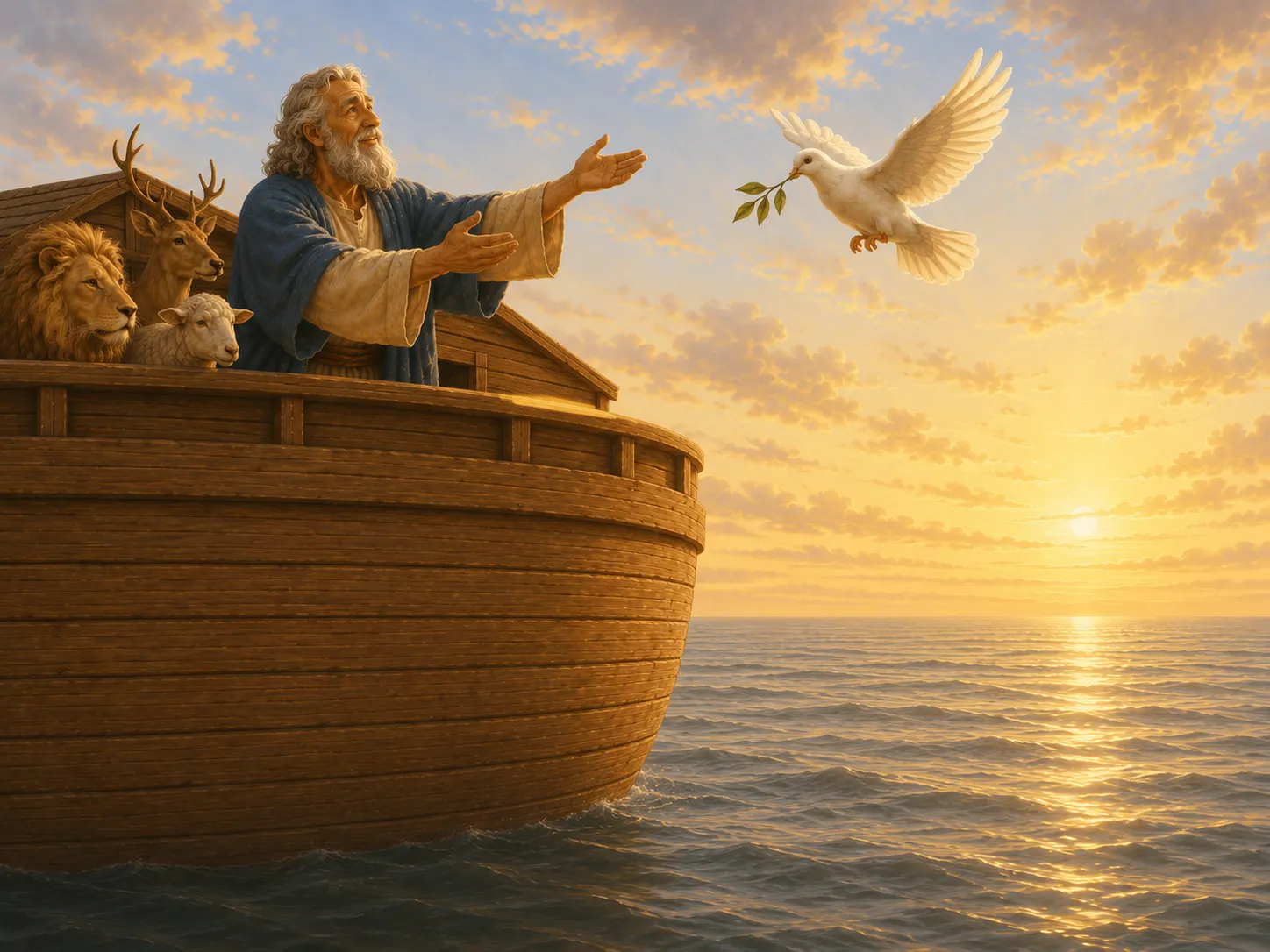
Noah now knew that the waters had gone down and plants were growing again.
He waited another seven days and sent the dove out once more.
This time it did not return.
Noah removed the ark’s covering and saw that the surface of the ground was drying.
Yet he did not lead everyone out immediately.
Noah had entered when God told him to enter, and he waited until God told him to leave.
At last God commanded Noah to come out with his wife, his sons, their wives, and every living creature.
The door opened.
The family stepped onto dry ground.
Animals left the ark and spread across the recovering land.
After so much waiting, the fresh air and open ground must have felt like a gift.
Noah’s first recorded action was an act of worship.
He built an altar and presented offerings to God.
The focus was not on violence or spectacle but on gratitude.
Noah recognized that God had preserved his family and the animals through the flood.
God then made a covenant with Noah, his descendants, and every living creature.
He promised that never again would a flood destroy all life and the whole earth in the same way.
This promise did not mean that local floods, storms, or hardships would never happen.
It was a specific covenant promise that God would not repeat this world-destroying flood judgment.
God also spoke of the continuing rhythms of life: seedtime and harvest, cold and heat, summer and winter, day and night.
Then God placed the rainbow in the clouds as the sign of His covenant.
The rainbow was not a magical object and did not remind a forgetful God of something He might lose track of.
It was God’s public sign that He had made a promise and would remain faithful to it.

What This Story Teaches Us
1. God Takes Evil Seriously
The flood shows that violence, cruelty, and corruption are not small matters before God.
God is patient, but He is also just and will not ignore evil forever.
2. Grace Came Before Noah’s Rescue
Noah found favor with God before the story describes all his work.
Rescue began with God’s grace, not with Noah proving that he was perfect.
3. Faith Obeys God
Noah trusted God’s warning before he saw the flood.
His trust became visible through steady obedience, careful work, and patience.
4. God Remembers His People
When Scripture says that God remembered Noah, it means God acted faithfully for him.
Noah’s family was never forgotten during the long months of waiting.
5. God Keeps His Covenant
The rainbow was the sign of God’s promise to Noah, future generations, and living creatures.
God does not make empty promises.
How It Fits into God's Bigger Story
The flood removed a violent generation, but it did not remove sin from the human heart.
After Noah’s family left the ark, people still needed a deeper rescue.
The ark shows an important pattern in the Bible: judgment is coming, God gives a warning, and God provides the way of rescue.
Noah and his family had to trust the rescue God provided rather than inventing a different plan.
Later, Jesus came not merely to carry one family safely through water but to rescue people from the guilt and power of sin.
The ark carried Noah’s family safely through the flood. Jesus brings everyone who trusts Him safely through judgment and into life with God.
Talk About It
- What was the world like during Noah’s time?
- What did God tell Noah to build?
- How did Noah show that he trusted God?
- What work did Noah and his family need to do while they waited inside the ark?
- What did the olive leaf tell Noah?
- What promise did God connect with the rainbow?
A Short Prayer
God, You are just, merciful, and faithful. Thank You for warning people about sin and for providing a way of rescue. Help us trust You even when obedience requires patience and hard work. Thank You for remembering Your people and keeping every promise You make. Teach us to care for others, reject violence, and respond to Your grace with thankful hearts. In Jesus’ name, amen.
Try This Together
Build, Wait, and Trust 15–25 min
You will need: Wooden blocks, craft sticks, or cardboard, Small animal figures, Blue fabric or paper, A timer, A small green leaf or paper leaf, The printable Build the Ark: Follow the Instructions
- Give the child a short step-by-step plan for building a simple model ark.
- Ask the child to follow the instructions without skipping steps.
- Place the animal figures near or inside the model.
- Arrange blue paper or fabric around the ark as water.
- Set a short timer for a waiting period.
- When the timer ends, slowly remove the blue material and add a green leaf.
- Discuss why Noah needed to work, wait, and trust at the same time.
Help children experience the three repeated actions in Noah’s story: following instructions, waiting patiently, and trusting a promise.
Memory Verse
“Noah did everything just as God commanded him.”— Genesis 6:22
For Parents and Teachers
Do Not Turn the Flood into a Cheerful Animal Tale
The animals are important, but the flood is first a story of judgment, grace, rescue, and covenant.
Avoid presenting the event as a light adventure disconnected from the violent world God judged.
Do Not Use the Story to Frighten Children
Children should understand that God opposes violence and provides rescue.
Do not threaten a child with floods, storms, or abandonment when correcting behavior.
Noah Was Faithful, Not Sinless
Noah is described as righteous and as walking with God, but the Bible does not present him as morally perfect.
His rescue began with God’s favor and was received through faith expressed in obedience.
What Does “God Remembered Noah” Mean?
The phrase does not mean that God forgot where the ark was.
It means that God turned toward Noah and acted according to His covenant commitment.
Do Not Add Popular Details as Biblical Facts
Genesis does not explicitly say that rain had never fallen before, that the ark took exactly 120 years to build, or that a crowd mocked Noah while he worked.
Such details should not be stated as certain facts in the article or images.
The Rainbow Promise Is Specific
The covenant does not promise that no local flood or natural disaster will ever occur.
It promises that God will not again destroy all life and the entire earth through a flood like this one.
For Children Affected by Flooding or Disaster
Avoid visual scenes of drowning, panic, collapsing homes, or terrified animals.
Emphasize safety, care, recovery, faithful adults, and the opportunity to speak with a trusted person about frightening experiences.
A child showing persistent distress after a disaster may benefit from support from a qualified mental-health professional.