Moses Is Born
God Protects a Baby in Egypt

Before You Read
Sometimes people with power make unfair or harmful choices.
This story includes a dangerous command from Pharaoh, but it also shows people making brave, wise, and compassionate choices to protect life.
As you read, notice how many different people help keep one small child safe.
The Bible Story
Many years had passed since Joseph helped his family settle in Egypt.
Joseph and the people of his generation eventually died, but the family of Israel continued to grow.
What had once been one family became a large people.
A new Pharaoh came to power in Egypt.
He did not remember Joseph or the good Joseph had done for Egypt.
Instead, Pharaoh looked at the growing Israelite population with fear.
He worried that they might become too powerful.
Fear led Pharaoh to make cruel and unjust choices.
The Egyptians forced the Israelites to work very hard.
They made bricks, worked in the fields, and helped build projects for Pharaoh.
The work was exhausting, but the Israelites continued to grow in number.
Pharaoh became even more afraid.
Then he gave a terrible order to two Hebrew midwives named Shiphrah and Puah.
He wanted them to help destroy newborn Hebrew boys.
But Shiphrah and Puah knew that Pharaoh’s command was wrong.
They feared God more than they feared the king.
They refused to help destroy innocent lives.
Their courage protected children during a dangerous time.
Pharaoh then gave an even harsher command.
He ordered that newborn Hebrew boys must not be allowed to live.
The order brought fear to Israelite families across Egypt.
During this dangerous time, a man and woman from the tribe of Levi had a baby boy.
The baby’s mother saw that he was healthy and precious.
She hid him for three months.
Keeping a growing baby hidden was not easy.
His family did everything they could to protect him.
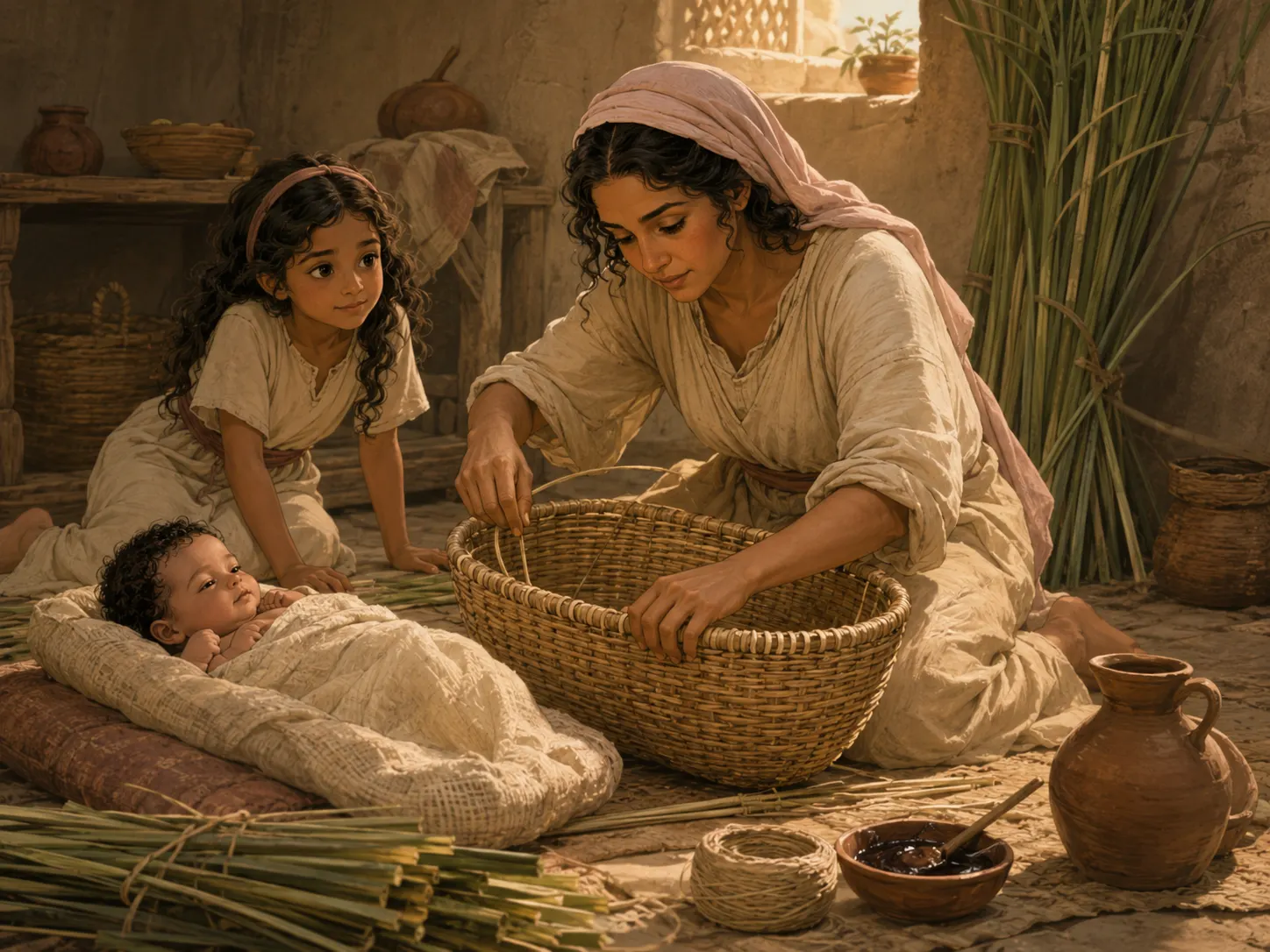
Eventually his mother knew she could no longer hide him safely at home.
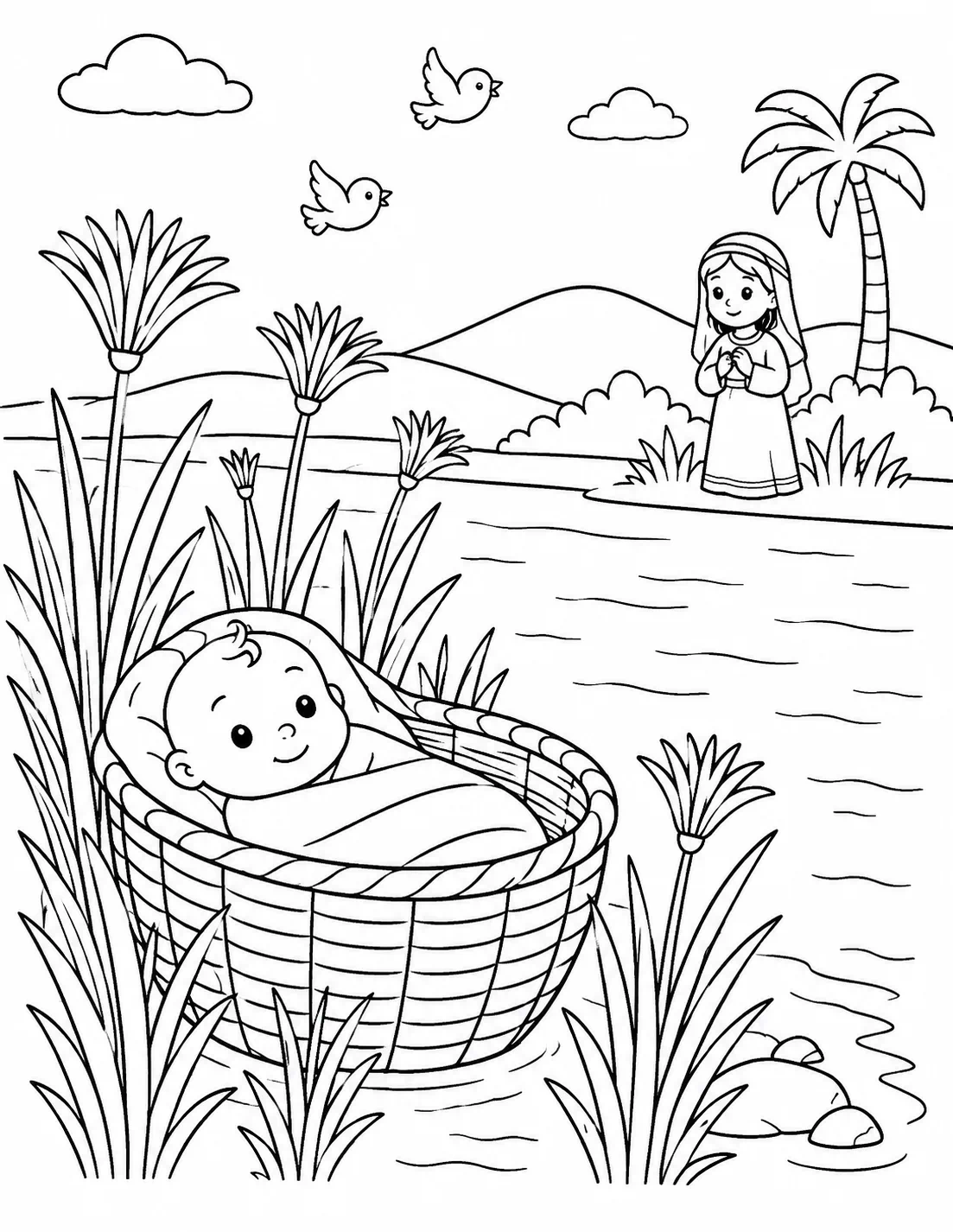
She made a small basket from papyrus reeds.
She carefully coated it so water would not easily leak inside.
Then she placed her baby safely in the basket.
She did not simply send him drifting down the river.
She placed the basket among the reeds along the bank of the Nile.
The baby’s older sister stayed nearby.
She watched from a distance to see what would happen.
The family could not control everything that would happen next.
But they had taken careful steps to protect the child as best they could.

Soon Pharaoh’s daughter came down to the river with her attendants.
She noticed something among the reeds.
She sent one of her attendants to bring the basket to her.
When Pharaoh’s daughter opened it, she saw the baby.
He was crying.
She realized that he was one of the Hebrew children.
Pharaoh’s command had treated Hebrew babies as a threat.
But Pharaoh’s daughter saw a child who needed care.
She felt compassion for him.
The baby’s sister had been watching carefully.
She stepped forward and spoke to Pharaoh’s daughter.
She offered to find a Hebrew woman who could nurse and care for the baby.
Pharaoh’s daughter agreed.
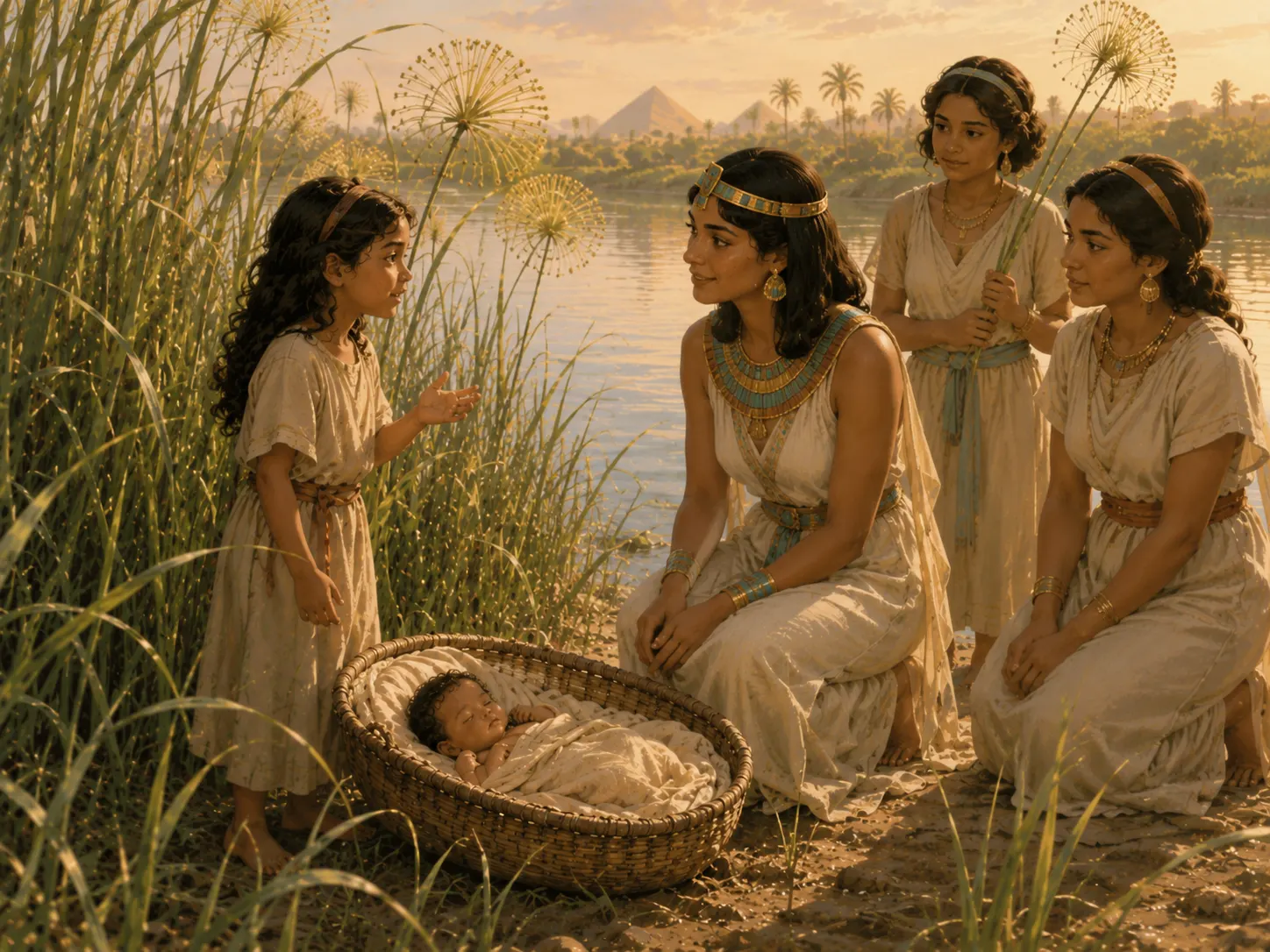
The girl quickly went to get the baby’s own mother.
Then Pharaoh’s daughter told the woman to care for the child for her.
She even promised to pay her for the work.
The mother who had feared losing her son was able to hold and care for him again.
The danger around the family had not disappeared.
Pharaoh was still ruling Egypt.
The Israelites were still being treated unjustly.
But the child had been preserved.
His mother cared for him while he was young.
When the boy grew older, she brought him to Pharaoh’s daughter.
Pharaoh’s daughter received him as her son.
She named him Moses.
The name was connected with the fact that she had drawn him out of the water.
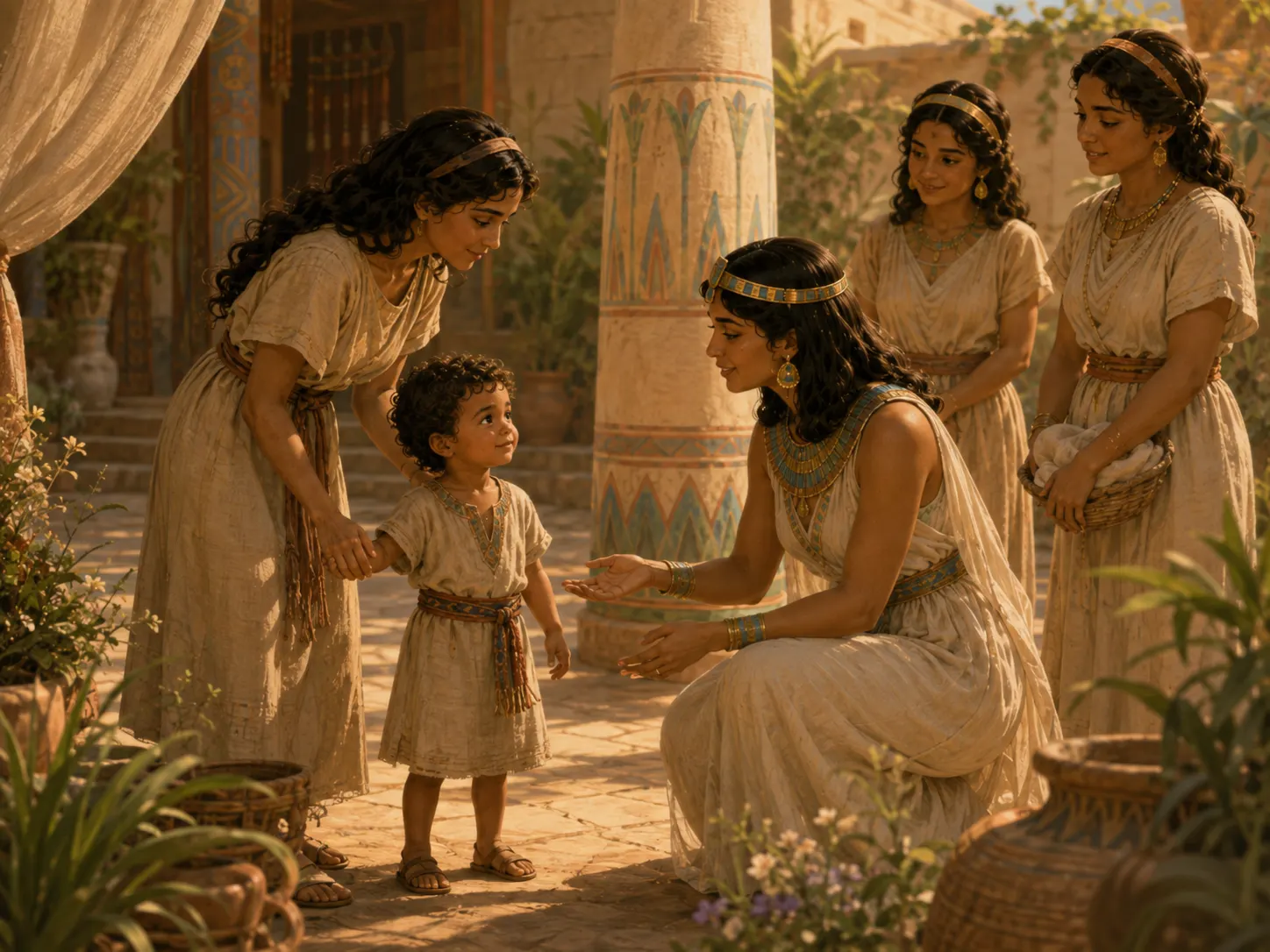
Moses would grow up inside Pharaoh’s household.
At this point, Moses did not know what his future would hold.
He did not know that one day God would call him to return to Pharaoh.
He did not know that he would help lead the Israelites out of slavery.
But God’s covenant promises had not been forgotten.
The same God who had been faithful to Abraham, Isaac, Jacob, and Joseph was still at work.
Pharaoh’s cruelty was wrong.
God did not need Pharaoh’s evil to become good.
Instead, God’s purposes continued even while people made harmful choices.
Shiphrah and Puah chose courage.
Moses’s mother chose wise protection.
His sister watched carefully and acted at the right moment.
Pharaoh’s daughter chose compassion.
Each person made real choices in a dangerous situation.
And Moses’s life was preserved.
The baby in the basket would one day become a grown man.
The next part of his story would begin far from the Nile, when God called to Moses from a burning bush.
What This Story Teaches Us
1. Courage Can Mean Refusing to Do What Is Wrong
Shiphrah and Puah would not help carry out Pharaoh’s cruel command.
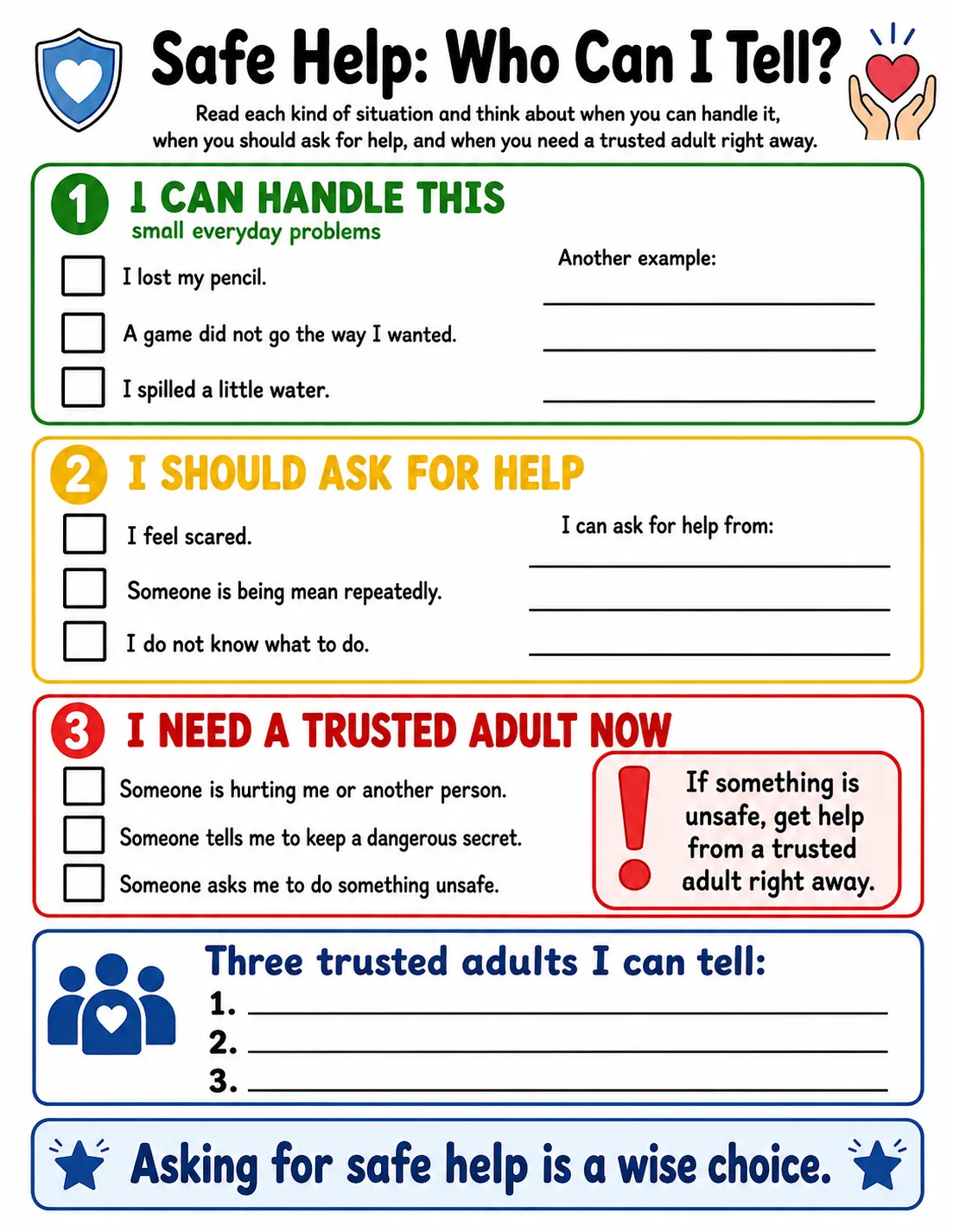
When something is harmful or unsafe, getting help from a trusted adult is a wise response.
2. Wise Protection Matters
Moses’s mother could not control everything, but she took careful steps to protect her child.
Wisdom often means doing the next safe and responsible thing we can do.
3. Young People Can Make Helpful Choices
Moses’s sister watched carefully, thought quickly, and spoke at the right time.
A child does not have to be the oldest person present to notice a need and ask a safe adult for help.
4. Compassion Sees a Person, Not a Threat
Pharaoh treated Hebrew children as a danger.
Pharaoh’s daughter looked at Moses and saw a baby who needed care.
5. God’s Work Can Begin Before We Understand the Whole Story
Baby Moses did not know anything about his future role.
The larger Exodus story shows that God had not forgotten His covenant people.
Talk About It
- Why was life difficult for the Israelites in Egypt?
- What did Shiphrah and Puah do when Pharaoh gave them a wrong command?
- Why did Moses’s mother make a special basket?
- Who watched the basket from a distance?
- Who found baby Moses?
- How did Moses’s sister help?
- How did Moses’s mother get to care for him again?