Moses and Pharaoh
Let My People Go

Before You Read
Moses and Aaron are about to stand before one of the most powerful rulers in the ancient world.
This story includes the first nine plagues in Egypt. We will describe them clearly without turning suffering into frightening entertainment.
Watch for the difference between wanting consequences to stop and truly changing what you choose.
The Bible Story
Moses and Aaron returned to Egypt with the message God had given them.
They met with the elders of Israel and told them that God had seen the suffering of His people.
When the Israelites heard that God had not forgotten them, they bowed in worship.
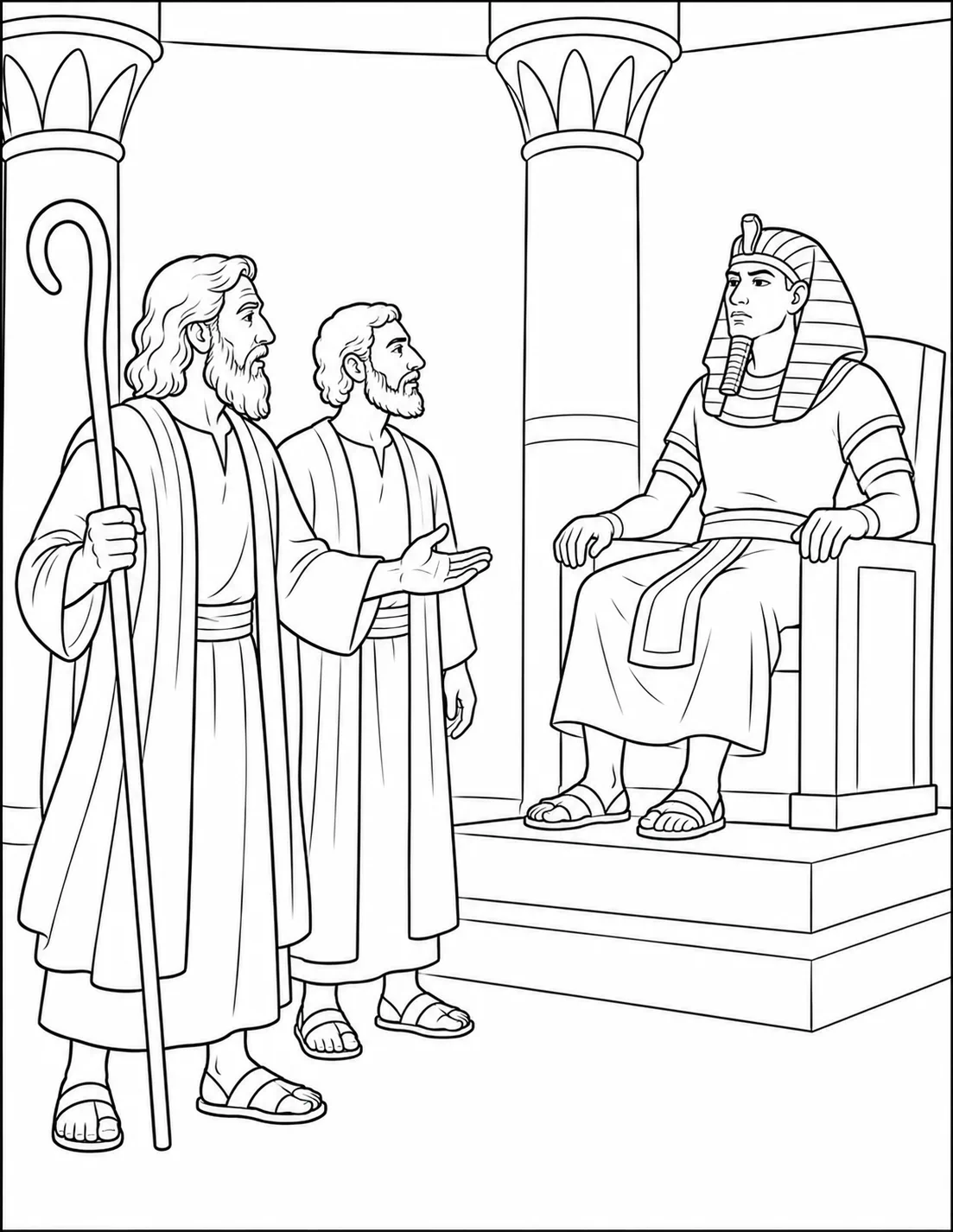
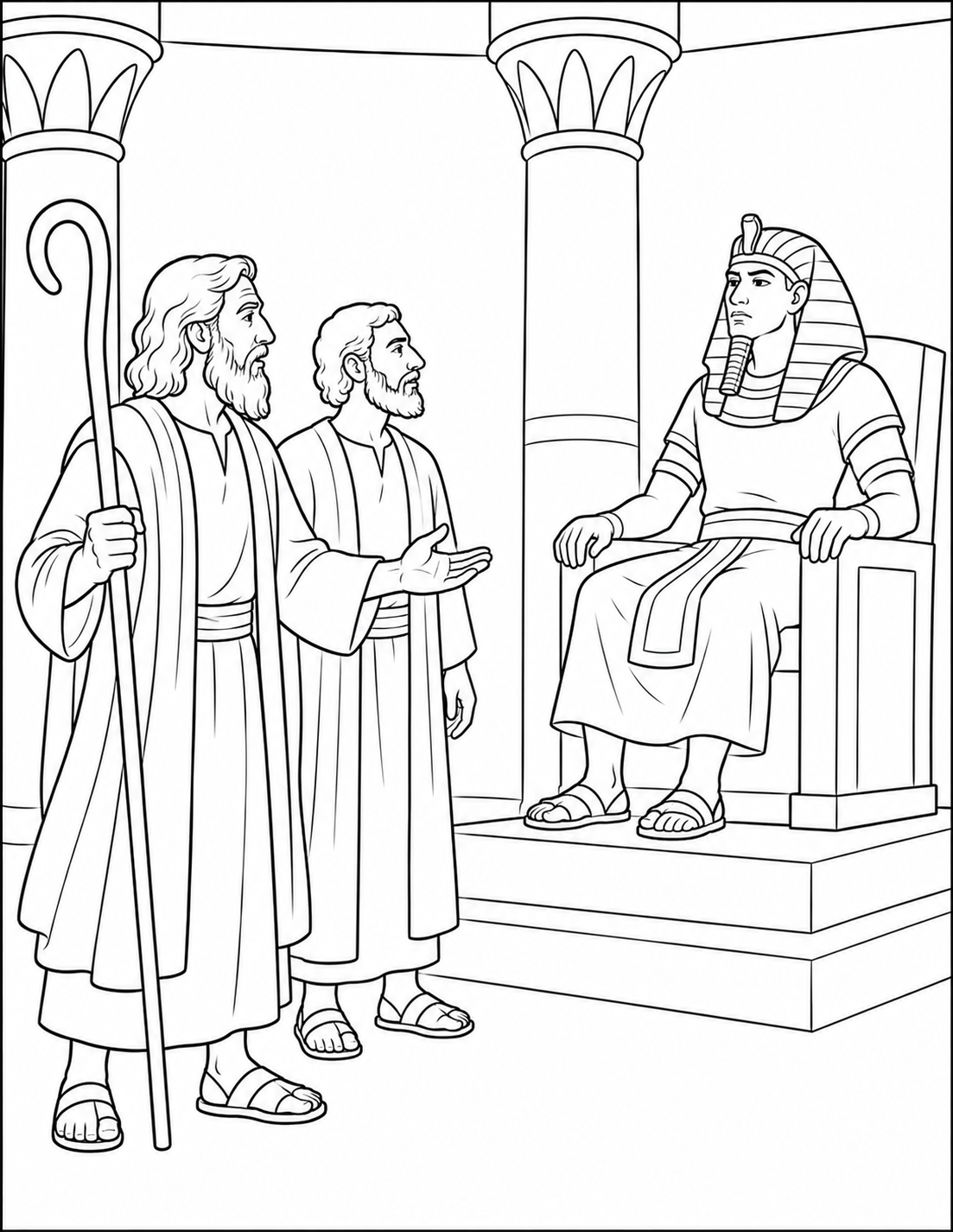
Then Moses and Aaron went to Pharaoh.
They told the ruler of Egypt that the God of Israel commanded him to let His people go.
Pharaoh refused.
He did not want to release the workers whose labor made Egypt stronger.
Instead of listening, Pharaoh made the Israelites’ work even harder.
Before, workers had been given straw to mix with the clay used for bricks.
Now Pharaoh ordered them to find their own straw while still making the same number of bricks.
The people scattered to gather dry stalks and stubble wherever they could find them.
They were exhausted and frustrated.
Their leaders complained that Moses and Aaron had made their situation worse.

Moses was deeply troubled.
He had obeyed God, but the first result seemed like more suffering instead of rescue.
Moses brought his confusion to God.
He asked why the situation had become worse.
God did not tell Moses that the promise had changed.
God repeated that He would act against Pharaoh and bring Israel out of slavery.
He reminded Moses that He was the covenant God of Abraham, Isaac, and Jacob.
God promised to bring His people out, free them, redeem them, and take them as His own people.
The rescue had not failed simply because Pharaoh had said no.
Moses and Aaron went back to Pharaoh.
God gave them a sign to show that their message did not come from their own authority.
Aaron threw down his staff, and it became a serpent.
Pharaoh’s wise men and magicians produced similar signs by their secret arts.
But Aaron’s staff swallowed their staffs.
Even then, Pharaoh refused to listen.
Again and again, Pharaoh stubbornly resisted God’s command.
Then the plagues began.
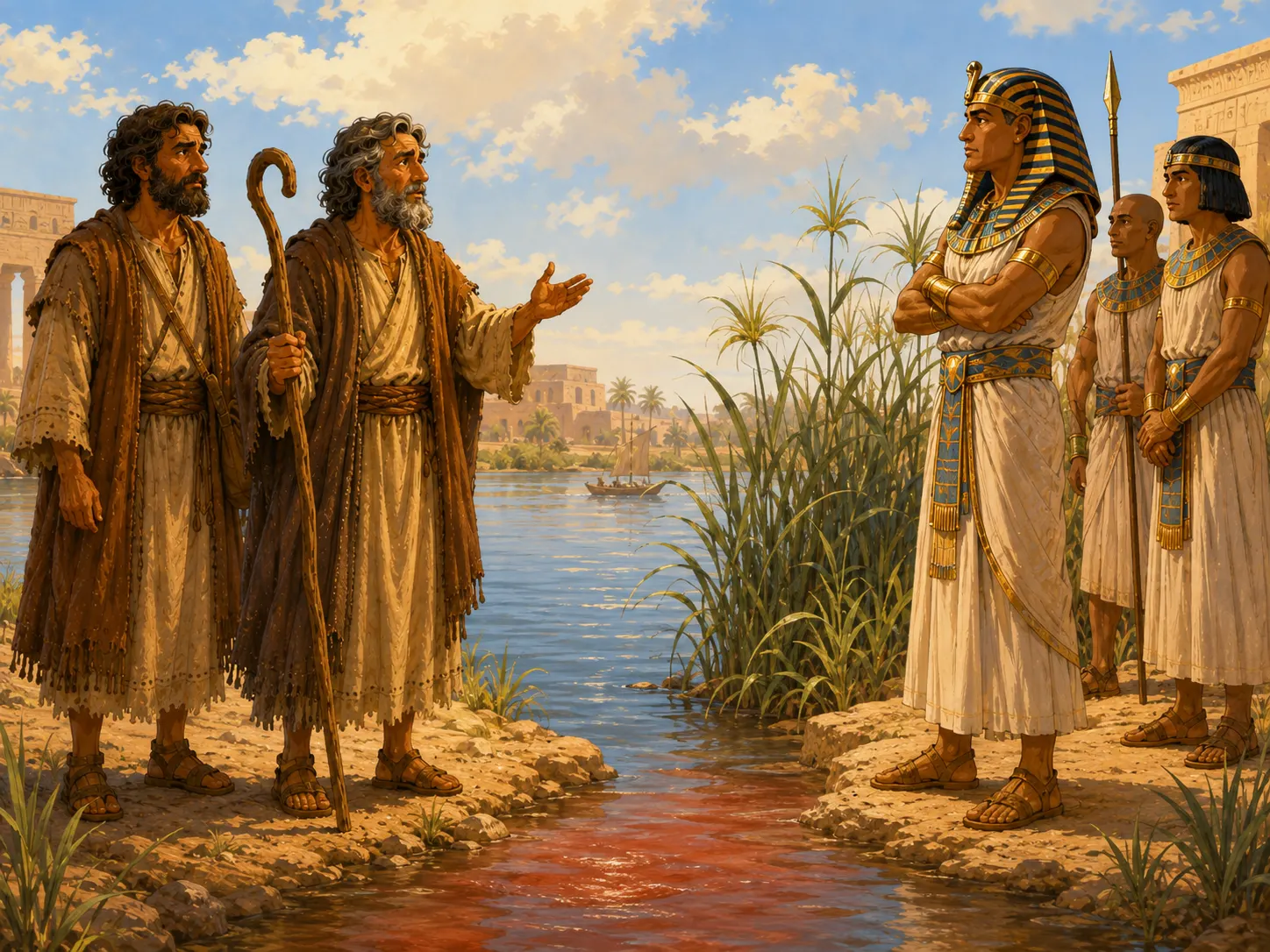
Moses met Pharaoh near the Nile and warned him again.
Pharaoh still would not release the Israelites.
At God’s command, the water of the Nile was struck and turned to blood.
Fish died, and the river could not be used normally for drinking.
Pharaoh’s magicians imitated part of the sign.
Pharaoh turned away and still refused.
Next, frogs came up from the river in great numbers.
They spread through homes, courtyards, sleeping areas, and places where food was prepared.
Pharaoh asked Moses to pray for the frogs to be removed.
Moses prayed, and the plague ended.
But when Pharaoh saw that there was relief, he refused again to let the people go.
Then came gnats and swarms of flies.
Even Pharaoh’s magicians began to recognize that something beyond their control was happening.
Still Pharaoh would not listen.
During some of these plagues, God made a distinction between Egypt and the region where the Israelites lived.
This did not mean the Israelites had never suffered in Egypt.
They had already endured terrible oppression under slavery.
But the plagues showed that God was able to distinguish His covenant people during judgment.
A severe disease then struck many Egyptian livestock.
After that came painful boils on people and animals.
The suffering across Egypt was terrible.
Yet Pharaoh continued to refuse.
Before the next plague, God gave a warning.
A destructive hailstorm was coming.
People and animals left outside would be in danger.
Some Egyptians had begun to take God’s warnings seriously.
They brought their servants and animals into shelter.
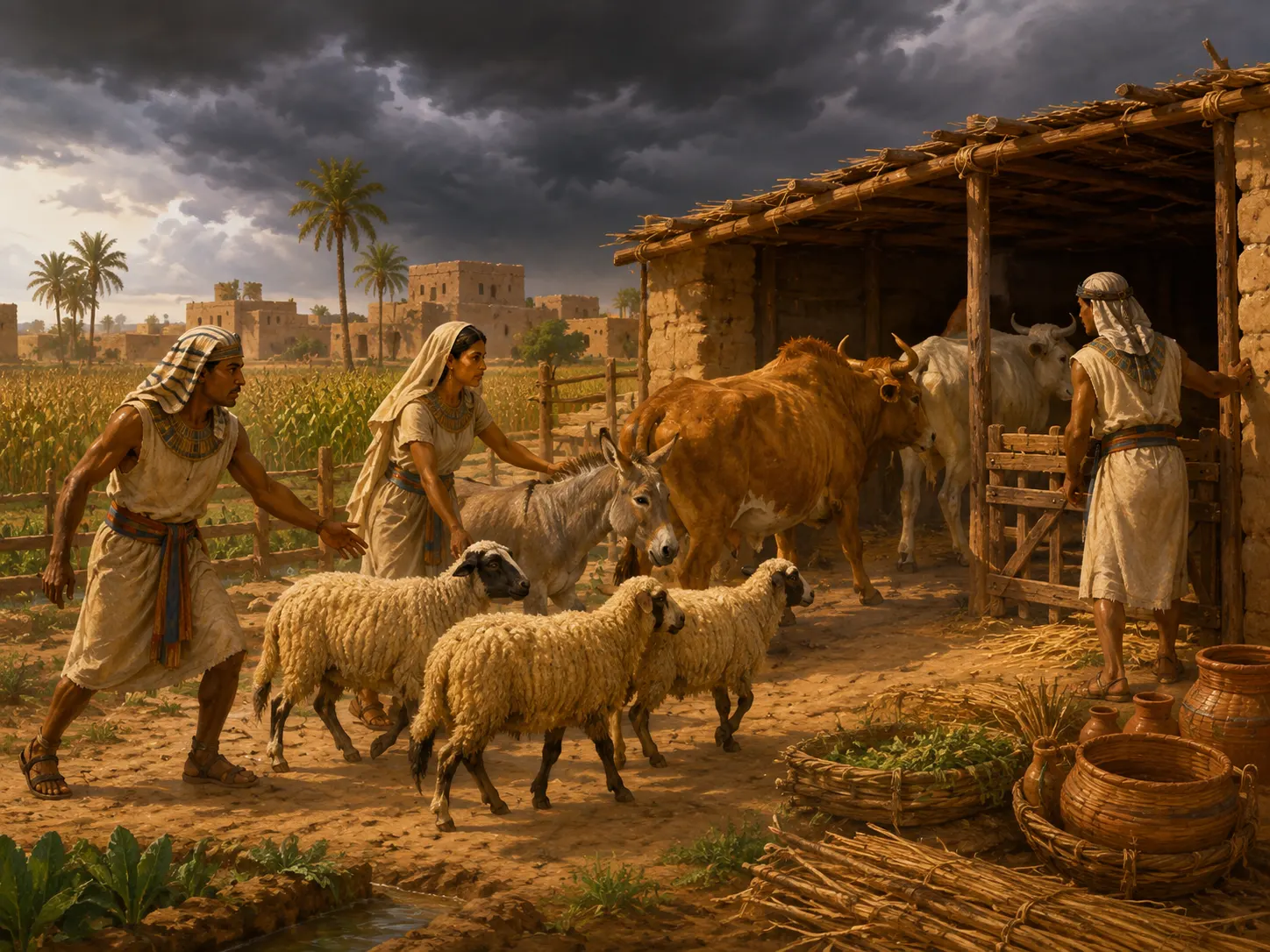
Others ignored the warning.
Then hail fell across the land with terrifying force.
Crops were damaged and fields were struck.
But the region of Goshen, where the Israelites lived, was not struck by the hail.
Pharaoh called for Moses and admitted that he had sinned.
He asked Moses to pray for the storm to stop.
Moses prayed, and the hail stopped.
But once the danger passed, Pharaoh returned to the same stubborn refusal.
His words of regret were not followed by lasting change.
Moses and Aaron warned Pharaoh again.
This time locusts would come if he continued to refuse.
Even some of Pharaoh’s own servants urged him to listen before Egypt was ruined.
Pharaoh tried to bargain about who could leave.
But Moses would not rewrite God’s command to make it acceptable to Pharaoh.
Locusts came in enormous numbers.
They covered the land and ate what remained of the crops after the hail.
Again Pharaoh called Moses.
Again he admitted wrongdoing and asked for relief.
The locusts were removed.
And again Pharaoh refused to release Israel.
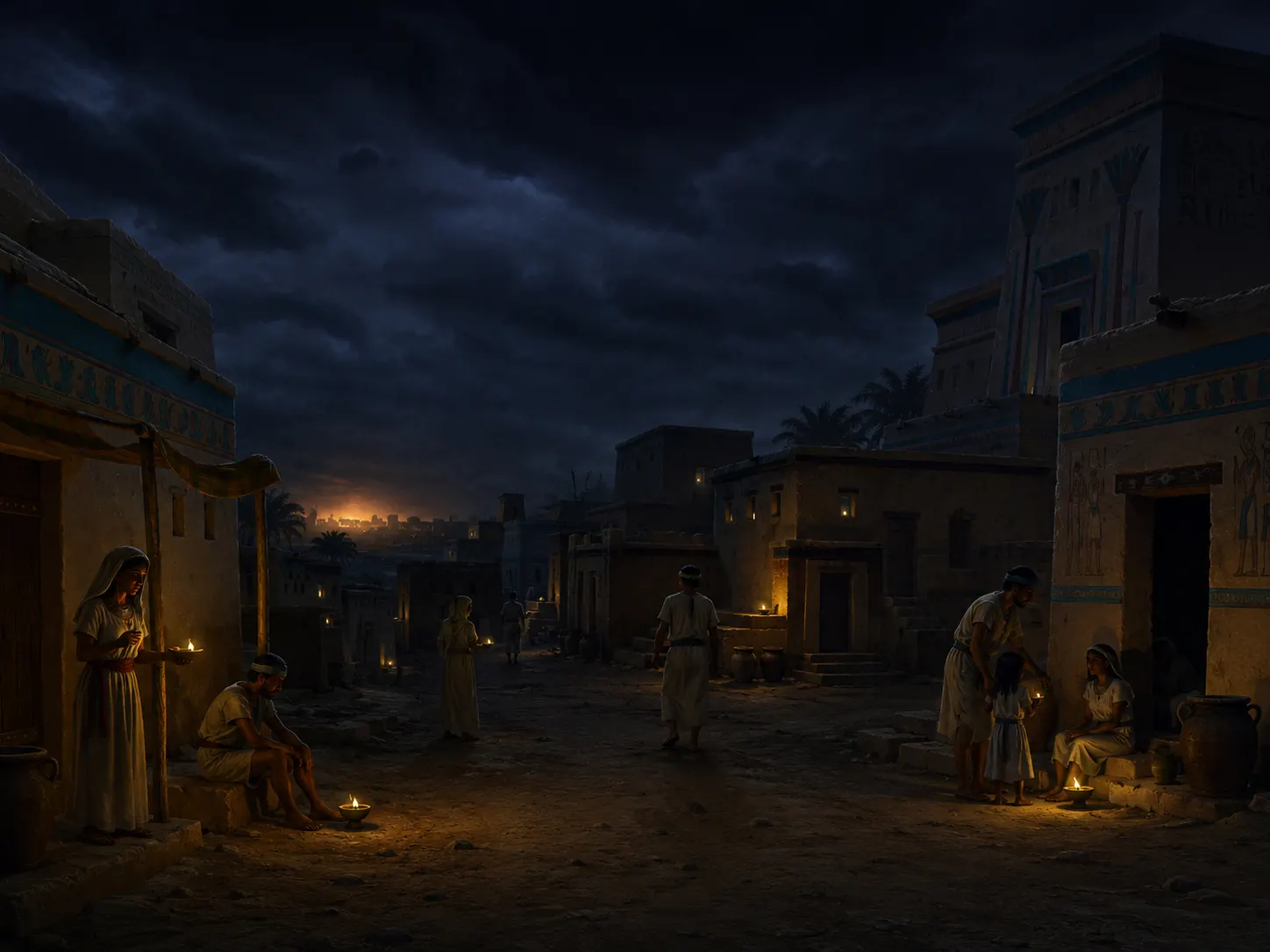
Then darkness covered Egypt for three days.
It was a deep darkness that stopped normal life.
Yet the Israelites had light where they lived.
Pharaoh called Moses again and offered another compromise.
He said the people could go if their livestock stayed behind.
Moses refused.
Israel would leave according to God’s command, not according to Pharaoh’s conditions.
Pharaoh became angry.
He ordered Moses to leave and warned him not to appear before him again.
After all the warnings and all the plagues, Pharaoh was still resisting.
But Pharaoh’s power was not greater than God’s.
God was faithfully working to bring His people out of slavery.
The final and most serious judgment had not yet come.
Before Israel left Egypt, God would give His people special instructions for a night they would always remember.
Before the Israelites left, God gave them a special meal and a sign of rescue: the first Passover.
What This Story Teaches Us
1. Power Does Not Make Someone Right
Pharaoh had enormous authority, but his oppression of Israel was unjust.
Authority does not turn a harmful choice into a good choice.
2. Obedience Does Not Always Make Things Easier Immediately
After Moses first spoke to Pharaoh, the Israelites’ work became harder.
The Bible does not promise that doing what is right will always produce immediate comfort.
3. God Heard His People Even When Rescue Took Time
The process of rescue unfolded over time.
Delay did not mean God had forgotten His covenant.
4. Pharaoh Wanted Relief Without Lasting Change
Several times Pharaoh admitted wrong or asked Moses to pray.
When the pressure stopped, he repeatedly returned to the same refusal.
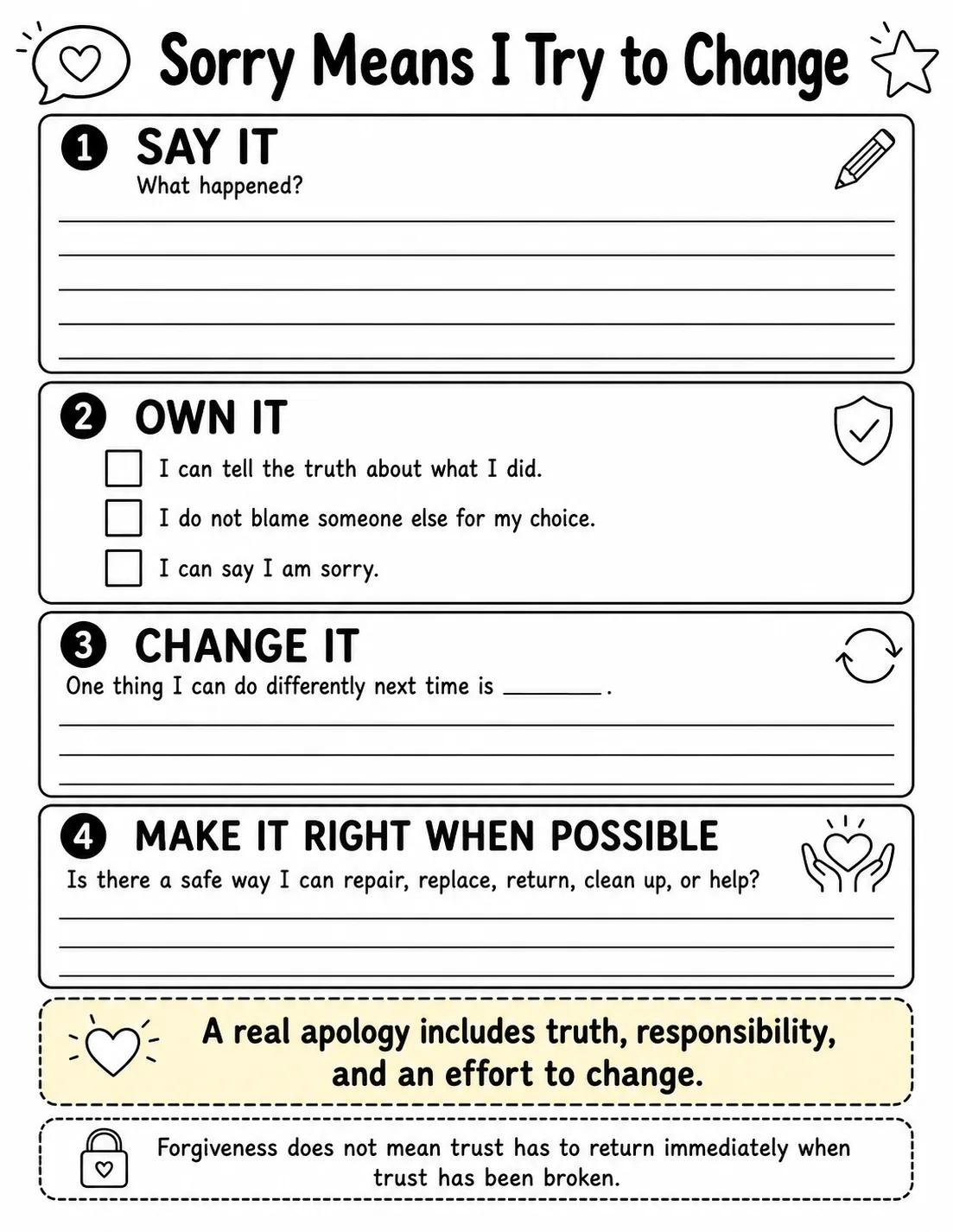
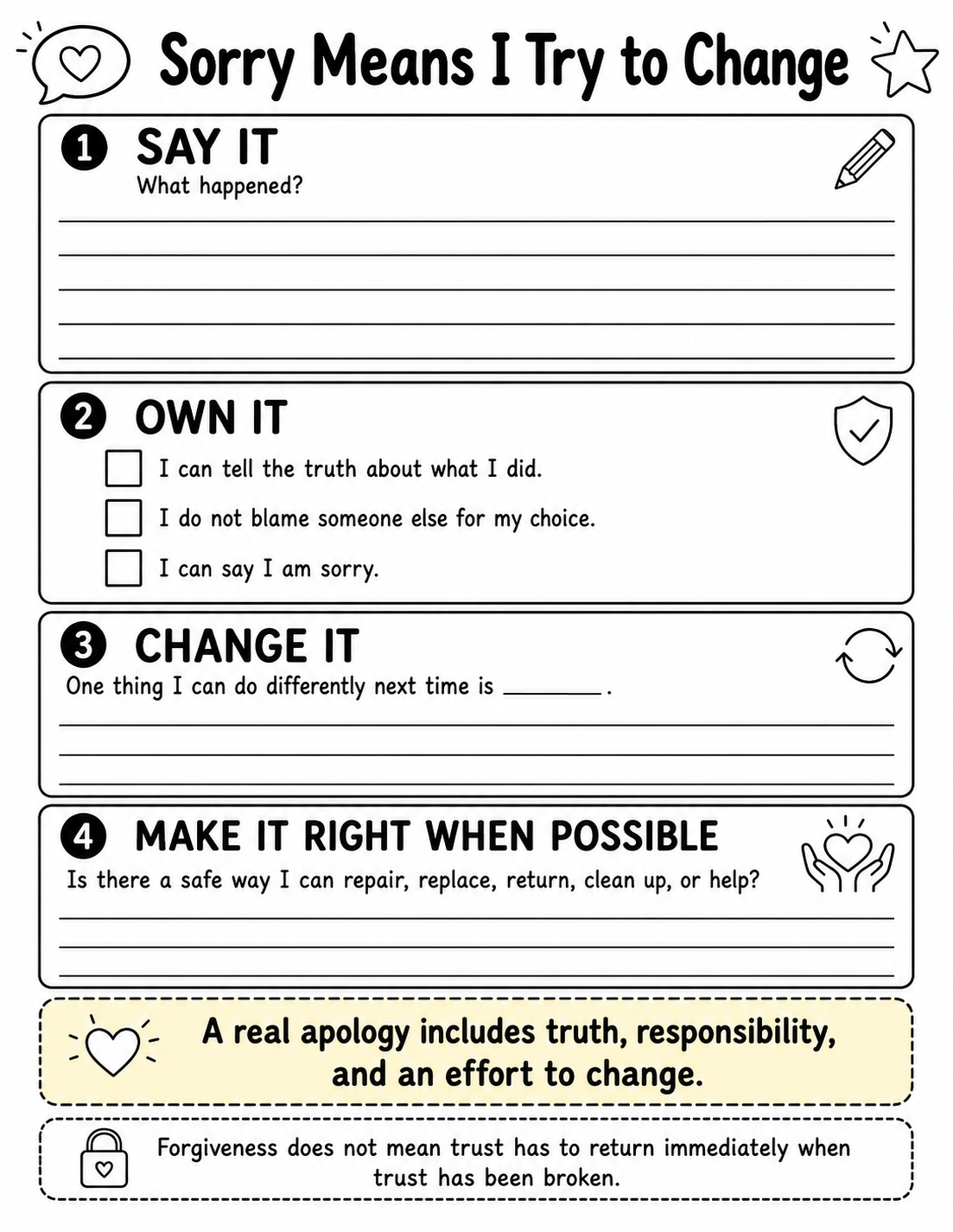
5. A Real Apology Includes an Effort to Change
Words matter, but repentance is more than saying the right sentence.
When possible, genuine repentance includes truthful responsibility and changed action.
6. Not Every Egyptian Responded Like Pharaoh
Before the hail, some Egyptians listened to God’s warning and protected their workers and animals.
The story should not be used to label an entire people as evil.
For Parents and Teachers
Talk About It
- What did Moses and Aaron ask Pharaoh to do?
- What did Pharaoh do to the Israelites’ work after the first meeting?
- What did Moses do when he did not understand why things were getting worse?
- What promise did God repeat?
- Why did the plagues come upon Egypt?
- Did Pharaoh truly change when a plague stopped?
- What happened when some Egyptians listened to the warning before the hail?
- What was unusual about the darkness over Egypt?
Memory Verse
“I will take you as my own people, and I will be your God.”— Exodus 6:7
Where the Story Goes Next
Pharaoh is still refusing to release Israel.
The final judgment and the first Passover come next.
The next story is The First Passover — God Makes a Way to Rescue His People.