Joseph and His Brothers
When Jealousy Breaks Trust
Before You Read
Have you ever felt jealous when someone else received attention, praise, or something you wanted?
Jealousy is a feeling we can notice and talk about. But when jealousy is fed with anger, comparison, and group pressure, it can lead to harmful choices.
Joseph’s family learned this in a painful way.
The Bible Story
Jacob’s family had grown large, and his sons often helped care for the family’s flocks.
One of those sons was Joseph.
Joseph was seventeen years old when this part of his story began.
He was still young, but he was old enough to work with his brothers and take responsibility in the family.
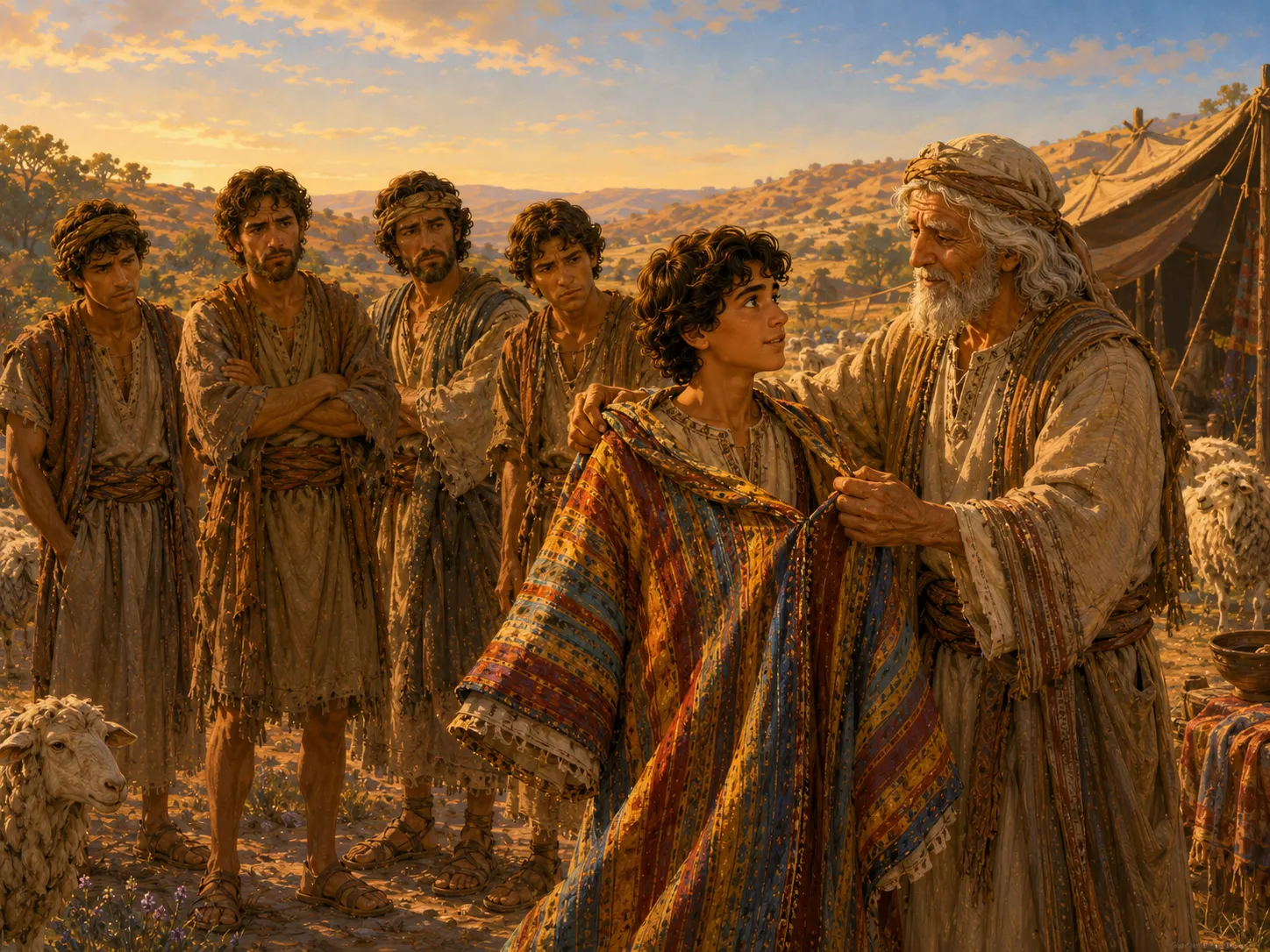
Jacob loved Joseph in a special way.
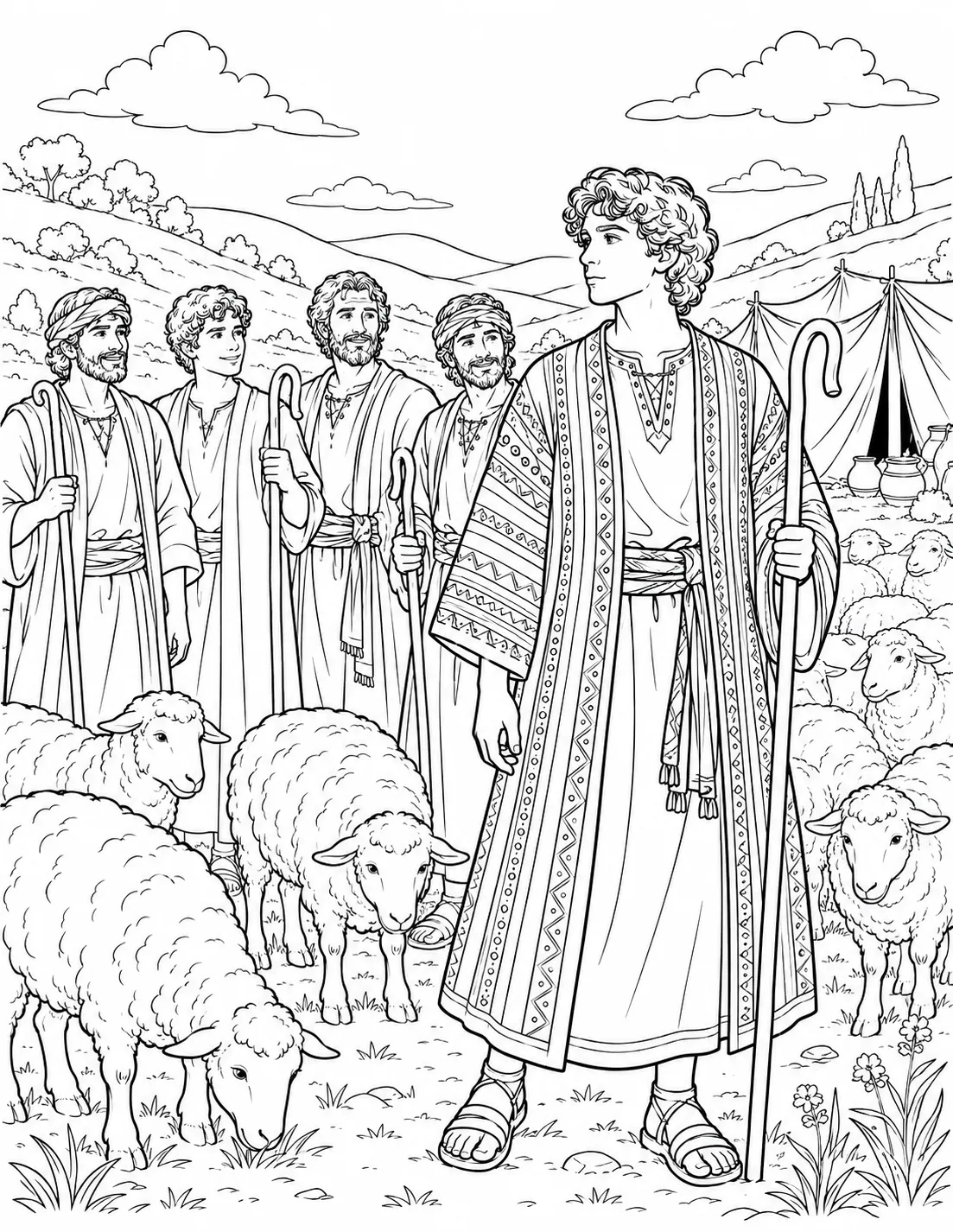
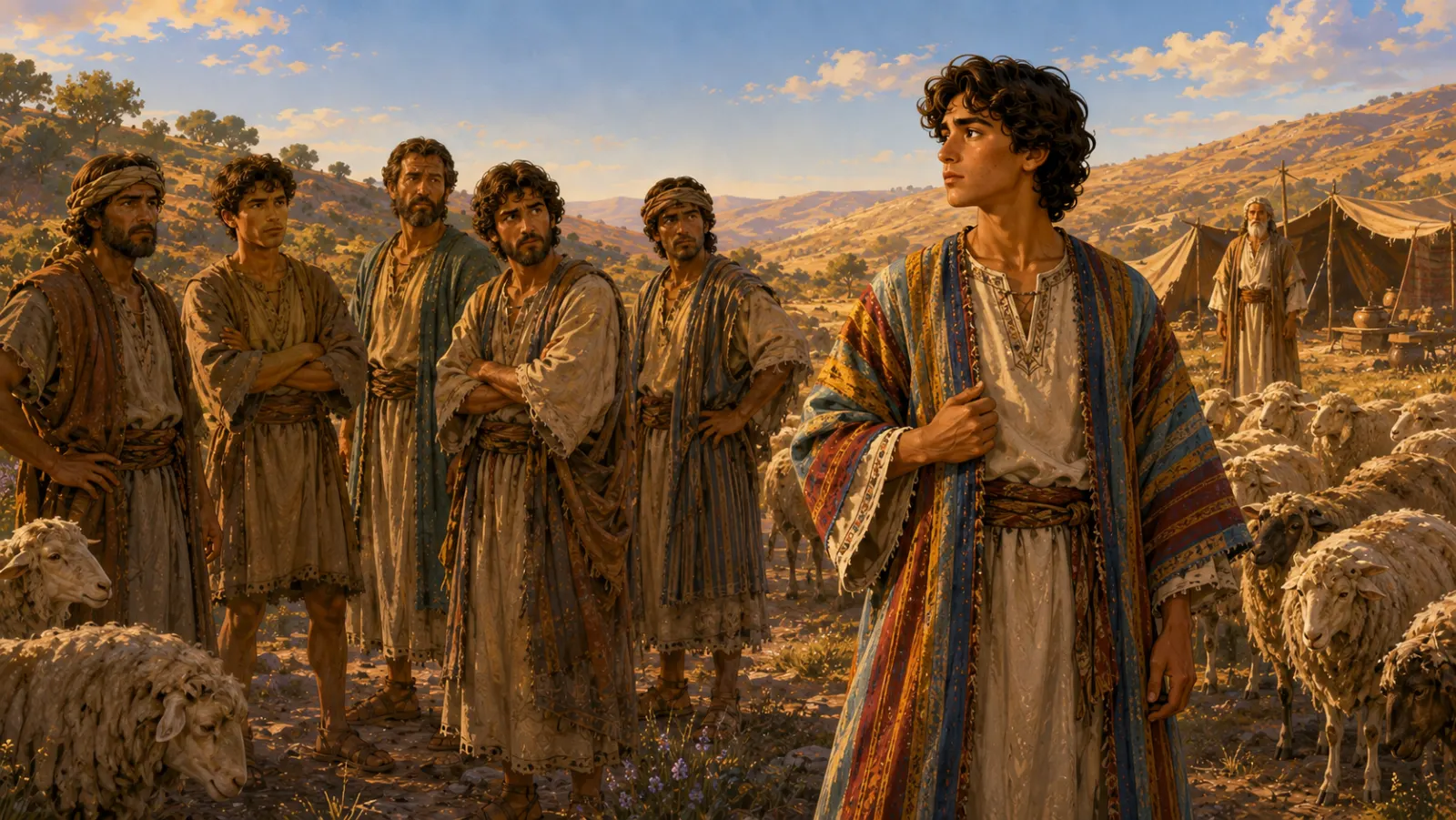
He gave Joseph a special robe that made that favoritism easy for everyone to see.
His father gave him a special robe that showed how much he favored Joseph.
It was a distinctive and valuable robe that clearly set Joseph apart.
Joseph’s brothers noticed the difference.
They saw that their father treated Joseph with special favor.
That hurt the family.
Favoritism can make people feel overlooked, compared, or pushed aside.
But Jacob’s favoritism did not give the brothers permission to hurt Joseph.
Joseph also brought Jacob a troubling report about some of his brothers.
Joseph also brought his father a bad report about some of his brothers.
Soon Joseph had a dream.
In the dream, Joseph and his brothers were binding bundles of grain in a field.
Joseph’s bundle stood upright.
The brothers’ bundles gathered around it and bowed down.
Joseph told his brothers what he had dreamed.
They immediately understood the dream as suggesting that Joseph would one day rule over them.
Their jealousy and anger grew stronger.
Then Joseph had another dream.
This time he saw the sun, the moon, and eleven stars bowing down to him.
Joseph told his father and brothers about this dream too.
Jacob corrected Joseph and questioned what the dream could mean.
Yet Jacob also kept the matter in mind.
Joseph may not have understood what the dreams meant or how they would one day fit into his life.
The brothers, however, continued to grow more jealous.

Some time later, Joseph’s brothers took the family flocks to graze away from home.
Jacob wanted to know how the brothers and the animals were doing.
He sent Joseph to find them and bring back news.
Joseph traveled toward Shechem.
When he arrived, he could not find his brothers.
A man found Joseph wandering in the fields and asked what he was looking for.
Joseph explained that he was searching for his brothers.
The man told him that they had moved on toward Dothan.
Joseph continued the journey.
At last his brothers saw him approaching from far away.
They recognized him before he reached them.
The jealousy they had allowed to grow had become dangerous.
Some of the brothers began talking about killing Joseph.
They wanted to throw him into a pit and then claim that a wild animal had attacked him.
This was not ordinary sibling anger anymore.
Their resentment had grown into a plan for serious harm.
Reuben heard what they were saying.
He did not want Joseph to be killed.
Reuben urged the brothers not to take Joseph’s life.
Instead, he suggested putting Joseph into an empty cistern in the wilderness.
Reuben planned to come back later, rescue Joseph, and return him to their father.
When Joseph reached his brothers, they took away his special robe.
They placed him in the cistern.
The cistern was empty and had no water in it.
Joseph was trapped in the empty cistern while his brothers sat down to eat.
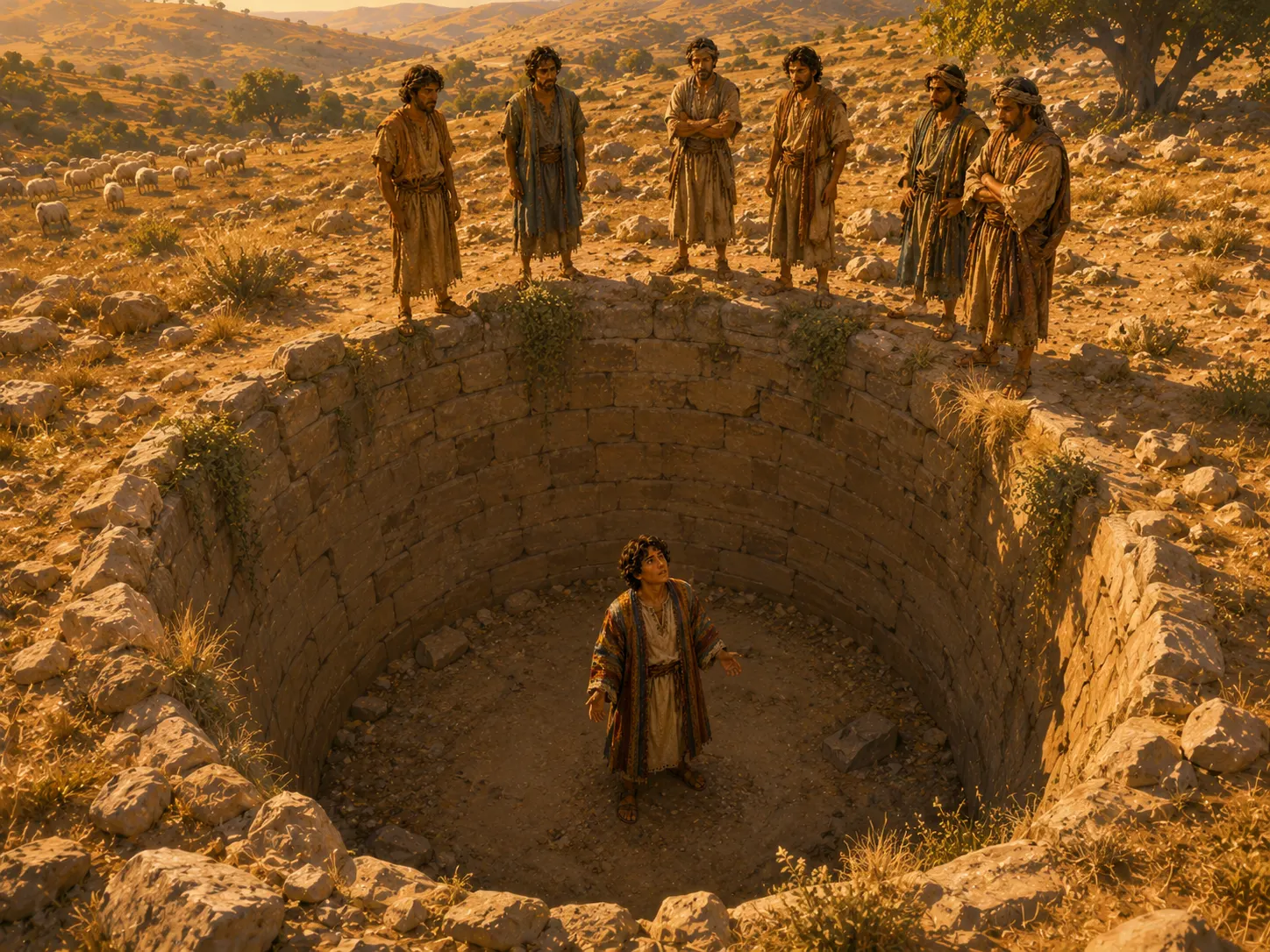
Then the brothers sat down to eat.
Their jealousy had hardened them so much that they could eat while their brother remained trapped nearby.
While they were eating, they saw a caravan approaching.
The travelers were carrying goods toward Egypt.
Judah suggested that instead of killing Joseph, they should sell him to the passing traders.
That stopped the murder plan, but selling their brother was still terribly wrong.
Joseph was a person, not something to be bought and sold.
His brothers took away his freedom and sent him away with strangers.
Joseph did not choose to leave his family this way.
The traders continued toward Egypt with Joseph.
The brothers remained behind.
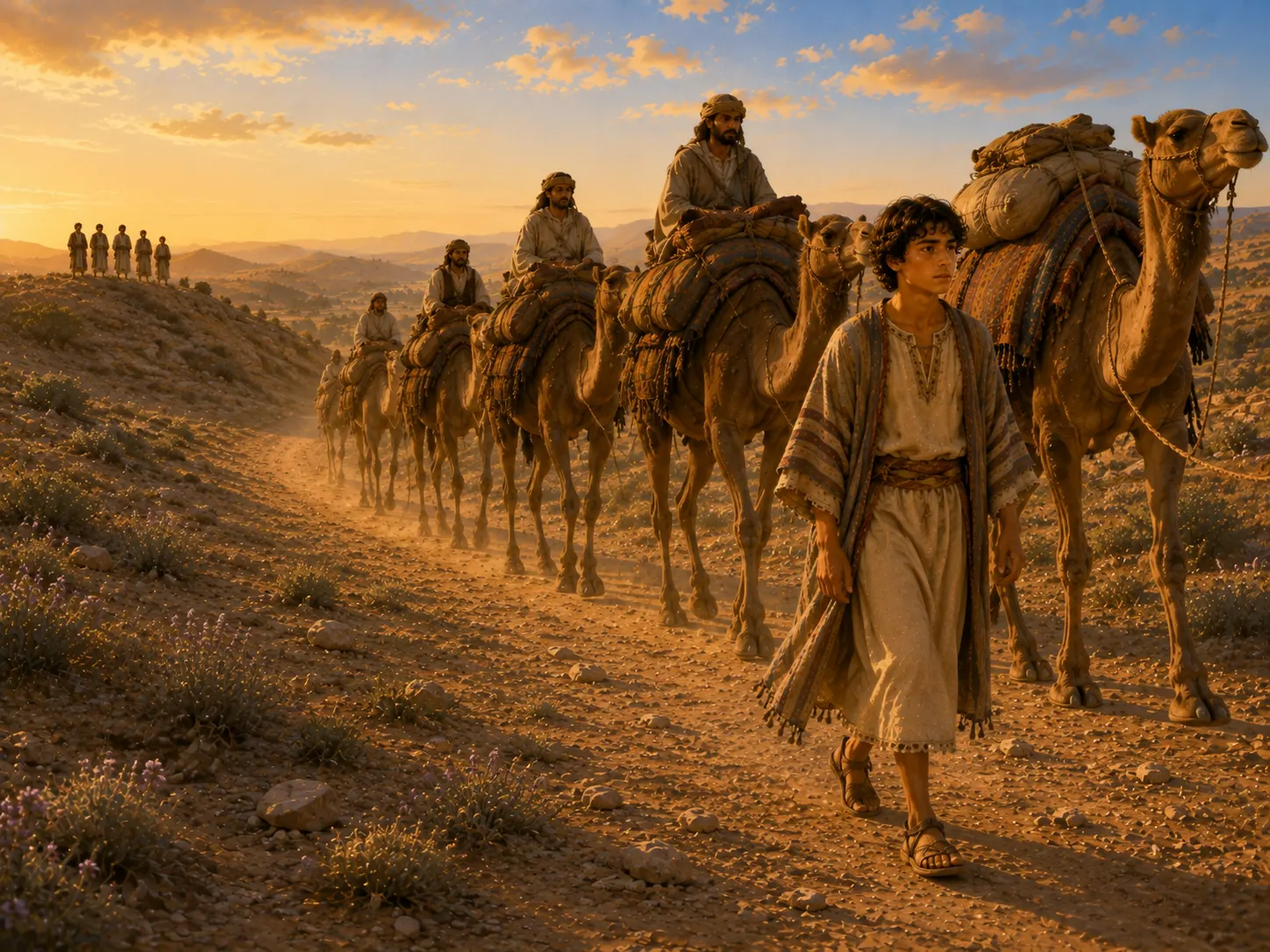
Joseph’s life had changed in a single day.
Later Reuben returned to the cistern.
When he discovered that Joseph was gone, he was horrified.
His plan to rescue his younger brother had failed.
The brothers now faced another problem.
They had to decide what to tell their father.
Instead of telling the truth, they chose another deception.
They damaged and stained Joseph’s special robe so Jacob would believe something terrible had happened to him.
Then they brought the robe to their father.
Jacob recognized it.
He believed Joseph had been killed.
Jacob was overwhelmed with grief.
Once again, deception brought deep pain into Jacob’s family.
Meanwhile, Joseph was still alive.
The traders brought him into Egypt.
There Joseph was sold to Potiphar, an officer of Pharaoh.
Joseph had lost his home, his freedom, and the life he had known.
From where Joseph stood, the future must have looked frighteningly uncertain.
But Joseph’s story was not over.
His brothers’ wrongdoing could not place him beyond God’s reach.
Even in Egypt, the Lord was with Joseph.
God did not call the brothers’ evil actions good.
But their sin would not have the final word.
Years later, Joseph would be in a position to help save many people during a severe famine.
Even his own family would one day come to Egypt looking for food.
The dreams Joseph had told them about would make sense in ways none of them yet understood.
For now, the family was broken and Joseph was far from home.
Jealousy, favoritism, group pressure, and deception had caused terrible harm.
But God’s larger plan was still moving forward.
What This Story Teaches Us
1. Favoritism Hurts Families
Jacob made his special preference for Joseph visible to the whole family.
Children are not responsible for a parent’s favoritism, and no child should have to compete to prove their worth.
2. Jealousy Is a Signal, Not Permission
Feeling jealous does not make someone evil.
But jealousy must not become an excuse for insults, humiliation, revenge, or physical harm.
3. Group Pressure Does Not Remove Responsibility
The brothers acted as a group, but each person still had choices.
If a group is planning to hurt, trap, threaten, or humiliate someone, leave and get help from a trusted adult.
4. A Less Harmful Wrong Choice Is Still Wrong
Reuben tried to prevent Joseph’s death, and Judah stopped the murder plan.
But putting Joseph in a cistern and selling him were still serious wrongs.
5. Human Wrongdoing Cannot Stop God’s Good Purposes
God did not call the brothers’ actions good.
Yet their wrongdoing could not end the larger covenant story or place Joseph beyond God’s reach.
How It Fits into God's Bigger Story
Joseph belonged to the covenant family that began with Abraham and continued through Isaac and Jacob.
The family was badly divided, but God’s promise had not disappeared.
Later, a severe famine would threaten many people, including Joseph’s own family.
God would place Joseph in a position where he could preserve lives and help keep the covenant family alive.
The evil his brothers chose would remain evil, but it would not have the final word.
The family line would continue, and much later Jesus would come through the line of Judah.
Talk About It
- Why were Joseph’s brothers jealous of him?
- What special gift did Jacob give Joseph?
- What did Joseph see in his dreams?
- What dangerous plan did some of the brothers make?
- How did Reuben try to keep Joseph from being killed?
- What happened when the traders came by?
A Short Prayer
God, help us notice jealousy before it turns into hurtful choices. Teach us not to compare our worth with someone else’s gifts or attention. Help us speak honestly, walk away from harmful group pressure, and ask a trusted adult for help when anger grows strong. Thank You that human wrongdoing cannot stop Your good purposes. Amen.
Try This Together
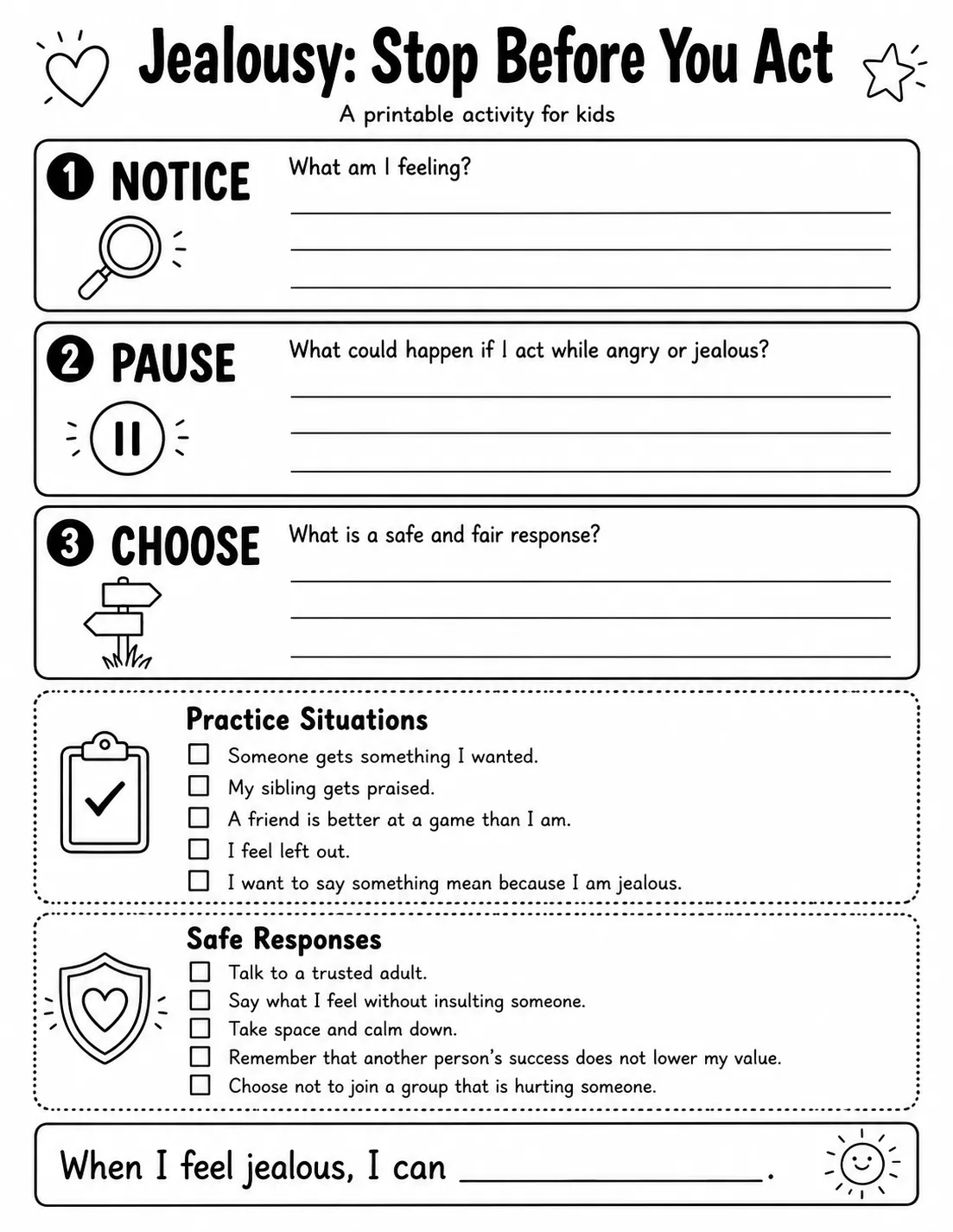
Name It, Pause, Choose
- Choose a simple situation that might create jealousy, such as a sibling getting praise or a friend winning a game.
- First name the feeling without judging it: I feel jealous, disappointed, left out, or angry.
- Pause and ask what could happen if you act while the feeling is very strong.
- Choose one safe response: speak honestly, take space, ask for help, congratulate the other person, or do the next fair thing.
- Remind the child that another person receiving something good does not make the child less valuable.
Practice recognizing jealousy before it becomes a harmful action.
Memory Verse
“Be kind and compassionate to one another.”— Ephesians 4:32
For Parents and Teachers
Favoritism Is an Adult Responsibility
Do not use this story only to tell a child to stop being jealous if the child is experiencing real, repeated favoritism.
Adults bear responsibility for building a home where children are loved without being forced to compete for worth.
Do Not Overstate Joseph’s Motives
Genesis says Joseph told his dreams and brought a bad report, but it does not directly say he was bragging or lying.
Avoid assigning motives the text does not provide.
Explain Slavery Honestly but Simply
Joseph was not simply given a new job in Egypt.
His freedom was taken away and he was treated as a person who could be sold. That was a serious wrong.
Group Violence Requires Adult Help
If peers are planning to trap, threaten, humiliate, or physically hurt someone, the child should move away and involve a trusted safe adult.
Do Not Treat Every Dream as Revelation
Joseph’s dreams become significant within the biblical story.
Children should not be taught to treat every ordinary dream as a prophecy or divine instruction.
God’s Providence Does Not Make Evil Good
Later Genesis will show God bringing good through events that began with human wrongdoing.
That does not mean God approves jealousy, kidnapping, slavery, or deception.