Jesus Welcomes Children
Jesus Makes Room for the Little Ones
Before You Read
People are bringing children—even very young children—to Jesus.
The disciples think the families should stop, but Jesus responds very differently.
As you read, notice what Jesus does and what He teaches about receiving God's kingdom.
The Bible Story
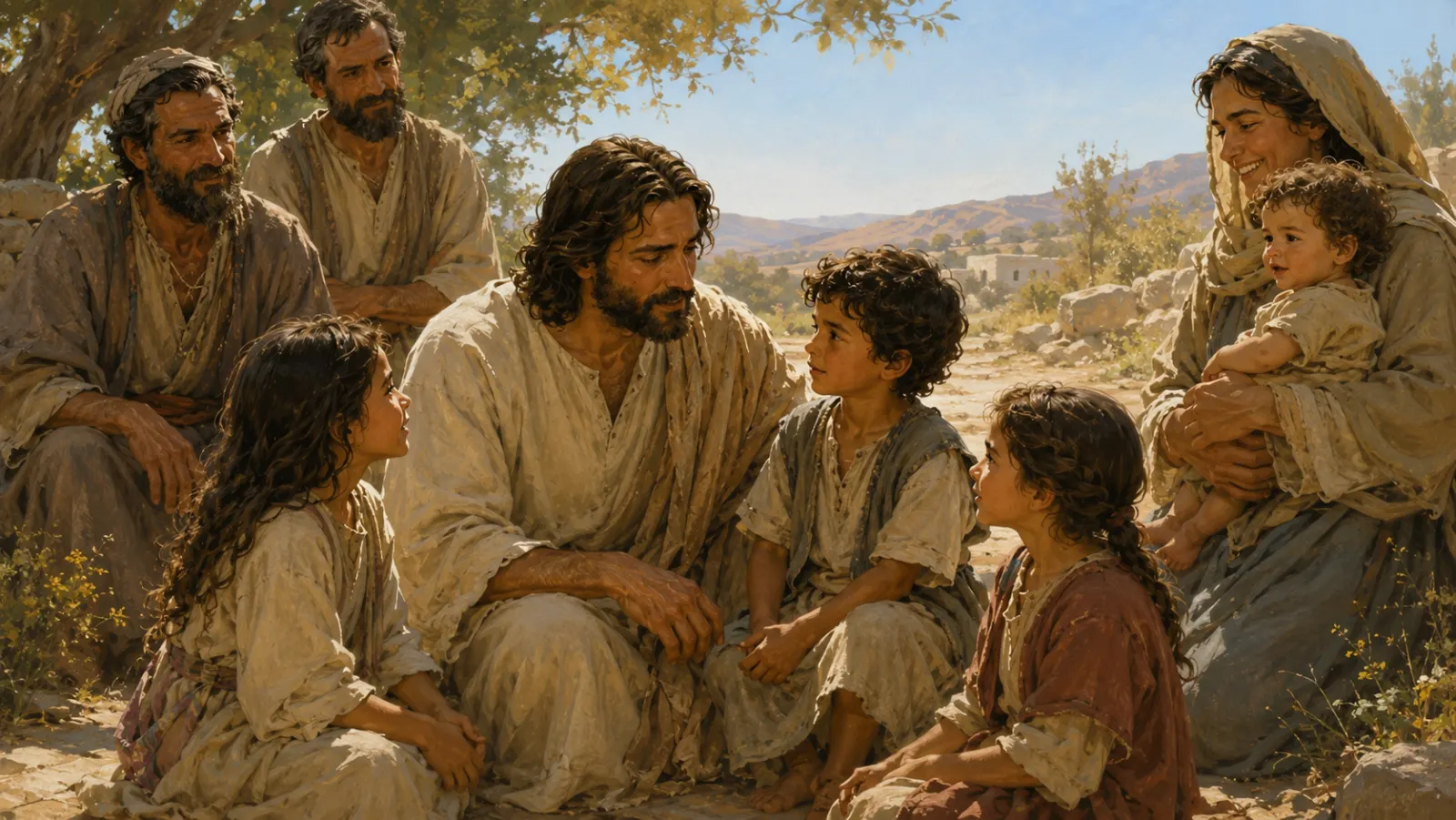
One day, people began bringing children to Jesus so that He could place His hands on them and pray for them.
Some of the children were very young—even babies were being brought to Jesus.
The adults were not bringing the children because the children had achieved something impressive. They were bringing them because they wanted Jesus to receive them and bless them.
But the disciples tried to stop the people. They rebuked those who were bringing the children.
The disciples tried to stop them. Maybe they believed the children should wait or that Jesus was too busy. Whatever they were thinking, they placed themselves between the children and Jesus.

Jesus saw what was happening, and He was deeply displeased. He did not want His disciples pushing the children away.
He called the children to come to Him. Jesus told the disciples not to stop them.
The kingdom of God, He said, belongs to such as these. Then Jesus said something even more surprising.
Anyone who will not receive the kingdom of God like a little child will never enter it.

Jesus was not saying that children are perfect. Children can be selfish, stubborn, fearful, generous, trusting, curious, and many other things—just like adults can.
His point was not that children earn God's kingdom by being innocent enough. The kingdom is something to receive.
A child does not usually come to a loving parent or trusted adult with a list of accomplishments proving that care has been earned. A child comes with need, dependence, trust, and open hands.
Jesus was showing His disciples that God's kingdom is not entered by status, importance, power, or achievement. It is received humbly.

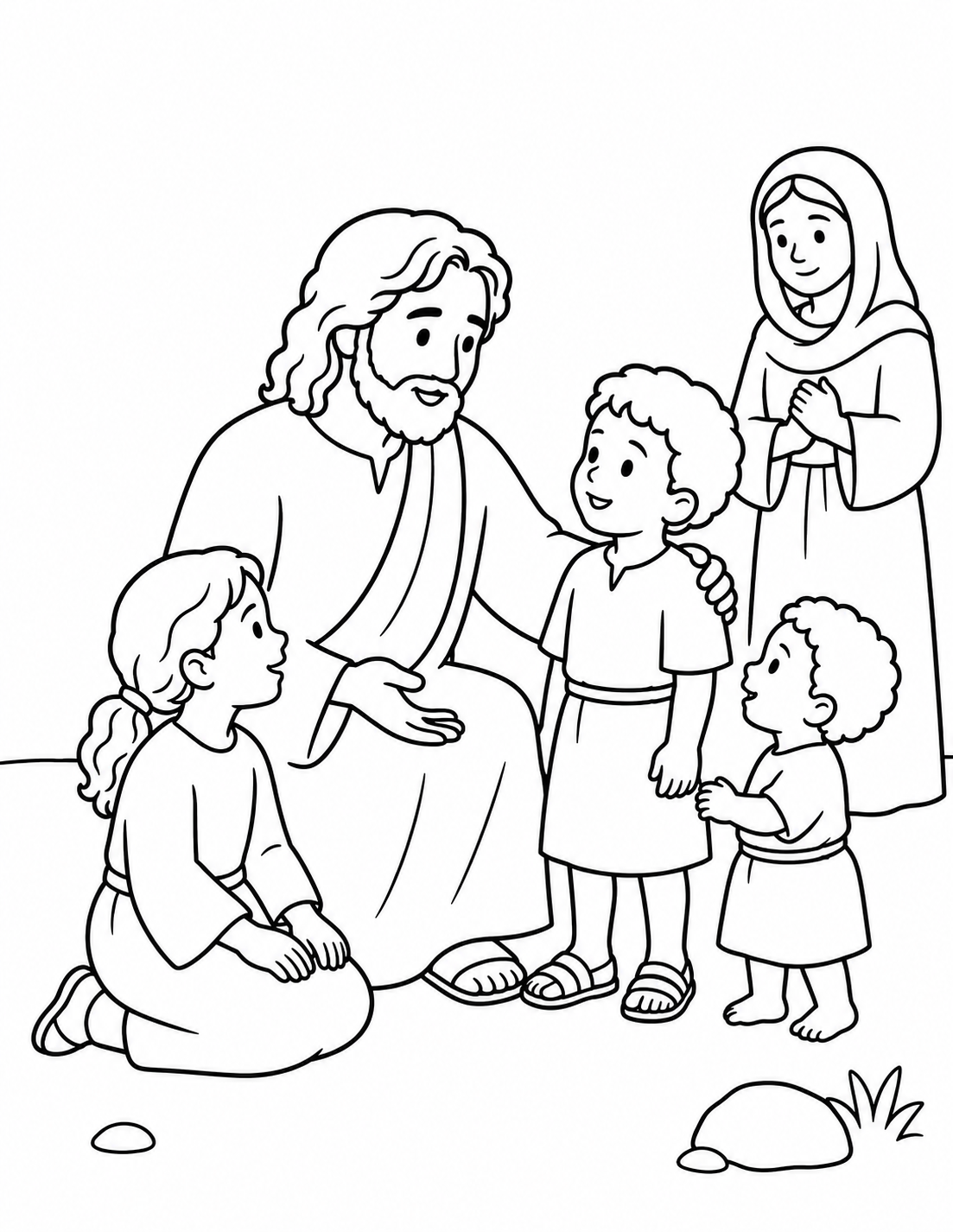
Then Jesus welcomed the children personally. He took children in His arms, placed His hands on them, and blessed them.
The scene is gentle, but it is also a correction. The disciples had tried to create a barrier around Jesus. Jesus removed that barrier.
He made room for the children. He treated them as people worthy of His attention. He did not treat them as distractions from serious spiritual matters.
They were part of the serious spiritual matter.
Jesus's welcome was warm and personal, but it was never about forcing a child to be touched or held. The children were being brought by caregivers who wanted Jesus to receive them, and Jesus treated them with dignity and care.
Jesus's care should never be used to pressure children into physical affection they do not want. Children can be welcomed through respect, listening, protection, patience, and safe attention.
Jesus was not telling adults to become silly or immature. He was pointing to the humble dependence of a child who receives rather than boasts. God's kingdom is received as a gift, not earned by acting important.
That message challenged the disciples. They had to learn that proximity to Jesus was not a reward reserved for people they considered important.
Children could come. The overlooked could come. Those without status could come.
Jesus's welcome showed what His kingdom is like. It is not controlled by human rankings. It is received as a gift.
And those who belong to Jesus are called to make room for people whom others may overlook.
Jesus blessed the children in front of everyone. The disciples who had tried to turn them away now had to watch their Teacher receive them with care. Their correction was not meant to humiliate them. It was part of learning what Jesus values. In His presence, the small and easily overlooked were not pushed to the edge. They were welcomed close enough to receive His attention and blessing.
The moment was simple, but the lesson was deep. In Jesus's kingdom, no child is too unimportant to be noticed.

What This Story Teaches Us
1. Jesus Welcomes Children
Jesus did not treat children as distractions.
He made room for them and gave them His attention.
2. The Disciples Needed Correction
The disciples tried to keep the children away.
Jesus corrected them because their barrier did not reflect His kingdom.
3. God's Kingdom Is Received
Jesus says the kingdom must be received like a child.
The emphasis is on humble dependence, not achievement or status.
4. Childlike Does Not Mean Childish
Jesus is not praising immaturity, ignorance, or gullibility.
He points to receiving rather than earning.
5. Children Have Real Spiritual Dignity
Jesus treats children as people worthy of His attention and blessing.
Faith communities should take children's safety, questions, worship, and growth seriously.
6. Welcome Must Be Safe
Children can be welcomed without being pressured into physical affection.
Respect, listening, protection, patience, and consent-aware care are all part of safe welcome.
How It Fits into God's Bigger Story
Throughout Jesus's ministry, He repeatedly gives attention to people whom others overlook or rank as less important. His welcome of children fits that larger pattern.
The kingdom of God is not a prize for people with the most status, knowledge, power, or accomplishments. Jesus teaches that it is received humbly as a gift.
This helps prepare readers for the heart of the Gospel. Christians do not earn God's rescue through importance or performance; they depend on what God gives through Jesus.
The One who welcomes children will continue toward the cross and resurrection, where God's grace is shown not as a reward for the powerful but as a gift received by faith.
Talk About It
- Why were people bringing children to Jesus?
- What did the disciples do, and how did Jesus respond?
- What does Jesus's welcome of children teach us about what matters in God's kingdom?
- Why do you think Jesus wanted the disciples to stop creating a barrier around Him?
- What is one way you can help another child feel included without ignoring their personal boundaries?
- How can our family make room for children to ask questions, participate, and feel safe when we talk about faith?
A Short Prayer
Jesus, thank You for welcoming children and treating them as important in Your kingdom. Help us receive Your gifts with humble hearts instead of thinking we must prove how important we are. Teach our family to notice children, listen carefully, protect their safety, and make room for their questions and faith. Help us welcome others with kindness and respect, just as You welcomed the little ones who came to You. Amen.
Try This Together
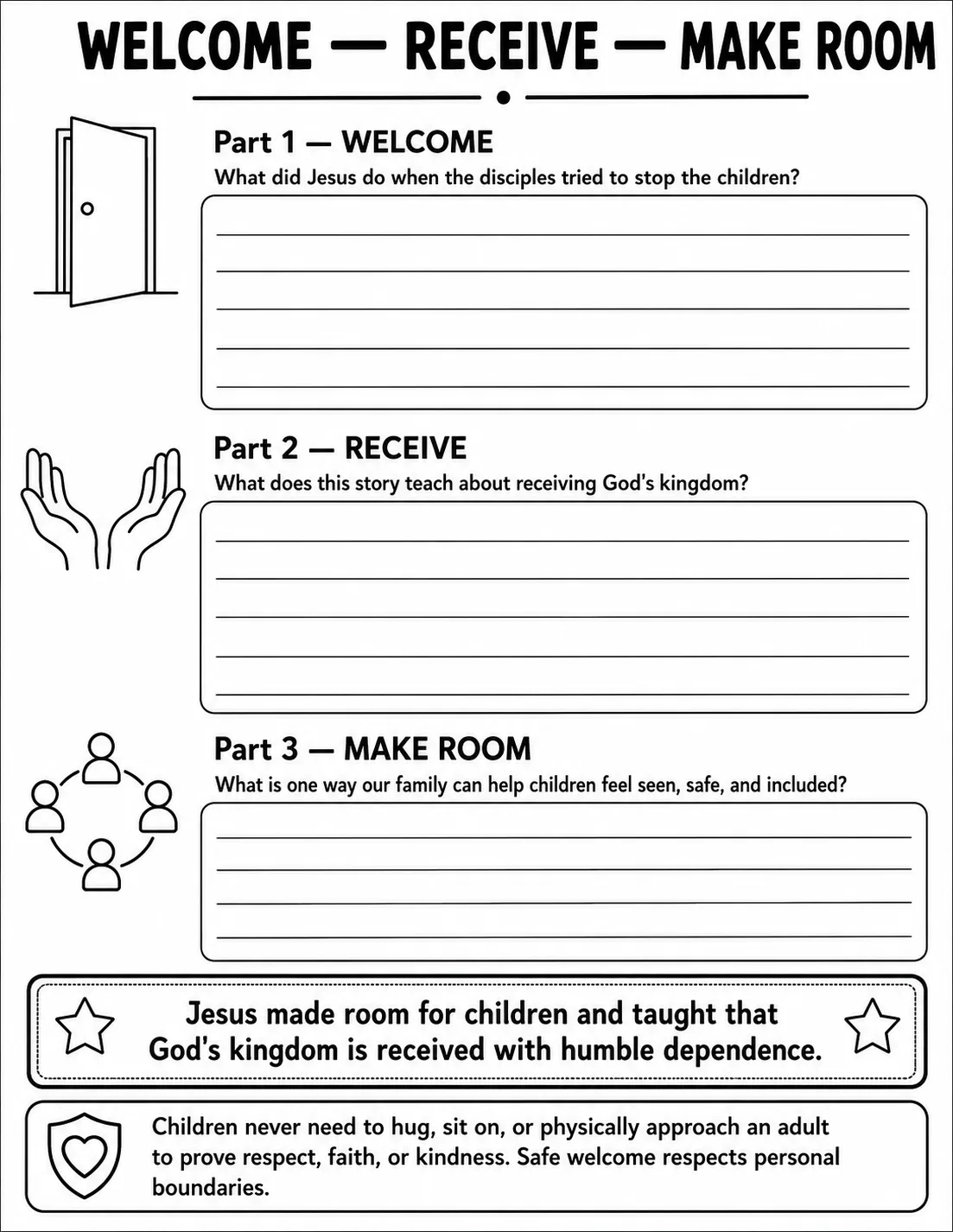
Welcome — Receive — Make Room 10–15 min
You will need: Printable activity page, Pencil, Crayons or colored pencils if desired
- Under WELCOME, write what Jesus did when the disciples tried to stop the children.
- Under RECEIVE, write one thing the story teaches about receiving God's kingdom.
- Under MAKE ROOM, choose one practical way your family can help children feel seen, safe, and included.
- Talk together about how welcome can respect someone's personal space and boundaries.
- Finish with the short prayer or your own prayer.
Connect Jesus's welcome with humble dependence and safe, respectful inclusion.
Safety: Do not use the activity to pressure children into touch, hugs, lap-sitting, or private interaction with adults.
Memory Verse
“Let the little children come to me, and do not hinder them.”— Mark 10:14
For Parents and Teachers
Do Not Idealize Children
Jesus does not say children are morally perfect.
The lesson centers on receiving the kingdom humbly rather than on childhood innocence as a spiritual achievement.
Do Not Guess the Disciples' Motives
The Gospels tell us that the disciples tried to stop those bringing the children.
They do not explain exactly why, so avoid presenting speculation as biblical fact.
Childlike Is Not Childish
Jesus's teaching should not be used to discourage learning, questions, wisdom, or mature thinking.
The key image is dependence and reception, not immaturity.
Respect Physical Boundaries
Jesus's physical welcome should never be used to pressure a child into unwanted touch.
Children can say no to hugs, lap-sitting, or physical contact and still be fully respected and welcomed.
Children Need Real Spiritual Care
Children's questions, fears, worship, and understanding deserve patient attention.
They are not merely future members of the faith community; Jesus receives them in the present.
Preserve the Gospel Center
The kingdom is received rather than achieved.
Connect the story with God's grace in Christ, not with a message that children earn God's favor by being trusting enough.