Jesus Dies on the Cross
Jesus Gives His Life to Save Sinners
Original age-appropriate retelling based on the four Gospel accounts; narrative wording is not copied from a published children's Bible.

Before You Read
This story is one of the saddest and most important parts of the Bible. Jesus was innocent, yet He chose to keep going toward the cross because He had come to rescue sinners.
Some parts may feel difficult to hear. We will tell them truthfully but gently, remembering that Jesus was never outside God's saving plan.
The Bible Story
After Jesus was arrested in the garden, He was taken away through the night. Religious leaders accused Him, even though He had done nothing wrong. By morning, Jesus was brought before Pontius Pilate, the Roman governor. Pilate questioned Him and could see that Jesus was innocent, but the crowd kept shouting louder and louder that Jesus should be crucified.
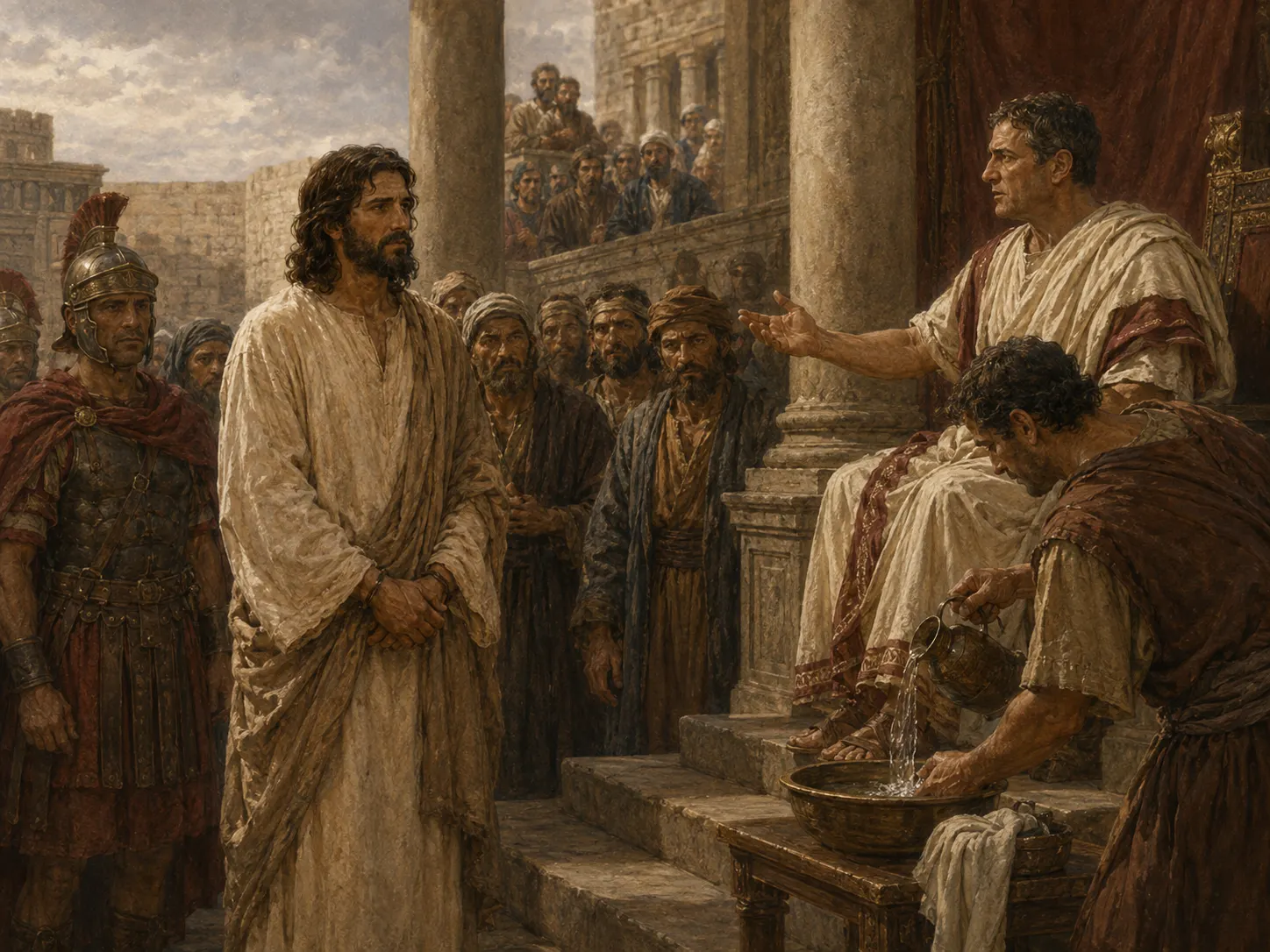
Pilate offered to release one prisoner, and the crowd chose Barabbas instead of Jesus. Though Pilate knew Jesus had done no wrong, he was afraid of the crowd and did not stand firm for justice. He washed his hands in front of the people as if to say he was not responsible, but then he handed Jesus over to be crucified.
The soldiers treated Jesus cruelly. They whipped Him and hurt Him. They put a robe on Him, pressed a crown of thorns on His head, and mocked Him as if He were only pretending to be a king. They struck Him and laughed at Him. Jesus endured all of this with quiet strength.
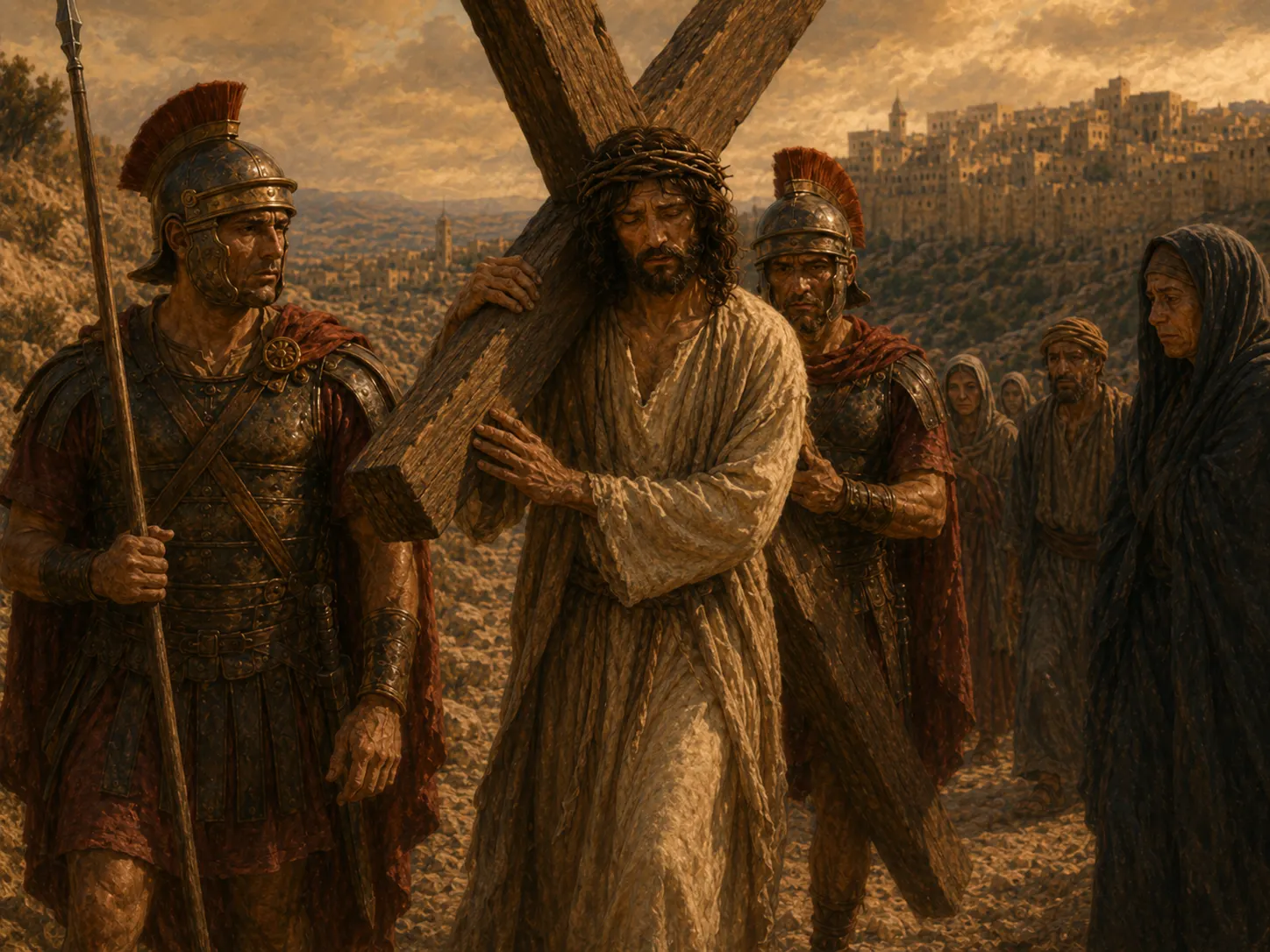
Then the soldiers led Jesus away toward Golgotha, the Place of a Skull. Jesus began the journey carrying His cross. The way was hard and sorrowful. When He became too weak to carry it farther, the soldiers forced a man named Simon of Cyrene to carry the cross behind Him. A small crowd followed, watching in grief and silence.
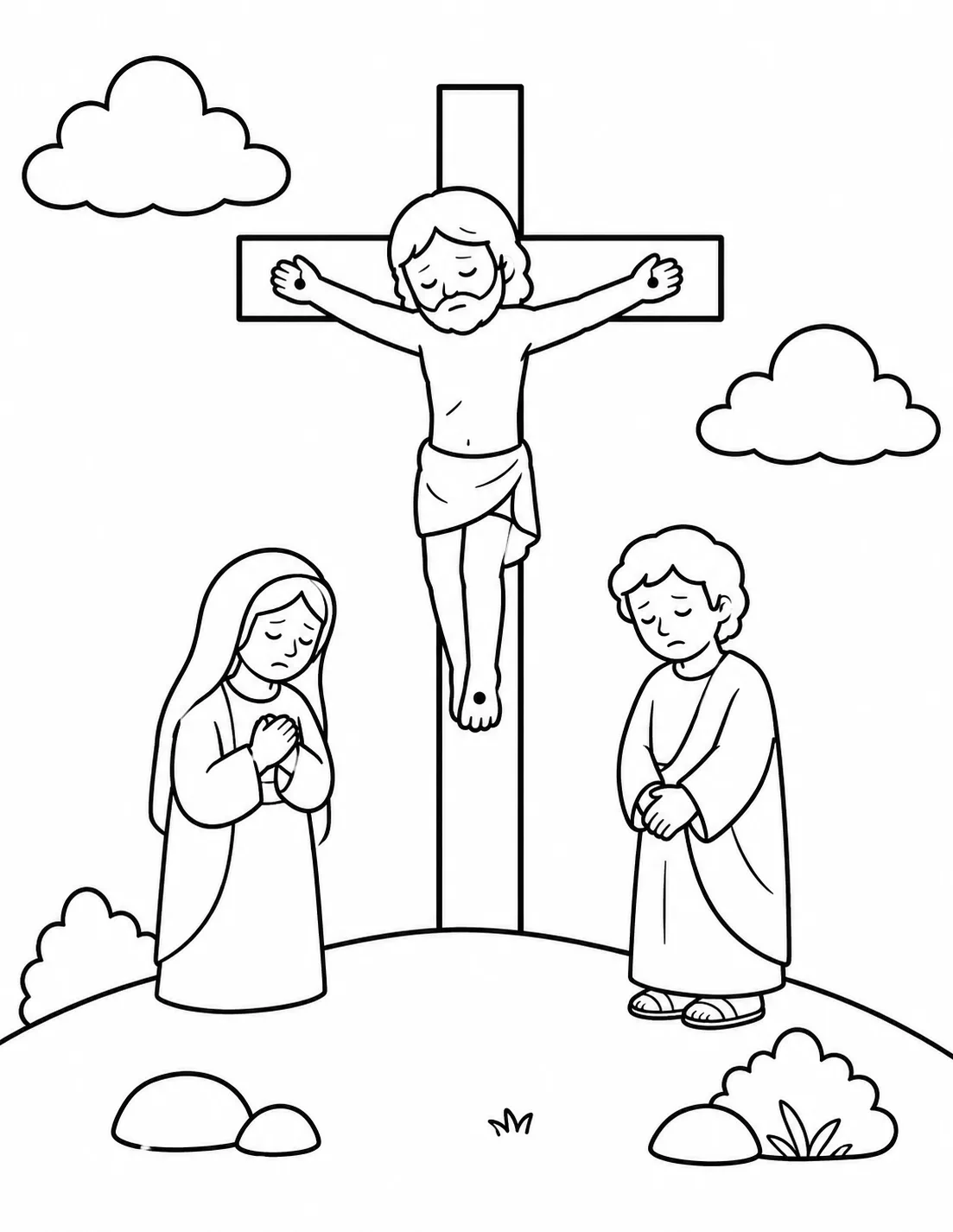
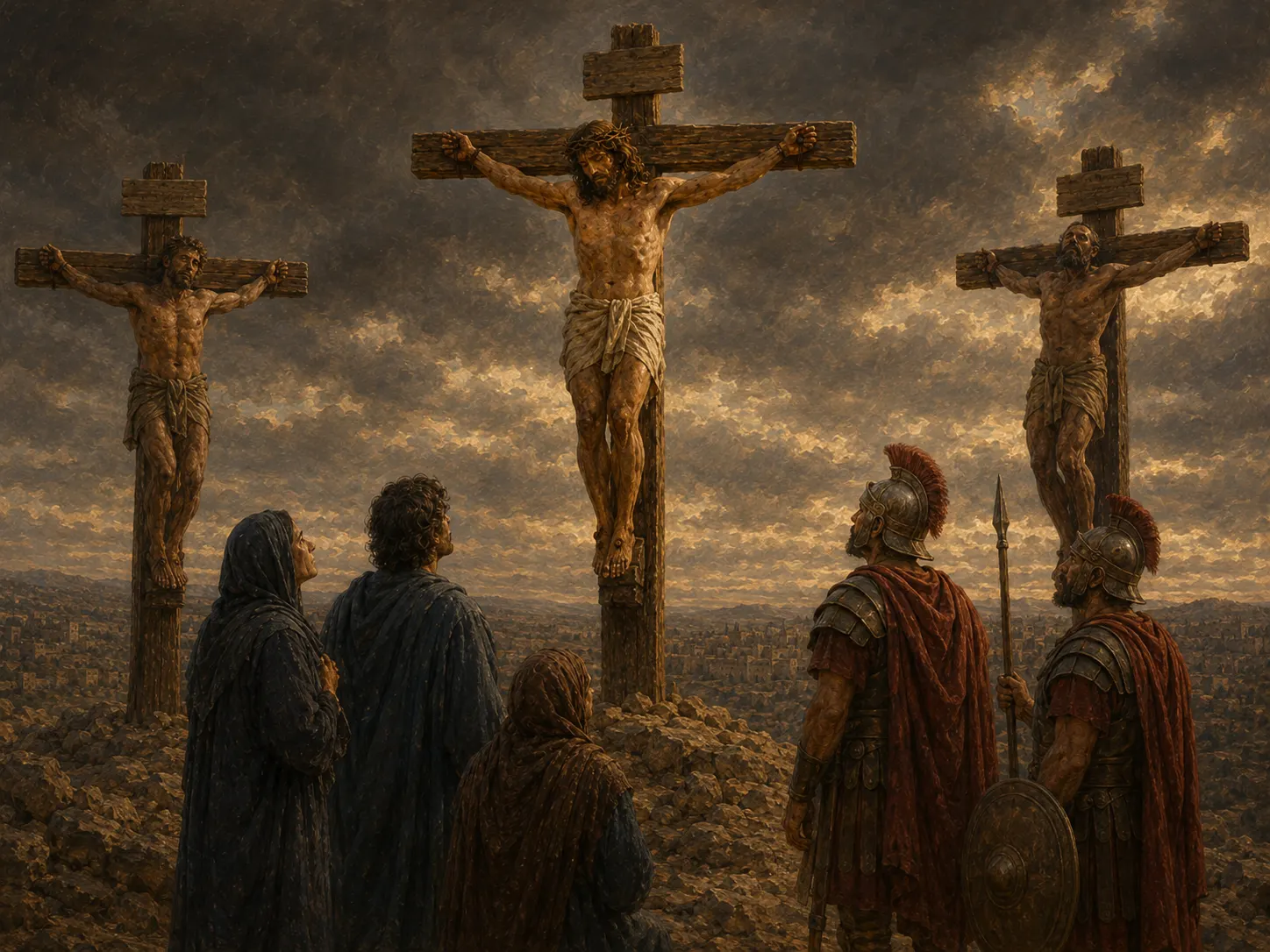
At Golgotha, the soldiers nailed Jesus to the cross and raised it up. Two criminals were crucified there too, one on each side of Him. A sign was placed above Jesus that said, “Jesus of Nazareth, the King of the Jews.” Though many people looked at Him with shame, Jesus truly was the promised King.
People passing by mocked Jesus. Some leaders sneered at Him, and soldiers watched nearby. One of the criminals also mocked Him, but the other saw that Jesus was different. He admitted his own guilt and asked Jesus to remember him. Jesus answered with mercy and promised him hope. Even while suffering, Jesus prayed that the Father would forgive the people who were hurting Him because they did not understand what they were doing.
Near the cross stood some of the women who loved Jesus, including His mother Mary. John was there too. Even in His suffering, Jesus cared for them. He made sure His mother would be cared for. Jesus was not only enduring pain. He was loving people to the very end.
At about midday, darkness came over the land. Something far greater than human cruelty was taking place. Jesus was bearing the weight of sin and carrying out the Father's plan. After hours on the cross, Jesus said that His work was finished. Then He entrusted Himself to the Father and gave up His life. Jesus did not die because He was powerless. He gave His life willingly.
At that moment, the curtain in the temple was torn from top to bottom. The way to God was being opened through Jesus. When a Roman centurion saw how Jesus died, he said that Jesus truly was righteous and truly was the Son of God.
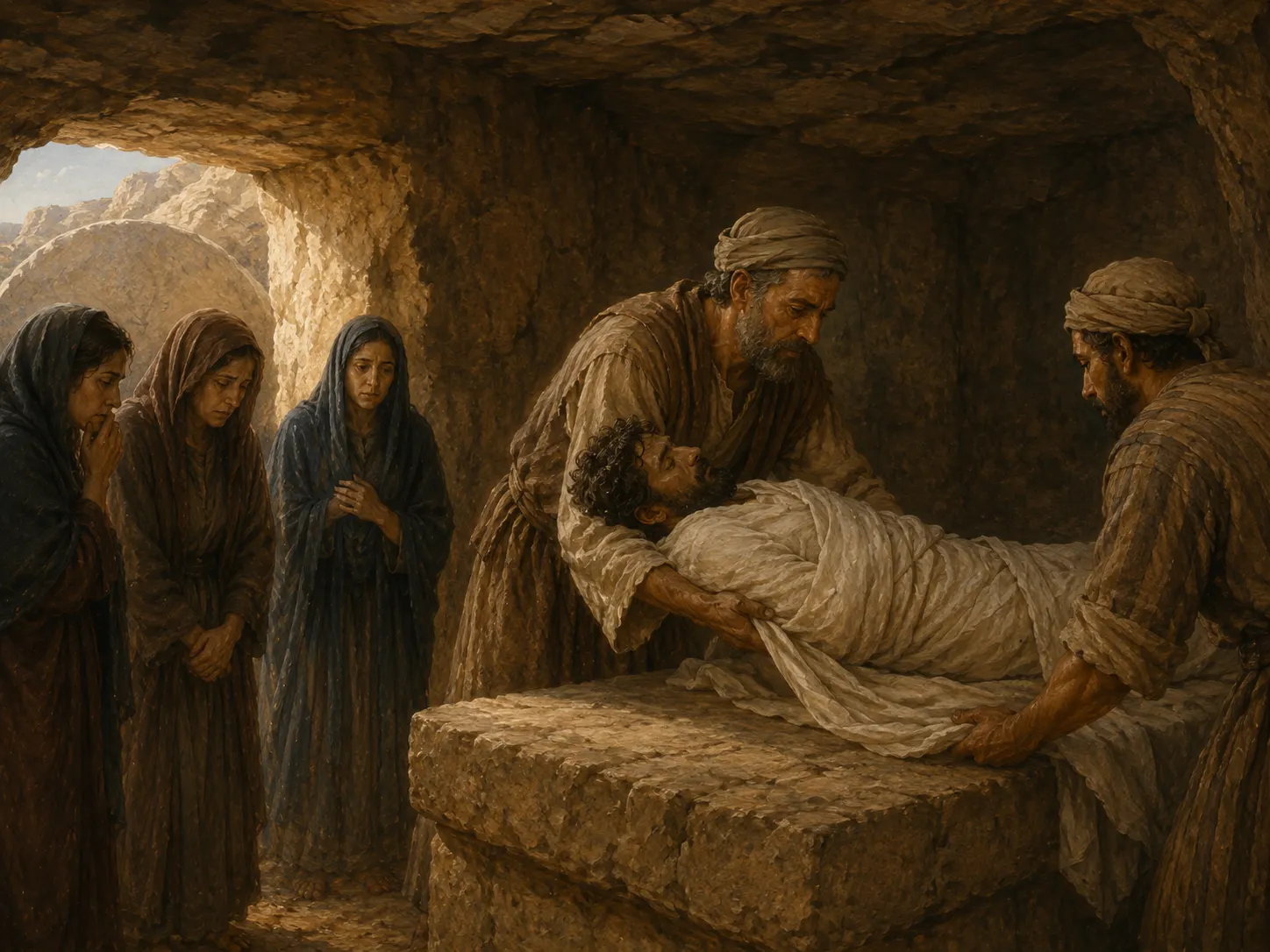
By evening, Joseph of Arimathea asked for Jesus's body. Nicodemus helped him prepare it with care. They wrapped Jesus in linen and laid Him in a new tomb cut in rock. A large stone was rolled in front of the entrance. The women who had followed Jesus saw where He was laid. Everything felt quiet, heavy, and deeply sorrowful. It seemed like the darkest day. But God's saving plan had not failed, and the story was not over.
What This Story Teaches Us
Jesus Was Innocent
Jesus had done nothing wrong, yet He was condemned and treated like a criminal.
Jesus Gave His Life Willingly
Jesus was not trapped by events. He continued toward the cross in obedience to the Father and love for sinners.
The Cross Shows the Seriousness of Sin
Sin separates people from God and cannot simply be ignored. Jesus came to deal with sin at the cross.
The Cross Shows the Greatness of God's Love
Jesus gave Himself so that sinners could receive forgiveness and peace with God.
Jesus Loved Others Even While Suffering
He showed mercy, cared for His mother, and did not answer cruelty with hatred.
How It Fits into God's Bigger Story
From the beginning, God promised to deal with sin and rescue His people. Sacrifices, the Passover lamb, and God's promises all pointed forward to a greater rescue.
At the cross, Jesus did what no one else could do. He gave Himself as the true and final sacrifice for sin. His death was not an accident or a defeat; it was the center of God's saving plan.
The cross opened the way for forgiveness and peace with God. And although this story ends at the tomb, God's plan was not finished.
Talk About It
- Why does it matter that Pilate knew Jesus was innocent?
- What do the crown of thorns, the mocking, and the cross show us about what Jesus was willing to endure?
- What do we learn about Jesus from the way He treated the repentant criminal, His mother, and the people hurting Him?
- Why was Jesus's death not a defeat, even though it looked very sad and dark?
- How does the cross help us understand God's love and our need for forgiveness?
- What can our family remember about Jesus when a story in the Bible feels very sad or difficult?
A Short Prayer
Lord Jesus, thank You for loving us enough to suffer and die on the cross for sinners. Thank You for willingly finishing the work of rescue the Father gave You to do. Help us understand both the seriousness of sin and the greatness of Your love. When this story feels sad or difficult, help us remember that Your saving plan did not fail. Teach us to trust You and receive Your forgiveness with grateful hearts. In Jesus' name, amen.
Try This Together
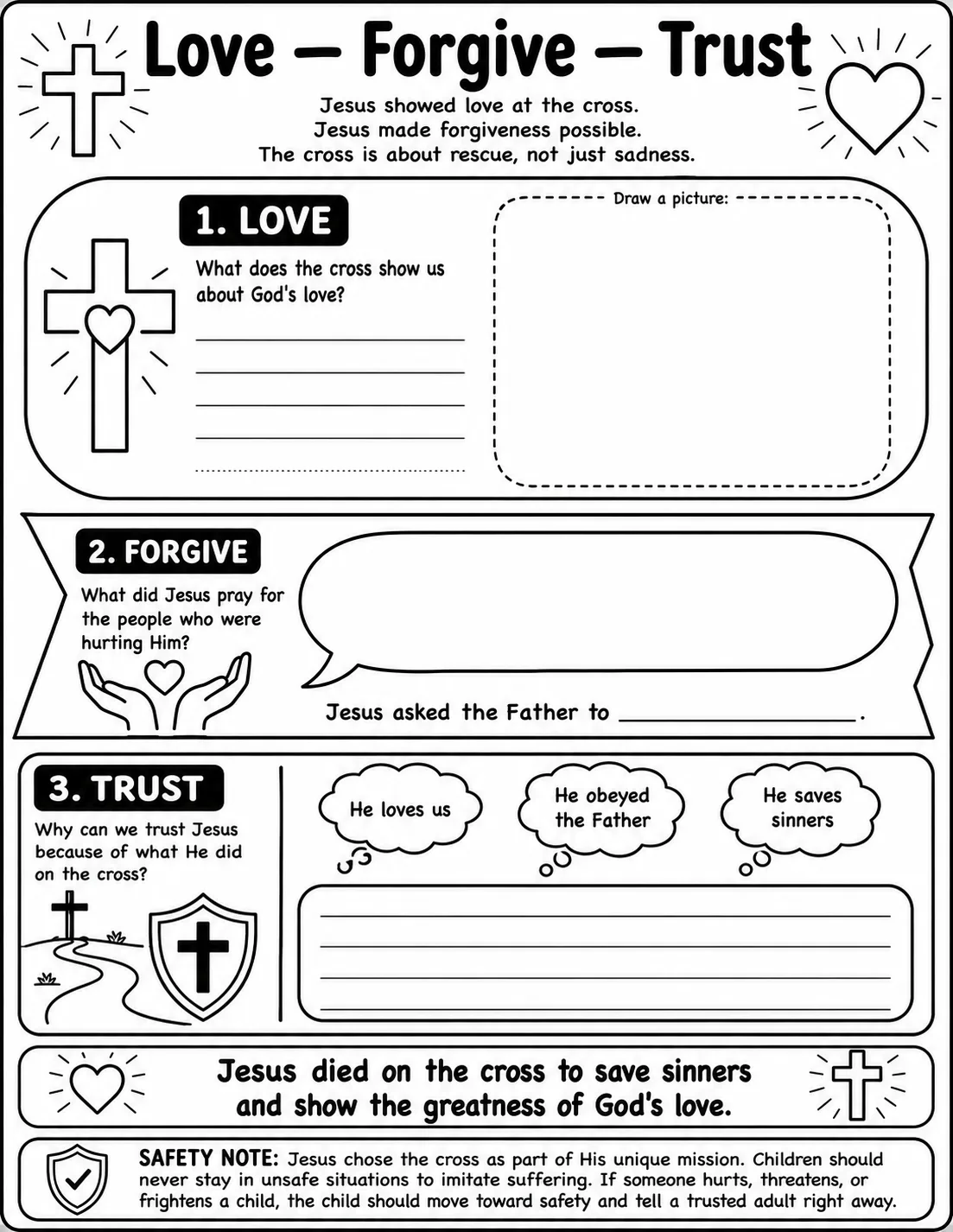
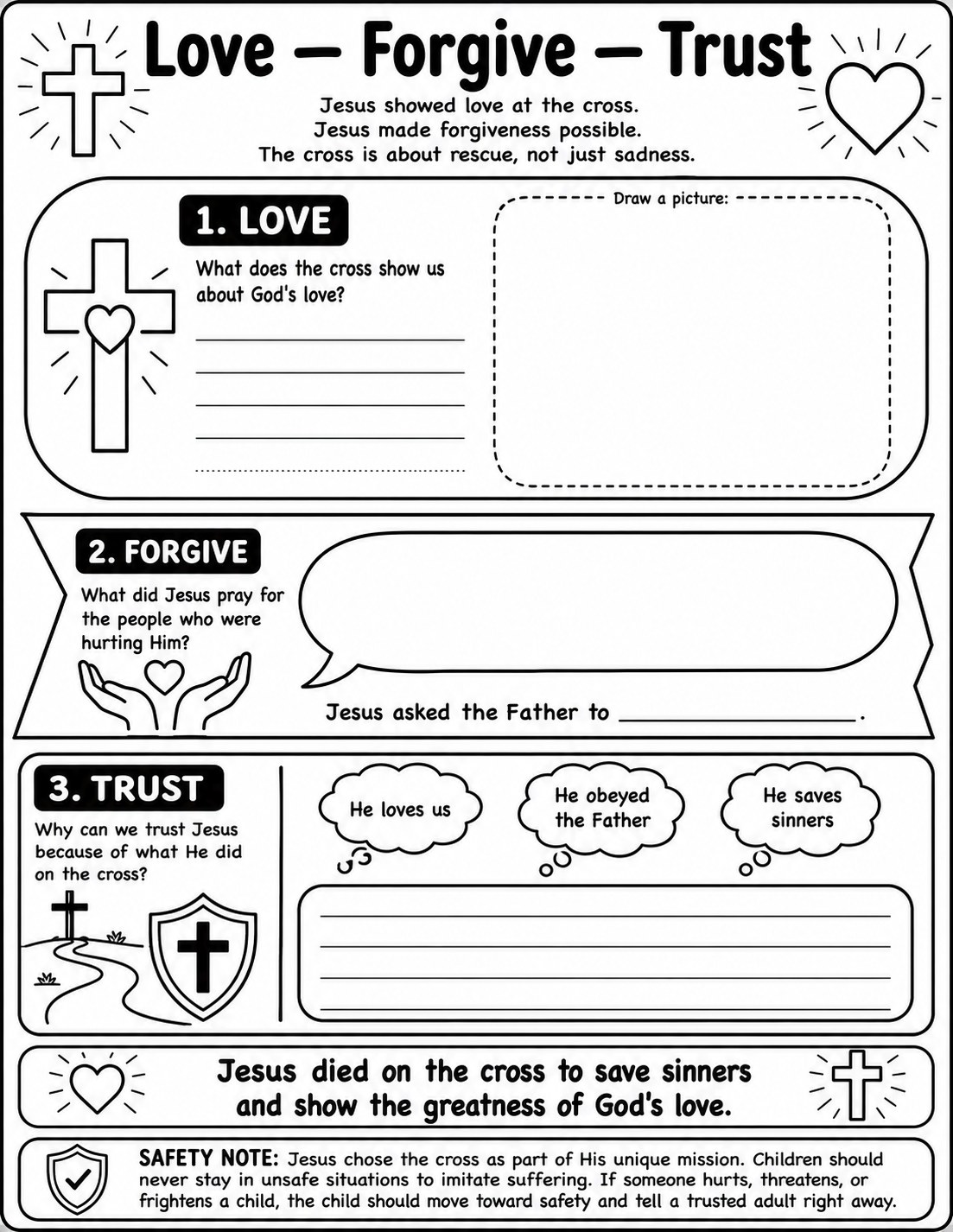
Love — Forgive — Trust 10–15 min
You will need: Printable activity page, Pencil, Crayons or markers
- Complete the LOVE section by drawing or writing what the cross shows about God's love.
- Complete the FORGIVE section by remembering what Jesus prayed for people who were hurting Him.
- Complete the TRUST section by writing why Jesus can be trusted.
- Read the final statement together and talk about one thing the child wants to remember from the story.
Help children connect the cross with Jesus' love, forgiveness, and trustworthy rescue.
Safety: Jesus chose the cross as part of His unique saving mission. Children should never stay in unsafe situations to imitate suffering. If someone hurts, threatens, or frightens a child, the child should move toward safety and tell a trusted adult right away.
Memory Verse
“God shows his love for us in this: while we were still sinners, Christ died for us.”— Romans 5:8
For Parents and Teachers
This story includes injustice, scourging, mocking, crucifixion, death, and burial. Tell these events truthfully but without graphic detail, and allow children to respond with sadness, questions, or silence.
Historical Context
Crucifixion was a Roman form of execution. The Gospel accounts emphasize both Jesus' innocence and His willing movement toward the cross. Pilate's hand-washing does not remove his responsibility for handing Jesus over.
A Question Your Child May Ask
“Why did Jesus let this happen if He could have stopped it?”
Jesus was not helpless. He willingly obeyed the Father and gave His life to rescue sinners. His choice was unique and does not mean children should stay in danger.
Common Misunderstandings
- Do not reduce the cross to only an example of bravery or kindness.
- Do not present Jesus as a helpless victim trapped by events.
- Do not imply that children should quietly endure abuse or danger in order to imitate Jesus.
- Do not blame all Jewish people for Jesus' death or portray Jewish people as a hostile ethnic group.
- Do not turn the crucifixion into graphic or sensational violence.
Safeguarding
Jesus chose the cross as part of His unique saving mission. A child who is being hurt, threatened, frightened, isolated, or pressured to keep an unsafe secret should move toward safety and tell a trusted adult.