Jesus Calms the Storm
Even the Wind and Waves Obey Him
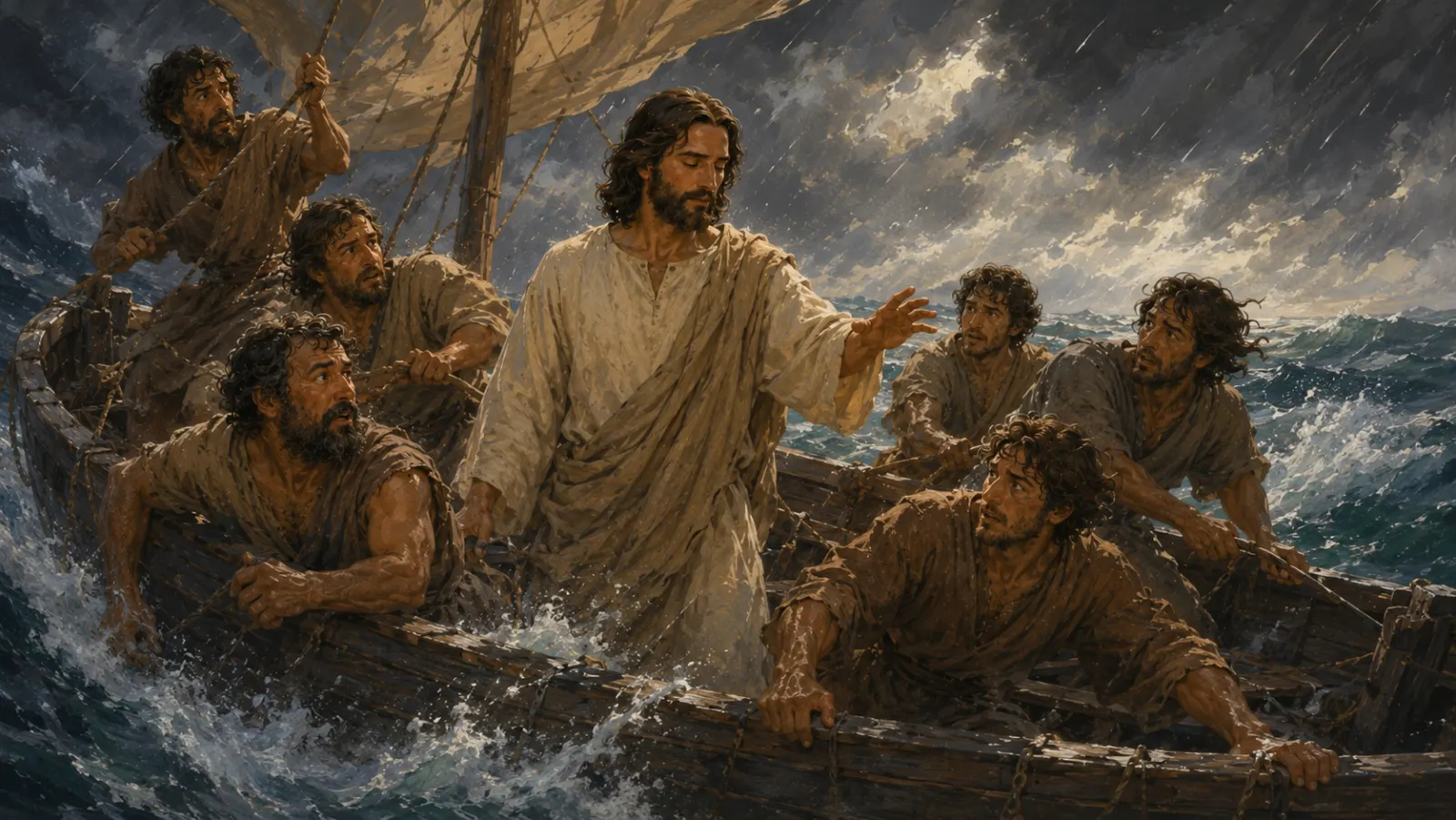
Before You Read
Several of Jesus's disciples had spent years working as fishermen on the Sea of Galilee. They knew boats, wind, and water.
That makes what happens in this story especially important: the storm becomes frightening even to people who know the lake well.
As you read, notice what Jesus does and the question the disciples ask after the lake becomes calm.
The Bible Story
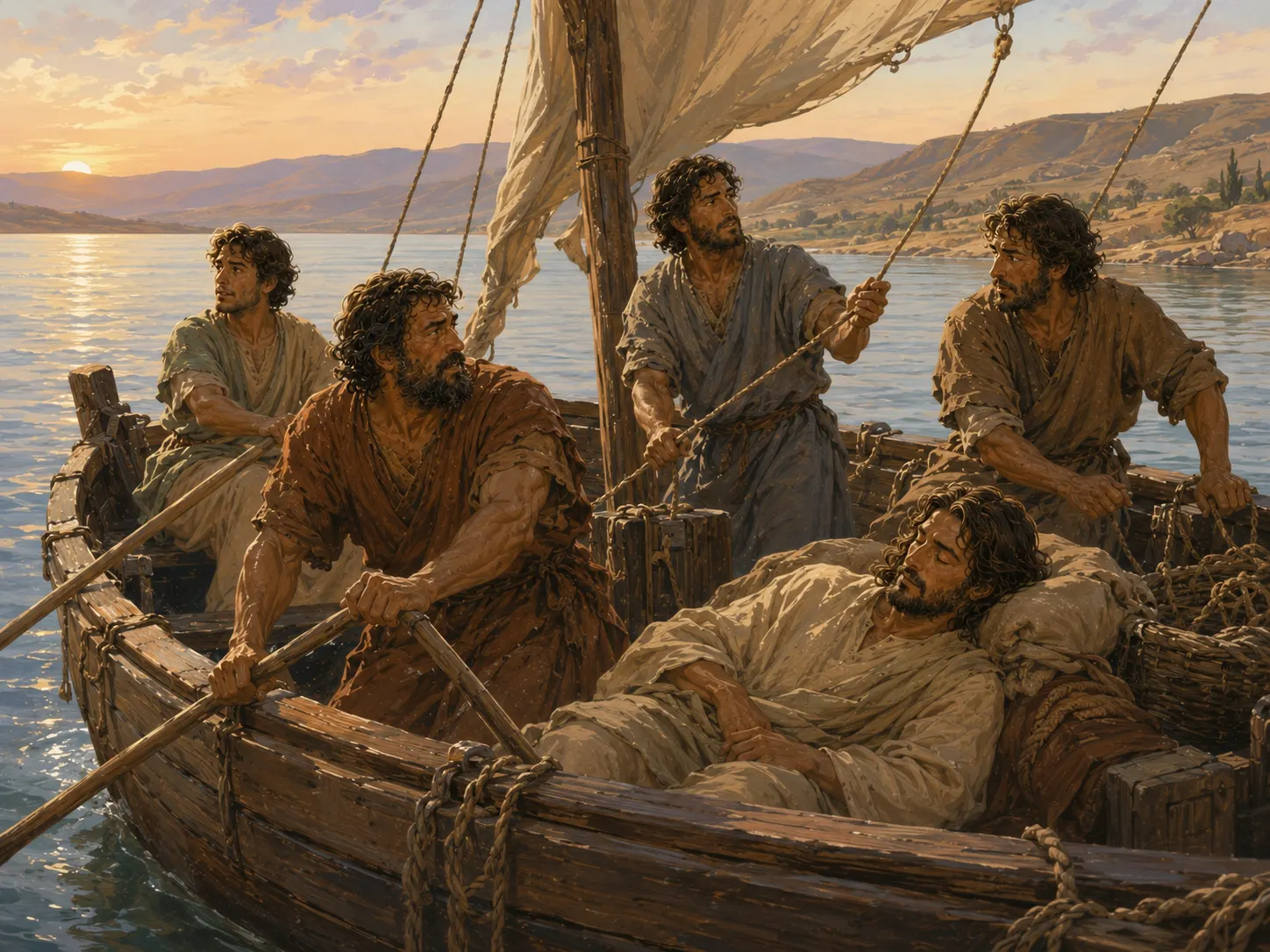
Jesus and His disciples had spent the day near the Sea of Galilee. Crowds had gathered to hear Jesus teach, and by evening He told His disciples that they would cross to the other side of the lake.
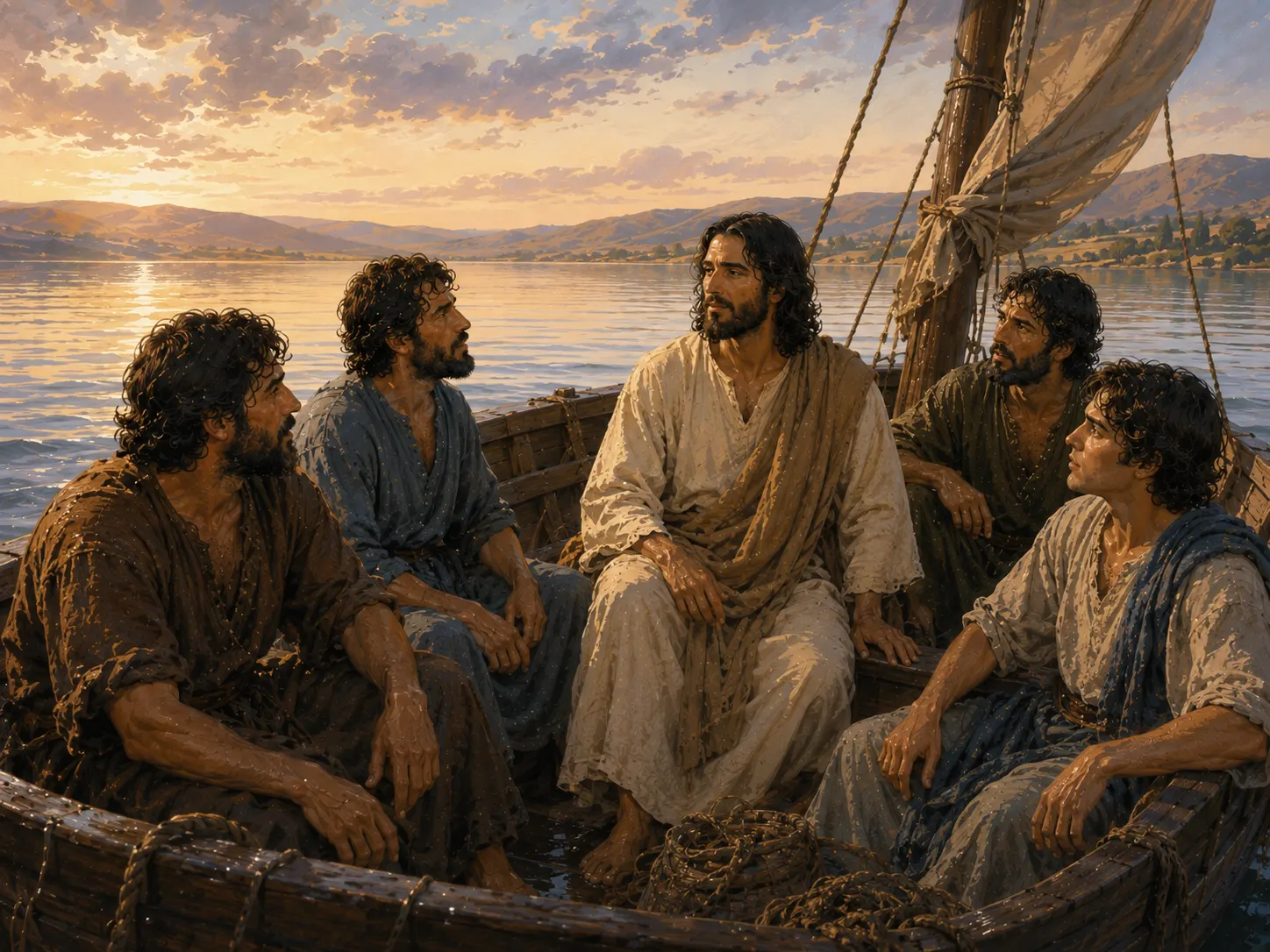
They got into a boat and pushed away from shore. Some of the disciples knew this lake well because they had worked there as fishermen, and they understood how quickly conditions could change.
Jesus was tired after teaching. He lay down in the boat and fell asleep.
At first, the crossing may have seemed ordinary. The disciples knew the sounds of water against wood, the pull of the wind, and the work of guiding a fishing boat across the lake.
Then the weather changed.
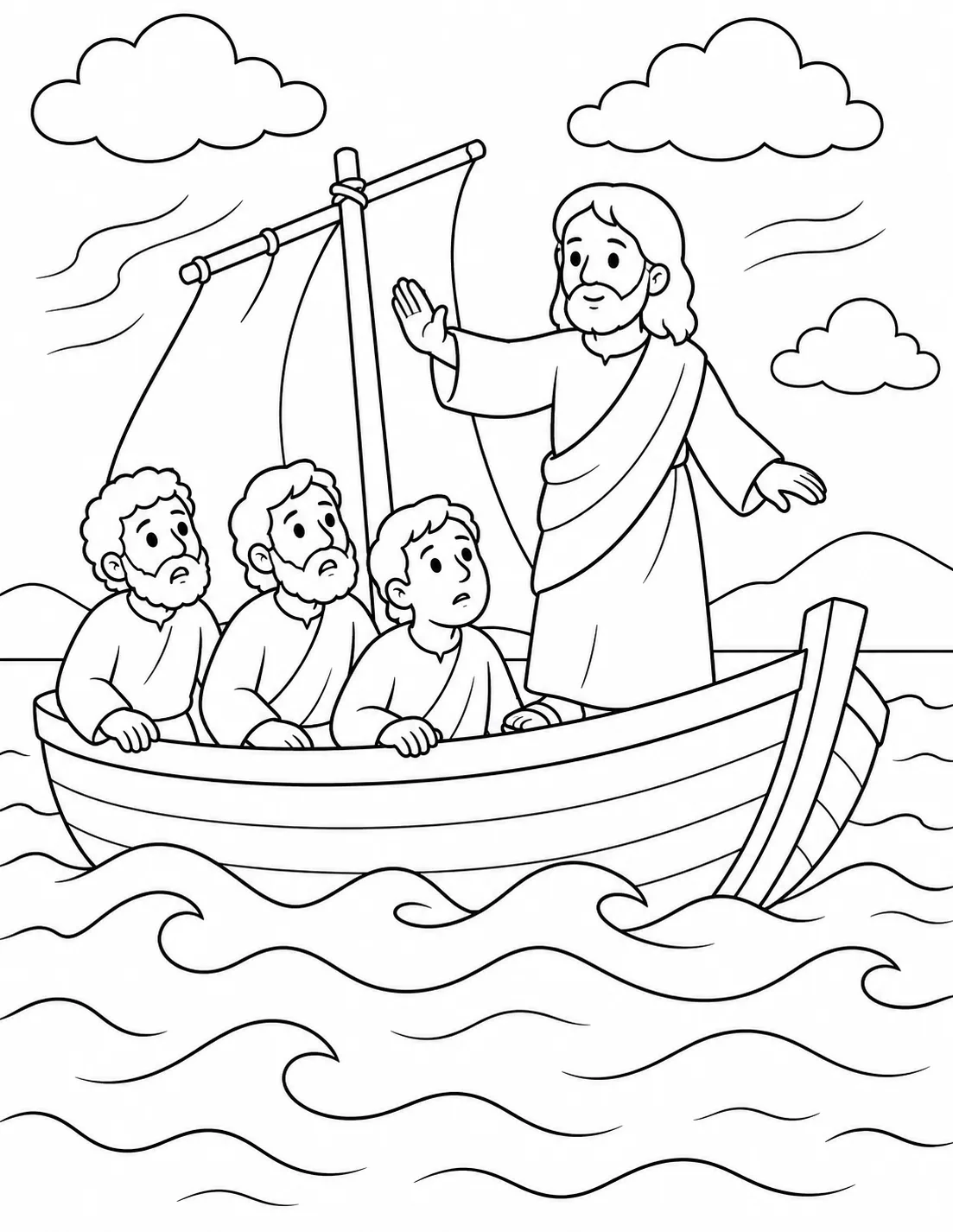
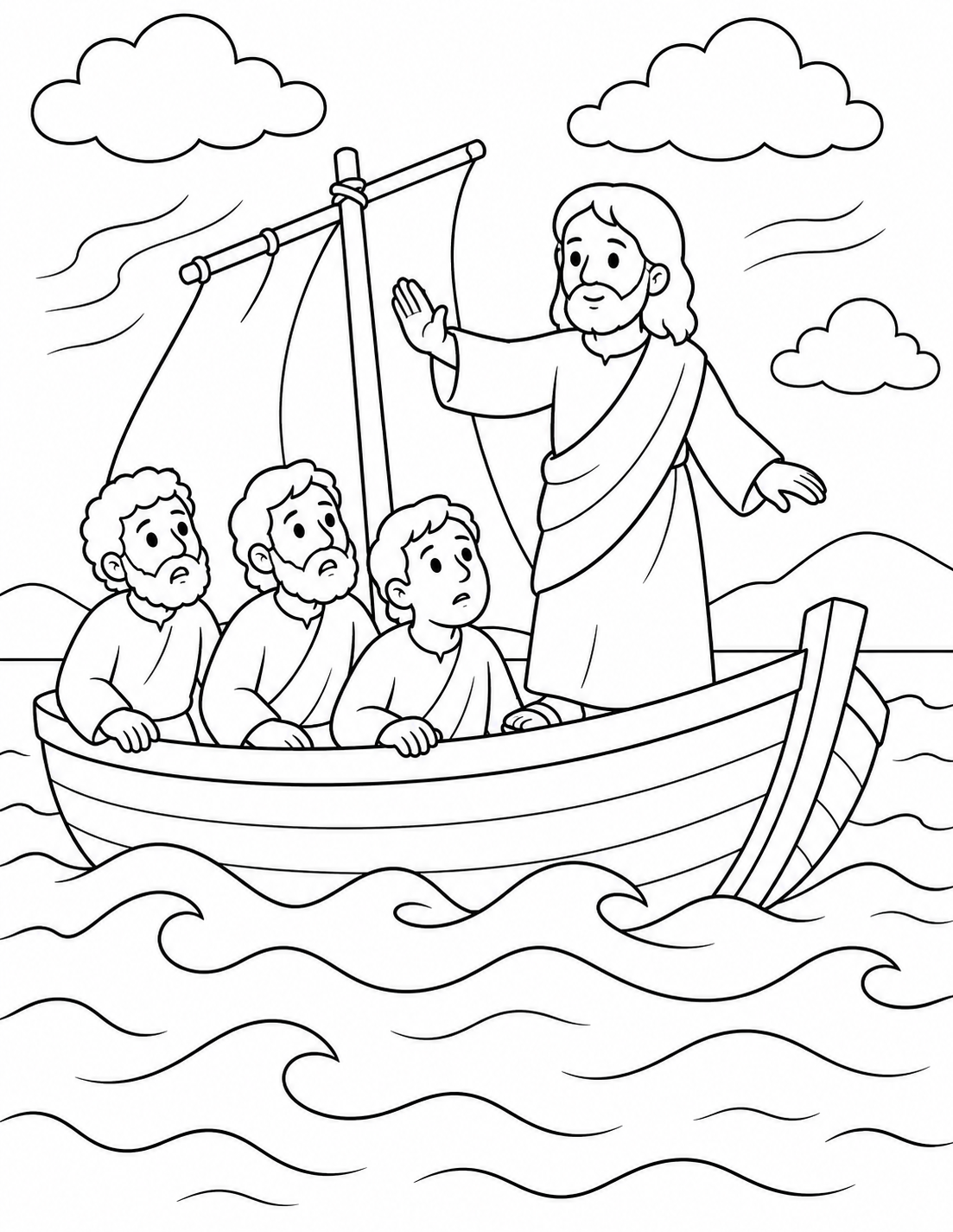
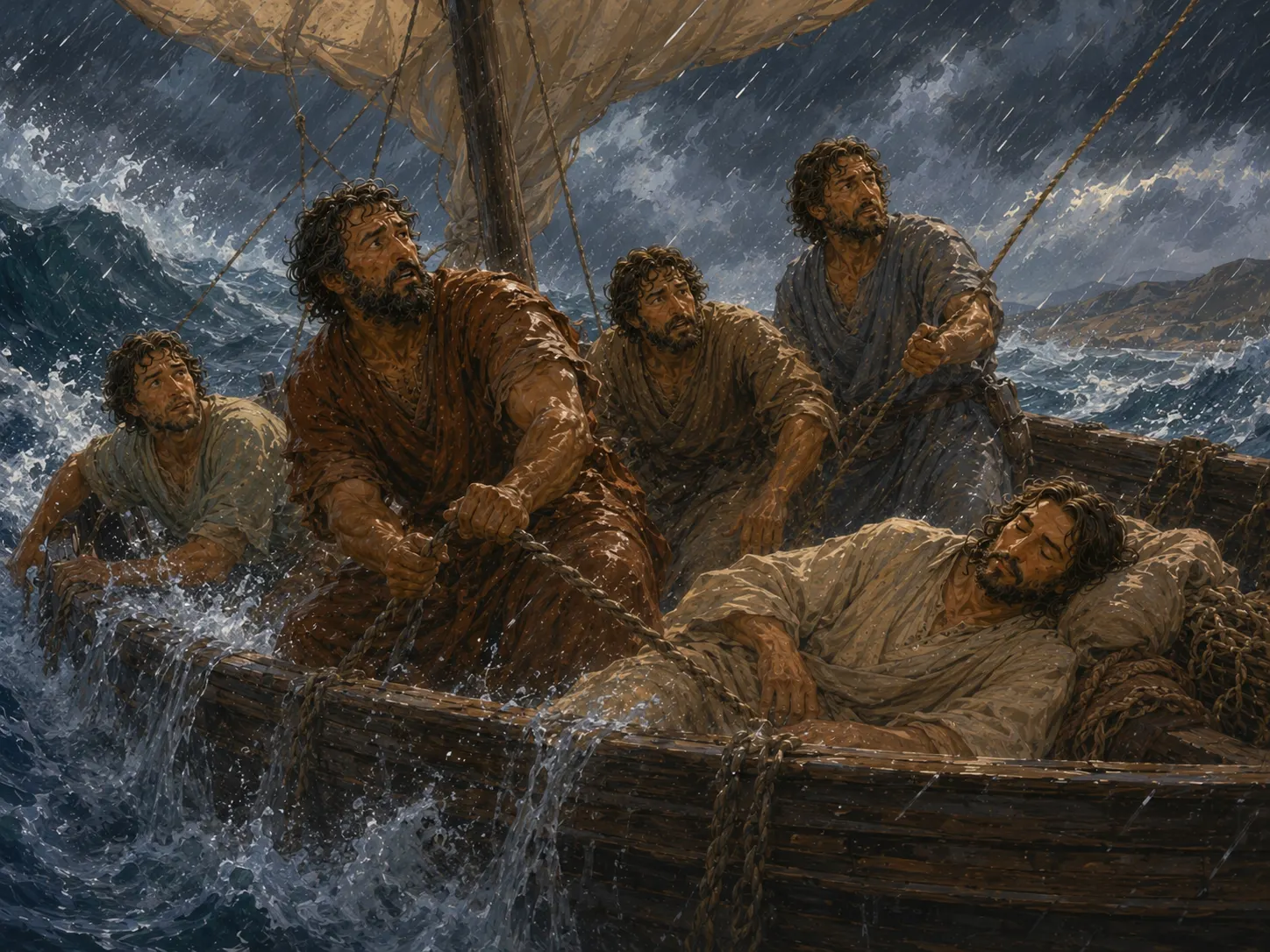
A strong wind swept across the lake. Waves began breaking over the boat, and water came in faster than the disciples wanted.
The Sea of Galilee could become dangerous quickly, and this storm was not something the disciples could simply ignore.
They worked to keep the boat under control. They handled ropes, watched the waves, and tried to keep water from overwhelming them.
Some of these men were experienced fishermen, but even they became afraid.
Meanwhile, Jesus was still asleep.
The disciples woke Him.
They were frightened and could not understand how He could sleep while the boat was being overwhelmed by the storm. Their words showed both fear and confusion.
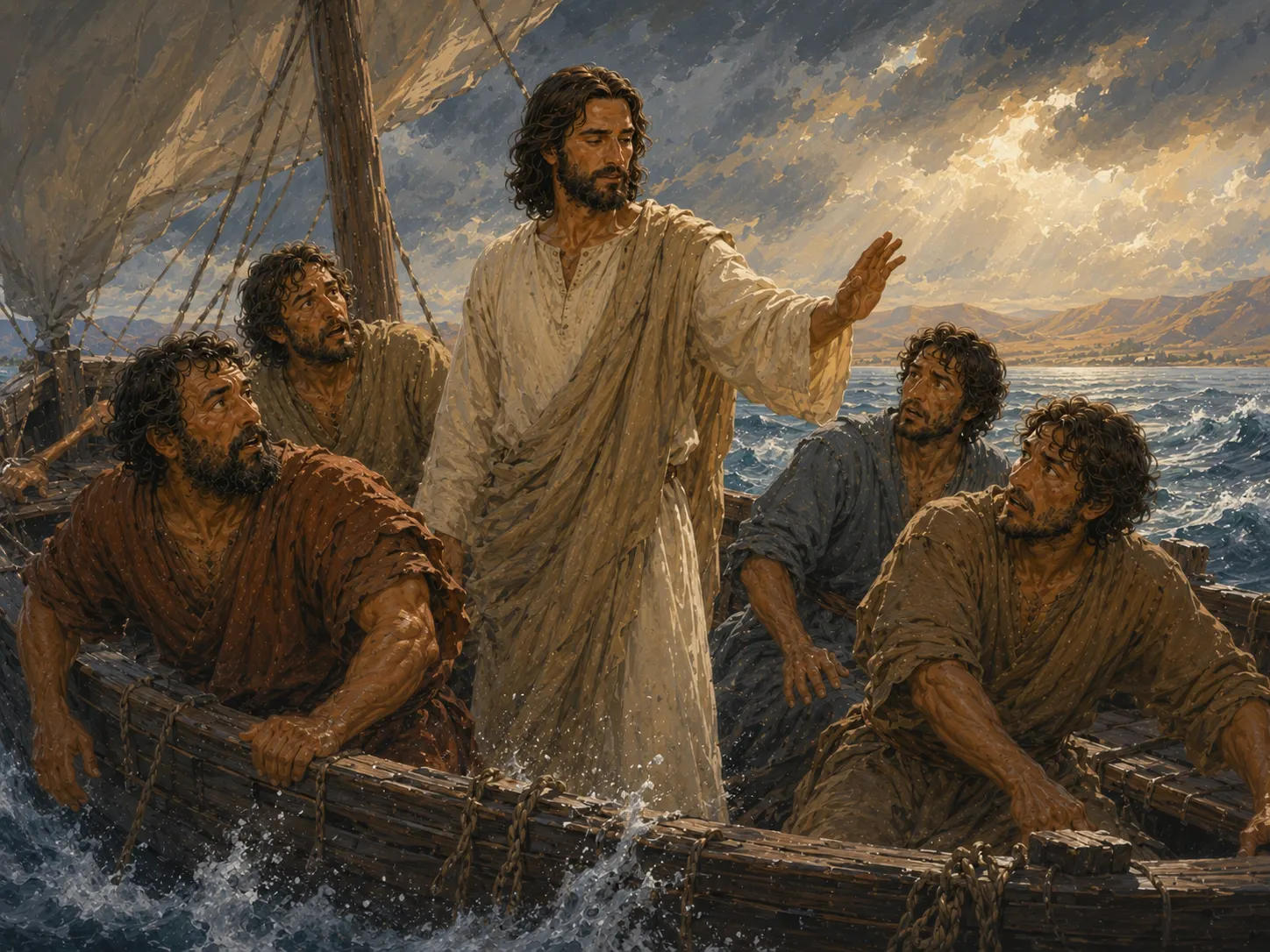
Jesus got up.
He spoke to the wind and the waves.
The storm stopped.
The wind died down, and the water became calm.
The change was not because the disciples had finally found the right sailing technique. It did not happen because the storm had simply run its course at that exact moment.
It happened because Jesus commanded the storm.
Then Jesus spoke to His disciples about their fear and faith.
He did not pretend that the storm had not been frightening. The boat had been taking on water, and the disciples had believed they were in serious danger.
But He challenged them to think more deeply about who was with them in the boat.
The disciples were amazed.
They had already heard Jesus teach and had begun to see His authority in other ways.
Now they had watched the wind and water obey Him.
They asked one another what kind of man this could be.
The question matters.
The disciples had survived a frightening storm, but their greatest surprise was not simply that the danger had passed. They had watched Jesus speak to the wind and waves, and the storm had obeyed Him.
It is about Jesus.
The disciples still had much to learn about Him.
They had followed Him, listened to Him, and left their work behind to become His disciples.
But being close to Jesus did not mean they understood Him fully.
The storm exposed both their fear and their limited understanding.
Jesus's authority was greater than the forces that frightened them.
This would not be the last frightening day the disciples ever faced. There would be other dangers, losses, and moments when they did not know what would happen next.
But this night on the lake gave them something they would remember: the wind and the sea were not beyond Jesus's authority.
Their fear did not disappear because they had learned a simple trick for staying calm. Instead, their fear turned into wonder as they looked at Jesus and tried to understand who was in the boat with them.
The point is that Jesus is not powerless in the middle of them.
His disciples were beginning to discover that His authority reached far beyond ordinary human ability.
The water was calm now, but the disciples were left with a question that would follow them long after the storm:
Who is Jesus?
The answer would become clearer as they watched Him teach, heal, forgive, confront evil, go to the cross, and rise again.
For now, the disciples sat in a suddenly quiet boat, looking at Jesus with a new kind of awe.
The storm had ended, but their questions about Jesus had only become bigger.
What This Story Teaches Us
1. Jesus Has Authority over Creation
The disciples could not command the wind and water, but Jesus did.
The calm that followed showed an authority beyond ordinary human ability.
2. The Disciples' Fear Was Connected to Real Danger
The storm was not imaginary, and the boat was taking on water.
The story does not require us to pretend frightening circumstances are harmless.
3. Fear Does Not Make Someone a Failure
Even experienced fishermen became afraid.
Jesus challenged His disciples to grow in faith, but the story should not be used to shame people for feeling fear.
4. Jesus's Presence Does Not Mean No Storms Will Come
The disciples were with Jesus and still faced a dangerous storm.
Following Jesus is not a promise that life will always feel safe, easy, or predictable.
5. The Story Leads to a Question about Jesus
The disciples were amazed that the wind and waves obeyed Him.
Their question—who is this?—pushes the Gospel story toward Jesus's identity.
6. Trust Can Include Wise Action
Faith does not mean ignoring danger.
In real-life frightening situations, children can move toward safety, tell a trusted adult, and ask for practical help while also praying and remembering what is true about God.
How It Fits into God's Bigger Story
In the Old Testament, God's power over the sea and storm is repeatedly connected with His unique authority as Creator and Lord.
When Jesus commands the wind and waves and they obey Him, the Gospel writers are giving readers another reason to ask who Jesus truly is.
The disciples do not yet understand everything. The answer will unfold as Jesus teaches, heals, forgives, confronts evil, gives His life, and rises from the dead.
The storm story therefore belongs to the larger Gospel revelation of Jesus's identity. He is not merely a teacher giving good advice from the shore; His authority reaches even over creation.
Talk About It
- What was Jesus doing when the storm became dangerous?
- Why was it important that even experienced fishermen became afraid of this storm?
- What does the wind and water obeying Jesus show us about His authority?
- Why do you think the disciples woke Jesus when they became frightened?
- When something is truly unsafe or frightening, what are some wise things a child can do besides pretending not to be afraid?
- What truth about Jesus from this story would our family want to remember during a frightening situation?
A Short Prayer
Jesus, thank You for showing Your authority over the wind and the sea. When we feel afraid, help us remember that fear does not mean we have failed. Give us wisdom to make safe choices, ask trusted people for help, and tell the truth about what scares us. Help us keep learning who You are and trust that You are never powerless. Amen.
Try This Together
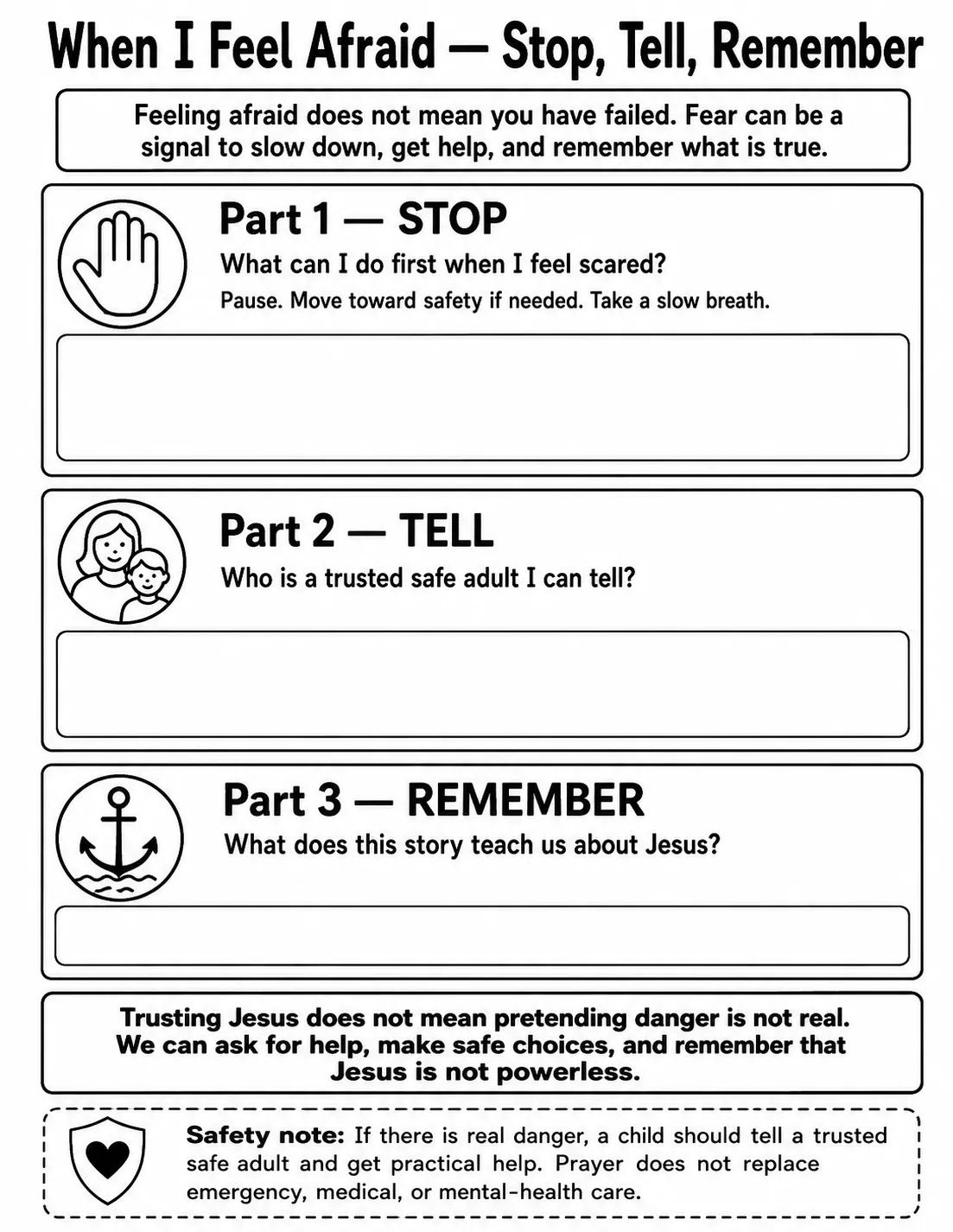
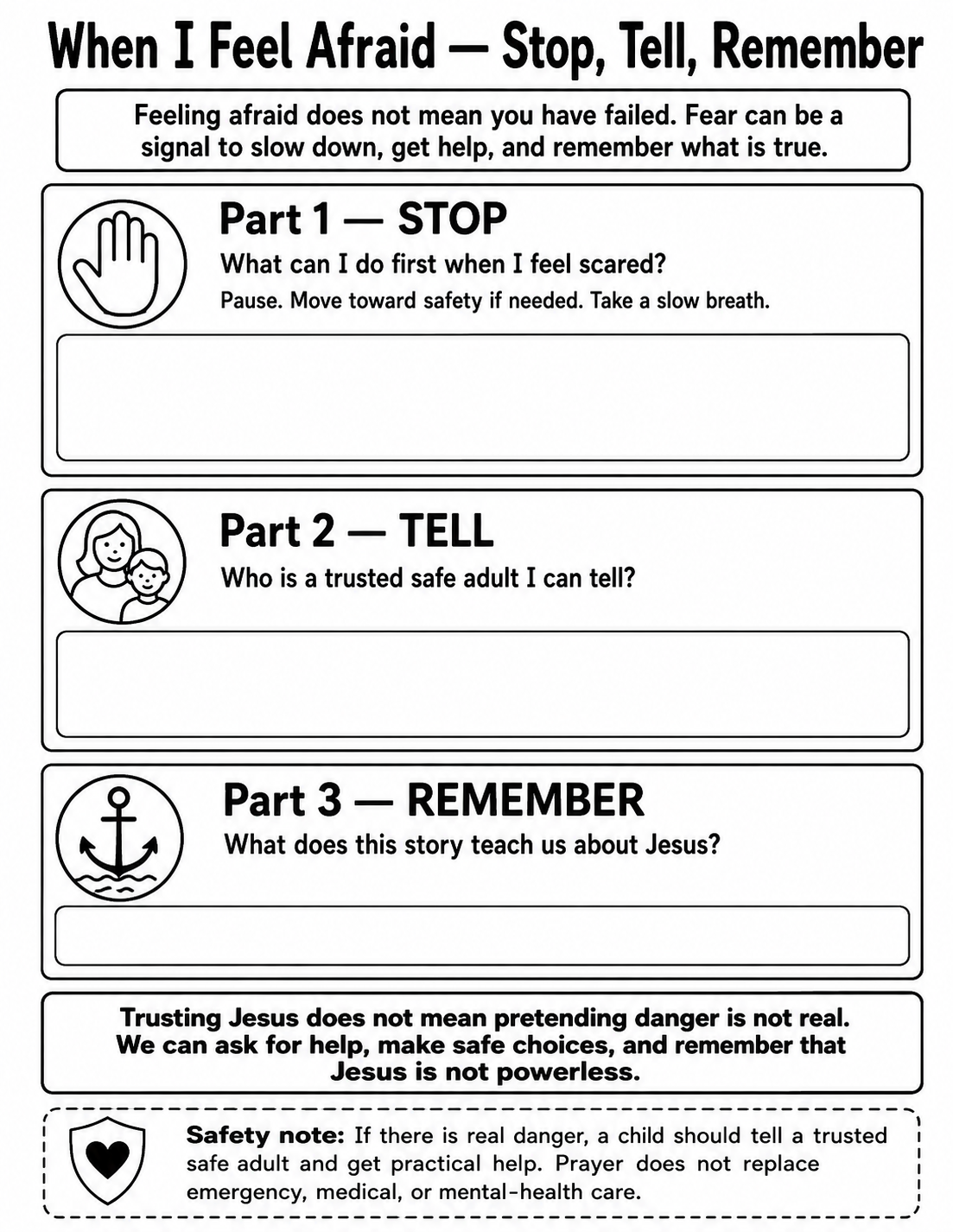
When I Feel Afraid — Stop, Tell, Remember 10–15 min
You will need: Printable activity page, Pencil, Crayons or colored pencils if desired
- Under STOP, write or draw one safe first step you can take when something feels frightening.
- Under TELL, name a trusted safe adult you can go to for help.
- Under REMEMBER, write one truth this story teaches about Jesus.
- Talk together about the difference between pretending not to be afraid and making a wise choice while afraid.
- Finish with the short prayer from the story or your own simple prayer.
Connect the storm story with realistic, safe responses to fear without promising that every problem will disappear immediately.
Safety: If something is unsafe or dangerous, children should tell a trusted safe adult and seek practical help. Prayer is not a substitute for emergency or medical care.
Memory Verse
“Even the wind and the waves obey him!”— Mark 4:41
For Parents and Teachers
Do Not Shame Fear
The disciples' fear occurs in a genuinely dangerous storm.
Children should not be taught that feeling afraid automatically means they have weak faith or have disappointed God.
Do Not Promise Every Storm Will Stop
This Gospel event reveals Jesus's authority; it is not a guarantee that prayer will immediately remove every frightening circumstance.
Christian families still experience illness, natural disasters, grief, conflict, and other situations that may not resolve quickly.
Faith and Safety Belong Together
Trusting God does not require ignoring danger.
Teach children to move toward safety, tell a trusted adult, call for appropriate help, and follow emergency instructions when needed.
Why Were Experienced Fishermen Afraid?
Several disciples had worked on the Sea of Galilee.
Their fear helps readers understand that this was not a mild inconvenience but a serious storm.
The Main Question Is 'Who Is Jesus?'
The story ends with the disciples amazed that the wind and sea obey Jesus.
Keep the theological emphasis on Jesus's identity and authority rather than turning the story into a generic lesson about emotional control.
Support Children with Strong Storm or Disaster Fears
Some children have experienced floods, hurricanes, accidents, or other frightening events.
Avoid vivid reenactments that may overwhelm them, and allow them to step away, ask questions, or seek additional support when needed.