Jacob’s Dream at Bethel
God Is with Jacob

Before You Read
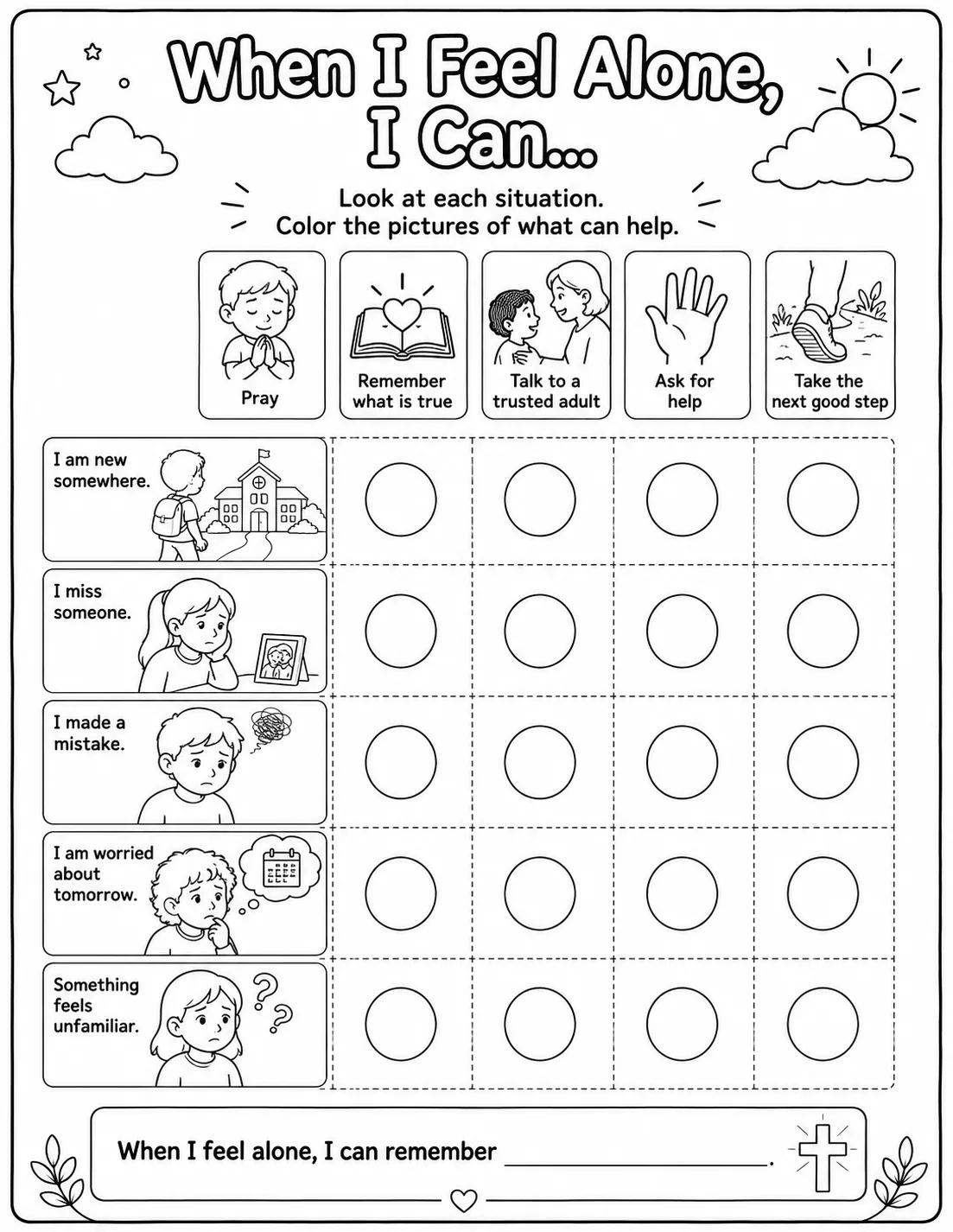
Have you ever been somewhere unfamiliar and wished you were back home?
Jacob was traveling far away after his family had been divided by painful choices.
He had made serious mistakes, but God had not abandoned His covenant plan. On a lonely night, Jacob learned that God was not limited by where Jacob happened to be.
The Bible Story
Jacob left Beersheba and began the long journey toward Haran.
He was leaving behind his parents, his brother Esau, and the familiar tents of home.
Jacob had received Isaac’s blessing through deception, and his choices had brought painful consequences.
Esau was deeply hurt and had become dangerously angry.
So Jacob was traveling away from home, not because everything had gone well, but because the family was divided.
The road ahead was long and uncertain.
Jacob carried what he needed for the journey and kept walking through the hill country.
As the sun moved lower in the sky, the shadows stretched across the path.
There was no family tent waiting for him that evening.
There was no familiar meal and no comfortable bed.

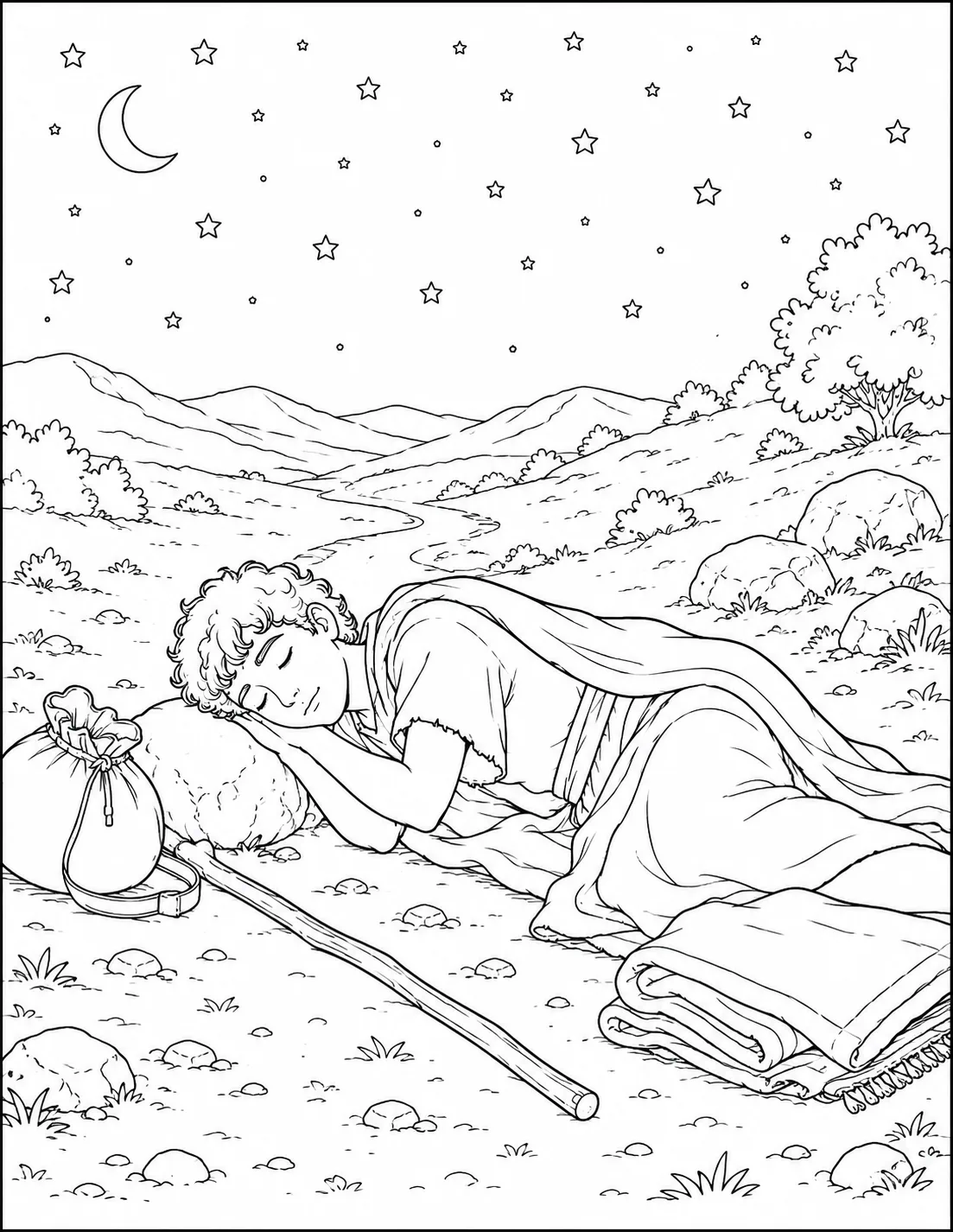
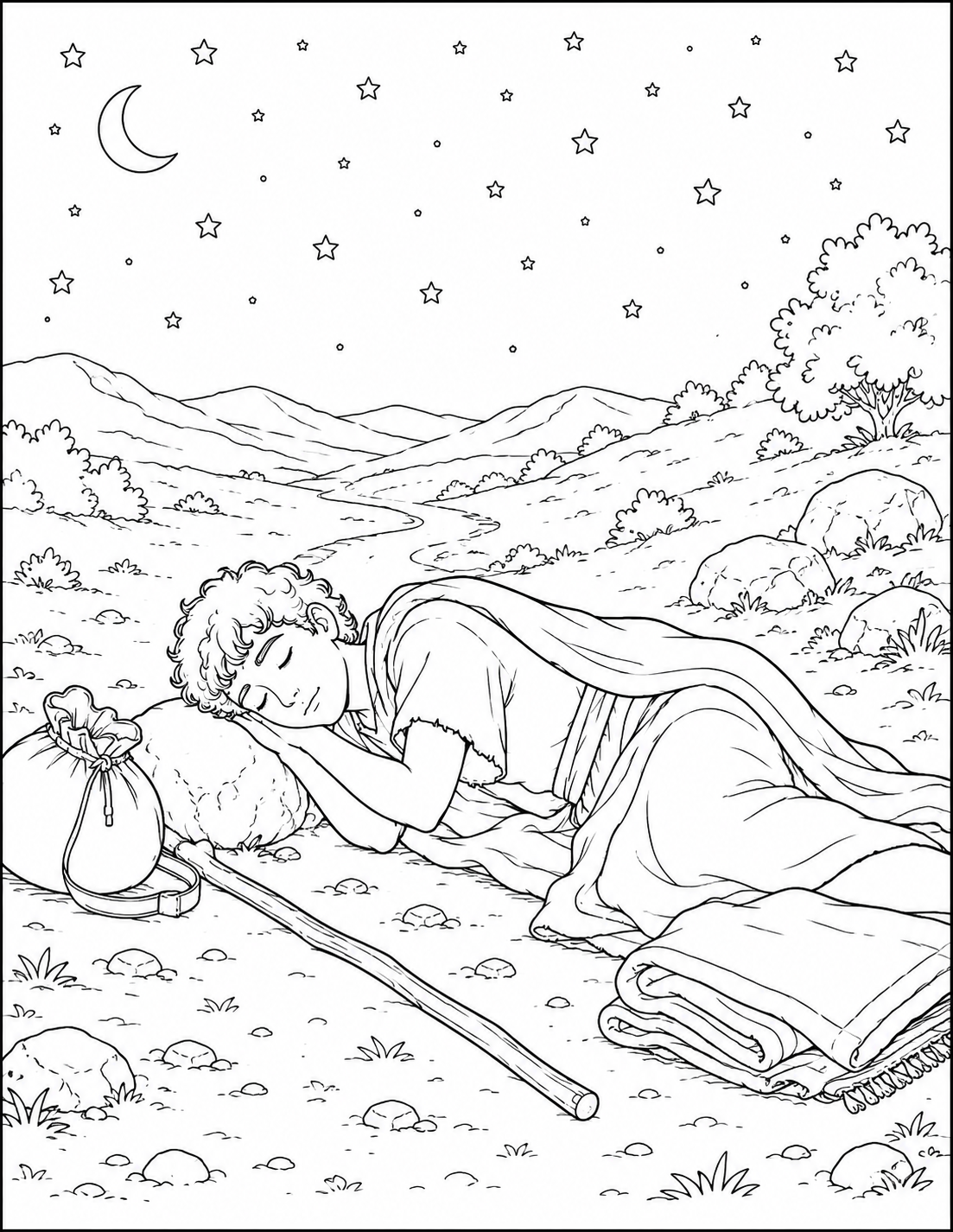
When the sun had set, Jacob stopped at a place along the road.
He took one of the stones there and placed it near his head.
Then he lay down to sleep beneath the open sky.
Jacob may have felt far from everything he knew.
But he was not beyond God’s reach.

While Jacob slept, God gave him a remarkable dream.
Jacob saw something like a great stairway rising from the earth toward heaven.
It was not an ordinary household ladder.
In the dream it stretched between the place where Jacob slept and the heavens above.
Angels of God were going up and down on it.
The scene showed Jacob that God’s purposes were far greater than the lonely road he could see around him.
Then the Lord spoke to Jacob.
God identified Himself as the God of Abraham and the God of Isaac.
Jacob was not meeting a new god belonging only to that place.
This was the same God who had called Abraham and kept His promises to Isaac.
God told Jacob that the land where he was lying would be given to him and to his descendants.
God promised that Jacob’s family would become very numerous.
His descendants would spread out in every direction.
Through Jacob and his offspring, the blessing promised to Abraham would continue toward the families of the earth.
Jacob had left home with an uncertain future, but God’s covenant promise had not been left behind.
Then God gave Jacob a deeply personal promise.
God told him, in words Jacob would remember, that He would be with him.
God promised to watch over Jacob wherever he went.
God promised that Jacob would one day be brought back to the land.
And God promised not to abandon the work He had begun.
This did not mean Jacob would never face hardship.
It did not erase the consequences of his past choices.
Jacob still had a long road ahead, and he still had much to learn.
But God was not limited by distance, tents, cities, or borders.
Jacob was far from home, but he was not far from God.
When the dream ended, Jacob woke up.
The night around him looked like the same place where he had fallen asleep.
The stones were still there.
The road was still waiting.
But Jacob now understood the place differently.
He realized that the Lord had been there even though Jacob had not recognized it before.
Jacob was filled with awe.
He understood that he had encountered the holy God.
He described the place as the house of God and the gate of heaven.
Jacob was not saying that God could only be found on that patch of ground.
He was responding with wonder to the revelation God had given him there.

Early the next morning Jacob got up.
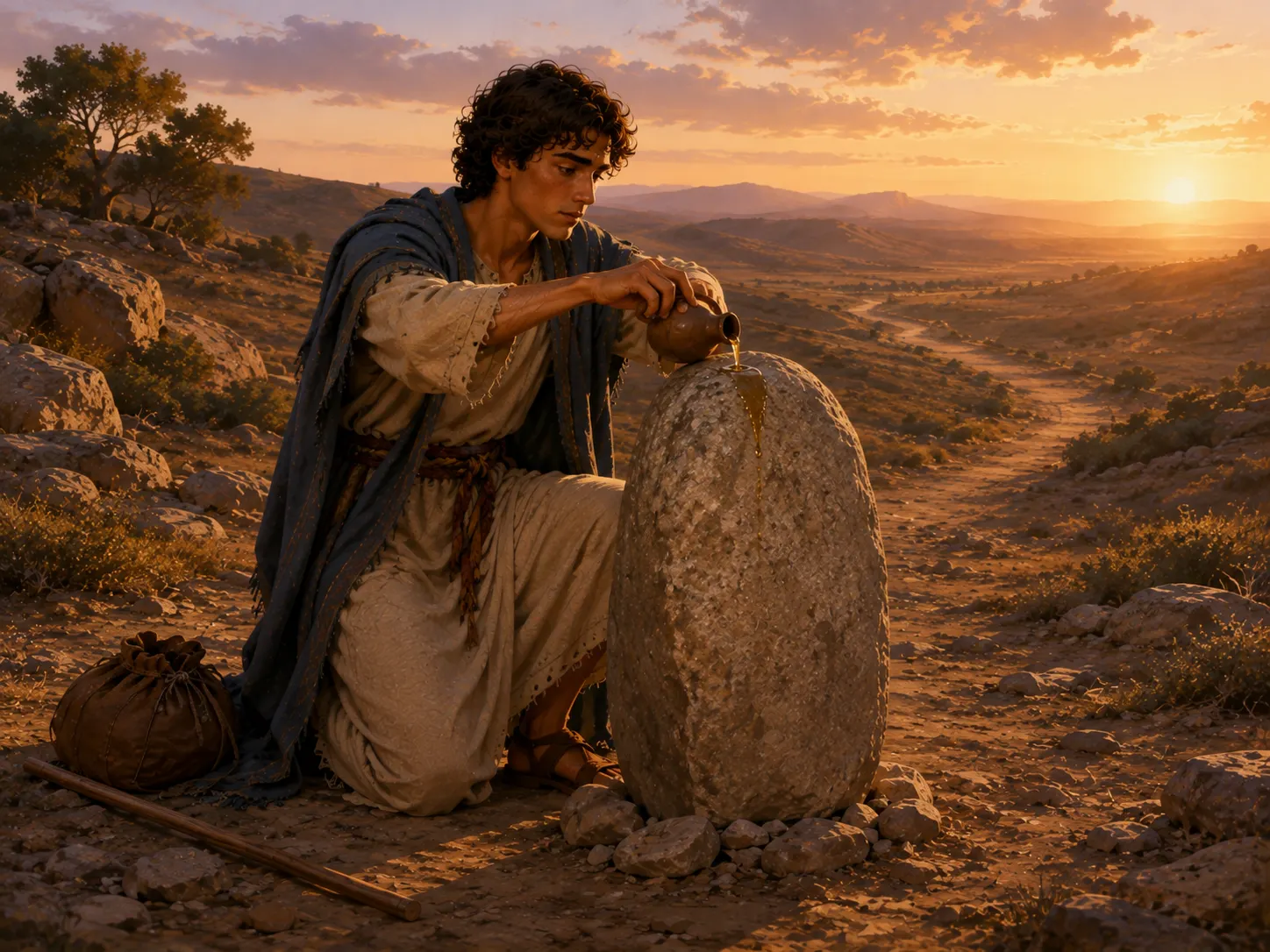
He took the stone that had been near his head.
He set it upright as a memorial stone.
The stone was not an idol and it had no magical power.
It was a visible reminder of what God had said and done.
Jacob poured oil on the top of the stone to mark the place as special.
Then he gave the place a new name.
It had previously been called Luz.
Jacob called it Bethel.
Bethel means “house of God.”
Jacob also made a vow in response to what God had promised.
He spoke about God being with him on the journey, providing what he needed, and bringing him safely home.
Jacob promised that the Lord would be his God.
He also promised to give back a tenth of what God gave him.
Jacob was not buying God’s help with a promise.
God had spoken first and had already made His covenant promise.
Jacob’s vow was his response to what he had heard.
When the morning was over, Jacob still needed to continue toward Haran.
His family problems had not suddenly disappeared.
His past choices had not been erased.
But something important had changed.
Jacob now knew that the God of Abraham and Isaac could meet him far from home.
He knew that the road ahead was still inside God’s sight.
God would continue working in Jacob’s life.
Jacob would make more mistakes and face more difficult lessons.
But the covenant promise would continue.
The lonely traveler at Bethel would one day become the father of a large family.
Later, God would even give Jacob a new name: Israel.
For now, Jacob picked up his belongings and continued his journey.
The road was still long.
But he carried a promise with him.
God had told him, “I am with you.”
What This Story Teaches Us
1. God Is Not Limited by Location
Jacob was far from the tents of his family, but God could meet him there.
No road, city, country, or unfamiliar place puts someone outside God’s reach.
2. God Can Work with Imperfect People
Jacob had made serious mistakes.
God’s promise did not mean those mistakes were good. It showed that God could continue correcting, guiding, and changing Jacob.
3. God’s Presence Does Not Remove Every Consequence
Jacob still had to continue toward Haran.
God being with him did not instantly repair every broken relationship or make the road easy.
4. Remember What God Has Done
Jacob used a memorial stone to remember what happened at Bethel.
We can use ordinary things such as journals, drawings, prayer lists, or notes to remember truths we learn from Scripture.
5. God Keeps His Bigger Promise
The covenant promise moved from Abraham to Isaac and now to Jacob.
God was continuing a plan much larger than Jacob could see that night.
How It Fits into God's Bigger Story
God’s covenant promise continued from Abraham to Isaac and then to Jacob.
Later, God would give Jacob the name Israel.
Jacob’s sons would become the ancestors of the tribes of Israel.
The promise that blessing would reach the nations through Abraham’s family continued moving forward.
In John 1:51, Jesus later used the image of angels ascending and descending. The dream at Bethel showed that heaven and earth were not outside God’s plan, and Jesus would reveal in an even greater way how God comes near to rescue His people.
Talk About It
- Why did Jacob have to leave home?
- Where did Jacob sleep when night came?
- What did Jacob see in his dream?
- What important promise did God make to Jacob about being with him?
- What did Jacob do with the stone the next morning?
- What did Jacob name the place?
A Short Prayer
God, thank You that You are not limited by where we are. Thank You for being faithful to Your promises. When we feel alone, uncertain, or far from what is familiar, help us remember what is true about You. Teach us to learn from our wrong choices and to keep following You. Thank You for continuing Your rescue plan through Abraham, Isaac, Jacob, and finally Jesus. Amen.
Try This Together
Remembering Stones
You will need: Several smooth stones, Washable markers or small paper labels, A small bowl or container
- Choose several smooth stones.
- Write or attach one short reminder to each stone: God is faithful, God hears, God helps, God forgives, or God is with me.
- Place the stones in a small bowl.
- Choose one during family Bible time and talk about why that truth matters.
- Explain that the stones have no special power. They are only reminders, similar to the way Jacob used a stone to remember what happened at Bethel.
Use ordinary objects as visual reminders of biblical truths without treating the objects as magical.
Memory Verse
“I am with you and will watch over you wherever you go.”— Genesis 28:15
For Parents and Teachers
God’s Faithfulness Does Not Approve Jacob’s Deception
The previous story must remain part of the context.
God’s covenant faithfulness does not turn Jacob’s earlier deception into a good action.
Do Not Treat Every Dream as a Message from God
Scripture records special occasions when God gave clear revelation through dreams.
Children should not be encouraged to decode ordinary dreams as divine instructions. Christian teaching about God should be tested by Scripture.
Explain the Stone as a Memorial
The stone is not magical and is not an idol.
It functions as a physical reminder of the place where Jacob received God’s promise.
Explain God’s Presence Carefully
God’s presence does not guarantee that every circumstance will be easy or painless.
Jacob still faced a long journey, difficult relationships, and future correction.
Keep the Covenant Promise in Context
God’s promises of land, descendants, return, and covenant blessing in Genesis 28 were given specifically to Jacob within the Abrahamic covenant.
Application for children should focus especially on God’s character and faithfulness rather than claiming every detail of Jacob’s promise for themselves.