Jacob and Esau
Two Brothers, Two Choices

Before You Read
Have you ever wanted something so much that it was hard to stop and think about what might happen next?
Jacob and Esau were twin brothers, but they made very different choices.
Their story reminds us that strong feelings do not make harmful choices right, and getting what we want is not worth losing honesty, fairness, or trust.
The Bible Story
The family God had promised to Abraham continued through his son Isaac.
Isaac married Rebekah, but for many years they had no children.
Isaac prayed for his wife, and God answered his prayer.
Rebekah became pregnant with twins.
Even before the boys were born, Rebekah could feel that something unusual was happening.
The babies struggled inside her, and she wondered what it meant.
Rebekah asked the Lord about it.
God told her that two nations would come from the two children and that the older would serve the younger.
God already knew the future of this family.
But knowing God’s plan would never make lying, manipulation, or unfairness right.
When the time came, the first baby was born.
He was reddish and very hairy, and they named him Esau.
Then his twin brother was born holding Esau’s heel.
They named the younger brother Jacob.
The twins shared the same parents and the same home, but they grew into very different people.
Esau loved the open country.
He became skilled at hunting and spent much of his time outdoors.
Jacob lived a quieter life and stayed closer to the family tents.
Neither kind of personality was better simply because it was different.
But another difference inside the family became a serious problem.
Isaac especially loved Esau and enjoyed the food Esau brought home from hunting.
Rebekah especially loved Jacob.
Instead of helping the brothers know that they were both loved, the parents’ favoritism added tension to the family.
Children should never have to compete to earn a parent’s love.
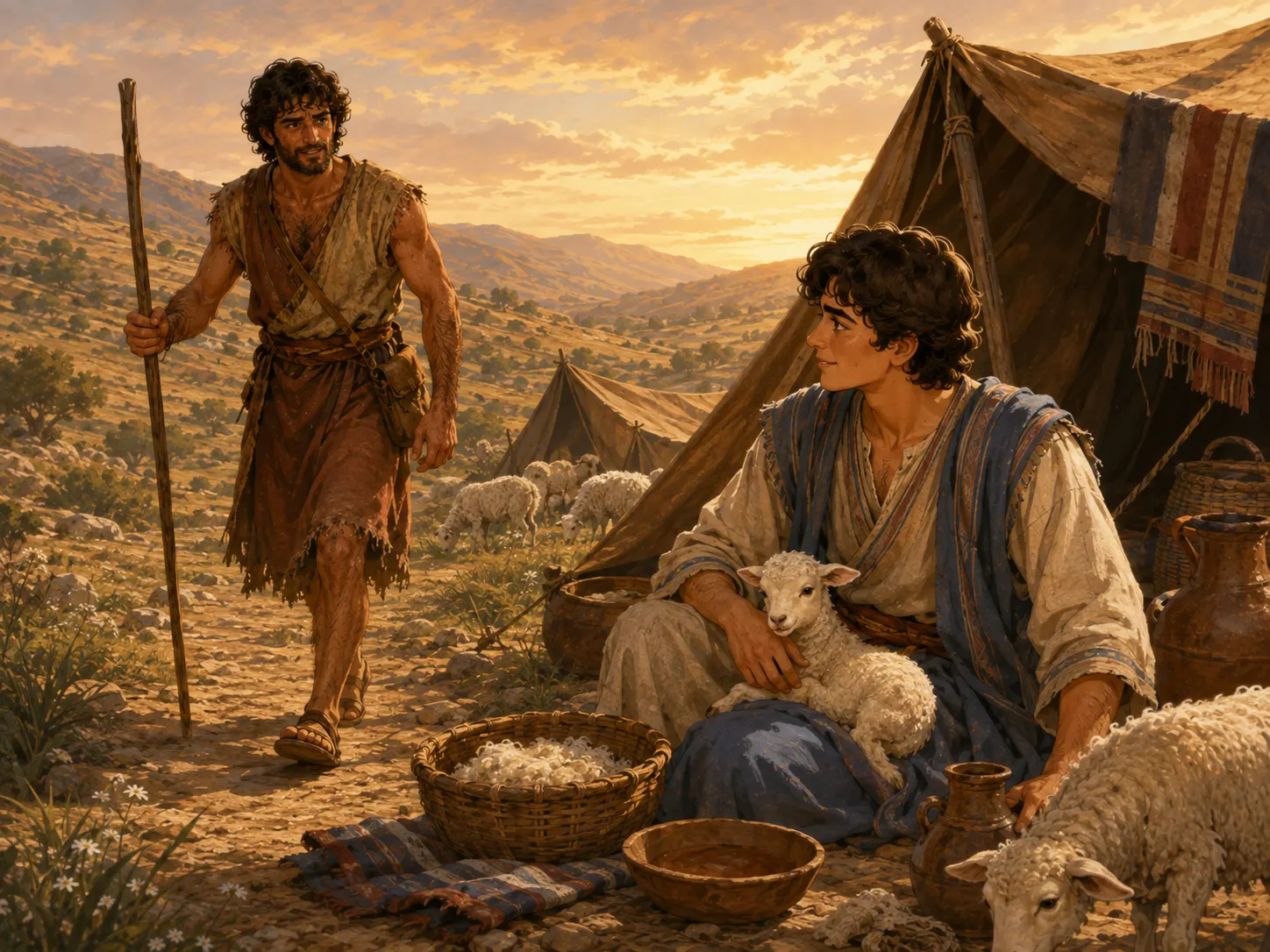
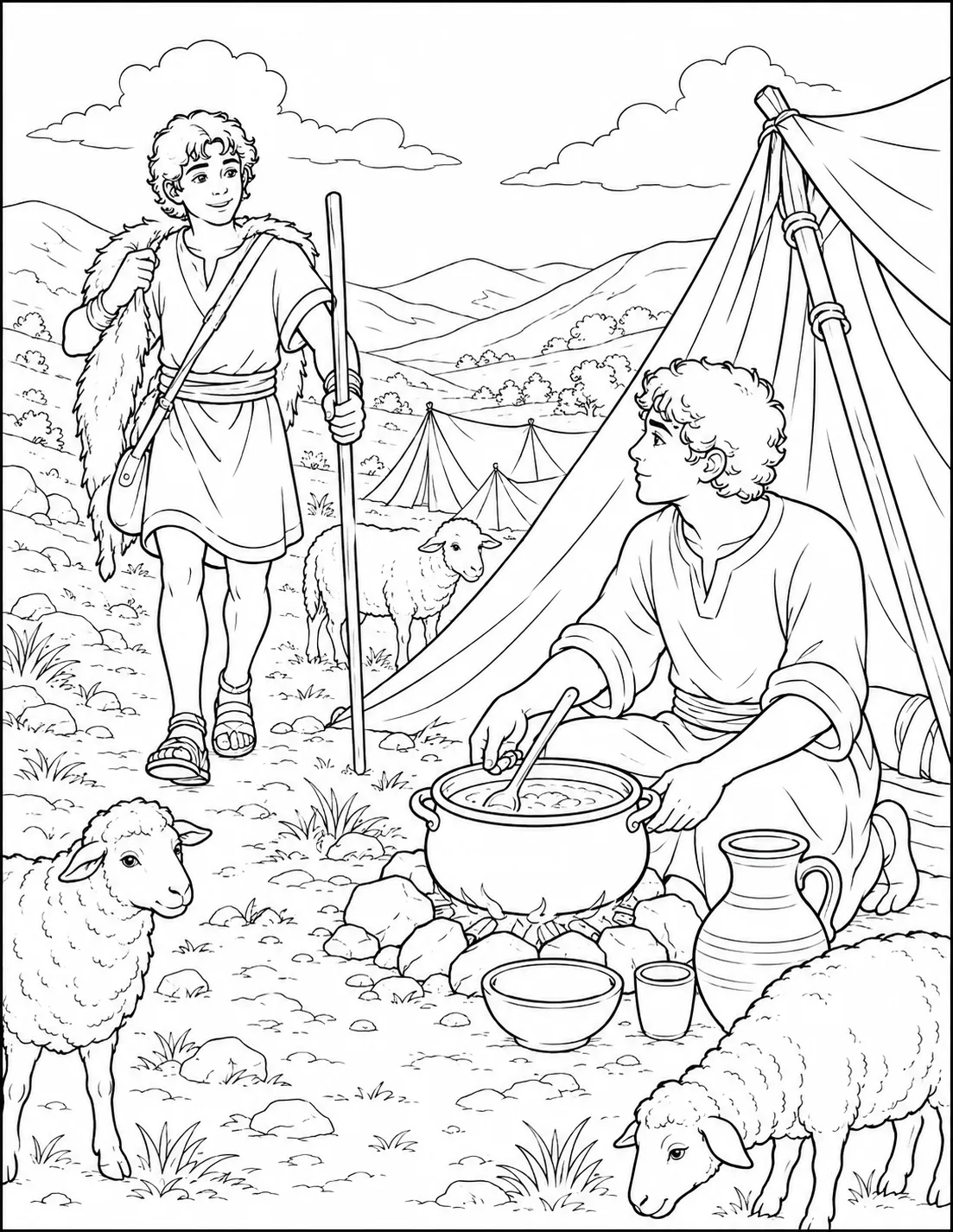
One day Jacob was cooking a pot of stew.
Esau came in from the open country exhausted and very hungry.
He smelled the food and wanted some immediately.
He asked Jacob to give him some of the stew.
Jacob saw his brother’s weak moment and decided to use it to get something he wanted.
Instead of simply helping his hungry brother, Jacob proposed a deal.
He asked Esau to sell him his birthright.
A birthright was the special family position normally given to the firstborn son.
It included important family responsibilities and a larger share of the inheritance.
In this family, it was also connected to the line through which God’s promises to Abraham were continuing.
Esau was focused on how hungry he felt right then.
He spoke as though the birthright did not matter very much compared with getting food immediately.
He agreed to Jacob’s demand.
Jacob made Esau confirm the agreement.
Then Jacob gave him bread and the lentil stew.
Esau ate, drank, got up, and left.
The meal satisfied his hunger for a short time.
But Esau had treated something deeply valuable as though it were unimportant.
Jacob had also done wrong.
He had taken advantage of his brother instead of treating him with generosity and fairness.

Years passed.
Isaac grew old, and his eyesight became very weak.
One day he called Esau to him.
Isaac asked Esau to go hunting, prepare the food he loved, and bring it back.
Afterward Isaac intended to give Esau a special fatherly blessing.
This blessing was connected to the family’s future, but it was not simply the same thing as the birthright Esau had traded years earlier.
Rebekah heard Isaac speaking to Esau.
After Esau left, she called Jacob.
Rebekah explained what Isaac had said and formed a plan.
She wanted Jacob to take food to Isaac before Esau returned.
Jacob would pretend to be his brother and receive the blessing.
God had already spoken about Jacob’s future before the twins were born.
But God did not need Rebekah and Jacob to deceive Isaac in order to accomplish His plan.
Jacob knew that the plan could easily be discovered.
Esau was hairy, while Jacob’s skin was smoother.
Jacob worried that his father might touch him and realize the truth.
Rebekah continued with the plan.
She prepared food the way Isaac liked it.
She gave Jacob some of Esau’s clothes to wear.
She also used animal skins on Jacob’s hands and neck so that he would feel more like Esau.

Jacob entered his father’s room carrying the food.
Isaac heard his voice and became suspicious.
The voice sounded like Jacob.
Isaac asked questions because he was not sure who was standing in front of him.
Jacob answered by pretending to be Esau.
He did not merely avoid the truth.
He lied to his father about who he was.
Isaac touched Jacob’s covered hands.
The disguise made them feel hairy like Esau’s hands.
Isaac smelled Esau’s clothing.
Still believing Jacob was Esau, Isaac gave him the blessing.
Jacob received what he had wanted, but he received it through deception.
Soon after Jacob left, Esau returned from hunting.
He prepared the food and brought it to his father.
Isaac was confused.
Then he realized that someone had already come pretending to be Esau.
The truth became clear.
Jacob had deceived him.
Esau was deeply hurt.
He cried out when he realized that the blessing had already been given.
His earlier careless choice about the birthright had been wrong, but Jacob’s deception still caused real pain.
Esau begged his father for a blessing too.
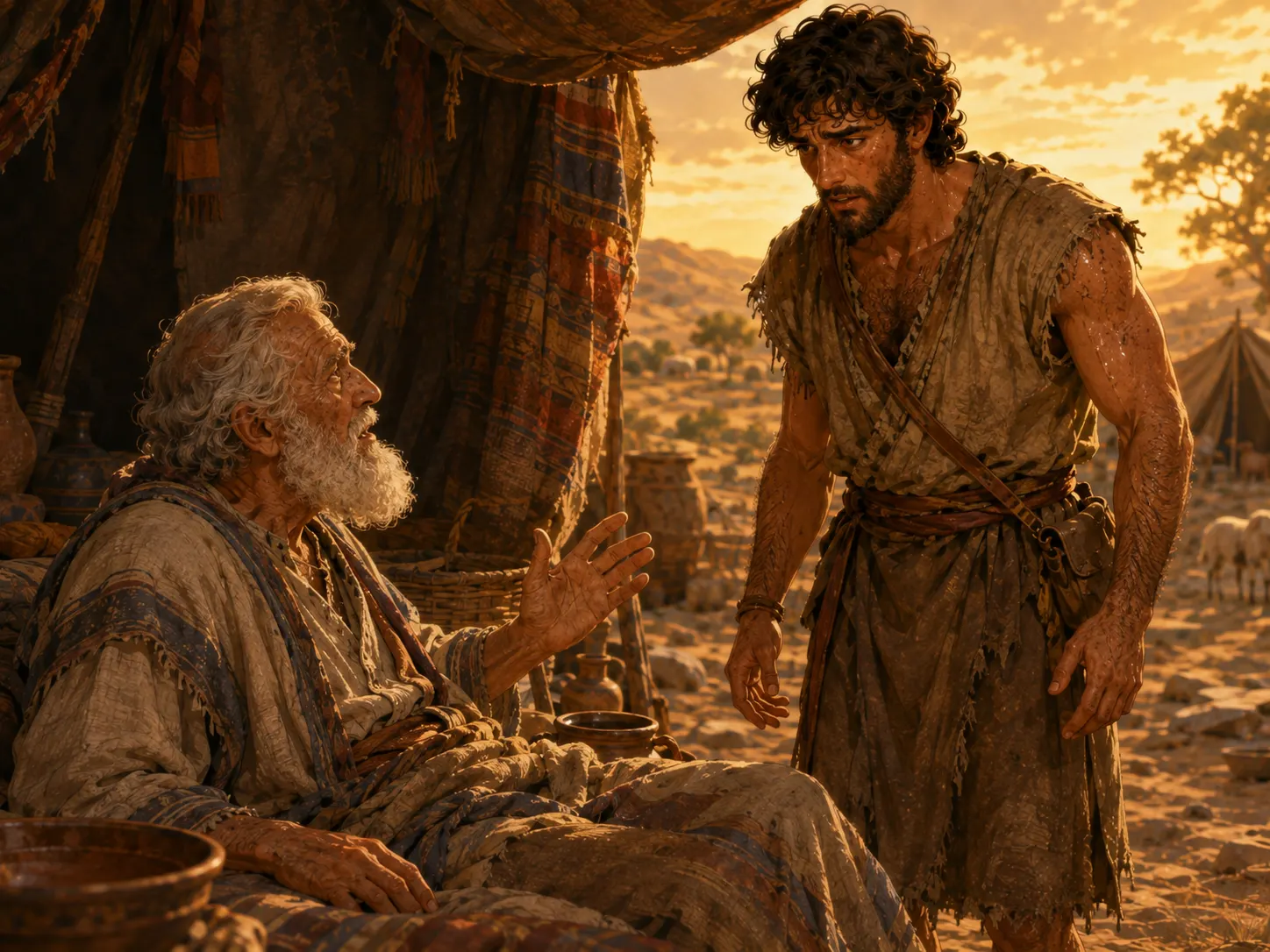
Isaac spoke to him about a difficult future and about a time when Esau would break free from his brother’s rule.
Esau’s sadness soon grew into dangerous anger.
He began thinking about seriously harming Jacob.
Being hurt did not make violence a right response.
Rebekah learned that Jacob was in danger.
She told Jacob to leave and stay with her brother Laban in Haran for a while.
Jacob had gained the blessing he wanted, but he was now leaving his home and family behind.
His choices had consequences.
The family was divided by favoritism, carelessness, deception, and anger.
Yet God’s promise had not disappeared.
God would continue working in Jacob’s life.
Jacob still had much to learn about honesty, trust, humility, and grace.
The next part of his story would begin far from home.
What This Story Teaches Us
1. Valuable Things Should Not Be Treated Carelessly
Esau focused on what he wanted immediately and treated his birthright as though it were unimportant.
Wise choices consider what may matter tomorrow, not only what feels urgent today.
2. Do Not Take Advantage of Someone’s Weak Moment
Jacob saw that Esau was exhausted and hungry.
Instead of helping freely, he used the moment to gain something from his brother.
3. A Good Goal Does Not Make a Wrong Method Right
God had already spoken about Jacob’s future.
That did not make Rebekah and Jacob’s deception right or necessary.
4. Favoritism Hurts Families
Isaac and Rebekah favored different sons.
Children should not have to compete for love or feel that one sibling matters more than another.
5. Anger Needs Safe Choices
Esau was genuinely hurt by Jacob’s deception.
But thoughts of seriously harming his brother were not a safe or right response.
How It Fits into God's Bigger Story
God’s covenant promise to Abraham continued through Isaac’s family.
Jacob would later receive the name Israel, and his sons would become the ancestors of the tribes of Israel.
The Bible does not hide Jacob’s failures. God’s faithfulness does not depend on His people being perfect.
God would continue changing Jacob over many years.
Much later, Jesus would come through the line of Judah, one of Jacob’s sons.
Talk About It
- How were Jacob and Esau different as they grew up?
- What valuable thing did Esau trade for a meal?
- Why was Jacob wrong to take advantage of Esau’s hunger?
- How did Rebekah and Jacob deceive Isaac?
- How did Esau feel when he learned what had happened?
- What could each person in the family have done differently?
A Short Prayer
God, thank You that You are faithful even when people make wrong choices. Help us value what is truly important. Teach us not to take advantage of others, lie to get what we want, or let anger control us. Help our families practice honesty, fairness, and love. Thank You that Your good plans do not depend on people being perfect. In Jesus’ name, amen.
Try This Together
Now or Later?
- Prepare several simple choice cards with a small option now and a more lasting option later.
- Examples might include one sticker now or choosing the family game later.
- Let the child explain what makes each choice attractive.
- Ask which choice may have more lasting value and why.
- Connect the discussion to Esau: being hungry was real, but he made a major decision while focused only on the immediate moment.
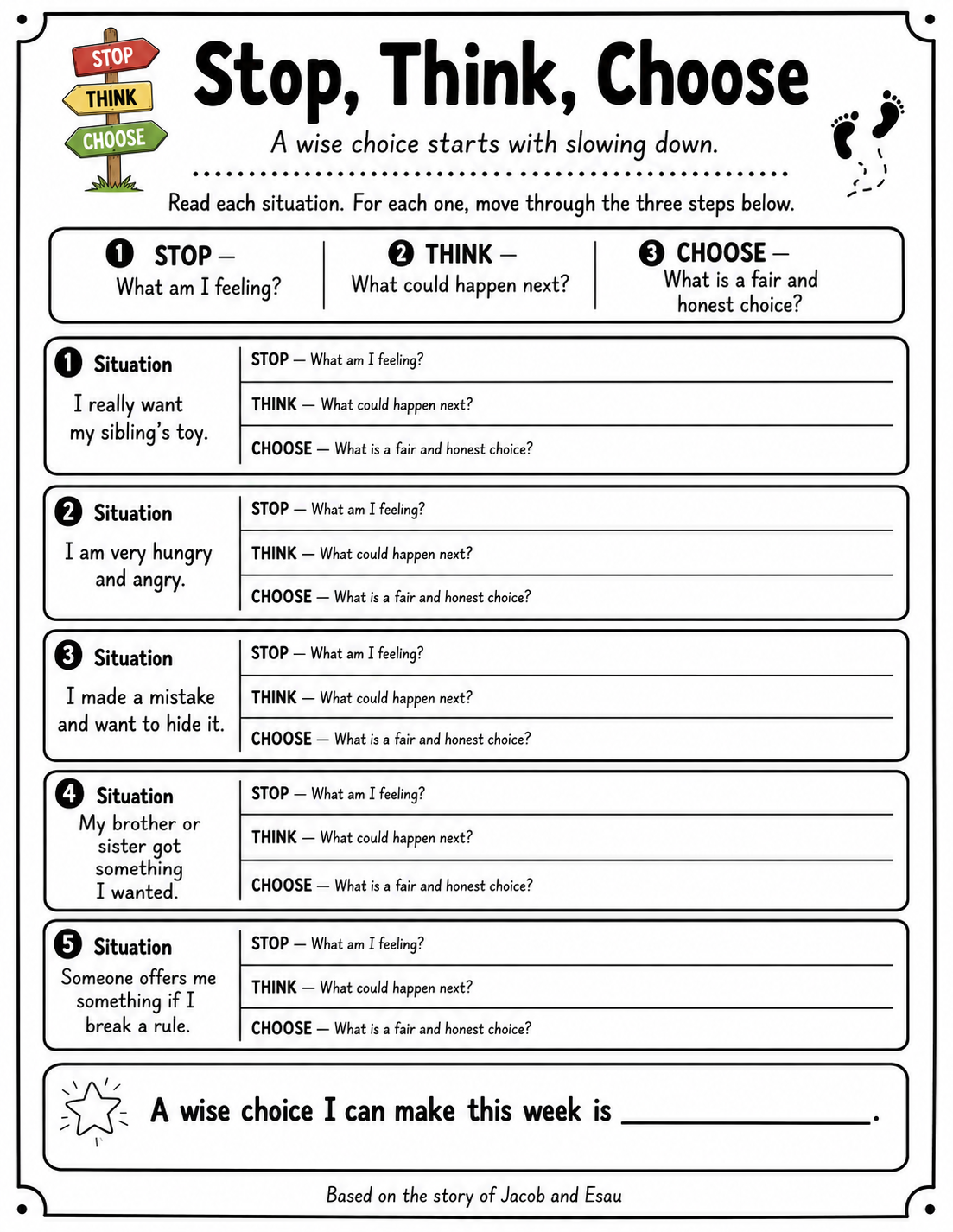
- Finish by practicing a pause phrase: Stop, think, then choose.
Help children think about immediate wants and longer-term value without shaming them for normal desires.
Memory Verse
“The Lord detests lying lips, but he delights in people who are trustworthy.”— Proverbs 12:22
For Parents and Teachers
Do Not Turn Jacob into the Good Brother and Esau into the Bad Brother
Both brothers make harmful choices.
The story is stronger when children see that biblical characters can be deeply important in God’s plan and still need correction and change.
Birthright and Blessing Are Related but Not Identical
The birthright in Genesis 25 and Isaac’s blessing in Genesis 27 are connected to family inheritance and future, but they are not simply the same event or object.
Keep the distinction clear in explanatory text.
Favoritism Is Part of the Family Problem
Genesis describes Isaac favoring Esau and Rebekah favoring Jacob.
Do not normalize this as healthy parenting. Children should not have to compete to earn a parent’s love.
God’s Plan Did Not Require Deception
God had spoken before the twins were born about the younger and the older.
That does not justify Jacob and Rebekah lying to Isaac. God is not dependent on sinful methods to accomplish His purposes.
Anger and Safety
Esau’s hurt is real and should not be mocked.
At the same time, threats or plans to harm someone are never a safe way to handle anger. Children should move to safety and involve a trusted adult when a conflict becomes threatening.