God Creates the World
Everything Begins with God
Original retelling based on Genesis 1:1–2:3.
Before You Read
Have you ever looked at the night sky and wondered where all the stars came from? Have you watched a bird fly, listened to rain, or noticed how many different kinds of plants and animals there are?
The Bible begins by telling us that everything starts with God.
The Bible Story
Before there were mountains, oceans, birds, trees, or people, God was already there.
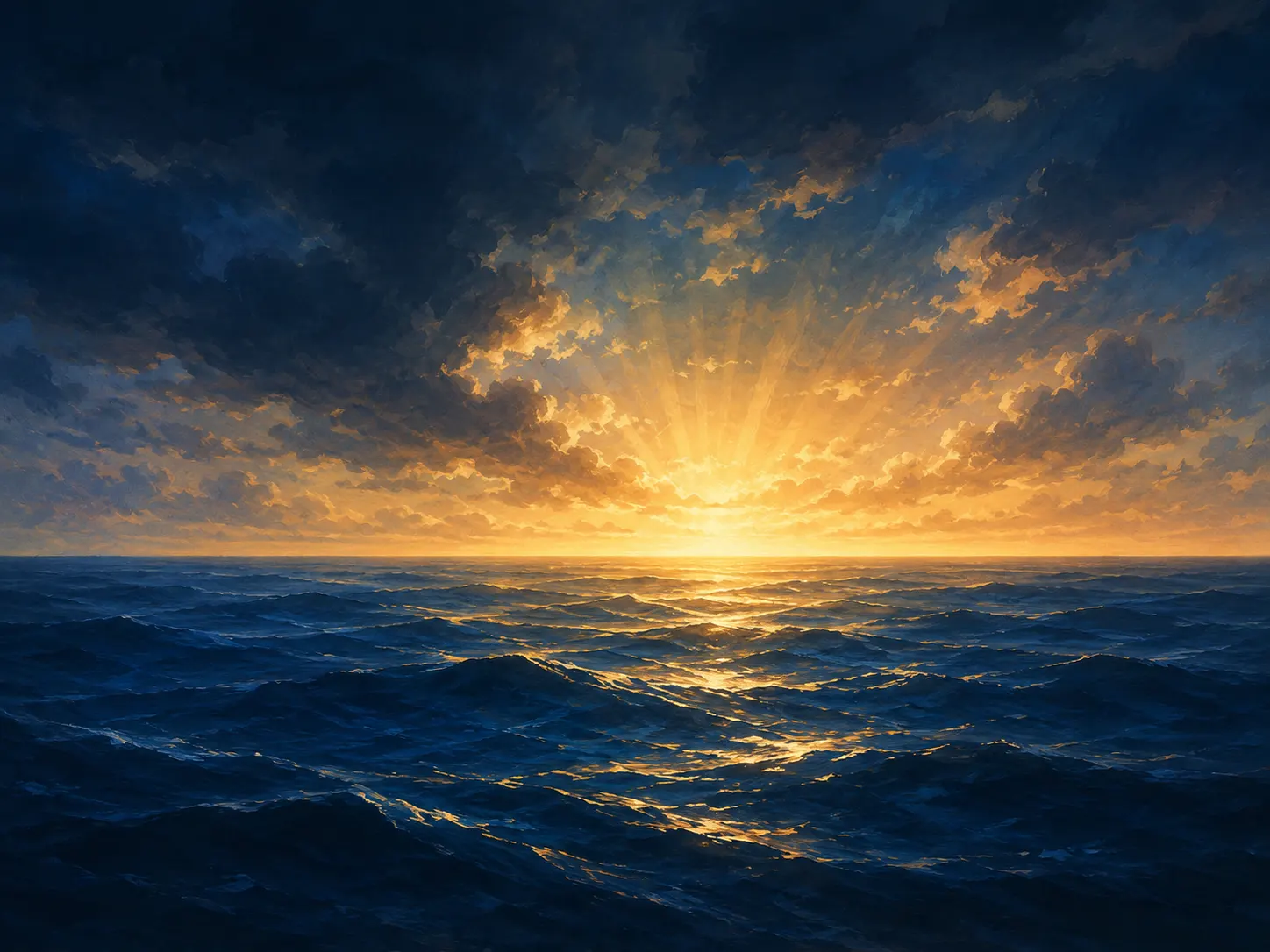
The earth had not yet been shaped and filled with life. It was empty and covered in darkness. Deep waters were everywhere, and God’s Spirit was present over them.
Then God spoke.
“Let there be light.”
At once, light appeared.
God saw that the light was good. He separated the light from the darkness. He called the light day, and He called the darkness night.
There was evening, and there was morning. The first day had passed.
God continued shaping the world.
He made the great space of the sky and separated the waters below from the waters above.
There was now room for the world to be filled with life.
Next, God gathered the waters together so that dry land appeared. He called the dry land earth, and He called the gathered waters seas.
God saw that what He had made was good.
Then plants began to grow from the earth. Small green plants covered the ground. Seed-bearing plants appeared, along with trees that produced fruit. Each kind of plant could make more plants like itself.
The empty land was becoming green and full of color.
God placed lights in the sky. The greater light shone during the day, and the lesser light shone at night. He also made the stars.
These lights helped mark days, seasons, and years. The sun, moon, and stars were not gods. They were part of the world God had made.
God looked at them and saw that they were good.
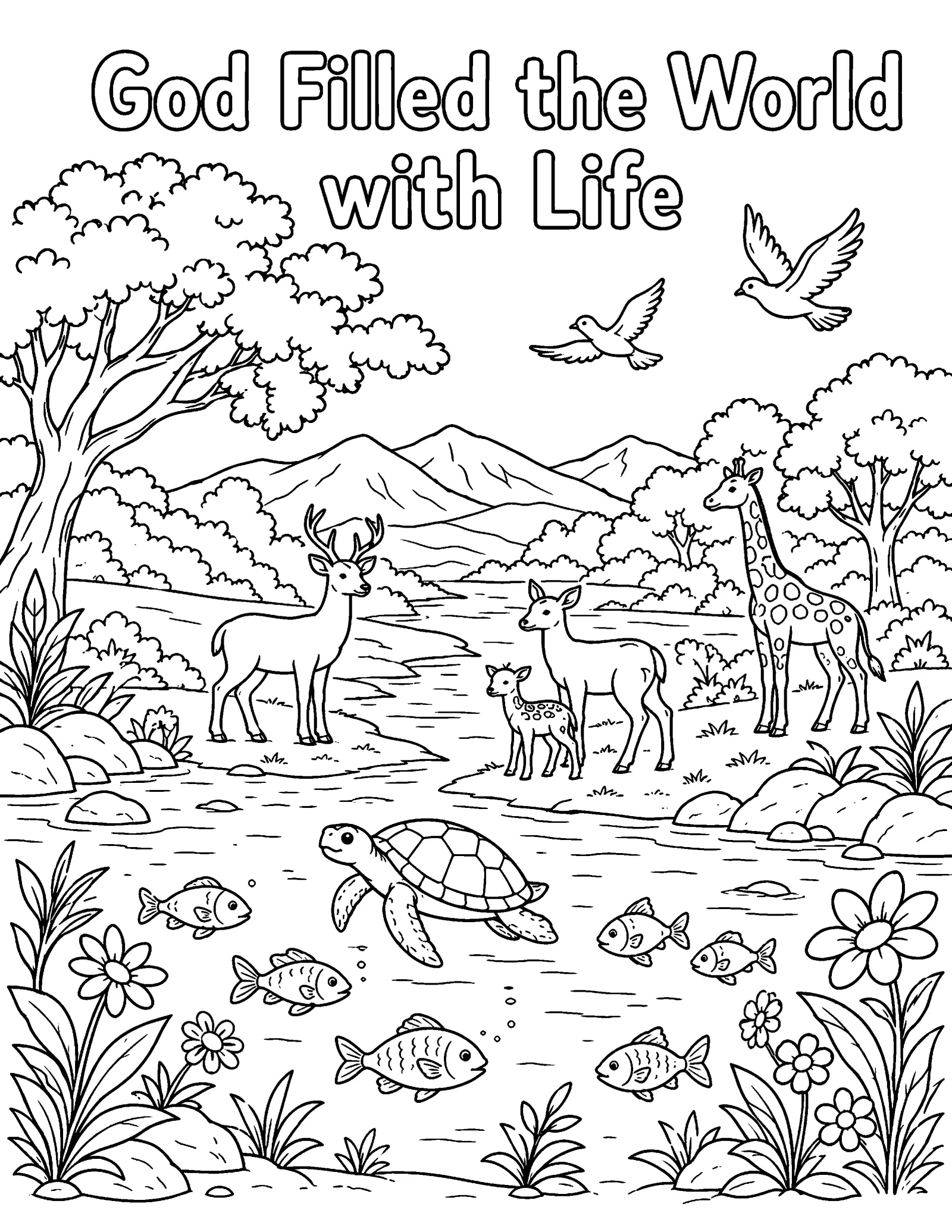
Then God filled the waters with living creatures. Some were small enough to hide beneath a stone. Others were large enough to move through the deep sea. The waters swarmed with life.
God also made birds to fly across the open sky. Some glided quietly. Others flapped their wings quickly or called loudly from the trees.
God blessed the creatures of the sea and the birds of the sky. He told them to multiply and fill the places He had prepared for them.
After that, God created the animals that lived on the land.
There were animals that walked, ran, crawled, climbed, and rested in the shade. Some were strong and powerful. Others were small and gentle. Each kind was different, and each belonged in the world God was filling with life.
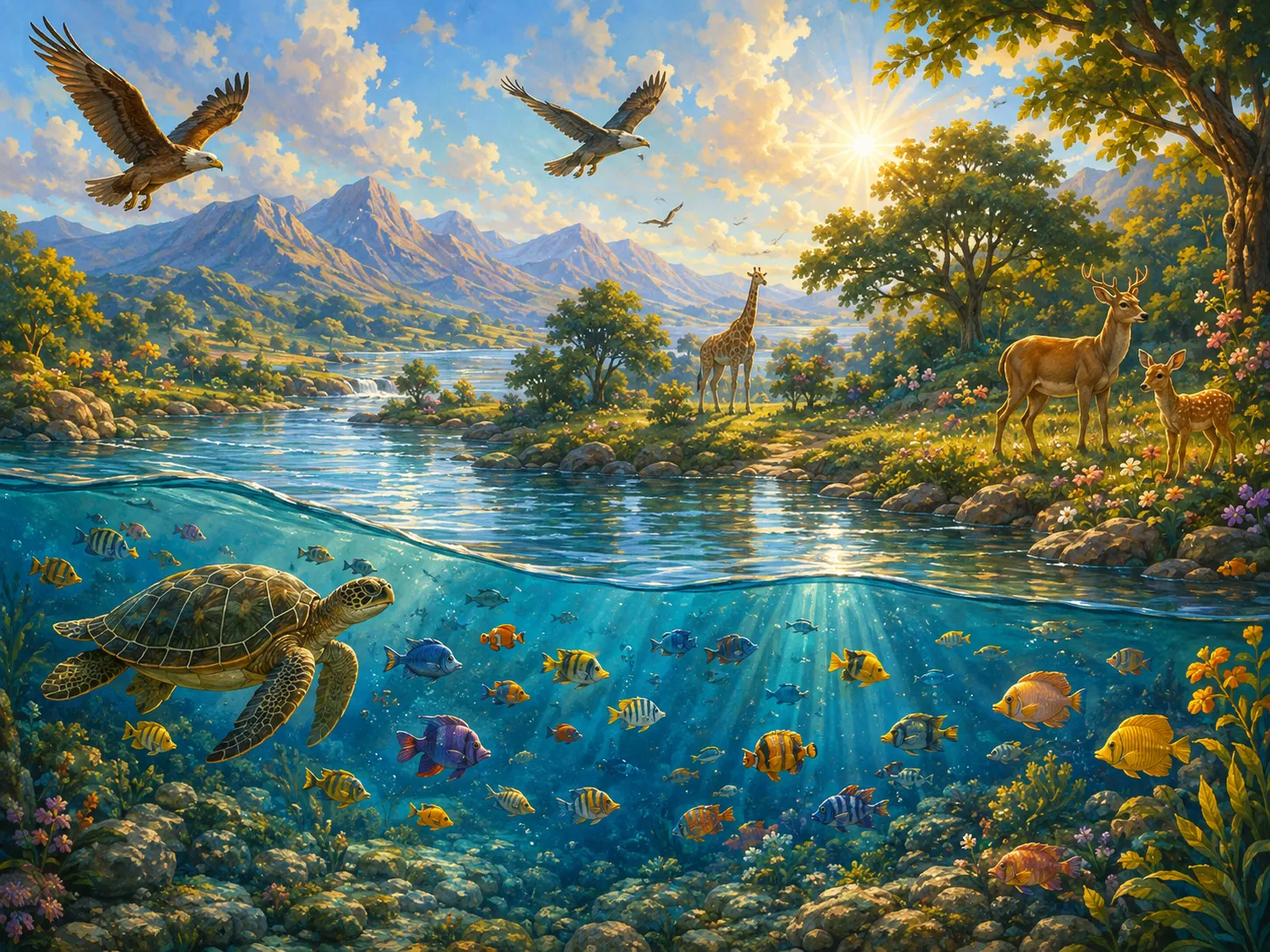
God saw that the animals were good.
But God’s work was not yet complete.
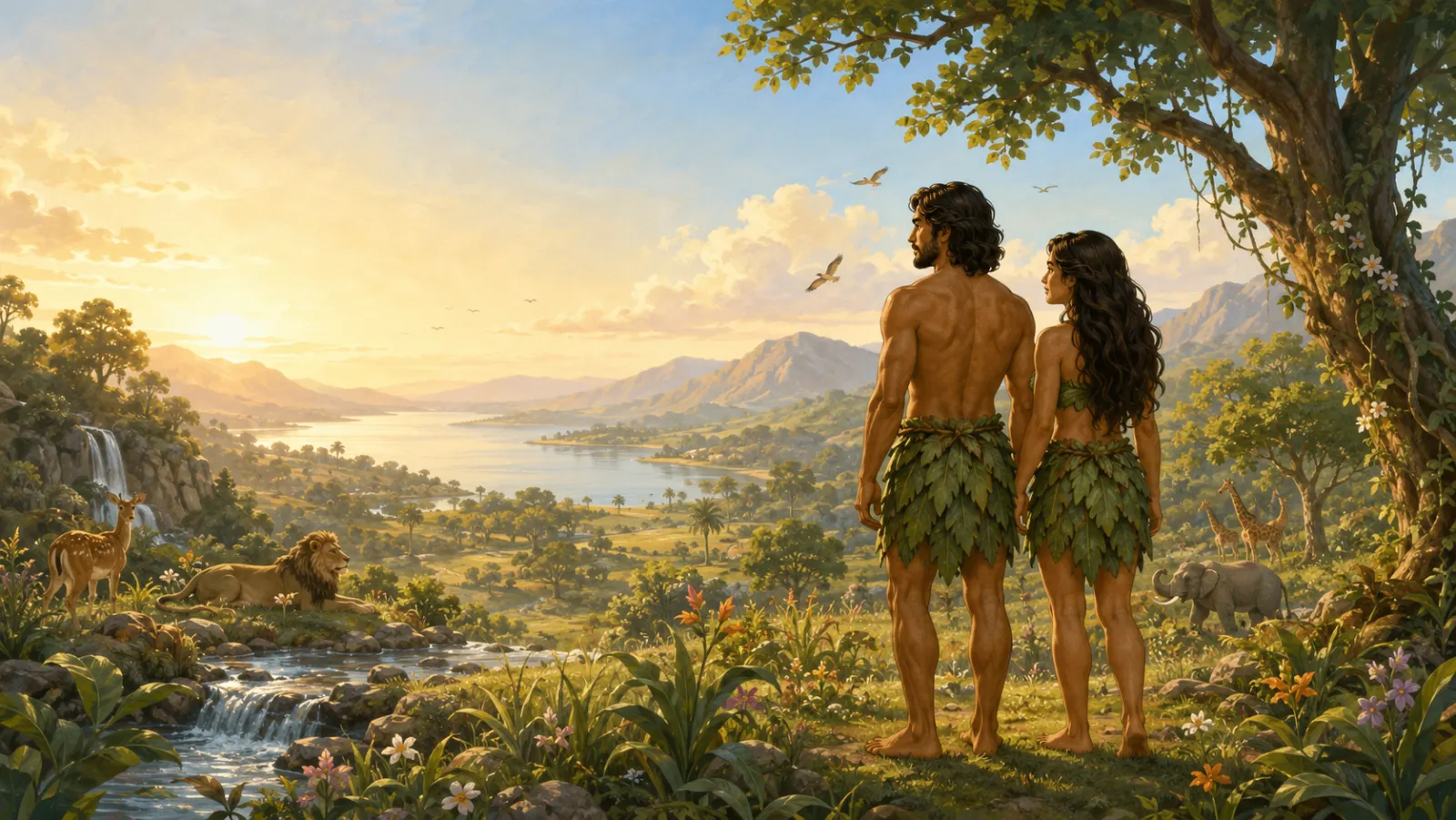
God chose to create human beings in His image.
Being made in God’s image does not mean that God has a body exactly like ours. It means that people were made with a special purpose. They could know God, love one another, make meaningful choices, create, communicate, and care for the world He had made.
God created both the first man and the first woman in His image. They shared the same God-given value. Neither was more human or more important than the other.
God blessed them and gave them an important responsibility. They were to fill the earth and care for its living creatures.
The world belonged to God, but He trusted human beings with work to do within it. They were not meant to ruin the land or use living things carelessly. They were to represent God’s good rule by looking after what He had made.
God provided plants and fruit for food. He gave the first people a world filled with everything they needed for life.
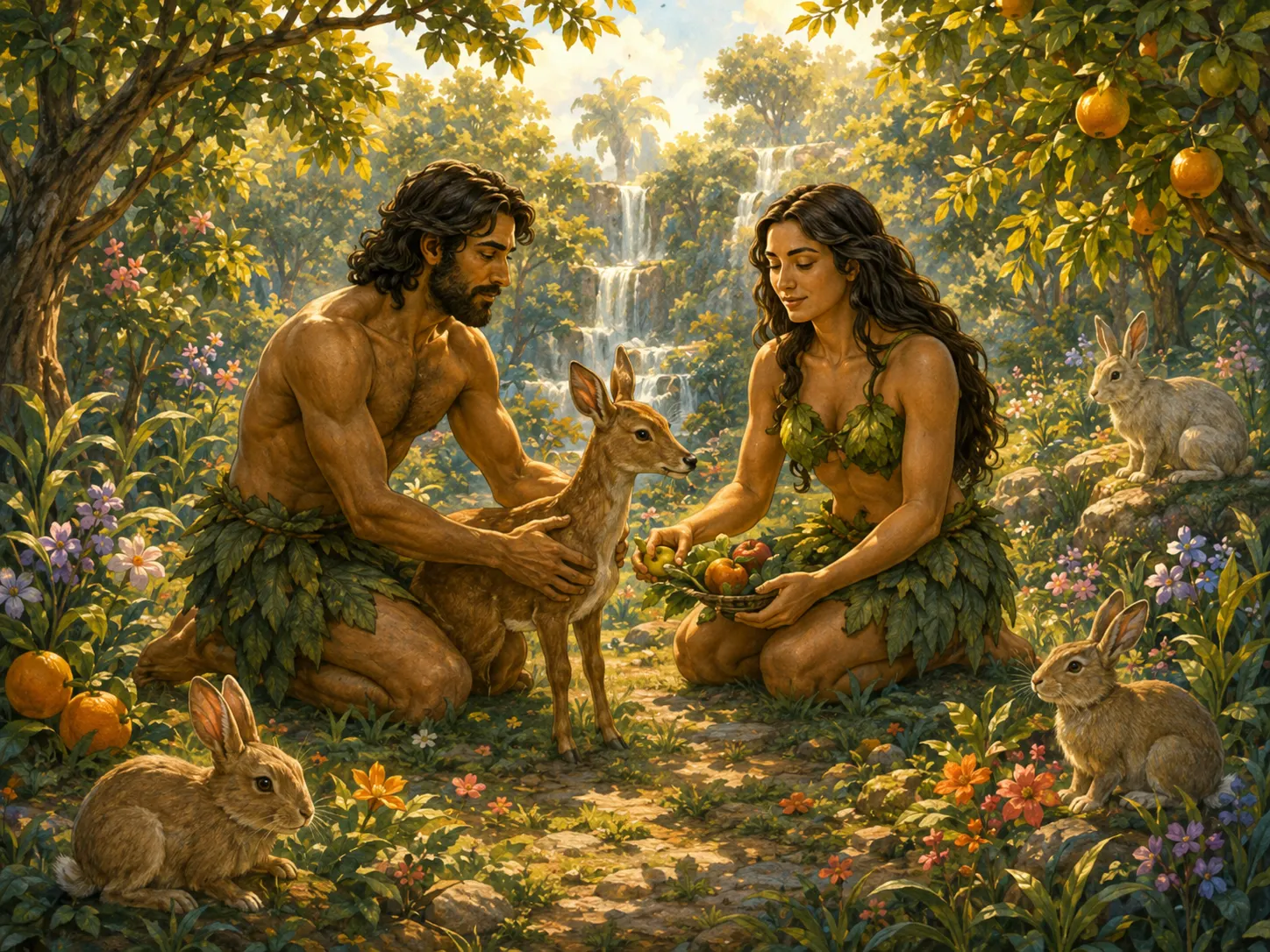
Then God looked at the whole creation.
He saw the light and darkness, the sky and seas, the dry land and plants, the sun, moon, and stars. He saw the fish, birds, animals, and human beings.
Everything had its place. Everything had its purpose.
God saw all that He had made, and it was very good.
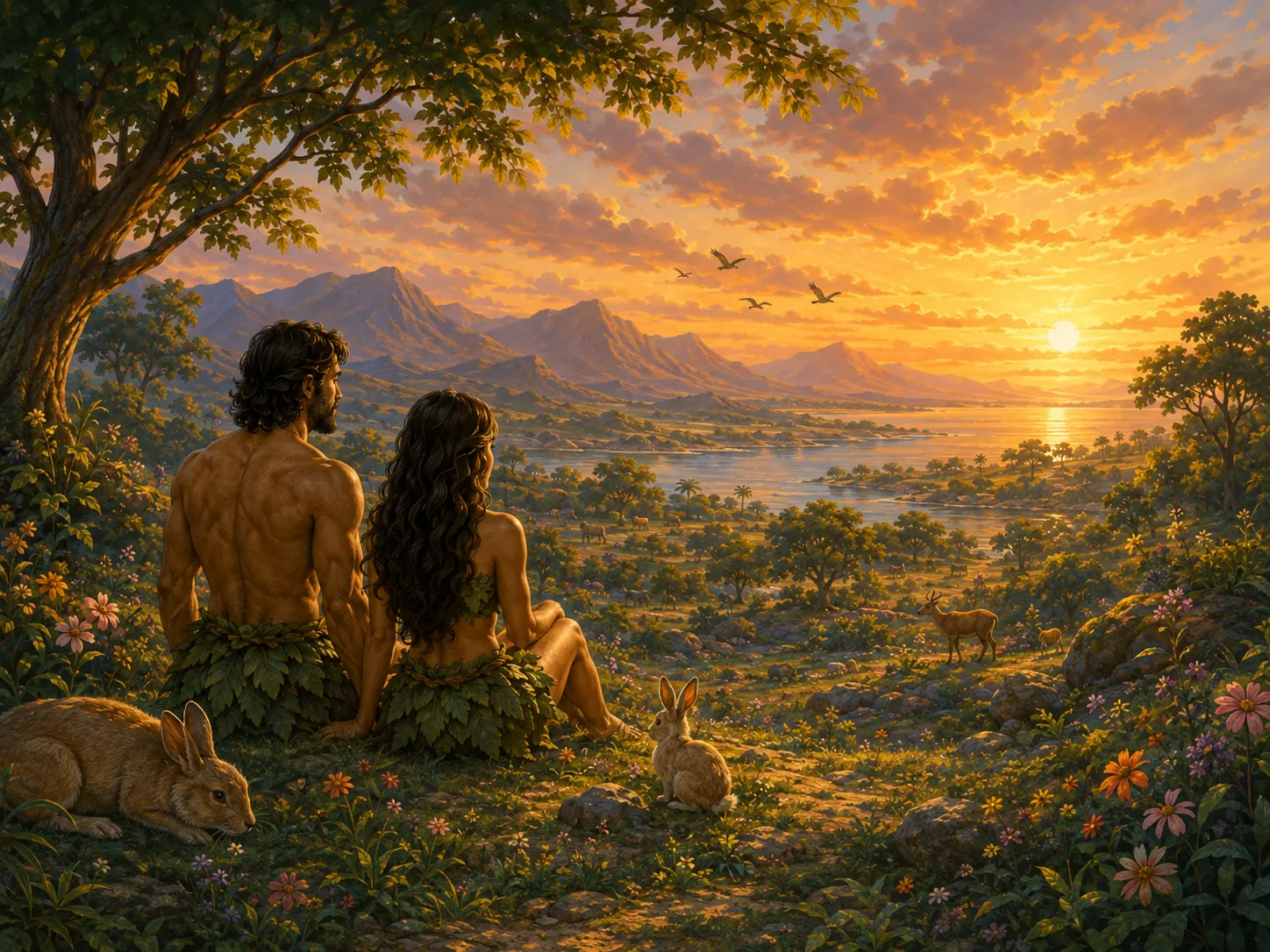
The heavens and the earth were complete. The world was no longer empty. It was filled with light, color, movement, sound, and life.
On the seventh day, God rested from His work of creation.
He did not rest because He was tired. God’s strength had not run out. He rested because the work He had chosen to do was complete.
God blessed the seventh day and made it special.
From the beginning, God showed that there is a time for meaningful work and a time to stop, remember, and enjoy what is good.
God had made a world full of order, beauty, life, and peace.
Everything begins with Him.
What This Story Teaches Us
1. Everything Begins with God
God did not come from the created world. He was already there before the earth, the sky, or any living creature existed.
Everything in creation depends on Him.
2. God’s Creation Is Good
God repeatedly saw that what He had made was good. The physical world is not worthless or unimportant. It belongs to God and displays His wisdom, power, and generosity.
3. Every Person Has God-Given Value
Both the man and the woman were created in God’s image.
Every person has value—not because of appearance, intelligence, health, strength, possessions, or achievements, but because human life has been given a special place in God’s creation.
4. We Are Responsible for God’s World
God gave people authority within creation, but that authority includes responsibility.
We should use the world’s resources wisely, treat animals with care, avoid needless waste, and remember that creation belongs to God.
5. Work and Rest Are Both Good
God gave people meaningful work, and He also established a pattern of rest.
Rest is not the same as laziness. It gives us time to stop, receive God’s gifts with gratitude, and remember that the world does not depend on us.
How It Fits into God's Bigger Story
The Bible begins with a good world made by God.
In the next story, the first people will disobey God. Sin will bring shame, pain, conflict, and death into the world. But God will not abandon the people or the creation He made.
The rest of the Bible reveals God’s plan to rescue His people. Jesus comes to save sinners, defeat death, and begin the work of restoring what sin has broken.
The Bible ends with the promise that God will one day make all things new.
Talk About It
- What are some of the things God created?
- What happened when God spoke?
- What does the variety and order of creation teach us about God?
- What does it mean for every person to be made in God’s image?
- What is one way you can care for something God created?
- What part of creation makes your family feel especially thankful to God?
A Short Prayer
God, thank You for creating the world and filling it with life. Thank You for the sky, the land, the water, the plants, the animals, and every person You have made. Help us remember that the world belongs to You. Teach us to care for Your creation and to treat every person with kindness and respect. Thank You for making us in Your image and giving us a place in Your good world. In Jesus’ name, amen.
Try This Together
Creation Gratitude Walk 10–20 min
You will need: A sheet of paper, A pencil or colored pencils, A safe place for a short walk
- Take a short walk outside with your family. A yard, park, garden, or quiet street will work. When going outside is not possible, look carefully through a window or explore pictures of nature together.
- Find five different things God created. You might notice a tree, a bird, clouds, flowers, an insect, stones, or another person.
- Draw or write down each thing you notice.
- Beside every item, add one reason you are thankful for it.
- When you finish, take turns sharing your answers.
- End by thanking God for several of the things you found.
Example: I am thankful for trees because they provide shade.
Safety: Do not touch unfamiliar plants, insects, or animals. Observe them from a safe distance with an adult.
Memory Verse
“In the beginning, God created the heavens and the earth.”— Genesis 1:1
For Parents and Teachers
The Main Focus of Genesis 1
Genesis 1 does more than provide an order of created things. It introduces several foundational biblical truths: God is the sovereign Creator; creation depends on Him; the world He made is good; human beings uniquely bear His image; people receive responsibility within creation; and work and rest belong to God’s good order.
Keep the focus on who God is and what creation reveals about Him. Avoid turning the story into either a scientific lecture or a list of disconnected objects God made.
When a Child Asks About the Six Days
Christians agree that God created the world, but they do not all understand every detail of the creation days in exactly the same way.
A helpful answer is: Christians have different views about how long the creation days were and how some parts of creation developed. Genesis teaches us clearly that God is the Creator, that the world has purpose, and that people were made in His image.
This allows honest conversation without making a disputed interpretation the central message of the story.
Explaining the Image of God
Avoid saying simply that people look like God. Scripture does not teach that God the Father has a human body.
A child-friendly explanation is: God made people to know Him, reflect His goodness, love others, make meaningful choices, and care for His world.
No single sentence explains everything meant by the image of God, but this provides an appropriate starting point.
Human Value and Disability
Being made in God’s image means that human value does not depend on physical strength, intelligence, speech, health, independence, productivity, or social position.
Children should understand that people with disabilities, illnesses, or different abilities fully share the same human dignity.
Caring for Creation
Genesis gives human beings authority within creation, but this should not be taught as permission for careless exploitation.
Children can practice responsible care by avoiding unnecessary waste, treating animals gently, respecting shared outdoor spaces, using water and other resources wisely, and thanking God for the world He provides.
Care for creation should remain connected to love for the Creator rather than becoming a substitute for worshiping Him.