
Abraham and Isaac
God Provides a Ram
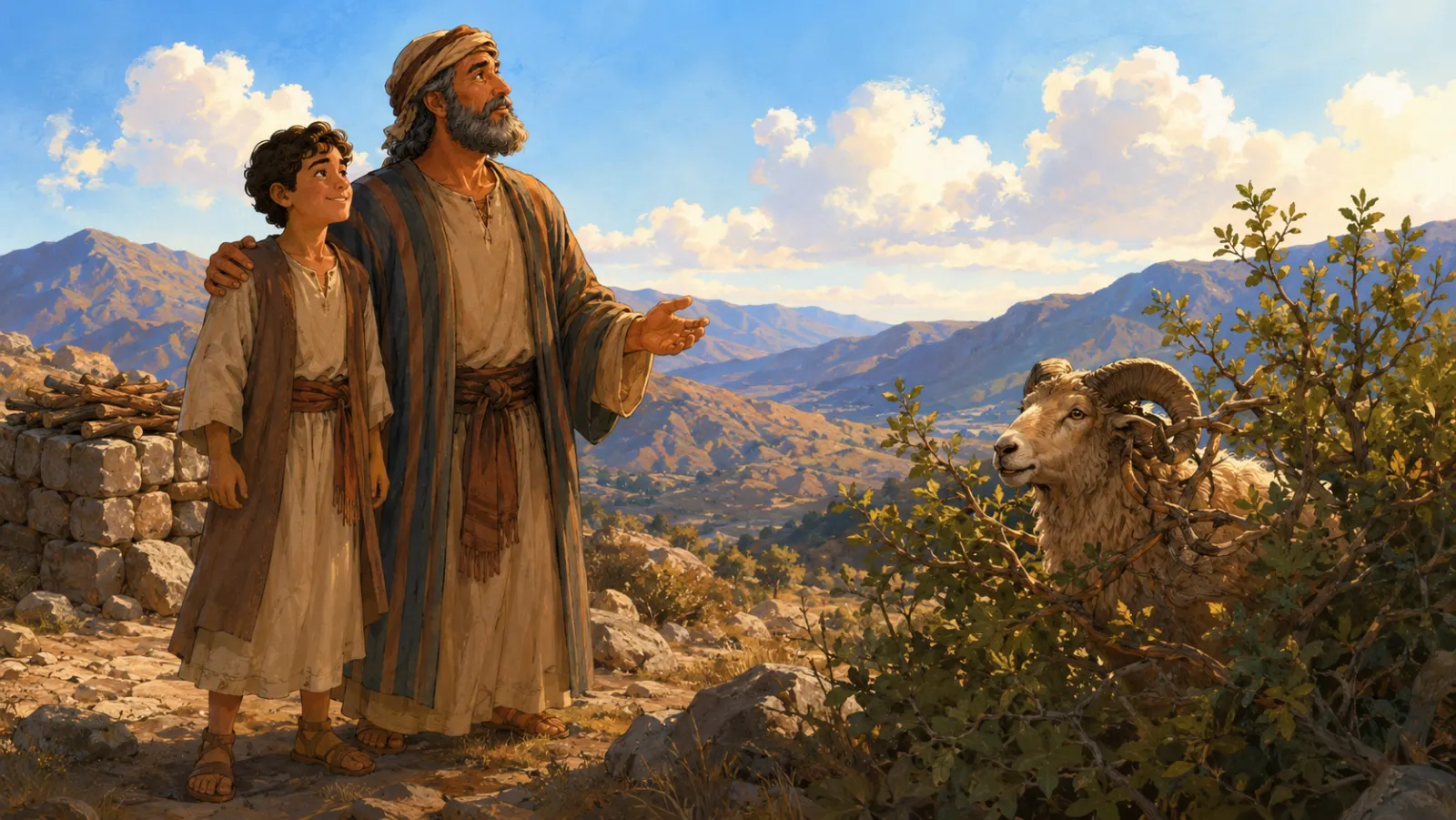
Before You Read
This is one of the most difficult stories in Genesis, so it is important to notice what the Bible tells us at the very beginning: God was testing Abraham.
Abraham did not know how the test would end, but God did.
Isaac was not harmed. God stopped Abraham and provided a ram.
The Bible Story
Isaac was no longer the newborn baby Abraham and Sarah had once held with such joy.
Time had passed, and the son God had promised was growing.
God had said that His covenant family would continue through Isaac.
Then Abraham faced one of the hardest tests of his life.
From the beginning, God was testing Abraham.
Abraham did not know how the test would end, but God did.
God called Abraham by name.
Abraham answered that he was listening.
Then came a command Abraham could not easily understand.
God told him to take Isaac, the son he loved, and travel to the region of Moriah.
The command seemed to place the son of the promise in danger.
How could God’s promise continue if Isaac was lost?
Abraham kept walking with Isaac, carrying out what God had told him to do.
It does tell us what he did next.
Early the following morning, Abraham got ready for the journey.
He prepared his donkey.
He gathered the wood needed for the offering.
He took Isaac with him.
Two servants traveled with them.
They left home and began moving toward the place God had told Abraham about.
The journey took time.
They walked through dry country and along rising paths.
The donkey carried supplies while the travelers continued toward the mountains.
For three days they traveled.

On the third day Abraham looked up and saw the place in the distance.
He told the two servants to remain with the donkey.
Abraham said that he and Isaac would go farther, worship, and then return.
Abraham still spoke as someone who expected God’s promise to continue.
The servants stayed behind.
Abraham and Isaac began the climb together.
Abraham placed the wood on Isaac to carry.
Isaac was strong enough to carry the wood as they climbed together.
Abraham carried what was needed to prepare the offering.
Father and son walked side by side.
The path rose toward the mountain.
For a while they continued quietly.
Then Isaac spoke.
He called to his father.
Abraham answered him warmly.
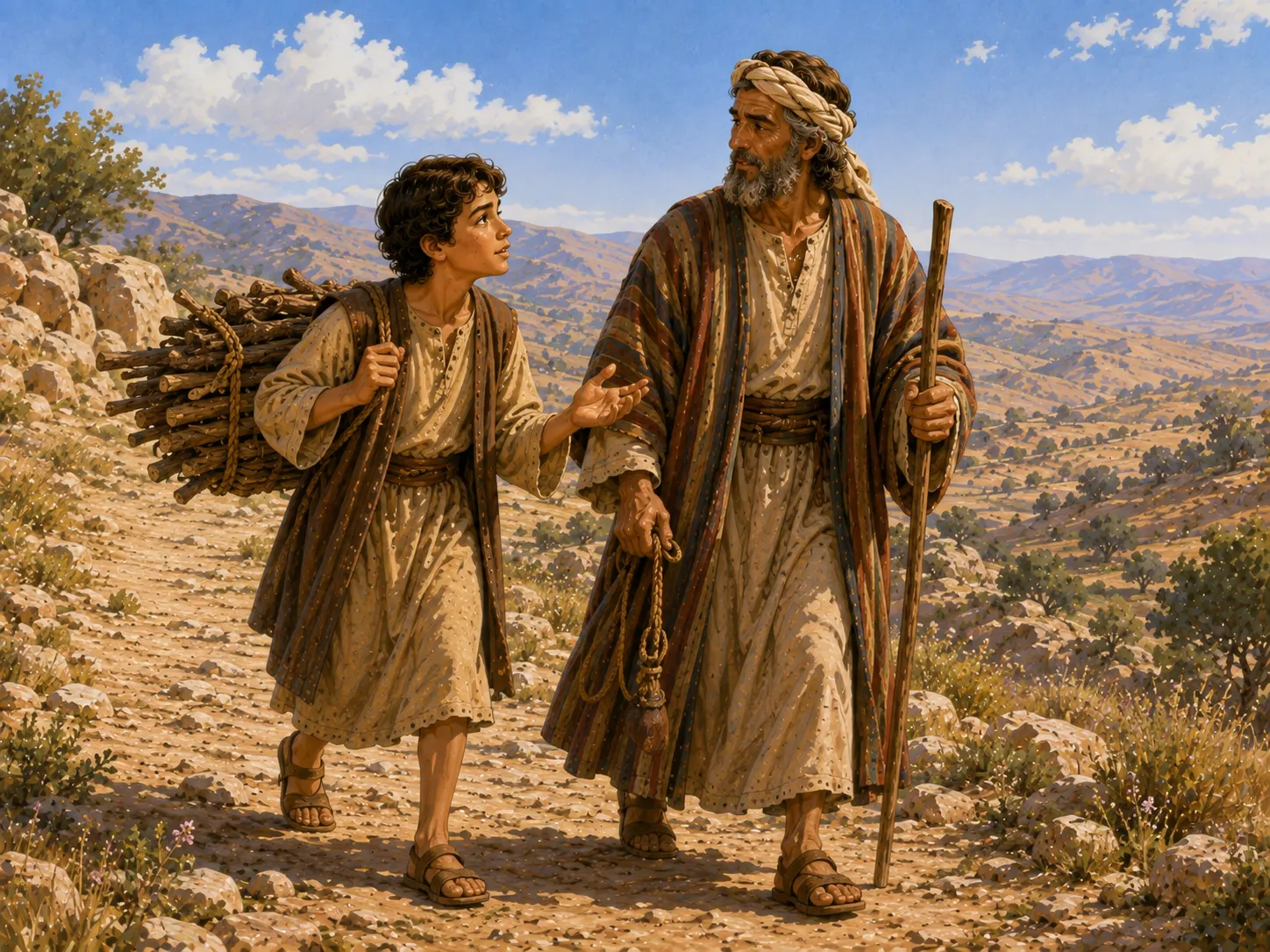
Isaac had noticed the wood and everything needed for the offering, but something seemed to be missing.
He asked where the lamb was.
It was a thoughtful and sensible question.
Abraham did not tell Isaac that he knew exactly how the test would end.
Instead he answered with trust.
God Himself would provide what was needed for the offering.
Then the two of them continued walking together.
At last they reached the place God had shown Abraham.
Abraham built a simple altar from stones.
He arranged the wood.
He prepared to obey the difficult command even though he still did not understand how the test fit with God’s promise.
The story now reaches its most serious moment.
But this is also where God intervened.
Before Isaac was harmed, the angel of the Lord called out to Abraham from heaven.
Abraham stopped immediately.

He answered the voice.
The command was clear: do not harm the boy.
Isaac was safe.
God had never lost control of the test.
Abraham had shown that he was willing to trust God even when he could not understand the path in front of him.
Then Abraham looked up.
Something moved nearby in the brush.
A ram was caught by its horns among the bushes.
The animal was alive and close enough for Abraham to see clearly.
God had provided exactly what was needed.
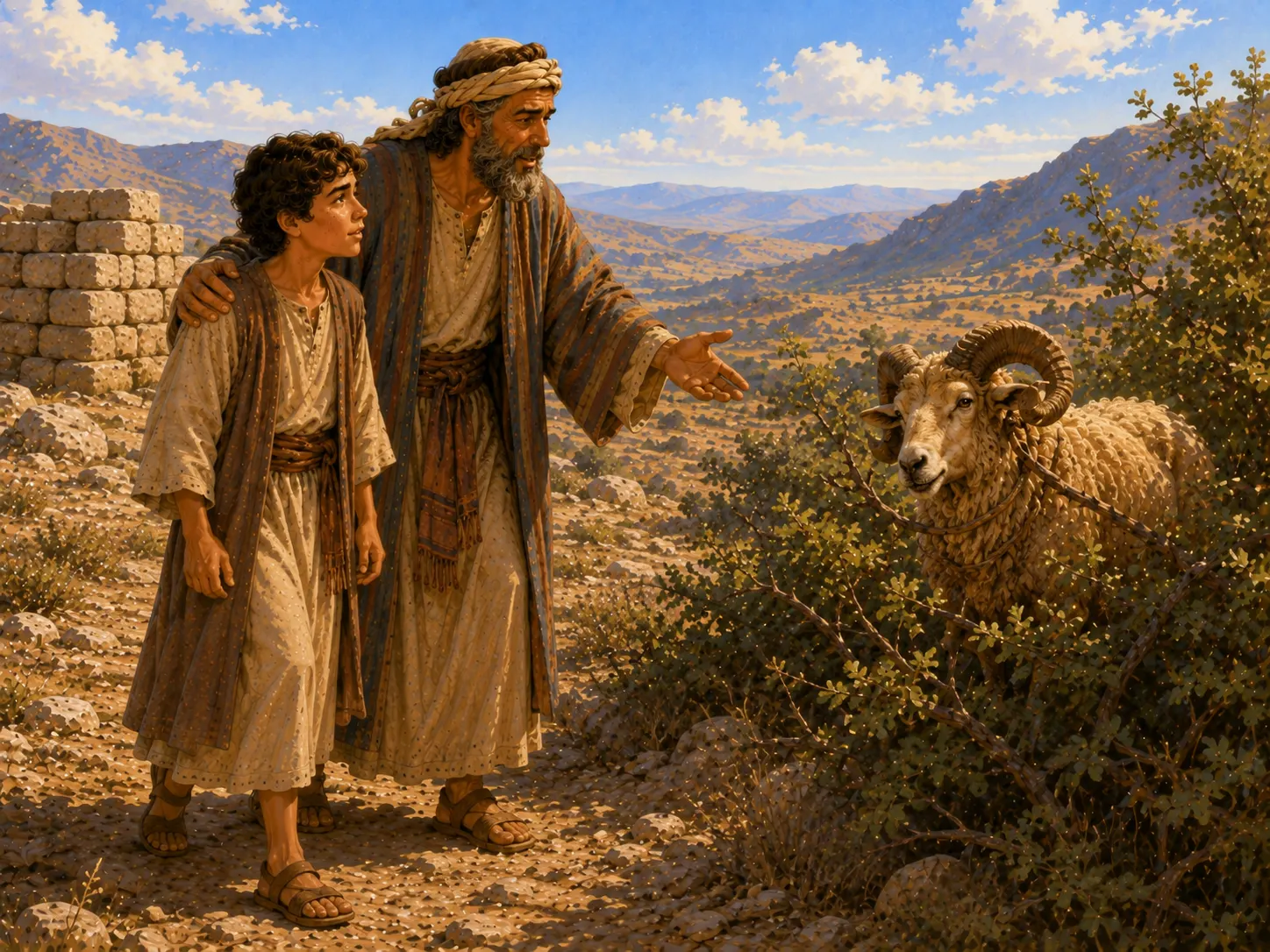
Abraham used the ram God had provided for the offering instead of Isaac.
Isaac remained safe.
Abraham gave the place a name connected with the truth that the Lord provides.
The name reminded him that God had known the answer even before Abraham could see it.
The angel of the Lord spoke again.
God reaffirmed His promise to Abraham.
His descendants would become very numerous.
And through Abraham’s offspring, blessing would reach the nations.
The test had not destroyed the promise.
Isaac was still alive.
God’s covenant plan was still moving forward.
Abraham and Isaac came back down from the mountain.
They returned to the two servants who had been waiting.
Then the group traveled home together.
Abraham still did not know everything that would happen in the generations ahead.
But he had learned again that God’s promise was not forgotten.
When Abraham could not see the answer, God could.
When Isaac asked where the lamb was, Abraham said God would provide.
And on the mountain, God did.
What This Story Teaches Us
1. God’s Promise Was Not Forgotten
Isaac was the son through whom God had promised Abraham’s family would continue.
The test did not erase or cancel God’s covenant promise.
2. We Can Trust God When We Do Not Understand Everything
Abraham did not receive a complete explanation before the journey.
He had to trust that the God who made the promise was still faithful.
3. God Stopped the Harm
The story clearly says that Abraham was stopped before Isaac was harmed.
Isaac remained safe.
4. God Provided What Was Needed
Abraham told Isaac that God would provide.
Then Abraham saw the ram that could be used for the offering instead.
5. Safe Obedience Includes Stopping
Abraham obeyed when God told him to go, and he also obeyed immediately when God told him to stop.
Children should never follow a voice, feeling, dream, or instruction that tells them to hurt themselves or another person.
How It Fits into God's Bigger Story
Isaac was Abraham’s beloved son and the son through whom God’s covenant promise would continue.
On Moriah, God provided a ram so Isaac did not die.
Christians have long seen themes in this story that point forward to Jesus, but the stories are not identical in every detail.
Isaac was spared and a substitute was provided.
Much later, God’s rescue plan would lead to Jesus, who gave His life and rose again so that sinners could be saved.
Talk About It
- Who traveled with Abraham toward Moriah?
- What did Isaac carry as he walked with his father?
- What question did Isaac ask Abraham?
- What did Abraham say God would do?
- What happened before Isaac was harmed?
- What did Abraham find in the bushes?
A Short Prayer
God, thank You that You are faithful even when we do not understand everything. Thank You for protecting Isaac and providing the ram. Help us trust what You have truly said and remember that Your promises are good. Give us wisdom to make safe choices and courage to ask trusted adults for help when something is wrong. Thank You for Your great rescue plan through Jesus. Amen.
Try This Together
What Does “Provide” Mean?
You will need: Water, Food item, Jacket, Bandage, Flashlight, Blanket, Pencil
- Place several everyday objects where the child can see them.
- Choose one item at a time.
- Ask the child to complete the sentence: This provides ______ when someone needs ______.
- Discuss the difference between a need and a want.
- Connect the activity to Genesis 22: Abraham could not see the answer ahead of time, but God provided what was needed for His covenant purpose.
Help children understand provision by connecting everyday needs with things that meet those needs.
Memory Verse
“The Lord will provide.”— Genesis 22:14
For Parents and Teachers
This Is a Unique Biblical Test
Genesis 22 must never be used to justify harming a child or another person.
The passage explicitly identifies the event as a test and shows God stopping Abraham before Isaac is harmed.
Do Not Over-Describe the Dangerous Moment
For children ages 6–9, there is no need to dwell on graphic physical details from Genesis 22:9–10.
A suitable retelling can say that Abraham prepared to obey, but before Isaac was harmed, God called out and stopped him.
If a Child Asks About Hearing a Dangerous Voice
A child should never hurt themselves or another person because of a voice, feeling, dream, message, or claimed divine instruction.
They should stop, move to safety, and tell a trusted safe adult immediately.
Do Not Assume Isaac’s Exact Age
Genesis 22 does not state Isaac’s exact age.
Illustrations may depict him as an older child or young teenager who is capable of conversation and carrying wood, without claiming a precise age.


