
The American calendar races from December 25 toward returns, resolutions, and stripped trees. The older Christian season keeps another feast on January 6: Christ made known to the nations.
On December 26, clearance signs appear while trees begin migrating toward curbs. Email turns from gifts to goals. Fitness plans, tax documents, school schedules, and return labels reclaim the house. Even church programs that spent four weeks approaching Christmas may fall abruptly silent once the main service ends. The culture has consumed the climax and needs the space for something else.
Historic Christian calendars move differently. In many traditions, Christmas unfolds as a season and January 6 brings Epiphany, a feast of manifestation associated in the West especially with the Magi. The calendar is not a biblical command, and Christians organize worship in different ways. Yet Epiphany offers American believers a useful gift: permission to stay with the story after the market has moved on.
Epiphany means manifestation
The Greek root behind Epiphany concerns appearing or being made visible. Christian observance developed with regional differences, connecting Jesus' birth, baptism, first sign, and the visit of the Magi in various ways. Western churches came to emphasize the Magi and Christ's manifestation to the Gentiles on January 6, while Eastern traditions often place greater emphasis on the baptism of Christ.
That history warns against pretending the feast dropped from heaven in its final form. The church calendar grew as Christians organized communal memory around the life of Jesus. Its value lies not in replacing Scripture but in giving Scripture time: recurring space to hear different scenes rather than compressing the whole Gospel into one December morning.
A season resists the demand for an instant climax
Commercial Christmas depends on acceleration. Anticipation must increase purchasing until the reveal, after which attention collapses. A liturgical season stretches meaning across days. The practice can feel inefficient, which may be exactly why it is helpful. Love, grief, prayer, and wonder rarely mature on a retail deadline.
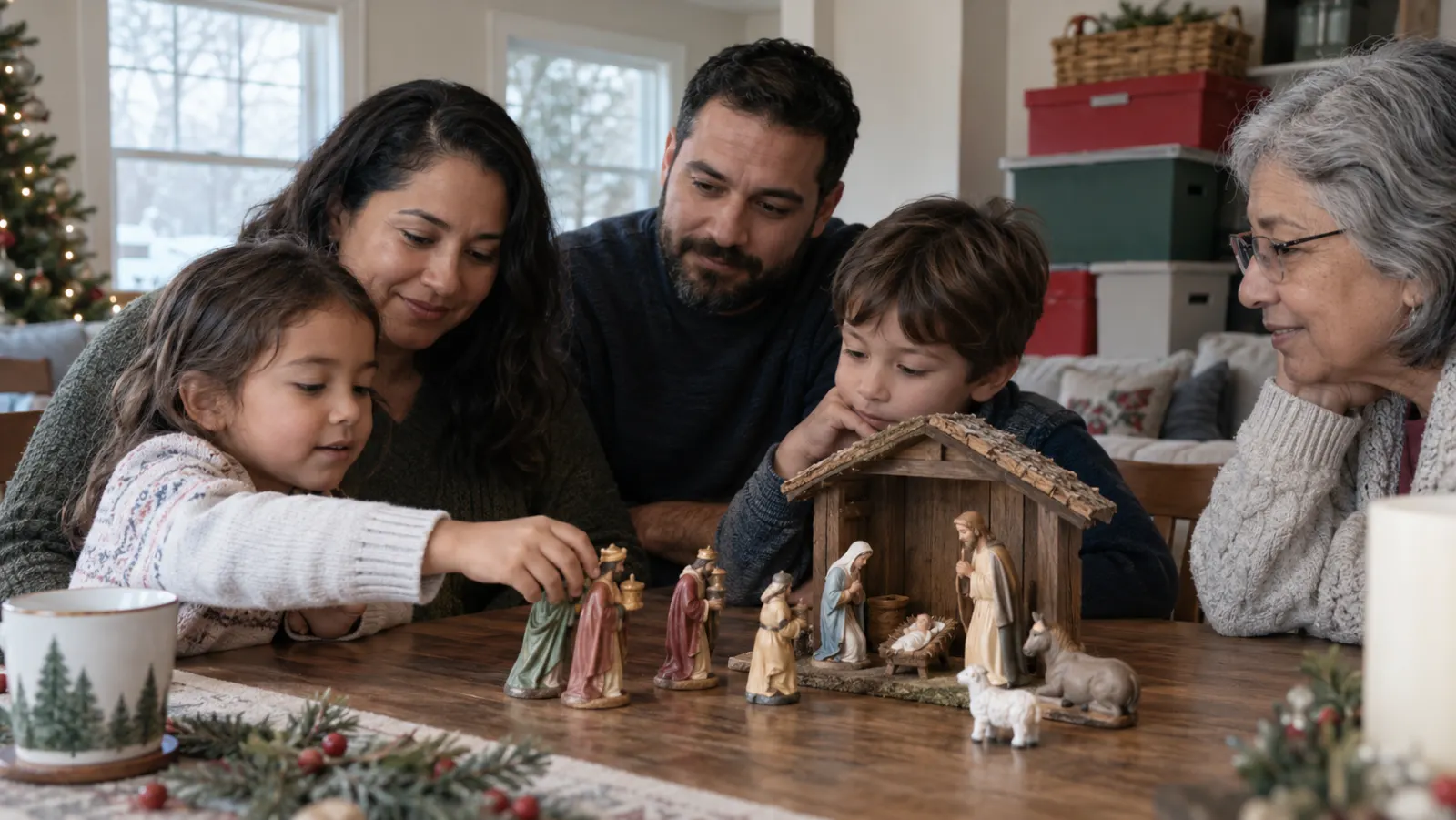
Keeping Epiphany does not require twelve elaborate events. It may mean leaving a nativity in place, reading Matthew 2 slowly, or sharing one January meal. The point is not adding obligations to exhausted families. It is refusing to let exhaustion make December's message disposable.
The Magi arrive after the familiar guests
Many homes move the Magi figures gradually toward the nativity and place them near the child on Epiphany. The custom is not a precise historical reenactment, but it teaches sequence and pilgrimage. These visitors are not part of Luke's birth-night shepherd scene. They come later in Matthew, carrying the world's distance into the house.
Their delayed arrival creates room to ask who has been missing from our Christmas imagination. Christ is manifested beyond one household, ethnicity, or neighborhood. January becomes a time to notice global Christianity, pray for communities unlike our own, and listen to believers whose experience challenges American assumptions.
January can begin with worship instead of self-invention
New Year's culture often says that the self is a project requiring immediate optimization. Track the habit, choose the word, rebuild the body, clean the house, launch the plan. Goals can be wise. They become crushing when worth depends on producing a redesigned person by February.
The Magi begin elsewhere: they kneel. Epiphany can orient a year around recognition before achievement. Christians do not create the light or earn the invitation. They respond to Christ made known. A resolution formed after worship may become less anxious and more attentive to neighbors, limits, and grace.
A slower ending makes space for complicated holidays
December is not joyful for everyone. Grief, estrangement, addiction, infertility, illness, work shifts, and financial pressure do not disappear beneath lights. The demand to feel merry by a date can intensify loneliness. When Christmas is treated as one perfect day, a hard day seems like a failed season.
Epiphany widens the window. A person who could not celebrate on December 25 can still light a candle, receive a meal, or hear the promise in January. Churches can remember members who work holidays and offer a quieter gathering without forcing cheerfulness. Christ's manifestation is not limited to the hour when the photographs looked right.
The feast can cultivate generous attention
Because the Magi bring gifts, some communities connect Epiphany with blessing homes, giving to missions, or serving neighbors. The practice should avoid turning distant people into charity props. Better generosity begins with relationship, accountability, and attention to what recipients say they need.
A household might choose one organization to learn about through the year rather than make a hurried seasonal donation. A church could invite a local immigrant congregation to share a meal as equal partners, not perform culture for an audience. Manifestation moves us beyond abstraction: Christ is honored among actual people and places.
Tradition should serve households, not judge them
Some Christians have never observed Epiphany, and many evangelical churches are cautious about liturgical calendars. Nothing in Matthew requires a January feast. A family that packs decorations on December 26 has not sinned. The practice is an invitation, not a test of seriousness.
This freedom matters because religious families can turn beautiful disciplines into competitions. One household bakes a cake; another reads a paragraph before school; another simply remembers the Magi during prayer. The useful tradition is the one that makes attention to Jesus more possible within the life people actually have.
Ending well is part of remembering
When Epiphany arrives, decorations can be removed deliberately rather than abandoned in fatigue. Children can help pack figures while naming what each represented. Adults can review where generosity became joyful or pressured. The end of a season can hold gratitude, regret, and a small intention for next year.
Christian memory is not nostalgia. It carries truth forward so that a feast shapes ordinary time. The Magi return home by another way; the household returns to work, school, bills, and winter. The question is whether worship has altered the road.
House blessings can become attentive prayer
Some Epiphany customs include praying through a home or marking its entrance. Christians who do not use those traditions can still receive the underlying practice: thanking God for shelter, remembering those without it, and asking that ordinary rooms become places of truth and welcome. The ritual need not imply protection by magic.
Walk through the kitchen, bedrooms, doorway, and work corner. Pray for meals, sleep, conflict, visitors, and labor. Let the physical house interrupt vague spirituality. A home is where faith becomes schedules, privacy, shared resources, and tone of voice.
Epiphany can widen the church's reading list
Because the feast emphasizes manifestation to the nations, January is a fitting time to hear how global Christians read Matthew. The practice should go beyond one guest speaker or exotic recipe. A congregation might study a commentary from another region, support a diaspora church's priorities, or learn the history of Christians in the Middle East.
Such attention corrects the assumption that Christianity's natural address is American. It also resists treating believers elsewhere only as recipients of aid. The Magi arrive with treasures and questions. Global fellowship includes gifts moving toward us.
The feast can interrupt throwaway habits
Keeping Christmas into January invites practical questions about disposal. Decorations, food, trees, packaging, and unwanted gifts reveal the material wake of celebration. Epiphany is not an environmental holiday, but lingering can make consumption visible and encourage repair, donation, composting, and careful storage.
The point is not moral perfection after an exhausting month. It is gratitude expressed through care for things and for sanitation workers, delivery drivers, retail employees, and neighbors who carry the season's hidden labor. Wonder becomes more truthful when it notices the world left after the photographs.
A small household observance can be enough
Read Matthew 2, place the Magi near the nativity, share bread or a simple dessert, and pray for people from another nation. Ask each person what changed on the travelers' road. The whole practice can fit inside an ordinary evening.
Simplicity protects Epiphany from becoming another standard families must perform. A feast serves attention when it is light enough to carry. The goal is not an impressive January tradition. It is one more honest encounter with Christ.
Epiphany will not fix holiday burnout by adding one more event. Its promise is almost the opposite: the feast interrupts the rush to dispose of Christmas and asks us to look again. Foreign travelers are still approaching. Light is still widening. The child is still worthy of attention after the wrapping is gone.
Keep the day elaborately, simply, or not at all. But receive its question. What would change if Christmas were allowed to remain long enough to reorder January? Perhaps the new year could begin not with a frantic reinvention of the self, but with the joy of having seen Christ.


