
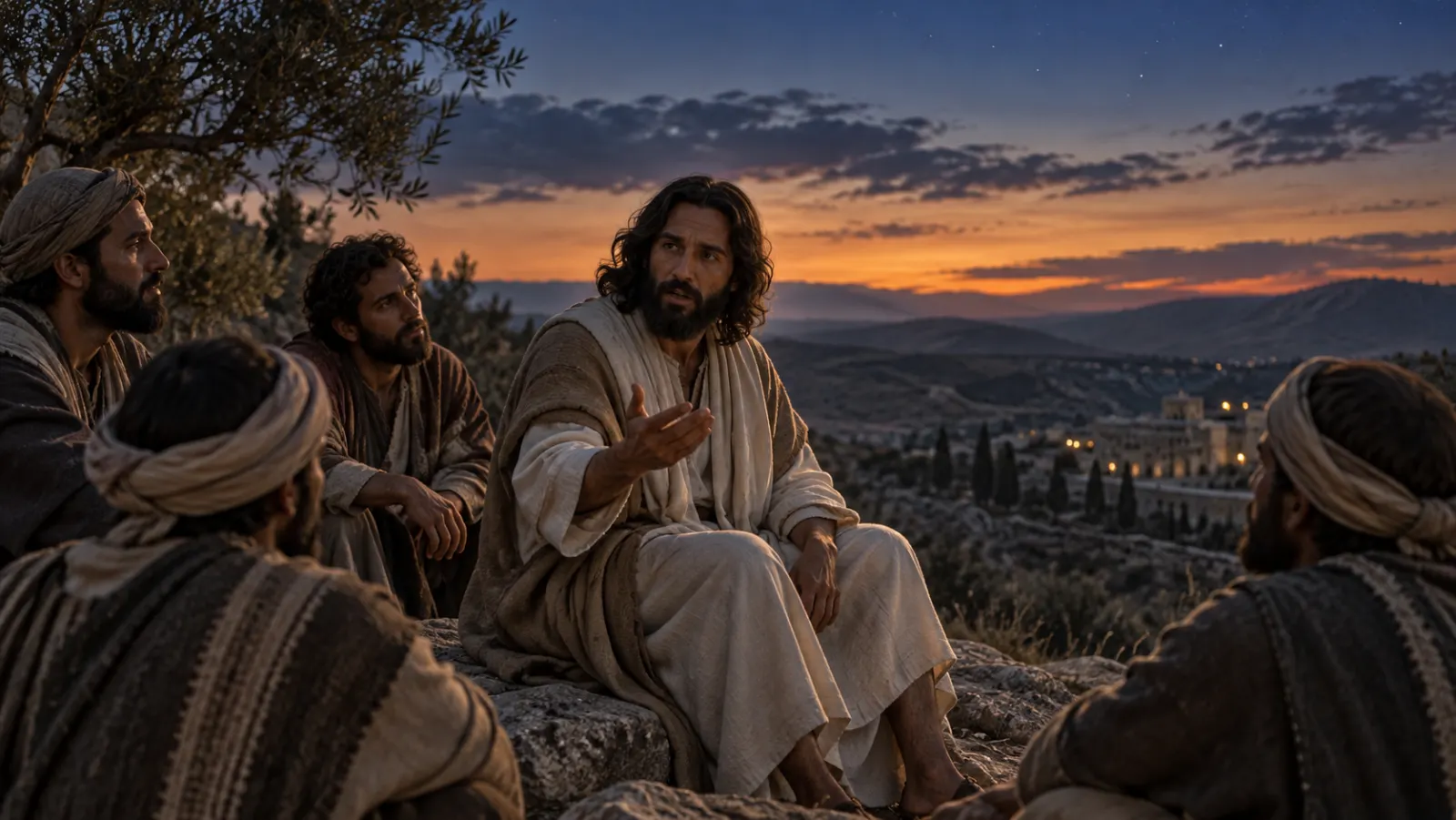
Son of Man can mean a human being, but Jesus also draws on Daniel’s vision of authority, judgment, suffering, and vindication.
Ask for Jesus’ most common self-designation in the Gospels and many churchgoers will guess Son of God. The answer is Son of Man. It sounds less impressive, almost like a way of saying this human being. Then Jesus uses it while forgiving sins, predicting suffering, and speaking of a figure who comes with heaven’s authority.
The phrase works like a door that looks ordinary until the story opens it. Readers need both its human plainness and its scriptural horizon, especially Daniel 7, where one like a son of man receives dominion after violent kingdoms are judged.
Ordinary words can carry a scriptural echo
In biblical languages, son of man can simply emphasize mortality or humanity. Daniel’s visionary phrase uses that ordinary shape in contrast to beastlike empires. The humanlike figure receives authority from the Ancient of Days. Jesus’ hearers could catch different resonances at different moments.
Authority appears before glory
In Mark 2, the Son of Man claims authority to forgive sins and then heals the paralyzed man. The title does not wait for the end of the story. It names authority already at work in mercy, conflict, and restoration.
The Son of Man must suffer
Jesus repeatedly joins the title to rejection and death. The disciples hear kingdom and imagine status; Jesus speaks of the servant who gives his life. Suffering is not the definition of all human authority, but it exposes an authority that will not preserve itself by sacrificing others.
Daniel’s courtroom enters Jesus’ trial
Before the council, Jesus combines Son of Man language with enthronement imagery. The prisoner announces that the apparent judges will face a greater judgment. The claim is politically and theologically explosive without requiring Jesus to stage a spectacle.
The title resists a mascot Jesus
American culture repeatedly makes Jesus a mascot for toughness, therapy, activism, or private spirituality. Son of Man will not remain inside one role. It joins solidarity with humanity to a claim of final authority that evaluates every tribe and platform.
Read the title across the whole Gospel
A concordance can list occurrences, but narrative sequence matters. Watch who understands, who misunderstands, and what happens immediately before and after the phrase. Meaning accumulates through forgiveness, table fellowship, passion prediction, trial, and promised return.
Questions for living the name
To bring this name of Jesus into an actual congregation, begin with a precise question: Where does the phrase sound ordinary? Return to Mark 14:53–65, separate what the passage states from what we infer, and listen first to people who will live with the consequences. Then choose one bounded action, name who owns it, and set a review date. A Christological title cannot remain safely general when bodies, homes, and relationships will carry the cost of our interpretation.
The answer may land differently across American lives: How does Daniel 7 contrast human and beastly power? Income, race, region, age, disability, work schedule, gender, and family status can alter the experience without altering the gospel. A mature community asks for concrete cases, seeks relevant expertise, and permits disagreement without threatening belonging. Biblical application becomes more faithful when it can receive new evidence, repair harm, and explain what changed.
A pastoral way to work through “Why Jesus Called Himself the Son of Man” is to ask: Why does Jesus join authority to suffering? Sincerity is not enough. Care requires consent, resources, limits, and accountability. A church should say what it can offer, what lies outside its competence, and which qualified partners it will involve. Prayer and study sustain the process; neither replaces professional attention nor permits another person's vulnerability to become institutional publicity.
To bring this name of Jesus into an actual congregation, begin with a precise question: What changes when the title appears at the trial? Return to Mark 14:53–65, separate what the passage states from what we infer, and listen first to people who will live with the consequences. Then choose one bounded action, name who owns it, and set a review date. A Christological title cannot remain safely general when bodies, homes, and relationships will carry the cost of our interpretation.
The answer may land differently across American lives: Which modern mascot does the Son of Man disrupt? Income, race, region, age, disability, work schedule, gender, and family status can alter the experience without altering the gospel. A mature community asks for concrete cases, seeks relevant expertise, and permits disagreement without threatening belonging. Biblical application becomes more faithful when it can receive new evidence, repair harm, and explain what changed.
When this practice is reviewed, the community can record what happened after asking: Where does the phrase sound ordinary? The impression of those who designed the response is not enough. Receive voluntary testimony, notice unexpected costs, and identify who remained outside. If the practice did not produce truth, justice, care, and communion, changing it does not betray biblical conviction; it may be a humble way to obey more faithfully. Review 1 should end with a decision people can understand and see communicated.
When this practice is reviewed, the community can record what happened after asking: How does Daniel 7 contrast human and beastly power? The impression of those who designed the response is not enough. Receive voluntary testimony, notice unexpected costs, and identify who remained outside. If the practice did not produce truth, justice, care, and communion, changing it does not betray biblical conviction; it may be a humble way to obey more faithfully. Review 2 should end with a decision people can understand and see communicated.
When this practice is reviewed, the community can record what happened after asking: Why does Jesus join authority to suffering? The impression of those who designed the response is not enough. Receive voluntary testimony, notice unexpected costs, and identify who remained outside. If the practice did not produce truth, justice, care, and communion, changing it does not betray biblical conviction; it may be a humble way to obey more faithfully. Review 3 should end with a decision people can understand and see communicated.
When this practice is reviewed, the community can record what happened after asking: What changes when the title appears at the trial? The impression of those who designed the response is not enough. Receive voluntary testimony, notice unexpected costs, and identify who remained outside. If the practice did not produce truth, justice, care, and communion, changing it does not betray biblical conviction; it may be a humble way to obey more faithfully. Review 4 should end with a decision people can understand and see communicated.
When this practice is reviewed, the community can record what happened after asking: Which modern mascot does the Son of Man disrupt? The impression of those who designed the response is not enough. Receive voluntary testimony, notice unexpected costs, and identify who remained outside. If the practice did not produce truth, justice, care, and communion, changing it does not betray biblical conviction; it may be a humble way to obey more faithfully. Review 5 should end with a decision people can understand and see communicated.
When this practice is reviewed, the community can record what happened after asking: Where does the phrase sound ordinary? The impression of those who designed the response is not enough. Receive voluntary testimony, notice unexpected costs, and identify who remained outside. If the practice did not produce truth, justice, care, and communion, changing it does not betray biblical conviction; it may be a humble way to obey more faithfully. Review 6 should end with a decision people can understand and see communicated.
Son of Man is not a secret code with one replacement word. It is a title Jesus uses to tell a story about human vocation, suffering service, divine authority, and vindication.
Its strangeness is useful. It slows confident readers down long enough to meet a Jesus who is truly with humanity and still refuses every attempt to domesticate his rule.


