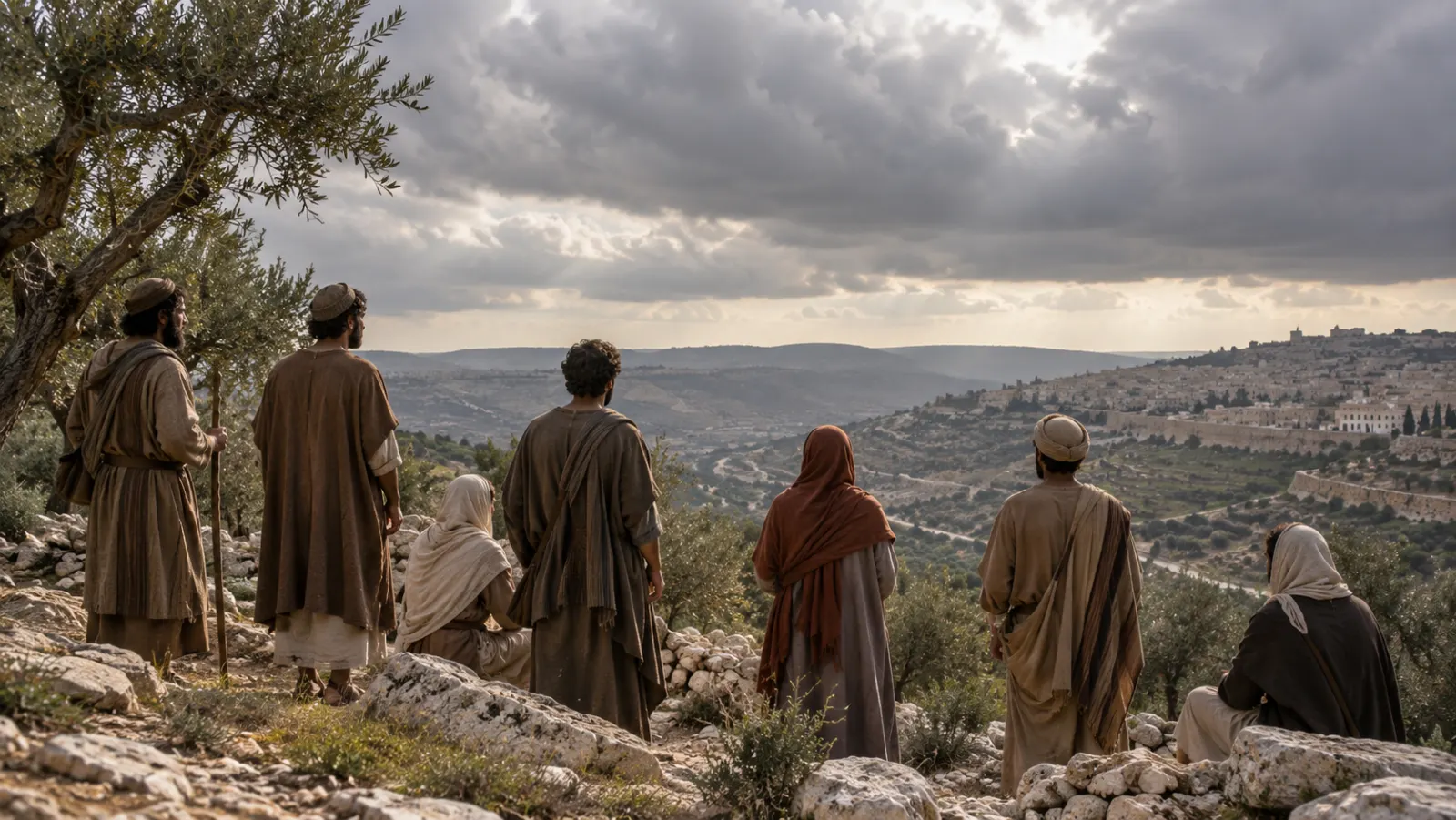
Acts does not picture Jesus using ancient weather as transportation technology. The cloud belongs to Scripture's language of divine presence, concealment, and kingship.
The sentence is brief: a cloud receives Jesus from the disciples' sight. To a modern imagination trained by aviation, science fiction, and launch footage, the scene can become unintentionally comic. Did Jesus rise through the atmosphere? Was the cloud a vehicle? What altitude counts as heaven? Those questions sound logical only after we have replaced Luke's biblical vocabulary with our technological one.
The cloud in Acts is not a primitive attempt to describe an engine. It belongs to a dense scriptural pattern. Clouds conceal and reveal God's presence; they lead Israel, cover Sinai, fill sacred space, overshadow the transfiguration, and accompany the human figure who receives dominion in Daniel's vision. Luke's readers would hear those echoes before they imagined meteorology. The point is not that Jesus discovered a route through the sky. The point is that he enters God's royal presence and authority.
Clouds hide as well as show
Biblical theophany rarely gives human beings an unrestricted view of God. Fire, smoke, darkness, thunder, and cloud communicate nearness while preserving mystery. The cloud says that God is truly present and that God cannot be possessed by human sight. In Acts, it both marks Jesus' exaltation and ends the disciples' visual access to him.
That double function matters. The ascension is not a final spectacular display meant to satisfy every curiosity. It establishes a boundary. The witnesses see enough to testify, then they must live by promise and Spirit rather than by constant visual proof. The cloud is therefore not decorative weather. It teaches a form of faithful unknowing.
Israel had traveled under a cloud
In Exodus, cloud and fire guide a liberated people through danger. The sign does not offer Israel a map of the entire journey. It gives direction for the next movement and testifies that the God who rescued them has not withdrawn. Later, cloud covers Sinai as covenant instruction is given. Presence and command belong together.
Acts carries that association into a new transition. Jesus' followers will travel, cross borders, face rulers, and learn obedience. They cannot keep him on the hillside as a private source of reassurance. The God who led Israel now directs the mission through promise, Scripture, Spirit, and communal discernment. The cloud turns their attention from possession to pilgrimage.
Daniel's royal figure comes with clouds
Daniel 7 portrays one like a son of man coming with the clouds to receive dominion from the Ancient of Days. The movement in the vision is toward God's throne, not a descent from the stratosphere. Early Christians drew on this royal scene to speak of Jesus' vindication after humiliation and of an authority greater than the beasts of empire.
That background keeps the ascension from becoming an odd postscript to Easter. The crucified one is enthroned. Rome may control roads, courts, armies, and public crosses, but it does not hold final sovereignty. The cloud announces political theology without handing the church a political weapon: authority belongs to Jesus, not to whichever nation claims him most loudly.
The transfiguration prepares the reader
Earlier in Luke, a cloud overshadows Jesus and the disciples on the mountain, and a voice identifies him as God's chosen Son. The disciples are afraid because the cloud means more than fog. It marks holy presence and demands that they listen. The ascension reuses that world of meaning at the end of Jesus' visible ministry.
Luke is a careful storyteller. The cloud links revelation, identity, and obedience. At the transfiguration the command is to hear Jesus; at the ascension the commission is to bear witness. In both cases, the sign directs attention away from spectacle toward faithful response. Mountain experiences are not souvenirs. They place obligations on those who descend.
Why literal does not mean wooden
Christians may affirm that the ascension truly occurred while recognizing symbolic dimensions in its description. A wedding ring is a literal object and a symbol; its symbolism does not make the marriage imaginary. Biblical events can carry meanings established by earlier Scripture. Historical claim and theological sign need not compete.
A wooden reading, by contrast, isolates an image from its literary world and asks it to answer a question it was not designed to answer. Luke does not offer atmospheric measurements or a model of cosmic geography. He tells where Jesus belongs, why the disciples cannot continue seeing him, and what authority stands behind their mission.
The cloud resists spiritual control
American religion often packages access: the right conference, method, leader, or worship atmosphere promises a reliable encounter. The ascension cloud frustrates that market. Jesus is present to his people, but he is not available for display. No ministry owns the throne, and no emotional intensity can force the King to become an exhibit.
That truth protects both wonder and accountability. Leaders cannot hide questionable claims behind mysterious language, because the same Scriptures test their teaching. Yet believers also need not reduce every act of God to what can be managed. The cloud leaves the church with confidence, humility, and a task—not with a device it knows how to operate.
Questions to carry into community
A responsible conversation can begin with this question: Which Old Testament cloud scenes most clarify Acts 1? It need not be answered quickly or turned into a test of belonging. Read the whole passage, listen to people who experience its consequences differently, and separate an inherited reaction from an examined conviction. The ascension forms communities able to pray, study, and act without pretending certainty about what the text does not explain. It also asks for accountable decisions: who will carry the task, how vulnerable people will be protected, and when the church will review what it promised.
To carry the subject into common life, ask: How does Daniel 7 change the direction and meaning we assign to the scene? The purpose is not a polished answer but clarity about what should change in habits, budgets, leadership, or care. A mature response can name limits and disagreements without using the Bible to close discussion. After listening, the group should identify one proportionate step, a responsible person, and a date for review. Reflection on the ascension then becomes more than a slogan; it becomes a humble practice under Christ's rule.
A further test for the community is this: What is the difference between a literal reading and a wooden reading? People with different histories may answer differently, and those differences deserve attention before a decision. Checking facts, seeking consent, and consulting people with relevant knowledge keeps a pious impression from becoming a harmful policy. The church need not solve everything in one evening. It can say plainly what it knows, what it does not know, what protection is urgent, and what learning must continue.
A responsible conversation can begin with this question: Where do churches try to package or control experiences of God's presence? It need not be answered quickly or turned into a test of belonging. Read the whole passage, listen to people who experience its consequences differently, and separate an inherited reaction from an examined conviction. The ascension forms communities able to pray, study, and act without pretending certainty about what the text does not explain. It also asks for accountable decisions: who will carry the task, how vulnerable people will be protected, and when the church will review what it promised.
To carry the subject into common life, ask: How can mystery coexist with responsible biblical interpretation? The purpose is not a polished answer but clarity about what should change in habits, budgets, leadership, or care. A mature response can name limits and disagreements without using the Bible to close discussion. After listening, the group should identify one proportionate step, a responsible person, and a date for review. Reflection on the ascension then becomes more than a slogan; it becomes a humble practice under Christ's rule.
The disciples did not watch a first-century spacecraft disappear. They witnessed a sign whose grammar had been formed by Exodus, Sinai, Daniel, and Jesus' own transfiguration. The cloud announced divine presence, royal vindication, and the end of ordinary sight.
Once that grammar is recovered, the scene becomes less embarrassing and more demanding. Jesus cannot be localized, marketed, or controlled. He reigns beyond the reach of every empire, and his people must stop staring long enough to become truthful witnesses on the ground.