
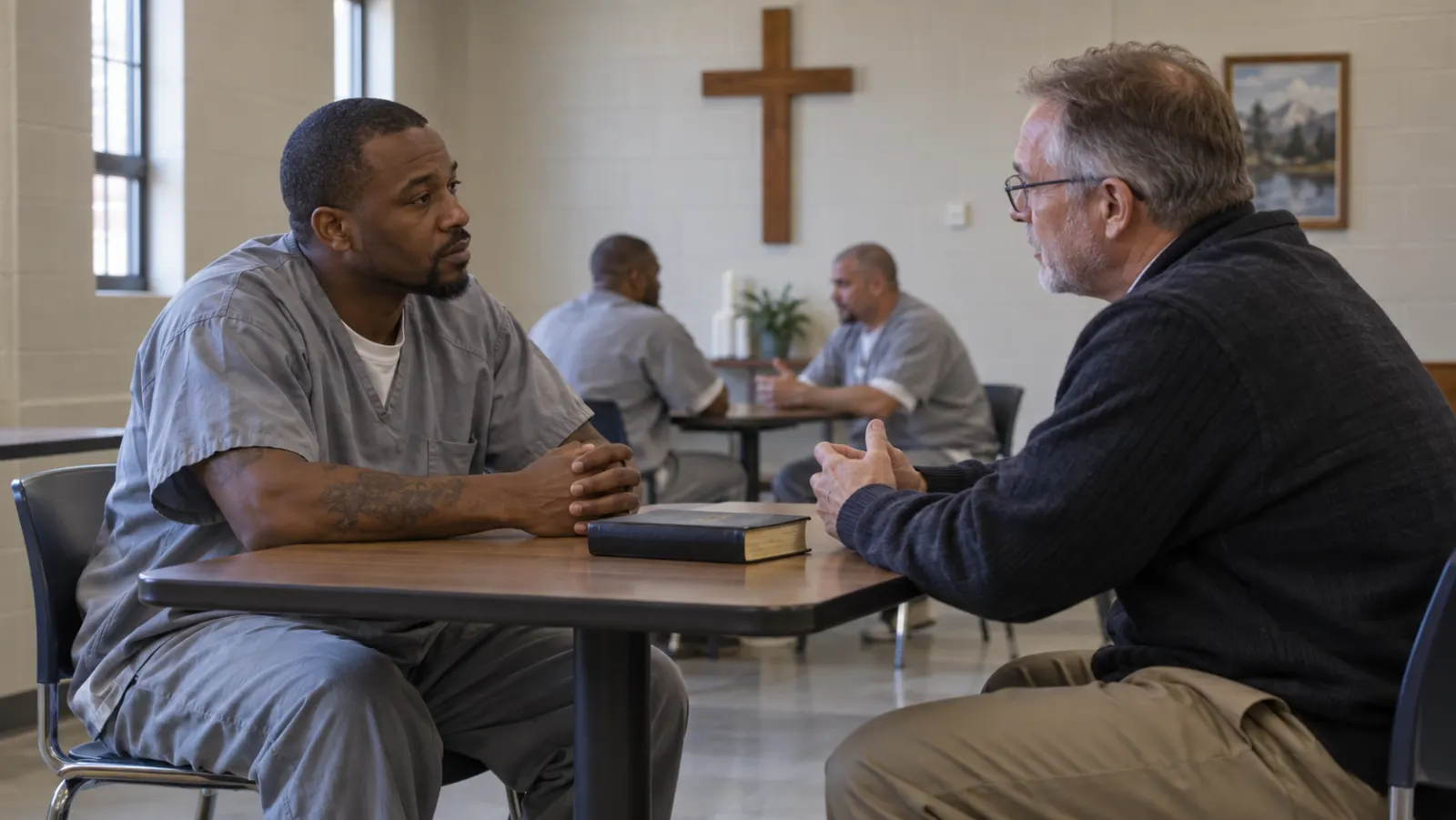
Paul's imprisonment is more than a dramatic backdrop. It asks American churches to see incarcerated people as members, teachers, neighbors, and moral agents.
Churches quote Paul from prison without always picturing a locked door. His confinement becomes proof that attitude conquers circumstance: rejoice anyway, preach anyway, write anyway. The courage is real. So are chains, guards, legal uncertainty, dependence on visitors, and the possibility of death. In the United States, where more than a million people are held in state and federal prisons and many more pass through jails, the setting cannot remain stained glass.
Ancient Roman custody is not identical to the modern American corrections system. Paul also possessed citizenship and social resources many prisoners lack. Still, his letters refuse a simple division between the free church that acts and the incarcerated person who receives. A confined apostle teaches, organizes, prays, sends coworkers, and interprets the gospel for communities outside.
Do not romanticize the cell
Paul speaks of fruitful ministry in confinement, but he does not call chains good. Acts records beatings, public humiliation, and procedural abuse. Hope does not require gratitude for dehumanization. Prison ministry should be honest about isolation, violence, medical care, disability, family separation, and the power staff hold. Spiritual resilience is not evidence that conditions are just.
Incarcerated believers are part of the church
A program language of going in to bring Jesus can overlook the Christians already praying, teaching, mentoring, and repenting inside. Volunteers should listen before designing. Chaplains and incarcerated leaders understand local constraints. Churches can receive testimony without turning pain into spectacle and create ways for theological insight from inside to shape worship outside.
Accountability and dignity belong together
Recognizing human dignity does not deny victims, minimize offenses, or erase consequences. Christian truth can hold harm, responsibility, punishment, mercy, restitution, and the possibility of change together. Ministries lose credibility when they center a dramatic conversion story while ignoring people who were harmed. Victim safety and consent must remain part of the moral field.
Families serve sentences too
Children travel long distances, pay costly communication fees, endure searches, and carry stigma. Partners and parents manage money and grief. A congregation can help with transportation, meals, school support, confidential listening, and practical navigation without forcing disclosure. Care should not assume every relationship is safe or that family reunification is always the right goal.
Reentry begins before release
Identification, housing, work, health care, transportation, supervision rules, and digital access can collide on the first days outside. A welcome service is not a plan. Churches need trained teams, realistic boundaries, partnerships with qualified organizations, and safeguards for everyone involved. People returning home need friendship and opportunity, not surveillance dressed as fellowship.
Let the letters change the outside church
Paul's prison writing addresses ambition, money, citizenship, unity, and courage among free believers. The question is not only what churches will do inside facilities. It is whether proximity will reshape hiring, political imagination, language about offenders, support for victims, and willingness to examine systems. A ministry that never changes the sending congregation has listened only halfway.
Questions to carry into community
A useful conversation about “Paul in Prison and the Incarcerated Church” can begin here: Do we treat incarcerated Christians as teachers as well as recipients? Ask for concrete examples, distinguish what Philippians 1:12–30 actually says from a reasonable inference, and name the information still missing. People who will live with the decision should speak before leaders close the question. Then choose one bounded action, assign responsibility, and set a review date. Faithfulness is not proved by solving everything in an evening; it appears when truth, care, and accountability stay together.
The question has to leave the study room: How does our ministry honor victims and accountability? In American congregations, the same policy lands differently depending on income, race, gender, disability, work schedule, family status, and institutional power. Hearing those differences does not weaken biblical authority. It helps a church avoid mistaking the habits of decision-makers for the center of the gospel. Before announcing a rule, test it against actual cases, seek relevant expertise, and explain how someone can appeal without losing belonging.
To keep incarceration from becoming a slogan, ask again: What burdens are carried by families? A Christian answer needs more than sincere intent. It needs boundaries, resources, consent, and visible ownership. It should also state what the congregation cannot provide and which qualified partner it will involve. Prayer and study belong in the process, but neither replaces checking facts or protecting the person who would bear the cost of a preventable mistake.
A useful conversation about “Paul in Prison and the Incarcerated Church” can begin here: Is our reentry support trained, bounded, and practical? Ask for concrete examples, distinguish what Philippians 1:12–30 actually says from a reasonable inference, and name the information still missing. People who will live with the decision should speak before leaders close the question. Then choose one bounded action, assign responsibility, and set a review date. Faithfulness is not proved by solving everything in an evening; it appears when truth, care, and accountability stay together.
The question has to leave the study room: What has contact with prison changed in our congregation outside? In American congregations, the same policy lands differently depending on income, race, gender, disability, work schedule, family status, and institutional power. Hearing those differences does not weaken biblical authority. It helps a church avoid mistaking the habits of decision-makers for the center of the gospel. Before announcing a rule, test it against actual cases, seek relevant expertise, and explain how someone can appeal without losing belonging.
One final check
Before closing “Paul in Prison and the Incarcerated Church,” return to Philippians 1:12–30 and summarize three things separately: what the text states, what interpretation the community holds, and what application it proposes for this moment. That distinction allows a practice to be corrected without treating every correction as abandonment of faith. A reader from another generation, a person affected, and someone with relevant expertise can test the conclusion. If there is no way to receive new evidence or acknowledge unintended harm, discernment is not finished.
In a later review of “Paul in Prison and the Incarcerated Church,” leaders can record what happened after asking: Do we treat incarcerated Christians as teachers as well as recipients? An impression from one service or the view of those who designed the response is not enough. Hear voluntary testimony, notice unexpected costs, and identify who remained outside. If the practice did not produce truth, justice, care, and communion, changing it does not betray biblical conviction; it may be a humble way to obey more faithfully. Review step 1 should end with a decision people can understand and see communicated.
In a later review of “Paul in Prison and the Incarcerated Church,” leaders can record what happened after asking: How does our ministry honor victims and accountability? An impression from one service or the view of those who designed the response is not enough. Hear voluntary testimony, notice unexpected costs, and identify who remained outside. If the practice did not produce truth, justice, care, and communion, changing it does not betray biblical conviction; it may be a humble way to obey more faithfully. Review step 2 should end with a decision people can understand and see communicated.
Paul's chains do not make prison holy. They reveal that Christian agency, teaching, and communion can persist where freedom is constrained—and that the church outside remains obligated to remember those inside as part of one body.
Faithful prison engagement protects dignity without denying harm, supports families, prepares for reentry, and allows incarcerated Christians to address the whole church rather than serve as illustrations in someone else's sermon.


