In American church life, the Great Commission can shrink into a slogan about getting people to say yes to Jesus. Conversion matters deeply, but Matthew 28:16–20 gives the church a larger horizon. The scene begins with the risen Jesus claiming authority and…
In American church life, the Great Commission can shrink into a slogan about getting people to say yes to Jesus. Conversion matters deeply, but Matthew 28:16–20 gives the church a larger horizon. The scene begins with the risen Jesus claiming authority and ends with his promise to remain with his people. Between those two statements stands a commission not merely to gather decisions, but to make disciples among all nations.
That difference is not a technical correction for specialists. It changes what churches celebrate, how missionaries work, and what ordinary Christians imagine faithfulness looks like. The commission includes going, baptizing, and teaching people to obey Jesus. Evangelism is therefore indispensable, but it is the doorway into a life of allegiance, learning, belonging, and obedience rather than the finish line of Christian mission.
The commission begins with Jesus, not with our urgency
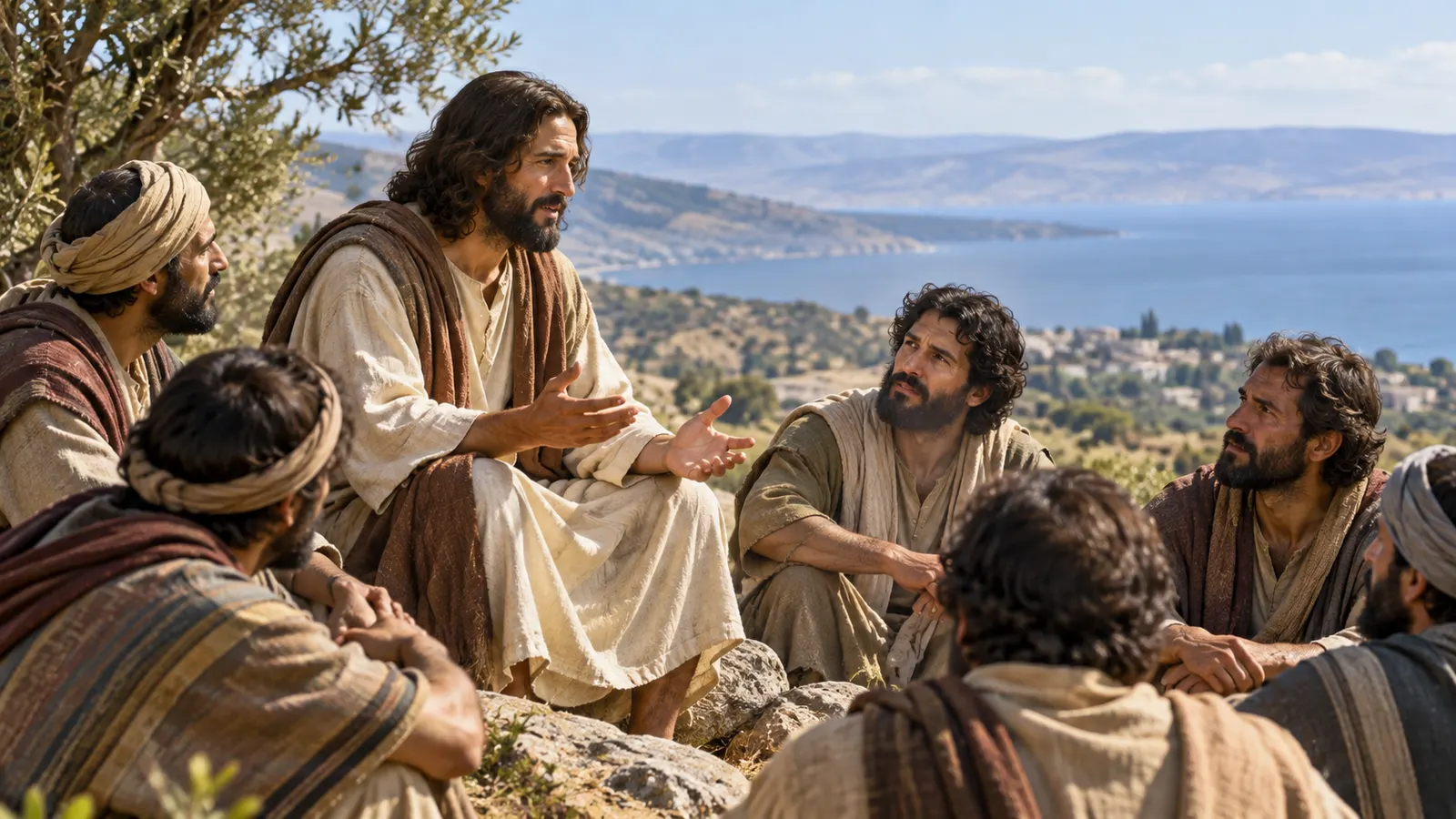
Matthew places the disciples on a mountain in Galilee, where they worship the risen Jesus even as the text candidly notes that some doubt. Jesus does not respond by giving them a motivational speech about their potential. He announces that all authority in heaven and on earth has been given to him. Mission begins there: not with Christian confidence in technique, but with Christ’s authority and the reality of his resurrection.
That order protects mission from panic and triumphalism at the same time. Christians do not have to manufacture spiritual results, and they are not authorized to treat other people as projects. The church bears witness because Jesus reigns and sends his followers. A commission grounded in his authority can be courageous without becoming coercive, urgent without becoming frantic, and confident without pretending that the messenger controls another person’s response.
“Make disciples” is the center of the sentence
The Greek grammar of Matthew 28:19–20 puts the main verbal weight on “make disciples.” The NET Bible’s notes and many New Testament interpreters observe that going, baptizing, and teaching are grammatically tied to that central command. Christians should be cautious about building an entire theology on one grammatical observation, but the shape of the sentence is still revealing: Jesus describes a mission that has depth as well as reach.
A disciple is more than a person who has heard a message. In Matthew’s Gospel, disciples follow Jesus, learn from him, fail, are corrected, receive mercy, and are sent. The commission therefore refuses a thin definition of success. A crowded event, a raised hand, a signed card, or a viral testimony may mark a meaningful beginning, but none of those things by itself is the mature goal Jesus names.
“All nations” pushes the church across real boundaries
The phrase translated “all nations” opens the mission beyond Israel to the peoples of the world. In Acts, that outward movement is geographic, cultural, linguistic, and social. The gospel crosses boundaries because the lordship of Jesus is not a tribal possession. Yet global scope does not mean every faithful Christian must purchase a plane ticket. Mission involves being sent across whatever boundaries keep people from hearing and seeing the gospel clearly.
For an American congregation, those boundaries may run through an apartment complex, a university lab, an immigrant neighborhood, a military base, a rural county, or another country. The point is not to romanticize distance. Sometimes churches speak as though overseas service were automatically more spiritual than patient witness at home. The Great Commission dignifies both, because the question is whether disciples are being made among people who actually exist, not whether the setting feels adventurous.
Baptism means discipleship is embodied and public
Jesus connects disciple-making with baptism into the name of the Father, Son, and Holy Spirit. Across Christian traditions, believers disagree about the proper subjects and timing of baptism, but they agree that baptism is not a private self-help exercise. It marks Christian identity in relation to Christ and his people. Mission therefore aims toward visible belonging, not isolated spiritual consumers who sample Christian ideas while remaining detached from the body of believers.
That has practical consequences for evangelism. A church that invites people to faith but has no plan to welcome, teach, protect, and incorporate them has separated what Jesus holds together. Likewise, a missionary who can describe conversions but has little concern for durable Christian community should ask what happens after the report is filed. The New Testament pattern repeatedly moves from proclamation to gathered communities in which believers worship, learn, serve, and are accountable to one another.
Teaching obedience takes longer than a campaign
The commission does not say merely “teach them what I commanded.” It says to teach disciples to obey everything Jesus commanded. Information matters, but discipleship is directed toward a practiced life: forgiving enemies, praying without performance, telling the truth, caring for the vulnerable, resisting greed, loving fellow believers, and trusting Christ when obedience costs something. That kind of formation cannot be downloaded in a weekend.
This is why mission and discipleship belong together. Evangelism that never moves toward teaching can leave people with a fragment of the gospel. Teaching that never moves outward can turn a church into a classroom that forgets why it was entrusted with good news. The Great Commission joins the two. Churches proclaim Christ so that people may follow him, and they teach followers so that those disciples learn to live under his gracious rule.
The promise of Christ’s presence changes the posture of mission
Matthew closes with a promise: Jesus will be with his disciples to the end of the age. That is not decorative comfort added after the difficult assignment. It is the condition that makes the mission possible. The church goes in the presence of the One it proclaims. Mission is therefore neither the export of American culture nor the heroic project of unusually bold personalities; it is participation in the work of the risen Christ.
The promise also creates room for patience. Some people respond quickly, some slowly, and some not at all. Churches may labor for years before seeing visible fruit. Missionaries may discover that their best plans were culturally clumsy. Parents may pray for adult children who have walked away from faith. The Great Commission offers no permission to manipulate outcomes. It gives something better: the presence of Christ, whose authority exceeds our reach and whose faithfulness outlasts our campaigns.
Mission measures faithfulness differently
The Great Commission also changes how churches measure success. Numbers can help leaders see patterns and steward resources, but the commission itself gives richer categories: disciples are being baptized, taught, gathered, and formed in obedience. A ministry can attract a crowd and still neglect those things; another can look small while patiently cultivating deep Christian maturity. Faithfulness cannot be reduced to attendance, decisions, or travel statistics.
That does not excuse laziness or indifference to fruit. The apostles longed for people to believe and worked hard to communicate clearly. But they knew that God gives growth. Churches can therefore examine methods honestly, learn from failure, and pursue effectiveness without pretending that the kingdom can be engineered. The commission frees Christians to work seriously while leaving ultimate results in Christ’s hands.
Evangelism is essential because disciples have to hear the good news of Jesus before they can follow him. But the Great Commission does not allow evangelism to be detached from baptism, teaching, obedience, and Christian community. The church is sent to announce Christ in such a way that people are invited into a lifelong apprenticeship to him.
A healthier mission question, then, is not simply, “How many decisions did we record?” It is, “Are we faithfully bearing witness, welcoming people into the life of Christ’s church, and teaching them to obey Jesus?” That standard is slower and harder to package. It is also much closer to the commission the risen Jesus actually gave.