American Christians can remember sacrifice and practice citizenship without turning worship into a ceremony of national innocence or power.
On Memorial Day weekend, one worshiper may remember a friend killed overseas. Another may carry moral injury. A refugee may be grateful for safety in the United States while grieving a war shaped by American policy. A child may only know that flags appeared beside the pulpit and patriotic songs replaced familiar hymns. The room is not united by one national experience, even if everyone stands together.
Christian worship can include public grief and gratitude. Scripture commands prayer for rulers and neighborly responsibility. Yet the church gathers first around the crucified and risen Jesus, whose people come from every nation. When the nation becomes the emotional center of worship, gratitude can slide into civil religion—the borrowing of Christian symbols to present a country as sacred, innocent, or uniquely favored.
Name the holiday accurately
Memorial Day remembers members of the U.S. armed forces who died in service; Veterans Day honors those who served. Confusing them can burden veterans with recognition the day was not designed to provide. July Fourth commemorates political independence, not the founding of the church. Accuracy makes space for appropriate prayer while resisting a vague blend of military, nation, and gospel.
A flag is not neutral
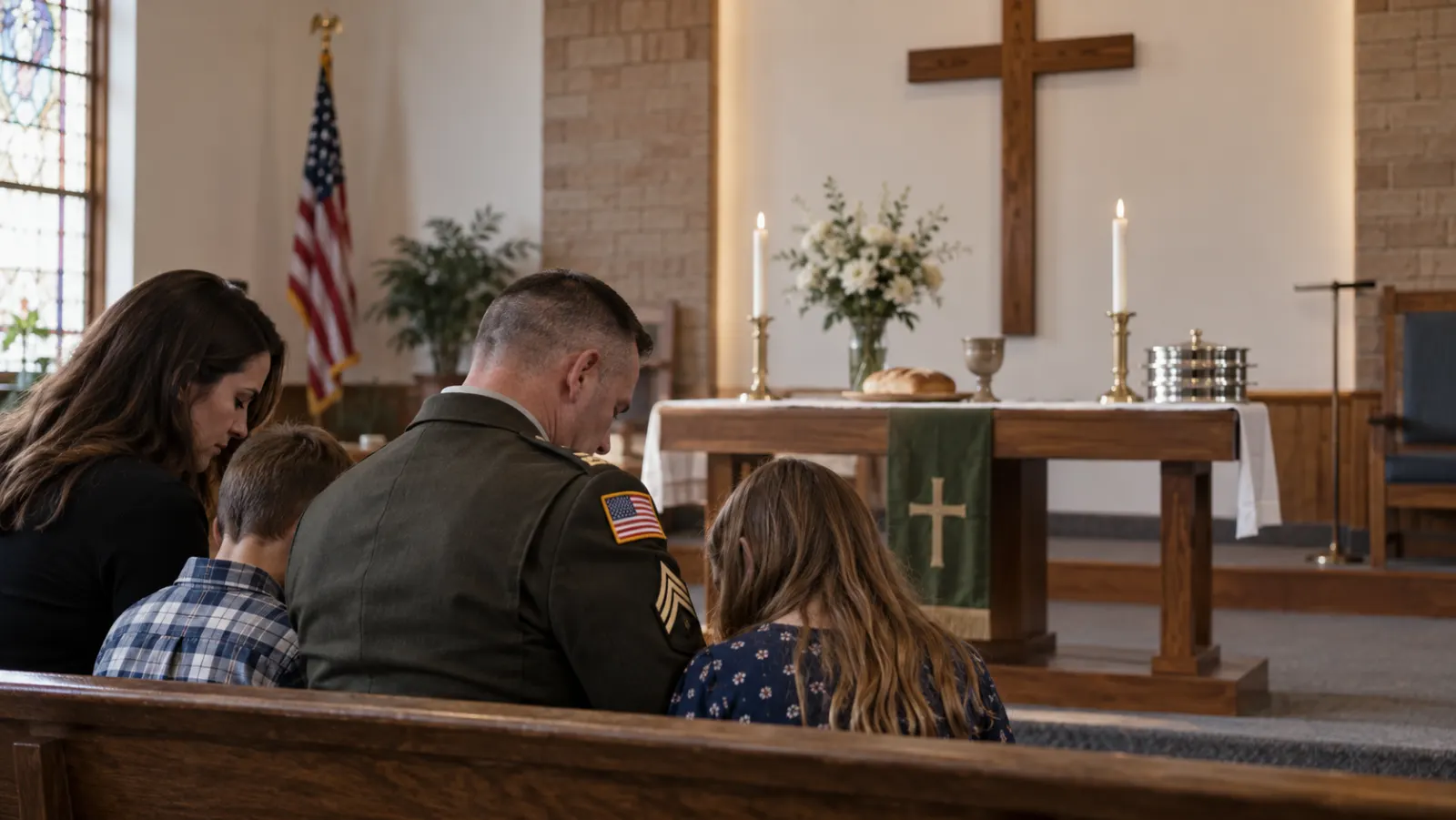
The flag carries sacrifice, citizenship, belonging, exclusion, protest, and power. Different worshipers see it through different biographies. Placing it beside communion may imply an equality leaders do not intend. Churches should ask what the arrangement teaches a child or visitor. The issue is not whether fabric is dangerous; it is whether symbols tell the truth about allegiance.
Care without romanticizing war
Veterans, active-duty members, spouses, children, and bereaved families need care beyond a holiday. Congregations can listen without demanding heroic stories, learn about moral injury, support caregivers, and connect people with qualified services. They can honor courage while lamenting soldiers and civilians alike. Christian compassion does not require a clean story about every conflict.
Citizenship can be critical
Paul used Roman citizenship when it served justice, yet named the church's primary commonwealth in heaven. Christians may vote, serve, protest, hold office, join the military, conscientiously object, and seek reform. None authorizes contempt or automatic approval of policy. Love of country matures when it can tell the truth and seek the good of people beyond its borders.
Worship widens loyalties
Revelation imagines a multitude from every people before God's throne. This does not erase nations; it dethrones them. A patriotic weekend can include prayers for leaders, enemies, migrants, peacemakers, and communities harmed by war. Such prayer may feel less satisfying than celebration, but it resembles the church's transnational identity more closely.
Restraint can be faithful
Pastors need not stage a culture-war confrontation. They can keep Christ-centered songs, preach the text, mention the civil observance accurately, lead lament, and offer care. If flags remain, explain their placement and ensure cross, table, font, and Scripture remain primary. Restraint is not ingratitude. It is theological clarity.
Questions to carry into community
A responsible community conversation can begin with this question: What does our sanctuary arrangement communicate about allegiance? It need not be answered quickly or turned into a test of belonging. Listen to people who live with the consequences, separate a biblical claim from a local custom, and name what information is still missing. Then identify one modest step, a responsible person, and a date for review. A church holiday becomes formative when its meaning takes accountable, correctable shape in ordinary life.
The question also has to reach the calendar and budget: Are we distinguishing national holidays accurately? People with different histories, work schedules, and family situations may answer differently. Those differences deserve attention before leaders decide. Checking facts, seeking consent, and consulting people with relevant knowledge keeps a good intention from causing preventable harm. The church need not solve everything in one meeting, but it can state what it knows, what boundary it will protect, and how it will report back.
To keep reflection from becoming a slogan, ask: How do military families experience our services? The most faithful answer may not be the most impressive one. It may require reducing a program, moving money, hearing an objection, or admitting an uncomfortable history. Christian practice becomes concrete when it includes capacity, safety, vulnerable people, and freedom of conscience. Prayer, study, and evaluation belong together; none excuses the absence of the others.
A responsible community conversation can begin with this question: Do our prayers include civilians, enemies, refugees, and peacemakers? It need not be answered quickly or turned into a test of belonging. Listen to people who live with the consequences, separate a biblical claim from a local custom, and name what information is still missing. Then identify one modest step, a responsible person, and a date for review. A church holiday becomes formative when its meaning takes accountable, correctable shape in ordinary life.
The question also has to reach the calendar and budget: What patriotic restraint would strengthen faithful citizenship? People with different histories, work schedules, and family situations may answer differently. Those differences deserve attention before leaders decide. Checking facts, seeking consent, and consulting people with relevant knowledge keeps a good intention from causing preventable harm. The church need not solve everything in one meeting, but it can state what it knows, what boundary it will protect, and how it will report back.
One final check
Before closing “When the Flag Enters the Sanctuary,” the community can return to Philippians 3:17–21 and summarize the difference between what the text claims, a reasonable inference, and a local application. That distinction protects biblical authority from our preferences. It is also wise to hear from someone directly affected and someone with relevant practical knowledge. A small, reviewable decision often serves people better than a grand promise with no owner, resources, or follow-through.
When reviewing Memorial Day, include people often absent from the planning room: shift workers, households with limited income, children, older adults, and people formed by a different tradition. Their observations may reveal costs the team cannot see. Documenting the decision, explaining why it was made, and opening a way to report problems turns goodwill into institutional care. If the practice does not produce the fruit leaders expected, changing it is not betrayal. It may be humble obedience.
Finally, “When the Flag Enters the Sanctuary” should not be evaluated by a single impression. Watch over a season to see whether the practice strengthens prayer, truth, hospitality, justice, and rest. The community can keep modest records, hear voluntary testimony, and review unintended consequences. Evaluation is not an attempt to control faith; it is a way to care for people and notice when a custom no longer communicates what leaders intended. Grace allows a church to thank God for what was good, confess harm, and begin again without turning change into a crisis.
Around “When the Flag Enters the Sanctuary,” that patience protects against two extremes: preserving from fear and canceling on impulse. A church can change timing, language, budget, or symbols while holding its confession of Christ firmly. Tradition serves the community; the community does not exist to sustain a production. Prayerful review grounded in evidence allows the calendar to remain a teacher of hope instead of becoming a master of conscience.
The question is not whether Christians may love the United States. It is whether that love remains limited beneath Jesus' lordship. The gospel frees citizens to give thanks without flattery, grieve without hatred, and criticize without despair.
When the flag enters the sanctuary, the church should know which story governs the room. The table belongs to a kingdom no border contains. There the dead are mourned, the powerful judged, enemies named as neighbors, and people from every nation receive one bread.